
TL;DR:
- Traditional car washing releases harmful chemicals into waterways through untreated stormwater runoff, impacting aquatic ecosystems. Eco-friendly car care products with biodegradable formulas, neutral pH, and proper techniques can significantly reduce chemical pollution and water consumption. Adopting sustainable practices like waterless washing, protective coatings, and careful habit adjustments benefits both the environment and your vehicle’s condition.
Most car owners, when they think about greening their vehicle maintenance routine, focus on water usage. That’s understandable, but it misses the bigger threat. The real damage from conventional car washing comes from what’s in the water, not just how much of it you use. Traditional soaps, waxes, and degreasers contain persistent chemicals that flow straight into stormwater drains, rivers, and ultimately the ocean. Understanding why use eco-friendly car care starts here, with the chemical pollution that most people never consider. This guide covers the environmental science, the product choices, the techniques, and the practical habits that make green car care genuinely effective.
Key takeaways
| Point | Details |
|---|---|
| Chemical runoff is the core problem | Conventional car washing sends detergents, oils, and grime directly into waterways via untreated stormwater drains. |
| Product chemistry matters as much as technique | pH-balanced, biodegradable formulas protect both your vehicle’s finish and local ecosystems. |
| Water efficiency is achievable | Professional eco washes using recycling systems can cut water use by roughly half per vehicle. |
| Eco care benefits you personally | Plant-based, low-VOC products reduce skin and respiratory irritation during washing. |
| Preventive coatings reduce overall impact | Protective layers like ceramic coatings mean fewer washes and less chemical use over time. |
Why use eco-friendly car care: the pollution problem
When you wash your car at home on a hard driveway, every drop of soapy water has one destination: the stormwater drain. Unlike household wastewater, stormwater is not treated before it reaches waterways. Untreated runoff flows directly into rivers and oceans, carrying detergents, road grime, engine oil residue, heavy metals from brake dust, and whatever chemical cocktail was in your car wash soap.
The ingredients that concern environmental scientists most are surfactants and phosphates. Surfactants are the compounds that make soap lather and lift grease. When they reach aquatic environments in high concentrations, they break down the protective mucous layers on fish gills, interfere with hormone function in invertebrates, and deplete oxygen levels in waterways. Phosphates accelerate algal blooms that suffocate aquatic life.
Non-biodegradable wax solvents and silicone-based products compound the issue. These compounds bind to soil particles near drainage points and persist for years, slowly leaching into groundwater. One car wash at home might seem trivial. But across an entire suburb doing the same thing every weekend, the cumulative chemical load is substantial.
“The concern isn’t just what goes down the drain. It’s where that drain leads. In most residential areas, stormwater and sewage are separate systems. Car wash water never gets treated.”
The contrast with commercial car wash facilities is stark. Professional systems are legally required in many jurisdictions to capture and treat wastewater before discharge. This is why even a standard commercial wash, let alone an eco-certified one, already performs better environmentally than the typical home bucket-and-hose approach.
Key pollutants commonly found in conventional car wash runoff include:
- Petroleum hydrocarbons from engine grease and road film
- Heavy metals including zinc, copper, and lead from tyre wear and brake dust
- Phosphates from conventional cleaning agents that trigger algal blooms
- Synthetic surfactants that persist in aquatic environments
- Silicone compounds from traditional waxes and dressings
What makes an eco-friendly car care product genuinely green
Not all products marketed as “green” or “natural” are equal. Understanding what actually makes a car care product environmentally responsible helps you cut through the marketing noise.
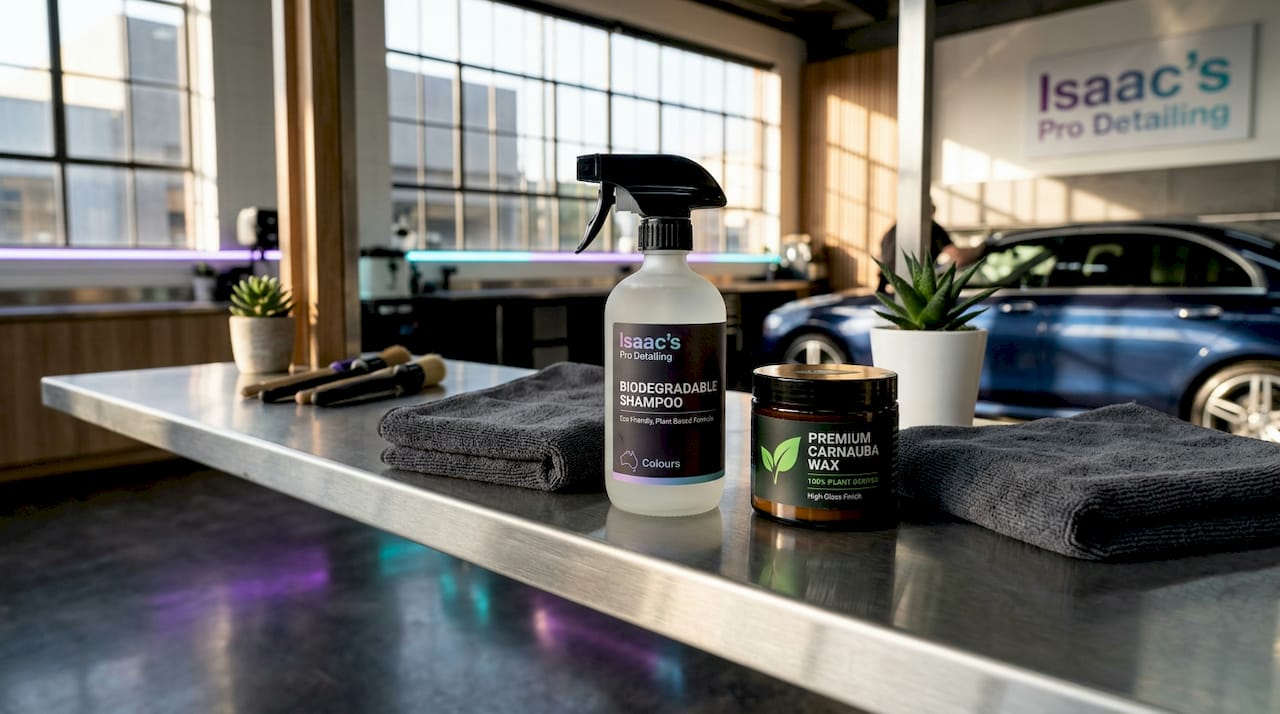
Biodegradability is the baseline. Under the EU Detergents Regulation 648/2004, surfactants in cleaning products must achieve ultimate aerobic biodegradability, meaning they fully break down into water, carbon dioxide, and biomass rather than persisting in the environment. Reputable manufacturers provide third-party certification to confirm this. If you cannot find it, that is a red flag.
However, biodegradable does not automatically mean harmless at the point of discharge. Regulatory biodegradability standards are minimums; responsible eco car care still requires proper wastewater controls and washing on surfaces that allow filtration rather than direct drain access. A product that biodegrades in 28 days under laboratory conditions still causes acute harm if it flows straight into a creek in concentrated form.
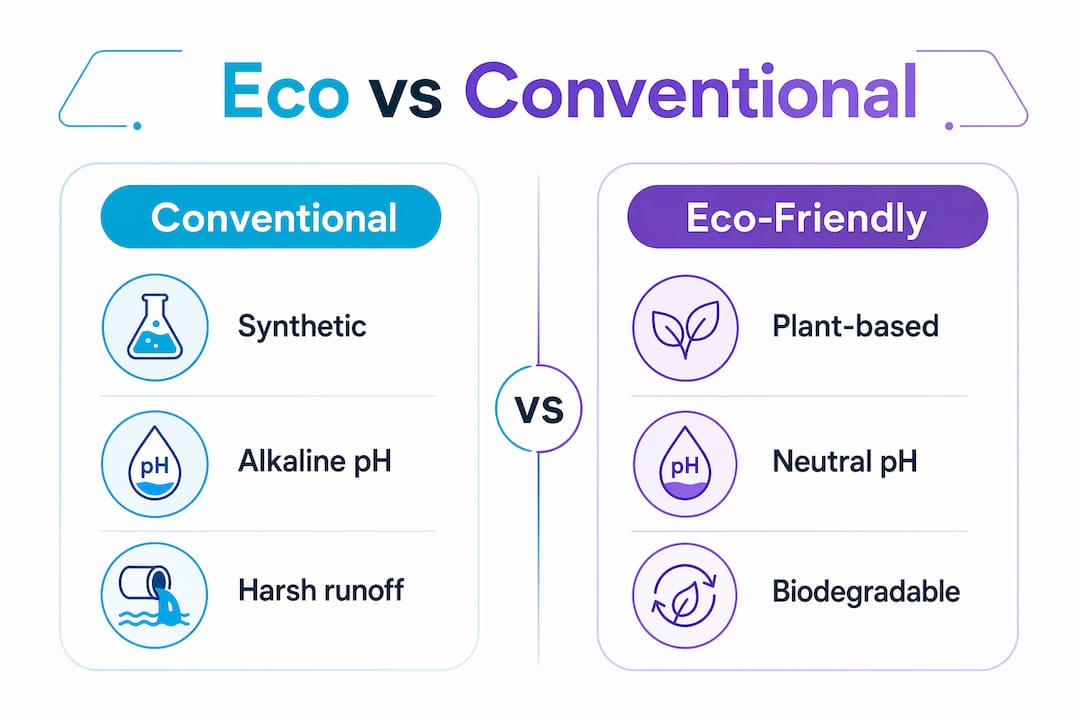
The second major factor is pH balance. Most modern vehicles wear protective coatings, either factory clear coat, aftermarket paint sealants, or ceramic coatings. Near-neutral pH shampoos (pH 6 to 8) clean effectively without stripping or degrading those layers. High-alkaline degreasers above pH 11 accelerate coating breakdown, which means you end up washing more often and using more product. That’s bad for your car and bad for the environment.
Quality eco car care products also incorporate lubricity additives in their shampoo formulas. These reduce washing-induced marring by lowering friction between the wash mitt and paint, giving you a safer clean with less mechanical abrasion.
| Feature | Conventional product | Eco-friendly product |
|---|---|---|
| Surfactant type | Synthetic, often non-biodegradable | Plant-based, biodegradable certified |
| pH range | Often highly alkaline (pH 10-13) | Near-neutral (pH 6-8) |
| Phosphate content | Frequently present | Phosphate-free |
| VOC compliance | Variable | Low or zero VOC |
| Effect on coatings | Accelerates degradation | Preserves and protects |
| Runoff safety | Harmful to aquatic life | Breaks down safely |
Eco car care products that use plant-based ingredients maintain strong cleaning performance while producing safe, non-toxic residues that break down without leaving chemical traces in soil or water.
Pro Tip: When buying car shampoo, search for the phrase “ultimate aerobic biodegradability” on the product’s technical data sheet. If the manufacturer cannot supply that document, choose a different product.
Sustainable washing techniques that actually reduce impact
Choosing better products is only half the equation. How and where you wash your car determines how much of that product actually reaches a waterway.
Professional eco car wash facilities demonstrate what water efficiency looks like at scale. Water reclamation systems can halve water consumption compared to traditional wash methods, with some operations using approximately 230 litres per vehicle, of which around 152 litres is recycled and a further 78 litres drawn from rainwater harvesting. For comparison, a typical home garden hose delivers around 1,000 litres in a 20-minute wash.
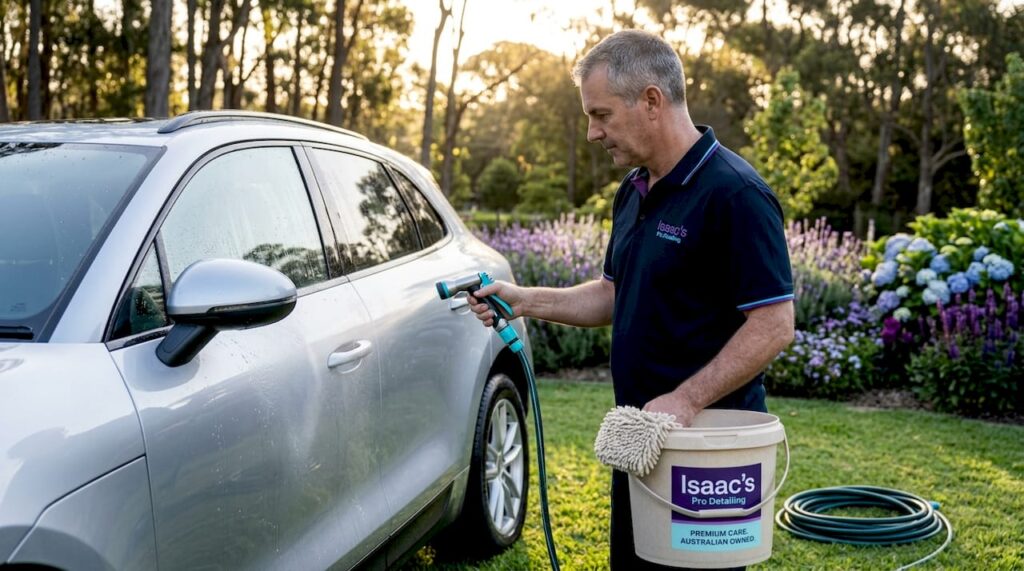
For at-home washing, location is the most underrated variable. Washing on a lawn or gravel surface allows soil and plant matter to filter chemicals before they reach groundwater, rather than sending everything straight down a drain. If you must wash on concrete, direct your runoff to a planted garden bed rather than a drain channel.
Waterless and rinseless car care products have become genuinely capable options for lightly soiled vehicles. Waterless wash effectiveness depends on technique discipline. The correct process involves panel-by-panel cleaning, using a fresh microfibre cloth for each panel, and pre-rinsing any areas with heavy mud or grit before applying product. Skipping that pre-rinse step on a dirty panel will drag abrasive particles across your paint.
Key technique adjustments worth adopting:
- Wash in the shade and in cooler parts of the day to slow product evaporation and reduce the amount of product needed
- Use two buckets, one for soapy water and one for rinsing your mitt, to keep contamination low and extend product life
- Start at the roof and work downward, so you are always washing cleaner panels before dirtier ones
- Use a pressure washer with an adjustable lance set to a wide, low-pressure fan rather than a concentrated jet, reducing both water volume and paint stress
- Apply protective coatings after each detail to repel dust and grime, which cuts the frequency of your next full wash
Pro Tip: Apply a ceramic coating to your vehicle and you will typically halve the number of full washes needed per year. Fewer washes means less product, less water, and less runoff into the environment.
Preventive maintenance is the most overlooked advantage in sustainable auto care. Protective coatings repel dirt so effectively that corrective washes become far less frequent. You spend less, use fewer resources, and your paint stays in better condition longer.
The full benefits of going green with your car care
The advantages of sustainable auto care extend well beyond the environment. Here is what shifts when you make the switch:
-
Reduced chemical exposure for you. Low-VOC, plant-based products mean you are not breathing solvent fumes or absorbing synthetic chemicals through your skin during a wash. This matters if you detail your car regularly or in an enclosed area like a garage.
-
Better protection for your paint and coatings. Gentle, pH-balanced chemistry cleans without stripping your clear coat or any protective coating you have applied. Your finish lasts longer, which means fewer corrective polishes and less material waste.
-
Lower water bills. Using waterless products, two-bucket technique, or a pressure washer with controlled flow reduces your water consumption significantly compared to a running garden hose.
-
Healthier local waterways. Every product choice you make either adds to or reduces the chemical load on your local catchment. On the Sunshine Coast, waterways feed directly into coastal ecosystems that are acutely sensitive to chemical disruption.
-
Support for businesses that do things right. Choosing eco-friendly detailing services signals market demand for sustainable practices, which pushes the broader industry toward higher standards.
-
Long-term cost savings. Protective coatings reduce cleaning frequency, biodegradable shampoos are concentrated so you use less per wash, and maintaining your finish avoids expensive paint correction work down the track.
How to build an eco-friendly car care routine
Adopting sustainable car cleaning steps does not require overhauling everything at once. Start with product swaps, then adjust technique, then build in protective treatments.
When selecting products, look for these markers:
- Third-party biodegradability certification, not just a label claim
- pH between 6 and 8 for any product that contacts paint
- Phosphate-free and low or zero VOC formulation
- Plant-derived surfactants rather than petroleum-based ones
- Concentrated formulas, which reduce packaging waste and product volume per wash
For routine washing, keep these habits consistent. Wash on grass or gravel where possible. Avoid washing on days when rain is forecast immediately afterward, which can carry undiluted product off your paint before it is rinsed properly. Use microfibre cloths rather than sponges. Sponges trap grit and grind it into your paint; microfibre lifts it away.
Time your washes strategically. Washing more frequently with less product is better than infrequent washes requiring heavy chemical degreasers to cut through built-up grime. A preventive maintenance approach with coatings and sealants actively reduces the chemical load of each subsequent clean.
Pro Tip: Avoid applying waterless wash products to panels coated in mud or thick dust. A quick pre-rinse with a low-pressure hose removes the bulk of abrasive material before you work with your microfibre. This single step prevents most of the paint scratching associated with waterless methods.
The most common mistake people make when switching to green car care is buying eco products but continuing to wash on the driveway and drain everything into the stormwater system. The product is only part of the solution. Where the water goes matters just as much.
My honest take on eco car care
I have spent years working with car paint, coatings, and cleaning chemistry, and the thing that consistently surprises people is how much better results you get when you stop fighting the car’s surface with harsh chemistry and start working with it.
Conventional wisdom in car care often defaults to stronger products as the solution to tougher dirt. In my experience, that logic does more damage than good. Aggressive alkaline degreasers strip protective layers that took time and money to apply. Then you are starting from scratch every few months, spending more on correction and reapplication, and sending more chemical waste into the environment each time.
When I shifted to pH-balanced, plant-based chemistry in my work, I did not sacrifice cleaning performance. What changed was the condition of the vehicles over time. Paint held its clarity longer. Coatings lasted closer to their rated lifespan. Customers noticed their cars looked better between services, not just immediately after.
The other thing I have observed is that people underestimate the cumulative impact of their own habits. One home wash seems inconsequential. But the same household doing that every fortnight for years, multiplied across thousands of driveways in a coastal region, adds up to a genuine ecological load. You have more influence over local water quality than you probably realise.
The shift toward eco-friendly vehicle maintenance is not a compromise. It is the smarter technical choice and the responsible one. I do not see these as separate considerations anymore.
— Isaac’s
Professional eco detailing on the Sunshine Coast
If you want to skip the guesswork on product selection and technique, Isaac’s Pro Detailing brings a fully equipped mobile detailing service directly to your home, workplace, or wherever suits you across the Sunshine Coast. Every service uses eco-certified, biodegradable products and water-efficient methods, so you get a professional result without the environmental cost of a conventional wash.

Whether you are after a thorough interior and exterior clean, paint correction, or long-term protection through ceramic coating, the full wash menu covers every level of care. Eco-conscious vehicle owners on the Sunshine Coast can book a service that matches both their standards and their values, without any compromise on results.
Common questions
What is the main environmental risk of conventional car washing?
The primary risk is untreated chemical runoff entering stormwater drains, which carries detergents, phosphates, heavy metals, and petroleum residues directly into local waterways without any treatment.
Are waterless car wash products actually safe for paint?
Yes, when used correctly. Waterless wash safety depends on technique: work panel by panel, use a clean microfibre cloth for each section, and pre-rinse heavily soiled areas before applying any product.
How does pH balance affect my car’s finish?
High-alkaline products above pH 11 degrade protective coatings and clear coat over time. Near-neutral shampoos between pH 6 and 8 clean just as effectively while preserving your paint protection.
Do eco-friendly car products clean as well as conventional ones?
Yes. Plant-based formulas maintain cleaning performance comparable to conventional products while breaking down safely after use, without leaving toxic residues in soil or water.
How often should I wash my car if I use protective coatings?
Applying a sealant or ceramic coating significantly reduces how often you need a full wash, as the coating repels dirt and contamination. Most coated vehicles require noticeably fewer product-intensive washes per year compared to unprotected paintwork.