
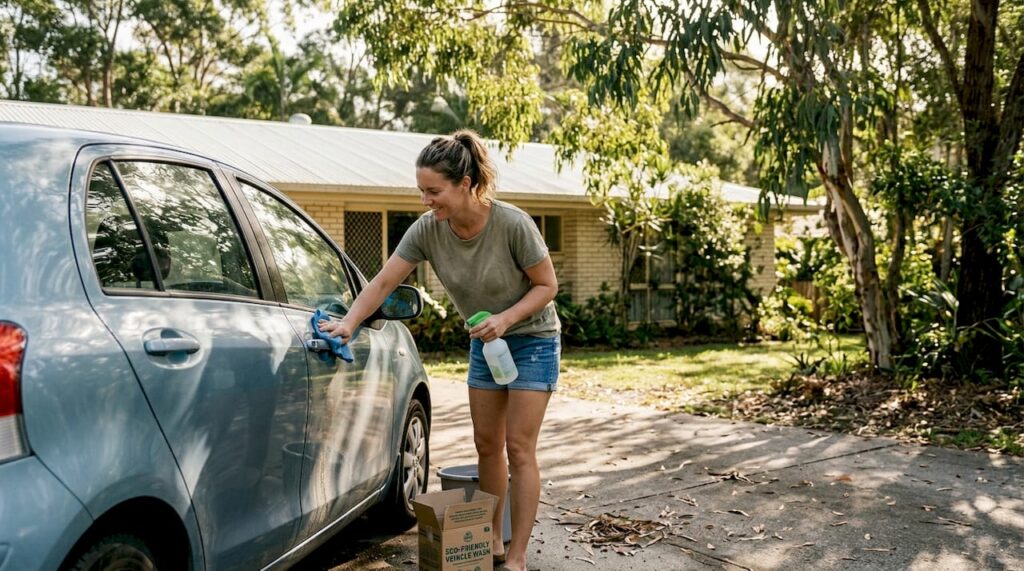
TL;DR:
- Eco-friendly car cleaning uses significantly less water and produces no harmful runoff.
- Professional methods protect vehicle paint longer and are environmentally superior to DIY washes.
- Proper techniques like washing on permeable surfaces prevent pollutants from entering Sunshine Coast waterways.
Most Sunshine Coast drivers assume a quick hose-down in the driveway is harmless. It’s not. Traditional driveway washes use 80 to 200 litres of water per car, and that chemical-laden runoff flows straight into storm drains and local waterways. Eco-friendly methods cut that to just 1 to 15 litres per wash, a saving of up to 95%. But here’s what surprises most people: greener cleaning isn’t a compromise. It often delivers better results, protects your paint longer, and costs less over time. This guide breaks down exactly how eco-friendly car cleaning works, why it matters specifically for Sunshine Coast drivers, and which methods suit your situation best.
Table of Contents
- Why eco-friendly car cleaning matters on the Sunshine Coast
- Eco-friendly car cleaning methods explained
- Comparing eco-friendly and traditional car washes
- Common pitfalls and pro tips for sustainable car cleaning
- What most car owners get wrong about eco-friendly cleaning
- Book a smarter, greener car clean
- Frequently asked questions
Key Takeaways
| Point | Details |
|---|---|
| Massive water savings | Eco-friendly car cleaning uses 90-95% less water than traditional methods. |
| Cleaner, greener results | Steam and waterless methods deliver excellent results with minimal harm to the Sunshine Coast environment. |
| Professional edge | Mobile detailing with water reclaim systems is often greener than DIY washing at home. |
| Watch for pitfalls | Avoid common mistakes like washing on hard surfaces and misusing microfibres to stay truly eco-friendly. |
Why eco-friendly car cleaning matters on the Sunshine Coast
The Sunshine Coast is one of Queensland’s most ecologically sensitive regions. Its beaches, estuaries, and marine parks depend on clean water flowing through the stormwater network. When you wash your car on a hard surface like a driveway or street, every drop of soapy, oily water runs directly into that network without any filtration. That’s not a minor issue.
Conventional car washing sends detergents, heavy metals from brake dust, and petroleum residues straight into local creeks and coastal waters. Coastal areas like the Sunshine Coast require extra care with stormwater to prevent pollution of local waters by chemicals and debris from car washing. The Sunshine Coast Council actively discourages driveway washing and encourages residents to use commercial facilities or eco-friendly alternatives that control runoff.
Here’s what makes the local context even more urgent for vehicle owners:
- Salt air from the ocean accelerates corrosion on paint, metal trim, and undercarriage components
- Fine beach sand acts as an abrasive that scratches clear coat when wiped dry
- Intense UV radiation on the Sunshine Coast degrades unprotected paint faster than in cooler climates
- Storm events can carry polluted runoff directly into Mooloolaba, Noosa, and Caloundra waterways within hours
The good news is that eco-friendly methods address all of these risks at once. They use pH-neutral, biodegradable products that are gentler on your vehicle’s surfaces while producing zero harmful runoff. And the water savings are dramatic: professional eco-washes recycle up to 80% of the water they use, making them far more sustainable than anything you’d manage at home.
For a broader picture of how these principles apply locally, the Sunshine Coast eco-cleaning guide covers region-specific considerations in detail. If you’re curious about how professional operators manage waste water on-site, detailing with minimal runoff explains the practical workflow.
Did you know? A single driveway car wash can release the same volume of chemical pollutants as several litres of used motor oil entering local waterways.
Eco-friendly car cleaning methods explained
Understanding the ‘why’ makes the eco-friendly approach compelling. But how do the most effective methods work in practice?
There are five main methods worth knowing. Each suits different levels of soiling and different situations.
- Waterless spray wash — A spray-on, wipe-off product that encapsulates dirt particles so they lift cleanly without scratching. Best for lightly soiled vehicles. Uses as little as 1 litre per vehicle and produces zero runoff.
- Steam cleaning — High-temperature steam loosens grime, kills bacteria, and sanitises interiors without chemicals. Steam cleaning kills 99% of bacteria using minimal water. Excellent for interiors, engine bays, and heavily soiled surfaces.
- Two-bucket wash with grit guards — One bucket holds clean soapy water, the other holds rinse water. Grit guards trap debris at the bottom so your wash mitt stays clean. Reduces contamination and water waste significantly.
- Low-flow hose with trigger nozzle — Replaces a running hose with a controlled spray. Simple but effective. Reduces water use by 50 to 70% compared to an open hose.
- Sheeting rinse — A final rinse technique where water is applied in a thin sheet across the panel, encouraging it to run off cleanly rather than pooling. Reduces drying time and water volume.
| Method | Water use | Best for | Runoff risk |
|---|---|---|---|
| Waterless spray | 1 litre | Light dust, quick refresh | None |
| Steam cleaning | 2 to 5 litres | Heavy soiling, interiors | None |
| Two-bucket wash | 15 to 30 litres | Regular full wash | Low |
| Low-flow hose | 30 to 60 litres | Moderate dirt | Medium |
| Traditional hose | 80 to 200 litres | Any | High |
For Sunshine Coast conditions specifically, waterless and steam methods are ideal after beach trips when salt and sand are the primary concerns. Water savings can reach 90 to 95% compared to standard driveway methods.
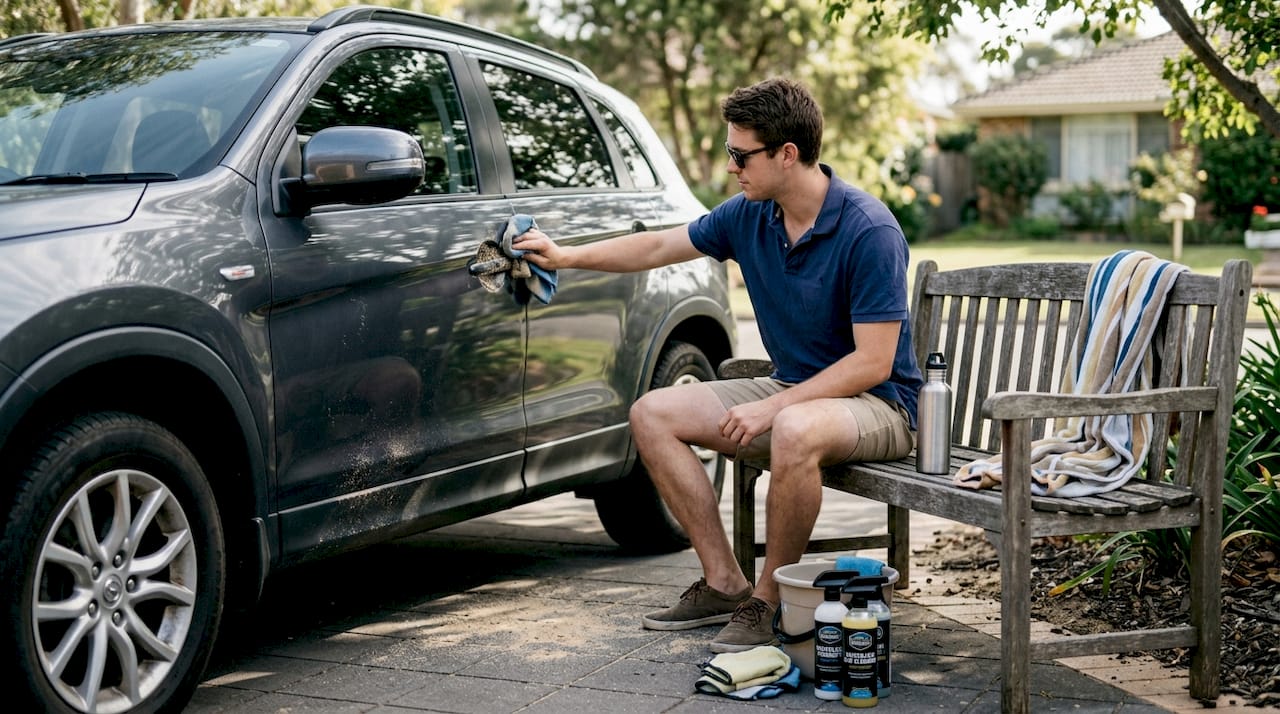
Pro Tip: Wash your microfibre cloths in a dedicated laundry bag designed to catch microfibres. Standard washing machine filters don’t capture these tiny plastic threads, and they end up in waterways. A microfibre filter bag costs under $20 and makes a genuine difference.
For a practical walkthrough of the full process, the step-by-step eco-cleaning guide is a useful companion.
Comparing eco-friendly and traditional car washes
With each method laid out, it’s natural to wonder: how much difference does choosing an eco-friendly approach genuinely make?
The numbers are striking. Traditional automatic car washes use 150 to 190 litres per vehicle, while manual DIY washes average 100 to 120 litres. Professional eco-friendly services recycle water and use biodegradable detergents to dramatically reduce that impact. Carbon emissions tell a similar story: hand washing produces 0.88 to 1.75 kg of CO2 per vehicle, jet washing 1.45 to 2.74 kg, tunnel washes 2.07 to 3.69 kg, and rollover machines up to 4.46 kg.
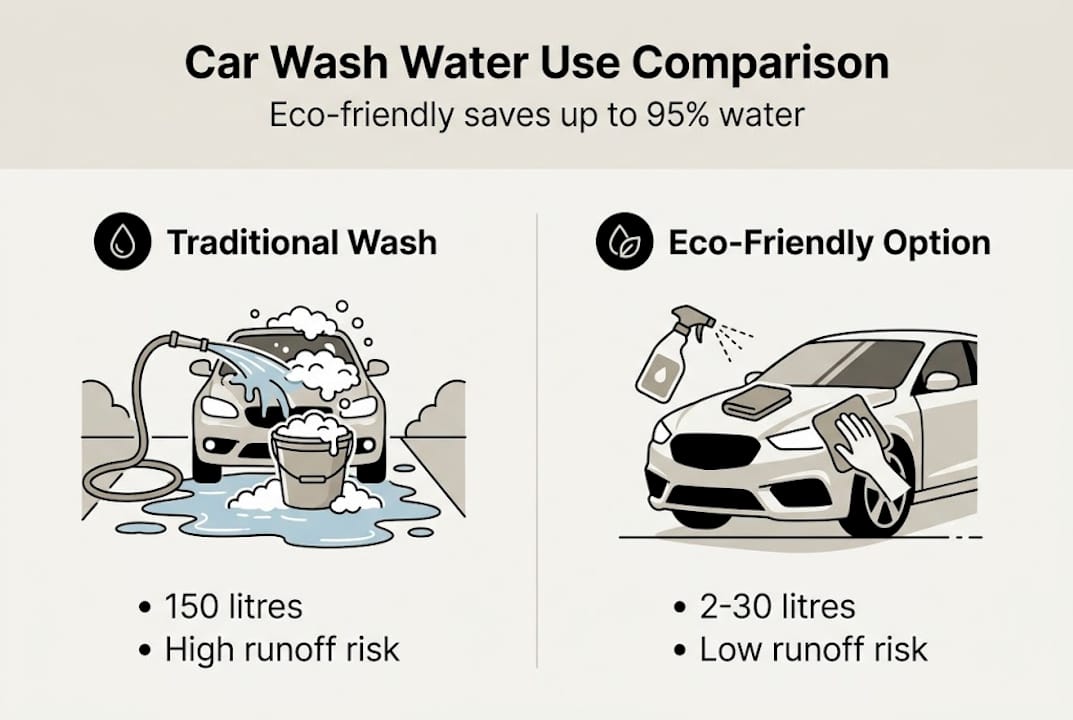
| Factor | Traditional wash | Professional eco-wash |
|---|---|---|
| Water use | 100 to 200 litres | 2 to 30 litres |
| CO2 per wash | 1.75 to 4.46 kg | Under 1 kg |
| Chemical runoff | High | Near zero |
| Paint protection | Minimal | High (pH-neutral products) |
| Long-term cost | Higher (paint damage) | Lower (protective coatings) |
Beyond the environmental numbers, eco-friendly cleaning protects your vehicle’s resale value. Harsh detergents and abrasive techniques used in conventional washes strip wax, dull clear coat, and accelerate oxidation. Over time, that costs you money when it’s time to sell.
That said, there are situations where a traditional wash may still be necessary, such as after off-road driving with heavy mud or following a flood event. In those cases, use a commercial facility with proper water treatment rather than washing on your driveway. It’s a small step that keeps pollutants out of local waterways.
- Choose eco-methods for regular maintenance washes
- Use commercial facilities for extreme soiling events
- Avoid driveway washing entirely when possible
- Consider protective coatings to reduce how often deep cleaning is needed
If time is a factor in your decision, mobile detailing time savings explains how professional services fit around your schedule. And if resale value matters to you, boost resale with green detailing covers the financial case in depth.
Common pitfalls and pro tips for sustainable car cleaning
No matter which method you choose, it’s easy to accidentally undermine your good intentions. Let’s look at mistakes to avoid and habits to build.
The most common errors Sunshine Coast drivers make include washing on concrete or bitumen, reusing dirty rinse water, and ignoring EV-specific requirements. Each of these mistakes either increases pollution or risks damaging your vehicle.
Mistakes to avoid:
- Washing on hard surfaces where runoff flows to storm drains
- Using the same bucket of water repeatedly until it’s grey with grime
- Applying pressure washing near EV charge ports or sensors
- Using generic household detergents that strip protective coatings
- Letting soapy water dry on panels in direct sun, which leaves water spots and residue
Best practice steps:
- Wash on a lawn or permeable surface so water filters naturally through soil rather than running off
- Pre-rinse with a waterless spray to remove loose debris before any contact wash
- Use two buckets and change your water when it becomes visibly dirty
- Work in the shade to prevent products drying prematurely
- Finish with a spray sealant or quick detailer to extend protection between washes
For electric vehicles, there are additional considerations. Avoid pressure cleaning near charge ports and never clean your EV while it’s charging. Always use pH-neutral detergents that won’t interfere with sensitive electronics or seals.
Pro Tip: Wash microfibre cloths separately from regular laundry and use a cold, gentle cycle. Hot water breaks down the fibres faster and increases microplastic shedding. A dedicated microfibre detergent also helps maintain their cleaning performance over time.
Local council rules on the Sunshine Coast make driveway washing a genuine compliance issue, not just an environmental preference. Professional services with water reclaim systems handle this automatically, removing the risk entirely. For families managing multiple vehicles, eco detailing for families and best mobile detailing practices offer practical guidance.
What most car owners get wrong about eco-friendly cleaning
After covering the practical details, let’s step back and challenge the conventional wisdom.
Most drivers assume that doing it yourself at home is automatically the greener option. That assumption made sense 20 years ago. It doesn’t hold up now. On the Sunshine Coast, a DIY driveway wash almost always produces more runoff, uses more water, and applies harsher products than a professional mobile eco-detailer would.
We’ve seen this pattern repeatedly. A well-meaning car owner spends 45 minutes hosing down their vehicle on the driveway, using a bottle of supermarket car wash, and congratulates themselves on saving money. Meanwhile, that runoff carries brake dust, oil residue, and detergent straight into the nearest drain. The vehicle also gets no protective treatment, so salt and UV damage accelerate between washes.
Professional services with reclaim systems are genuinely superior to DIY for runoff control. They also apply protective coatings that reduce how often your car needs cleaning in the first place. Fewer washes means less water, less product, and less time. That’s the real efficiency gain that most people miss.
The eco detailing expertise available locally on the Sunshine Coast means you don’t have to choose between convenience and environmental responsibility. You can have both.
Book a smarter, greener car clean
Ready to make your next car clean both greener and more effective? Here’s how to take the next step on the Sunshine Coast.
At Isaac’s Pro Detailing Sunshine Coast, we bring professional eco-friendly car care directly to your home, workplace, or favourite beach car park. Our mobile service uses minimal water, biodegradable products, and proper runoff control so your vehicle gets the care it deserves without harming local waterways.
Whether you want to understand the mobile detailing workflow, pick up pro detailing tips for maintaining your finish between visits, or explore our in-depth local eco-cleaning guide, we’ve got you covered. Get in touch today and give your car the clean it needs without the environmental cost.
Frequently asked questions
How much water can I save with eco-friendly car cleaning?
Eco-friendly methods can cut water use by 90 to 95%, using as little as 1 to 15 litres per car compared to 80 to 200 litres for traditional driveway washes.
Is professional eco-friendly detailing better for the environment than washing at home?
Yes. Professional services recycle up to 80% of their water and manage runoff properly, making them significantly greener than most DIY home washes.
Are eco-friendly car cleaning products safe for my vehicle’s paint and interior?
Absolutely. Quality eco-friendly products are pH-neutral and suitable for sensitive finishes including EVs, and they clean effectively without leaving harmful residues.
What’s the best way to prevent chemical runoff into Sunshine Coast waterways?
Wash your car on a lawn or use a professional service with a water reclaim system. Washing on permeable surfaces allows natural filtration and keeps pollutants out of storm drains and local waterways.