
TL;DR:
- The Sunshine Coast’s bright sunlight accelerates interior damage in vehicles through UV rays and heat, causing fading and cracking across materials. Proper protection methods, including window tinting, surface protectants, and regular professional detailing, can significantly extend interior lifespan and preserve resale value. Consistent preventive measures are more cost-effective and beneficial than costly repairs or replacements caused by neglect.
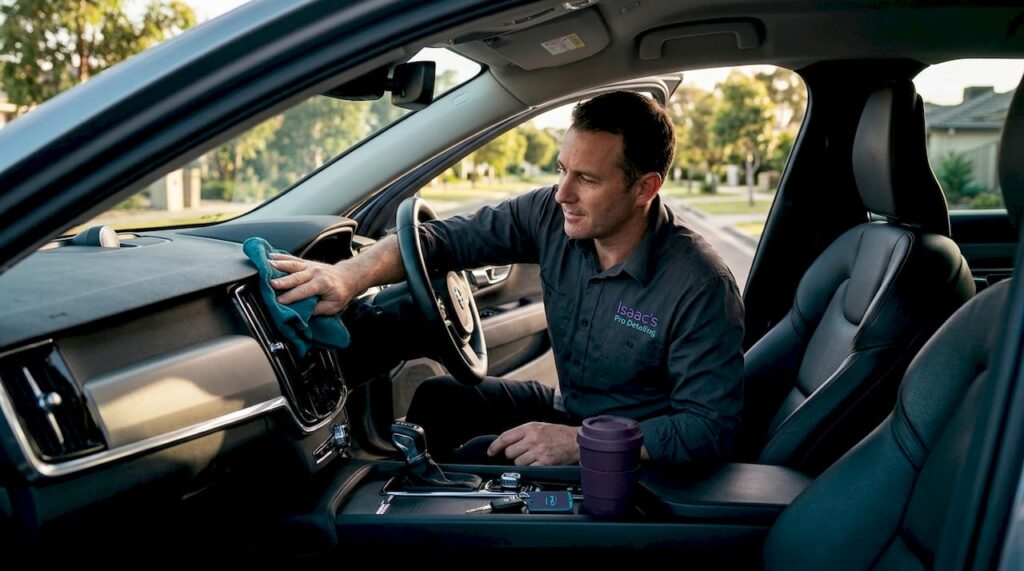
The Sunshine Coast is one of Australia’s most enviable places to live, but that same glorious sunshine that draws people here is quietly working against your car’s interior every single day. Most vehicle owners assume their cabin is shielded simply because the windows are up, but UV rays penetrate car windows, causing fading, cracking, and material breakdown across leather, vinyl, plastic, and fabric — all made worse by interior temperatures that regularly exceed 71°C. The result is an interior that ages years faster than it should, dragging down both comfort and resale value in the process.
Table of Contents
- Why your car’s interior needs serious protection
- Common types of interior damage and their impacts
- Proven methods to protect your car’s interior
- The real cost of neglect: maintenance vs. repairs
- Why quick fixes won’t work: a detailer’s perspective
- Protect your interior for years – with expert mobile detailing
- Frequently asked questions
Key Takeaways
| Point | Details |
|---|---|
| UV damage is real | Sunshine Coast interiors face measurable UV and heat damage even with closed windows. |
| Prevention beats repair | Routine protection and cleaning extend interior life and save money compared to restoration costs. |
| Layer protection methods | Combining window tint, protectants, and maintenance delivers the best results for your car’s interior. |
| Professional help pays off | Expert mobile detailing saves busy owners time and maximises the benefits of advanced protection. |
Why your car’s interior needs serious protection
Most people treat interior protection as an afterthought. You wash the outside, maybe vacuum the floors, and call it done. But the threats working against your interior are invisible, persistent, and surprisingly powerful even with every window closed.
UV radiation does not stop at glass. UV transmission through side windows averages 0.34 to 1.70 mW/cm², roughly one-seventh of direct outdoor levels — but that is still more than enough to bleach your dash, stiffen your leather, and yellow your plastics over a few seasons. Front windshields are somewhat better, averaging 0.21 to 0.80 mW/cm², yet they still let through meaningful radiation every time you drive or park.
Heat compounds the problem dramatically. When a dark-coloured car sits in the Sunshine Coast sun for a couple of hours, interior temperatures can hit levels that would make an oven blush. Plastics warp, adhesives fail, and leather loses its natural oils faster than any amount of conditioning can replace them.
Cleaning removes dirt, but it does nothing to stop UV penetration or heat stress. Real interior protection requires a deliberate strategy, not just a wipe-down.
Here is what actually breaks down without proper protection:
- Leather seats dry out, crack along stress lines, and develop permanent discolouration that is expensive to restore
- Vinyl surfaces become brittle and split, particularly on dashboards and door cards
- Fabric upholstery fades unevenly, with sun-facing sections turning noticeably lighter than shadowed areas
- Plastic trim and bezels yellow, chalk, and lose their surface finish entirely
- Headliners sag and detach as adhesive fails under repeated heat cycling
There are compelling reasons to maintain vehicle interiors beyond aesthetics — air quality, driver comfort, and long-term asset value all depend on the health of your cabin materials.
With the risks clearer, let’s look at how fast and how severely unprotected interiors can deteriorate.
Common types of interior damage and their impacts
The damage does not always announce itself loudly. It creeps. A slight yellowing here, a hairline crack there, a faint musty odour after a wet week — and then one day you sit in your car and realise it looks and feels a decade older than it is.
UV rays cause fading, cracking, and breakdown across every material found in a modern car cabin. Understanding which materials are most vulnerable helps you prioritise where to focus your protection efforts first.
| Interior material | Primary threat | Common damage | Repair cost estimate |
|---|---|---|---|
| Leather seats | UV and heat | Cracking, fading, peeling | $300 to $1,500+ |
| Vinyl dash and trim | UV and heat | Brittleness, yellowing, splitting | $200 to $900+ |
| Fabric upholstery | UV and moisture | Fading, staining, odour | $150 to $700+ |
| Plastic trim | UV | Chalking, discolouration, hazing | $100 to $500+ |
| Rubber seals and mats | Heat and ozone | Cracking, hardening, shrinkage | $50 to $400+ |
| Headliner | Heat and adhesive failure | Sagging, peeling | $200 to $800+ |
The financial impact adds up fast. A full interior restoration on a mid-size sedan can easily reach several thousand dollars, and that assumes the damage has not progressed to the point where replacement is the only option.
Beyond cost, there is the impact on your everyday experience. Cracked leather is uncomfortable and unhygienic. A yellowed dash creates glare that actually affects driving safety. Persistent odours from degraded materials make every trip unpleasant, no matter how much air freshener you spray. Understanding boosting value and longevity through early preventive action is the smartest approach any Sunshine Coast driver can take.
The car interior cleaning process is a great starting point, but it needs to sit within a broader protection strategy to be truly effective long-term.
Now that we know which issues to watch for, let’s focus on proactive protection.
Proven methods to protect your car’s interior
Good news: protecting your interior is not complicated. It does require consistency and the right layering of approaches, but most of it is straightforward to implement whether you are doing it yourself or relying on a professional.
Window tinting blocks 99% of UV and infrared radiation and represents the single most impactful first step any vehicle owner can take. Quality ceramic tint does not just reduce fading — it also cuts cabin heat significantly, making your air conditioning work less hard and extending the life of every material inside your car.
Here is a proven protection sequence that actually works:
- Install quality window tint on all side windows and the rear glass. This alone eliminates the majority of UV exposure that reaches your interior surfaces every day.
- Apply a UV-protective coating or protectant to leather, vinyl, and plastic surfaces. These products create a sacrificial layer that takes the UV hit rather than your materials.
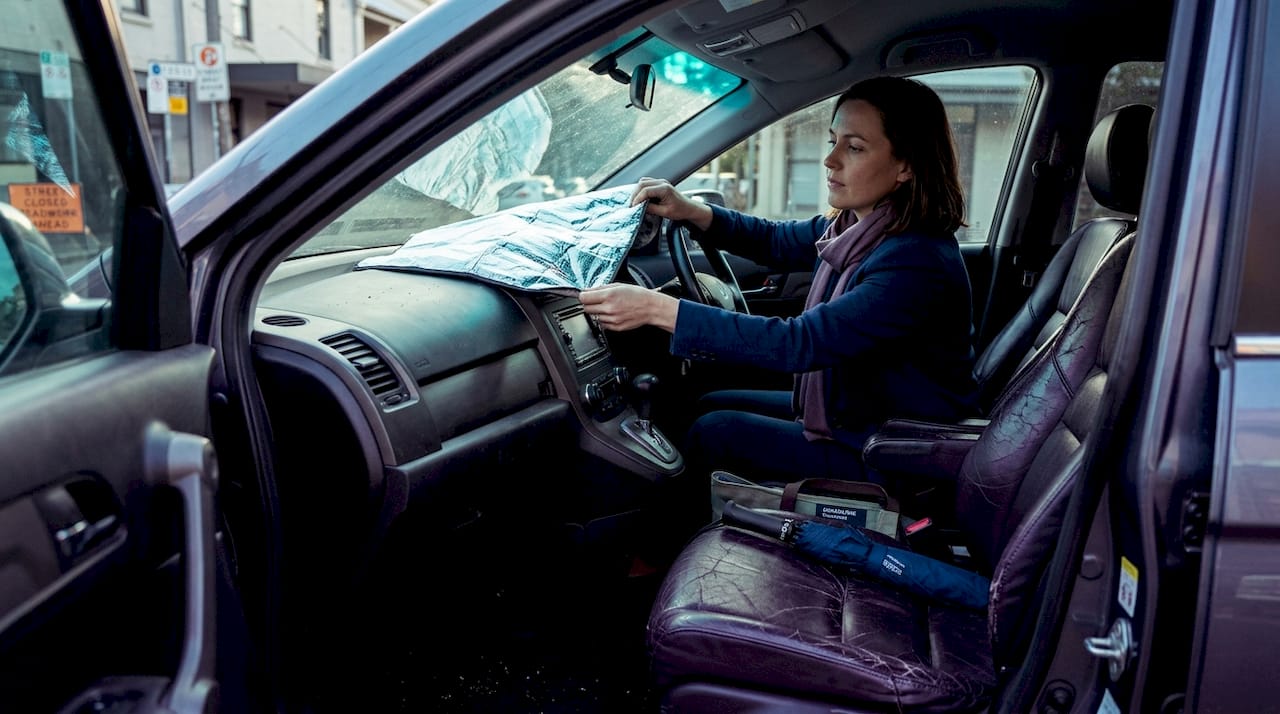
- Use a folding windshield sunshade every time you park outdoors. A quality reflective sunshade can reduce dashboard temperatures by 15 to 20 degrees Celsius, which makes a real difference to material longevity.
- Clean interior surfaces regularly using pH-balanced products suited to each material type. Dirt and oils accelerate surface degradation, especially on leather.
- Condition leather and treated vinyl every three to six months to replenish oils and maintain flexibility. Dry leather cracks. Well-conditioned leather lasts decades.
- Book a professional interior detail at least twice a year to extract embedded grime, treat all surfaces with appropriate protectants, and address any early damage before it becomes serious.
| Protection method | Cost range | DIY suitability | Longevity of protection |
|---|---|---|---|
| Windshield sunshade | $20 to $60 | Very easy | Ongoing with daily use |
| Interior protectant spray | $15 to $50 | Easy | 2 to 4 months |
| Window tinting | $200 to $600 | Professional recommended | 5 to 15 years |
| Leather conditioning | $20 to $80 | Easy to moderate | 3 to 6 months |
| Fabric protection treatment | $30 to $100 | Moderate | 6 to 12 months |
| Professional interior detail | $150 to $400+ | Professional service | Quarterly recommended |
Pro Tip: Do not apply a generic “all-surface” protectant to every material and assume you are covered. Leather, vinyl, and fabric each need specific products. Using a fabric protectant on leather, for example, can actually strip away the natural oils you are trying to preserve.
For deeper guidance on keeping your cabin in top condition, the professional maintenance tips and interior cleaning methods resources cover each surface type in practical detail.
Having outlined what works, let’s consider the real cost of ignoring these steps.
The real cost of neglect: maintenance vs. repairs
Here is the uncomfortable truth that most car owners only discover too late: the gap between prevention and restoration is enormous, both financially and emotionally.
Heat and UV damage can cost hundreds to thousands of dollars in restoration work once it takes hold. A cracked leather seat that could have been prevented with a $30 conditioner and some shade parking can cost $500 to $1,200 to professionally repair. A sun-damaged dashboard that might have lasted 20 years with proper tinting can start failing within five years in Queensland’s climate.
Consider the typical cycle of neglect and what it actually costs:
- Year one: Interior looks fine. Some minor fading on the dash begins but goes unnoticed. Cost of prevention: $50 to $100 in protectants and a sunshade.
- Year two to three: Leather starts showing hairline cracks. Plastic trim begins to haze. Odours develop from trapped moisture and degraded materials. Cost of correction at this stage: $200 to $600.
- Year four to five: Significant cracking on seats, yellowed dash, faded fabric panels. Resale value drops noticeably. Buyers see it immediately and negotiate hard. Cost of restoration or resale loss: $1,500 to $4,000+.
Spending $150 to $300 on a quality professional detail twice a year is not an extravagance. It is straightforward financial logic. Regular cost-effective car detailing tips make this kind of preventive schedule achievable without blowing the budget.
Pro Tip: Before you trade in or sell your vehicle, factor in that buyers and dealers both immediately assess interior condition. A well-maintained interior can add thousands to a private sale price and dramatically improves trade-in negotiations. Buyers pay premium for evidence of care.
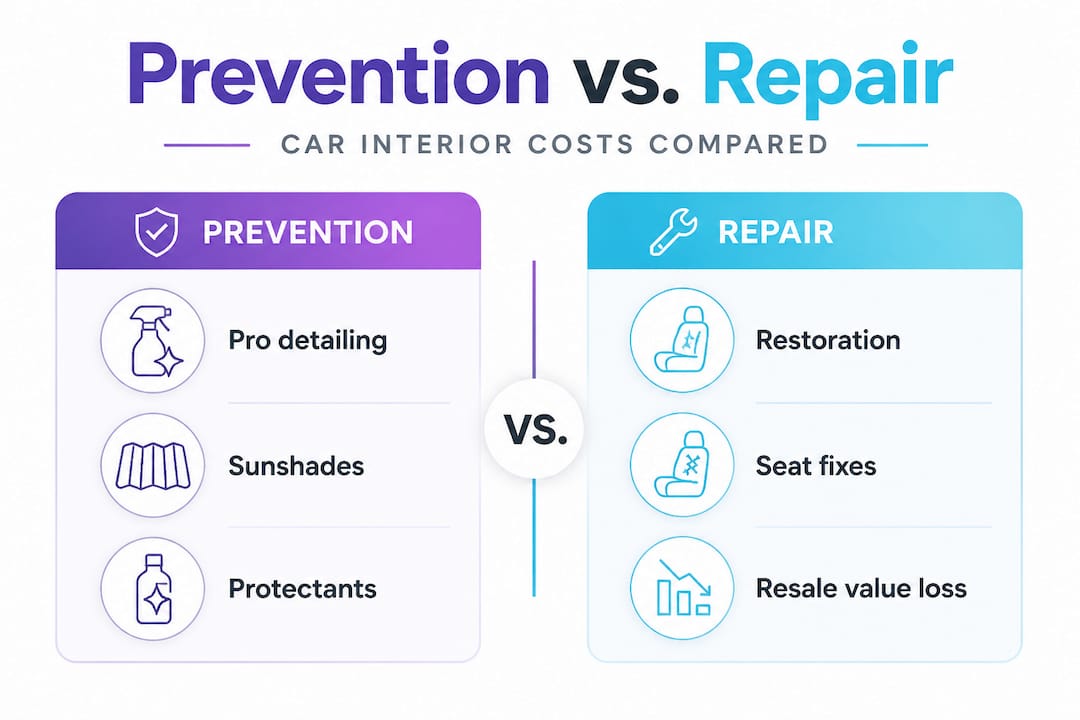
The calculation is simple. A few hundred dollars a year in prevention versus several thousand in repairs or lost resale value. There is only one sensible path forward.
Why quick fixes won’t work: a detailer’s perspective
After working with hundreds of vehicles across the Sunshine Coast, we have noticed the same pattern over and over again. Owners reach for the air freshener when they should be reaching for an extractor. They spot-clean a stain but ignore the cracking leather three centimetres away. They buy a bottle of leather conditioner, use it once after reading this kind of article, and then forget about it for three years.
Quick fixes are satisfying in the moment. They mask symptoms. But they do not address the underlying cause, which is ongoing UV and heat exposure to materials that need consistent, layered protection to survive Queensland’s climate.
The real gold standard is this: window tint to block the radiation before it reaches your cabin, followed by surface-specific protectants applied regularly, combined with professional interior detailing that goes beyond a surface clean. This is not an opinion. This is what full-protection detail strategies consistently show deliver the best long-term results.
What surprises most people is that the cost of doing this properly is far less than they imagine, especially when you factor in what they are protecting. A vehicle worth $25,000 to $60,000 deserves better than a quarterly vacuum and a dangling air freshener.
The small steps you skip today, the conditioning session you postpone, the tint installation you keep putting off, the professional detail you cancel because it feels like an unnecessary expense, these become the big restoration bills and the disappointed buyers you face in three years. Sunshine Coast drivers are savvy people. Make the smart call early.
Protect your interior for years – with expert mobile detailing
You know what needs to be done. The challenge for most busy Sunshine Coast vehicle owners is finding the time and the right professional to do it properly.
That is exactly where Isaac’s Pro Detailing Sunshine Coast removes every barrier. Our fully mobile service comes to your home, your workplace, or wherever your day takes you, delivering flawless finish detailing without disrupting your schedule. From fabric and leather protection treatments through to deep seat and carpet extraction, odour elimination, and ceramic coatings, every service is designed to give your interior the defence it needs against Sunshine Coast conditions. See how our mobile detailing workflow delivers a complete, professional result at your door — no drop-offs, no waiting rooms, just exceptional care where you need it.
Frequently asked questions
Does window tint really prevent interior fading?
Quality window tint blocks up to 99% of UV, significantly slowing fading and crack formation across all interior materials, making it the most impactful single protection step you can take.
Is heat alone as damaging as sunlight for car interiors?
Both work together, but UV is the primary driver of fading and cracking in interior materials; heat accelerates this process by drying out and stressing materials that UV has already weakened.
How often should you apply interior protectants?
Most quality interior protectants need reapplication every three to six months, though vehicles parked outdoors regularly in harsh Sunshine Coast conditions may benefit from more frequent treatment closer to every eight to ten weeks.
Can all interior materials be protected the same way?
No. Leather, vinyl, and fabric each require specific products formulated for their unique properties; using the wrong product can strip protective coatings or leave surfaces more vulnerable than before.
What is the easiest step to start with for busy vehicle owners?
Start with a quality reflective windshield sunshade and make a habit of parking in shade wherever possible, then book a professional detail to bring your interior back to a protected baseline you can maintain from there.
Recommended
- Why Maintain Car Interiors: Boost Value, Health & Longevity
- Why Maintain Vehicle Interiors: Protect Value, Health, Comfort
- Essential Tips For Maintaining Your Vehicle Interior Like A Pro
- Why Detail Your Car Regularly For Lasting Value In 2026
- Elite scratch protection for your luxury car in Fort Lauderdale – Many Ceramic Pro Touch