
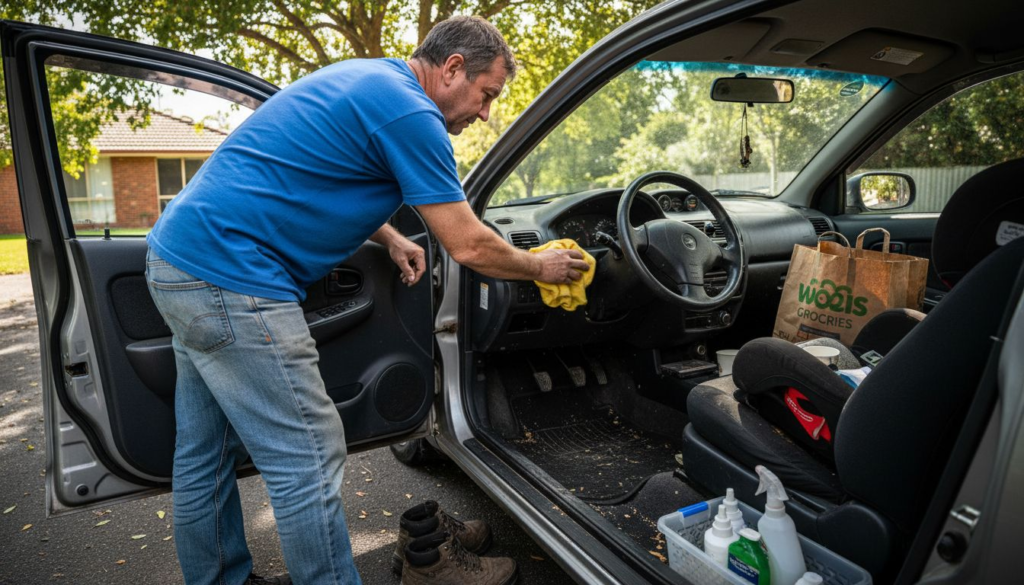
Messy car interiors are a common challenge for busy Sunshine Coast households and professionals, especially when pets are regular passengers. Creating a safe, organised workspace before cleaning is a smart first step, as recommended by the National Road Safety Partnership Program. This guide highlights the importance of strategic preparation for efficient, eco-friendly interior maintenance, showing how the right tools and techniques help keep your vehicle hygienic and looking its best.
Table of Contents
- Step 1: Prepare And Organise Your Vehicle For Cleaning
- Step 2: Remove And Vacuum Loose Debris From Surfaces
- Step 3: Clean And Extract Seats, Carpets And Mats
- Step 4: Sanitise And Detail All Interior Surfaces
- Step 5: Protect And Verify Cleanliness For Lasting Freshness
Quick Summary
| Key Point | Explanation |
|---|---|
| 1. Prepare your workspace effectively | Clean in a ventilated area with good lighting and remove personal items from the vehicle interior for a better cleaning process. |
| 2. Use proper vacuuming techniques | Start vacuuming from the top and move downwards to avoid redistributing dust, paying attention to tight spaces and crevices. |
| 3. Select appropriate cleaning solutions | Different upholstery types require specific cleaning methods; always test solutions on hidden areas first to avoid damage. |
| 4. Focus on sanitisation of high-touch areas | Systematically disinfect critical surfaces like the steering wheel and handles with hospital-grade disinfectants for hygiene. |
| 5. Implement protective measures after cleaning | Apply protectants and cover seats to maintain cleanliness and prevent future contamination, ensuring lasting freshness in your vehicle. |
Step 1: Prepare and organise your vehicle for cleaning
Getting your vehicle ready for a thorough interior cleaning requires strategic preparation and smart organisation. Before diving into the deep clean, you’ll need to set up a workspace that allows efficient and comprehensive vehicle interior maintenance.
Start by finding a suitable location for cleaning – preferably a level surface away from direct sunlight and with ample space to move around your vehicle. When preparing your workspace, basic vehicle pre-start checks are essential for creating a safe cleaning environment. Here are the key preparation steps:
- Park your vehicle in a well-ventilated area with good lighting
- Remove all personal items from the interior, including:
- Loose papers and documents
- Electronic devices
- Small personal accessories
- Rubbish and unnecessary items
- Gather your cleaning supplies before starting, including:
- Microfibre cloths
- Interior cleaning solutions
- Vacuum cleaner with attachments
- Soft-bristled brushes
- Protective gloves
By methodically preparing your vehicle and workspace, you’ll create an efficient cleaning environment that allows for a thorough and systematic interior detailing process.
Here’s a quick comparison of key equipment for vehicle interior cleaning and their ideal uses:
| Cleaning Tool | Ideal Use | Benefits |
|---|---|---|
| Microfibre cloths | All surfaces, dusting and wiping | Scratch-free, reusable |
| Soft-bristled brushes | Agitating fabric and small gaps | Reaches crevices gently |
| Handheld vacuum | Seats, carpets, and corners | Portable, precise suction |
| Wet-dry extractor | Deep cleaning upholstery & mats | Removes moisture and dirt |
| Interior protectant | Dashboards, vinyl, and trim | Reduces UV and fading |
Proper preparation is 50% of a successful car interior cleaning project.
Pro tip: Keep a dedicated cleaning kit in your vehicle to make future interior maintenance faster and more convenient.
Step 2: Remove and vacuum loose debris from surfaces
Removing loose debris is a critical first step in thoroughly cleaning your vehicle’s interior. By systematically clearing out dirt, dust, and random items, you’ll create a clean foundation for deeper cleaning and detailing.
Begin by using a high-efficiency vacuum cleaner designed to effectively capture fine particles without redistributing them. Start from the top of your vehicle’s interior and work downwards, ensuring comprehensive coverage:
- Prepare your vacuum with appropriate attachments
- Remove floor mats and shake out loose debris outside the vehicle
- Vacuum systematically using these techniques:
- Start with dashboard and console surfaces
- Move to seat crevices and between seats
- Vacuum floor areas thoroughly
- Use crevice tools for tight spaces
Careful and methodical vacuuming prevents spreading dirt and minimises potential damage to interior surfaces.
Pay special attention to areas that collect debris, like seat seams, air vents, and storage compartments. Removing loose items not only improves cleanliness but also prevents potential hazardous projectile risks during sudden vehicle movements.
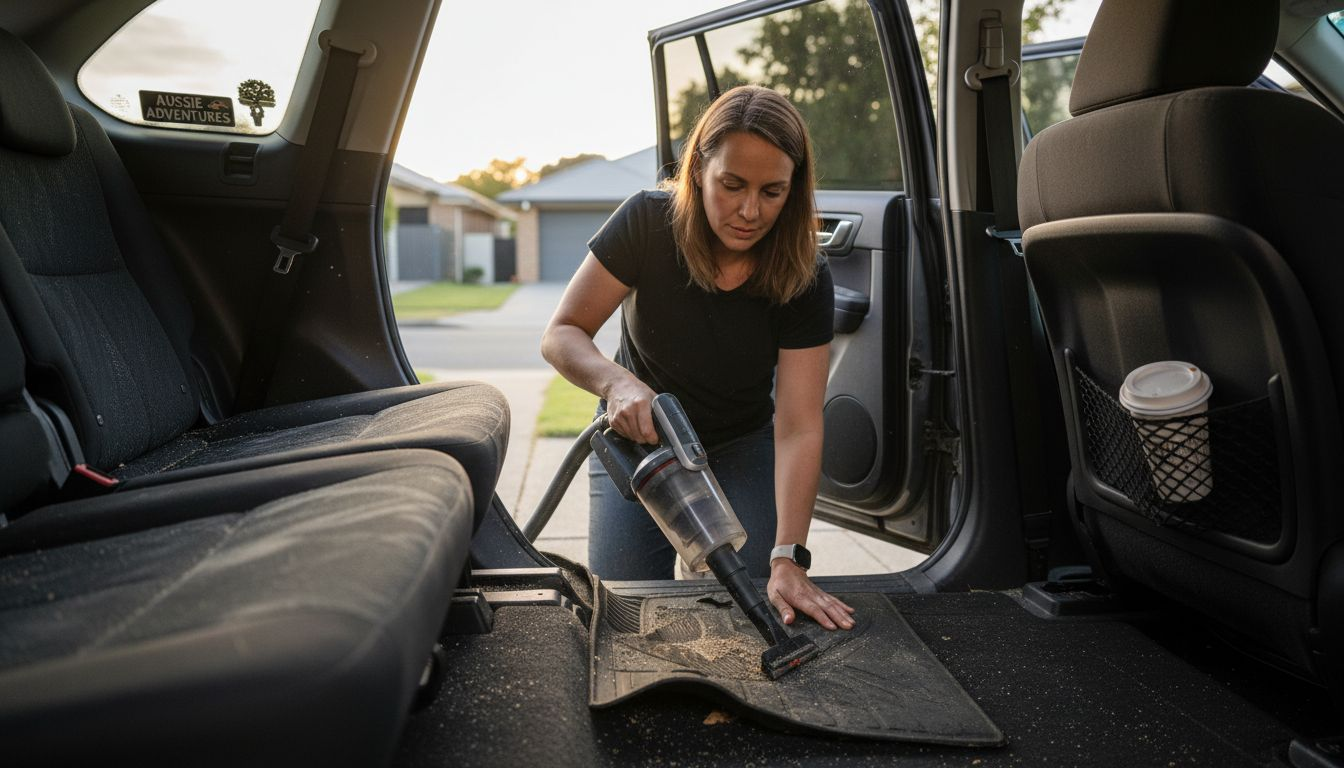
Pro tip: Invest in a compact, powerful handheld vacuum with multiple attachments for more efficient and thorough interior cleaning.
Step 3: Clean and extract seats, carpets and mats
Deep cleaning your vehicle’s upholstery requires a systematic approach to effectively remove dirt, stains, and potential allergens. Understanding the right techniques will help you restore your vehicle’s interior to its pristine condition.
Begin by selecting an appropriate cleaning solution that matches your vehicle’s specific upholstery cleaning standards. Different fabric types require different treatment approaches:
- Identify fabric type before selecting cleaning method
- Pre-treat visible stains with appropriate spot cleaners
- Use extraction techniques for deep cleaning:
- Apply upholstery cleaner evenly
- Use soft-bristled brush for gentle agitation
- Extract cleaning solution with wet-dry vacuum
- Allow surfaces to dry completely
Thorough cleaning not only improves appearance but significantly reduces potential allergen accumulation.
Pay special attention to high-contact areas like seat edges and floor mats. Regular allergen minimisation through deep cleaning helps maintain a healthier vehicle interior environment, reducing potential respiratory irritants for you and your passengers.
Pro tip: Test any cleaning solution on a small, inconspicuous area first to ensure it doesn’t cause discolouration or damage.
Step 4: Sanitise and detail all interior surfaces
Sanitising your vehicle’s interior goes beyond simple cleaning – it’s about creating a hygienic environment that protects you and your passengers from potential health risks. A thorough approach ensures every surface is not just visually clean, but genuinely free from harmful microorganisms.
Follow the car cleaning sanitisation guidelines to systematically disinfect high-touch areas:
- Prepare cleaning materials including:
- Hospital-grade disinfectant
- Microfibre cloths
- Disposable gloves
- Soft-bristled brushes
- Target critical touch points:
- Steering wheel
- Gear shift
- Door handles
- Dashboard controls
- Infotainment screen
- Seat surfaces
- Apply disinfectant correctly:
- Spray onto cloth first
- Wipe surfaces thoroughly
- Allow recommended contact time
- Buff with clean microfibre cloth
Professional sanitisation requires methodical, comprehensive surface treatment.
Ensure you select disinfectants compatible with your vehicle’s interior materials. Cleaning agents must effectively neutralise pathogens while preserving surface integrity.
Pro tip: Invest in specialised automotive interior disinfectant that’s safe for multiple surface types to simplify your sanitisation process.
Step 5: Protect and verify cleanliness for lasting freshness
After meticulously cleaning your vehicle’s interior, the final step involves protecting your hard work and ensuring long-lasting cleanliness. This stage focuses on creating a protective barrier that maintains your vehicle’s fresh, sanitised condition and prevents rapid recontamination.
Implement ongoing surface protection techniques to preserve your cleaning efforts:
- Apply protective treatments:
- Use fabric sealant on upholstery
- Apply dashboard and vinyl protectant
- Treat leather surfaces with conditioning spray
- Create barrier against future contamination:
- Limit food and drink in vehicle
- Use seat covers
- Install washable floor mats
- Verify cleaning effectiveness:
- Check surfaces under good lighting
- Use white cloth to confirm no residue transfers
- Assess overall surface appearance
Maintaining a clean interior requires consistent, proactive protection strategies.
Consider vehicle air quality management to complement your cleaning efforts. Proper ventilation and periodic air filter replacement can significantly reduce dust and odour reaccumulation, keeping your vehicle’s interior feeling fresh and clean.
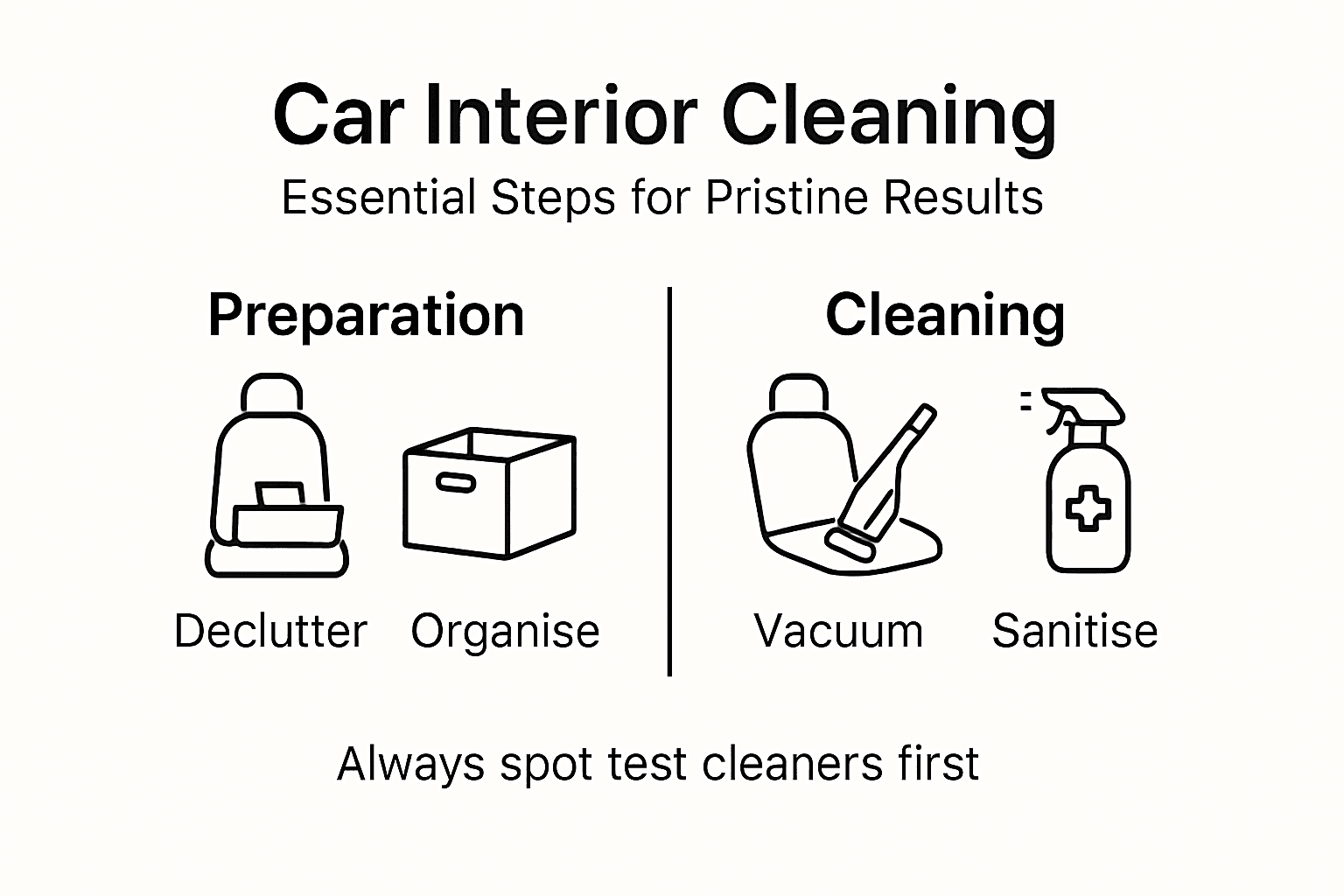
The table below summarises common vehicle interior surfaces and their recommended cleaning, sanitising, and protection methods:
| Surface Type | Cleaning Method | Sanitising Product | Protection Solution |
|---|---|---|---|
| Fabric seats | Wet extraction & brush | Hospital-grade fabric spray | Fabric sealant spray |
| Leather seats | Mild leather cleaner | Alcohol-free leather wipe | Leather conditioner |
| Dashboard/Trim | Damp microfibre cloth | Interior-safe disinfectant | Silicone-free protectant |
| Floor mats | Vacuum and wet-wash | All-purpose germicidal spray | Washable rubber covers |
| Touch controls | Electronic-safe wipe | Isopropyl disinfectant | Screen-safe coating |
Pro tip: Keep a microfibre cloth and quick-detailer spray in your vehicle for instant touch-ups between deep cleaning sessions.
Keep Your Car Interior Pristine with Expert Mobile Detailing
Cleaning your vehicle’s interior can be time-consuming and physically demanding, especially when it involves thorough steps like vacuuming tight crevices, deep extraction of seats and carpets, sanitising high-touch surfaces, and applying protective treatments. If you are seeking a professional solution that delivers expert care right at your doorstep, Isaac’s Pro Detailing Sunshine Coast offers the perfect answer. With their convenient mobile services, you can enjoy premium interior cleaning—including seat and carpet extraction—that addresses dust, allergens, odours, and protects all surfaces for lasting freshness.
Experience the difference of having your car expertly cleaned and protected without interrupting your day. Don’t wait until dirt and germs settle in or your vehicle loses its showroom shine. Visit Isaac’s Pro Detailing Sunshine Coast now to schedule your on-site interior detailing service. Choose convenience, quality, and advanced care that keeps your vehicle looking and feeling at its best. Learn more about their comprehensive interior cleaning options and get started today.
Frequently Asked Questions
How do I prepare my vehicle for a thorough interior cleaning?
To prepare your vehicle, park it in a well-ventilated area with good lighting and remove all personal items from the interior. Then, gather your cleaning supplies such as microfibre cloths, vacuum cleaner, and cleaning solutions to create an efficient workspace.
What is the best method to vacuum my vehicle’s interior?
Start vacuuming from the top surfaces like the dashboard and console, then move down to the seats and floor areas. Use appropriate attachments to reach crevices and ensure to vacuum systematically to avoid spreading dirt.
How do I effectively clean and extract stains from seats and carpets?
Identify the fabric type of your upholstery and pre-treat visible stains with an appropriate spot cleaner. Then, apply a suitable cleaning solution, use a soft-bristled brush for agitation, and extract the solution using a wet-dry vacuum to ensure thorough cleaning.
What are the best practices for sanitising high-touch areas in my vehicle?
Focus on areas like the steering wheel, gear shift, and door handles using a hospital-grade disinfectant. Spray the disinfectant onto a cloth, wipe the surfaces thoroughly, and allow it to sit for the recommended time to ensure effective sanitisation.
How can I protect my vehicle’s interior after cleaning?
To protect the interior, apply protective treatments specific to each surface such as fabric sealant for upholstery and conditioning spray for leather. Additionally, limit the use of food and drink in the vehicle, and consider using seat covers and washable floor mats.
What should I do if I notice residual dirt after cleaning?
If you notice any residue, check surfaces under proper lighting and use a white cloth to confirm cleanliness. Re-clean any areas as needed and ensure to buff them with a clean microfibre cloth for a pristine finish.