
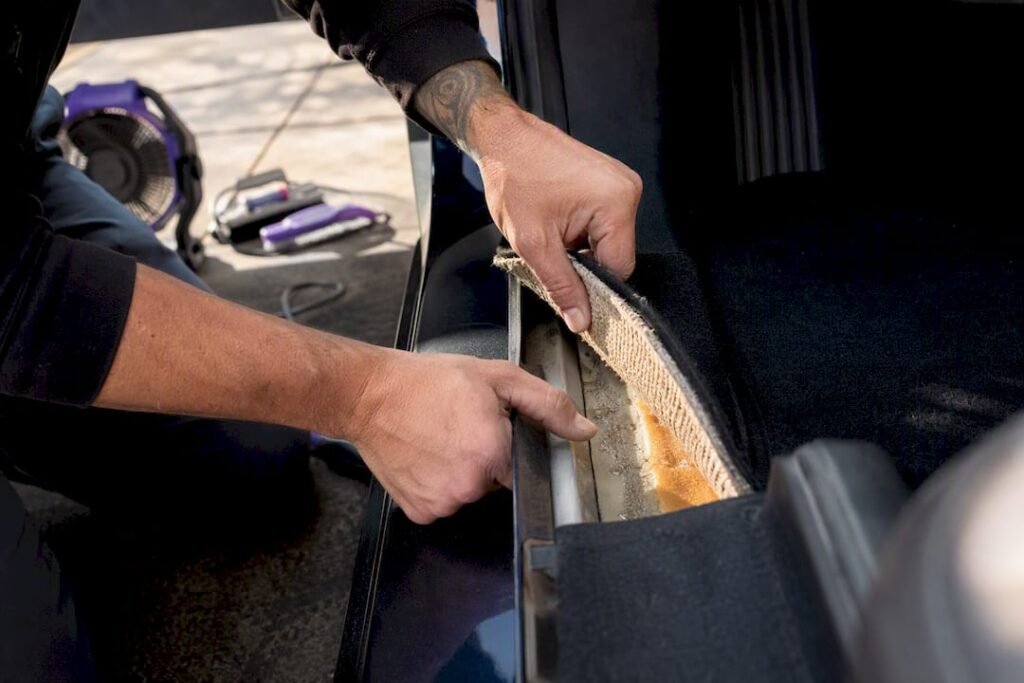
Small, surface-level mould on car carpet is usually removable with detergent, a diluted vinegar solution and proper drying. Large infestations that have soaked into the underlay, or carpet that still smells musty after cleaning, generally need the carpet pulled up or a professional’s help. Before you touch anything, take three steps:
- Ventilate first. Open every door and window for at least 15 minutes before you start scrubbing.
- Don’t dry-brush or vacuum with a household unit. That scatters spores through the cabin and into your vacuum’s exhaust.
- Pull out anything wet. Floor mats, gym bags, wet towels. Mould needs moisture to spread, so removing the source stops it in its tracks.
Once the car’s aired out, you’re ready to work out whether this is a weekend job or one for a professional.
Key Takeaways
Mould in car carpet is usually manageable with detergent, a vinegar solution and fast extraction, but underlay soaked for more than 48 hours or a smell that won’t lift after cleaning means it’s time to remove the carpet or call a professional.
| Point | Details |
|---|---|
| Diagnose before you clean | Musty smell without visible mould usually means the underlay is already involved. |
| Ventilate and extract, don’t dry-brush | Airborne spore spread is the biggest DIY mistake; extract cleaning solution immediately rather than letting it air-dry. |
| Know your disposal threshold | Porous material that stays wet beyond a couple of days is generally better disposed of than cleaned. |
| Fix the cause, not just the symptom | Closed-cell underlay and sealed drains stop recurring mould better than repeat cleaning. |
| Isaac’s Pro Detailing for stubborn cases | Mobile hot water extraction and eco-conscious products handle jobs DIY cleaning can’t fully resolve. |
Table of Contents
- How do you tell how bad the mold in car carpet actually is?
- What PPE and tools do you need before you start?
- How do you remove mold from car carpet step by step?
- When do you need to remove the carpet and underlay instead?
- How do you dry the car and stop mould coming back?
- When should you call a professional for mold removal car interior work?
- How do you check for hidden mould under the carpet backing?
- Do you need to check car seats, floor mats and trunk linings too?
- What’s the right way to dispose of mould-contaminated materials?
- What does the research actually tell you about mould in car carpet?
- Get mobile mould extraction without pulling your own carpet up
- Frequently asked questions
- Sources
How do you tell how bad the mold in car carpet actually is?
Active mould usually shows up as fuzzy grey, green or black patches, and it almost always comes with a musty smell that lingers even with the windows down. It tends to colonise the spots that stay damp longest: under floor mats, along the door sill edges, in the boot well, and underneath the front seats where spilled drinks and wet shoes pool.
- Check the smell first. Musty odour is one of the most reliable indicators of mould, even when you can’t see much on the surface.
- Peel back a mat or seat edge. If the carpet underneath feels damp, spongy or smells worse than the visible patch, mould has likely reached the underlay.
- Time it. Mould can establish in car carpet within a few days of standing water, so a single wet camping trip or a leaking sunroof seal is enough to start a colony.
- Weigh up your health. If anyone who regularly rides in the car has asthma or allergies, treat even a small patch as urgent rather than something to leave until the weekend.
What PPE and tools do you need before you start?
Mould is classed as a biological hazard, and SafeWork NSW recommends PPE and containment to avoid spreading it further while you work. Gather your kit before opening a single door.
PPE checklist:
- P2 or N95 respirator mask (a cloth mask won’t filter spores)
- Nitrile gloves
- Safety glasses or goggles
- Long sleeves and pants you can wash immediately after
Containment and tools:
- Work outdoors or in a well-ventilated garage, never in a closed room
- Bag contaminated mats, towels or paper straight away rather than carrying them through the house
- Skip the household vacuum unless it has a HEPA filter, otherwise you’re just redistributing spores
- Have mild detergent, distilled white vinegar, an enzyme cleaner, a wet vac or carpet extractor, soft-bristle brushes and old towels on hand
Pro Tip: Do a load of laundry with your cleaning clothes on their own hot cycle straight after. Spores cling to fabric and cross-contaminate the next thing you wash.
How do you remove mold from car carpet step by step?
This sequence follows what detailers actually recommend for interior fabric, not generic household mould advice, because car carpet dries slower and traps moisture against metal.
-
Dry removal outdoors first. With windows down and doors open, use a HEPA vacuum or a strong shop vac to lift loose surface spores before you introduce any liquid. Skipping this step just turns dry spores into a soggy paste later.
-
Detergent wash, then a vinegar or enzyme pass. Clean the area with a mild detergent and warm water to lift grime, then apply a 1:1 distilled white vinegar solution or a purpose-built enzyme cleaner directly onto the mould. Autoguide’s cleaning guide for car interiors specifically warns against household bleach on coloured fabrics, since it can lift dye and weaken carpet fibres without necessarily reaching mould embedded deeper in the pile.
-
Agitate gently, then extract immediately. Use a soft brush to work the solution into the fibres rather than scrubbing hard, which can push spores deeper into the underlay. The moment you’ve agitated a section, extract it with a wet vac or carpet extractor. Detailers treat this extraction step as non-negotiable: leaving cleaning solution to sit and air-dry is one of the more common reasons mould returns, because damp carpet with organic residue is exactly what mould wants.
-
Dry fast and dry completely. Point fans directly at the treated area, run a dehumidifier if you have one, and park with doors open in full sun where weather allows. Check back at 24 and 48 hours: no smell and no dampness to the touch means you’ve cleared it.
Stop the DIY process and call a professional if: the musty smell is still there after a full dry cycle, mould reappears within a few days of cleaning, or any section of carpet is still damp after 48 hours. That last point matters more than people think: porous materials that stay wet beyond 48 hours are often flagged for disposal rather than continued cleaning in official mould guidance, because the risk of regrowth outweighs the cost of the material itself.
For a broader look at the full extraction process detailers use on interiors generally, this step-by-step interior cleaning guide walks through the same extraction logic across seats and carpet together.
When do you need to remove the carpet and underlay instead?
Some mould infestations are past the point where cleaning solutions can reach them. A few signs tell you the carpet’s underlay, not just the surface, has been compromised.
- The musty smell returns within days of a thorough clean and dry cycle
- The underlay feels crunchy, permanently discoloured, or crumbles when pressed
- You can see mould growth through the carpet backing itself, not just on top
If any of those apply, lifting the carpet is usually the better call. Peel back the carpet from its edges or clips, drain any pooled water from the floor pan, and let the bare metal dry fully before doing anything else. While it’s exposed, check door and sunroof drain seals for the leak that likely caused this in the first place. Jute underlay holds moisture far longer than closed-cell foam or waterproof vinyl, so replacing it with a moisture-resistant material rather than putting the original underlay back is worth the extra step. Wipe down the floor pan itself with detergent before refitting anything, since residual spores on bare metal will just recolonise new carpet.
How do you dry the car and stop mould coming back?
Getting the cabin bone dry matters more than the cleaning product you use, and most recurring mould cases trace back to a rushed drying step rather than a weak cleaner.
- Extract first, always, before you reach for fans. Removing liquid mechanically beats waiting for it to evaporate.
- Run fans directly into the cabin for several hours, then follow with a dehumidifier if humidity is high.
- Finish with sun. Parking with doors open on a warm, dry day for a few hours does more than people expect, since UV and airflow together discourage regrowth.
Longer term, fix the cause, not just the symptom. Failed door seals and blocked sunroof drains are the usual culprits, and replacing jute underlay with closed-cell foam or waterproof vinyl deals with humid climates far more reliably than repeat cleaning ever will. Get wet gear, muddy boots and damp towels out of the car the same day, not the same week.
Pro Tip: Run your air conditioner on a dry setting for ten minutes after a wet drive, even in winter. It pulls moisture out of the cabin air before it settles into the carpet fibres. For ongoing odour issues once mould’s been cleared, this guide to removing odours from cars covers deodorising steps that pair well with a proper drying routine.
When should you call a professional for mold removal car interior work?
DIY cleaning has real limits. Call a professional when mould covers more than one panel or section, when the underlay is thoroughly soaked rather than just damp, when anyone who regularly uses the car has asthma or a mould allergy, or when you suspect the metal floor pan underneath has started to rust.
Professional remediation typically follows a set sequence: a full inspection to map how far the mould has spread, targeted extraction of affected fabric, HEPA vacuuming to capture airborne spores, deodorisation, and removal of carpet or underlay where cleaning genuinely can’t recover the material. Restoration guidance also cautions against relying on fogging or biocide treatments alone, since dead mould fragments can still trigger reactions if the material itself isn’t physically removed.
- Mobile detailers with hot water extraction gear can often do this on-site, at your home or workplace, rather than requiring a drop-off
- Look for a provider that uses eco-conscious cleaning products if you’ve got kids or pets who use the car regularly
- Ask whether underlay replacement is offered as part of the service, not just surface cleaning, if you already suspect deep contamination
Isaac’s Pro Detailing runs mobile extraction across the Sunshine Coast using this exact workflow, which is worth knowing if the DIY steps above don’t fully clear the smell.
How do you check for hidden mould under the carpet backing?
Surface cleaning only tells you half the story. Mould that’s taken hold in the padding underneath the carpet backing won’t always show through to the top layer, which is why smell matters more than sight in a lot of cases.
Start by lifting the carpet at its edges, usually held by plastic clips or velcro strips near the door sills and seat bases. You don’t need to remove the whole carpet to check; pulling back a corner near the wettest-looking area is usually enough to tell you what’s going on underneath. Press your palm flat against the padding. If it feels cool, damp or squishy rather than dry and firm, moisture has gotten past the carpet’s surface.
Look at the underlay’s colour too. Fresh jute or foam padding is usually a consistent tan or grey. Dark blotches, a slimy texture, or a smell that’s stronger underneath than on the carpet’s surface all point to contamination that a surface wipe won’t fix.
If the padding is only lightly damp with no visible growth, you can often dry it in place, lifting the carpet enough to let air circulate underneath, running a fan directly into the gap, and checking again after 24 hours. If it’s saturated or already growing mould, treat the earlier carpet-removal guidance as your next step rather than continuing to clean around it. Trying to spray cleaner through the carpet and hoping it reaches the padding underneath rarely works. The liquid gets trapped in exactly the layer that’s already too wet.
Do you need to check car seats, floor mats and trunk linings too?
Mould rarely stays confined to one spot, since the same humidity and leaks that soak the carpet usually affect nearby fabric too. A full check means working through every porous surface in the cabin, not just the floor.
Seats are worth checking along the seams and underneath, where spilled drinks pool and rarely get noticed until they smell. Cloth seats can usually be treated with the same detergent and vinegar approach as carpet, though leather needs a specific leather-safe cleaner since vinegar can dry out and crack the surface over time.
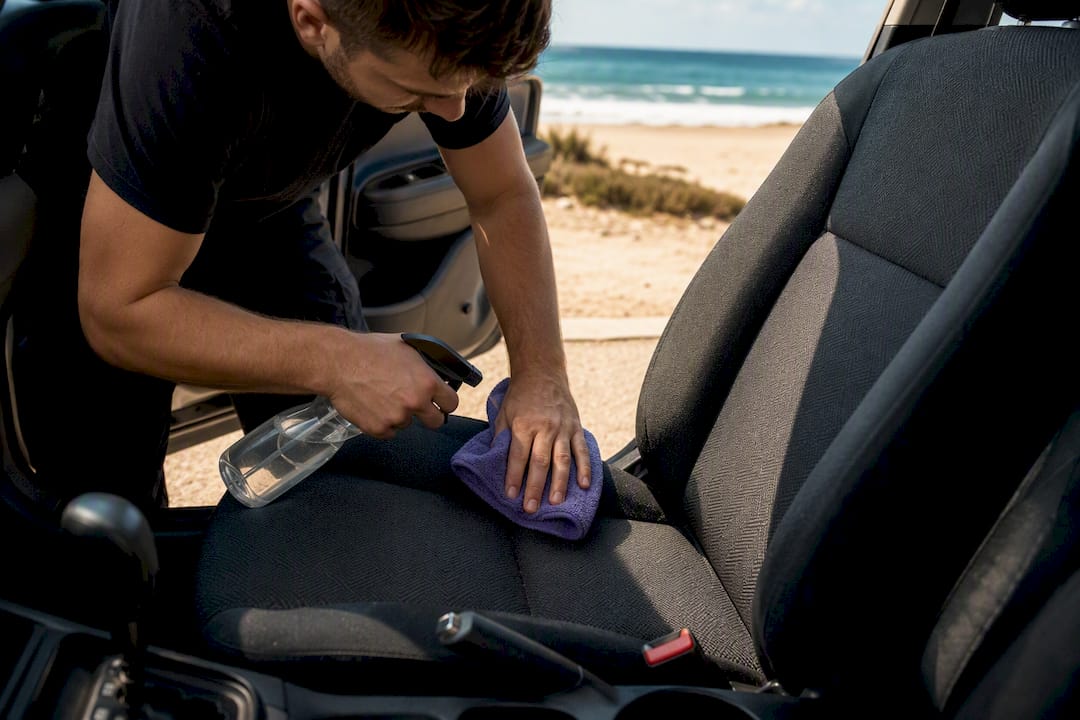
Floor mats, particularly the fabric or carpeted type rather than rubber, trap water against the carpet underneath and are often the actual source of a mould problem rather than a symptom of it. Pull them out and check the carpet directly beneath; if it’s dry, the mat did its job. If it’s damp, the mat’s been holding moisture against the floor for longer than you realised. Rubber mats resist mould themselves but can still trap water underneath if not lifted and dried regularly.
Trunk linings get overlooked because they’re rarely inspected, yet leaking tailgate seals or a cracked rear window seal can quietly soak the boot carpet for weeks. Lift the spare tyre cover and boot floor panel if your car has one, and check for the same musty smell and staining you’d look for elsewhere.
Treat each area with the same detergent, vinegar and extraction sequence used on the main carpet, and dry everything fully before it goes back in the car.
What’s the right way to dispose of mould-contaminated materials?
Not everything can be safely cleaned back to usable condition, and trying to salvage material that should be binned is one of the more common mistakes people make. Porous items with visible mould growth, or anything that’s been wet for more than 48 hours, are generally recommended for disposal rather than continued cleaning, since the material’s internal structure holds spores that surface cleaning can’t reach.
Once you’ve decided something needs to go, bag it immediately, ideally in a sealed plastic bag, before carrying it out of the car. This stops spores dispersing through the cabin or your garage on the way to the bin. Do this outdoors if you can, and keep your PPE on until the bagged item is in the bin.
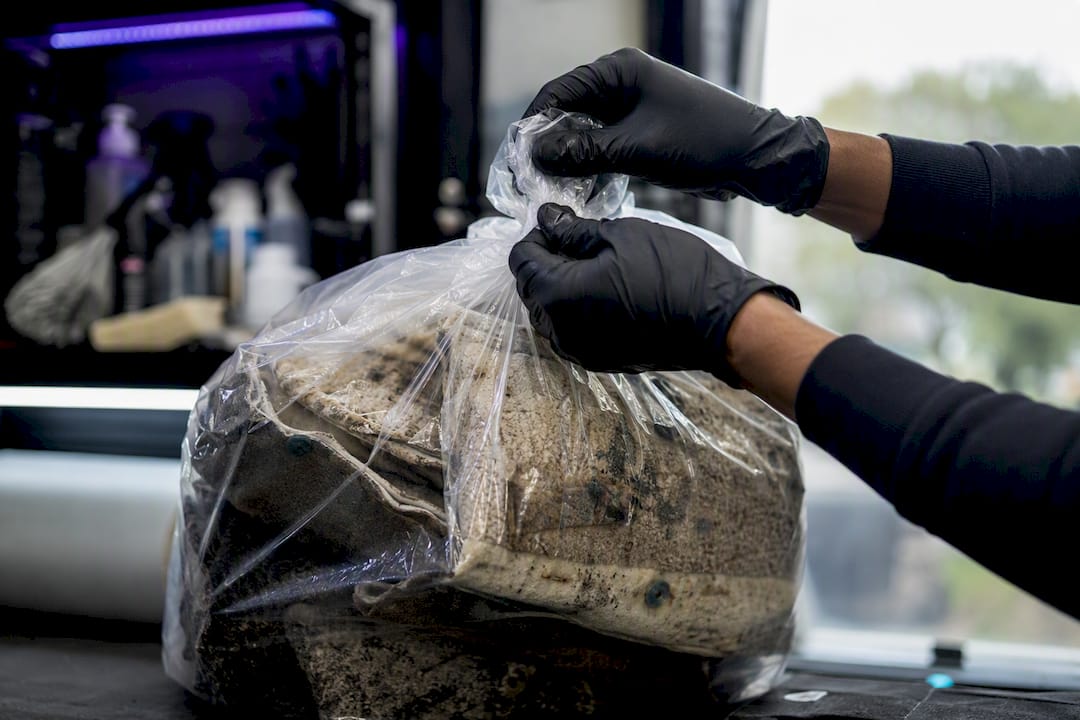
Wipe down anything the contaminated item touched, door sills, boot lining, your hands and forearms, with a detergent solution afterwards. Wash the clothes you wore separately from your regular laundry, on a hot cycle. If you’re removing a whole section of carpet or underlay, check with your local council on general waste guidelines, since larger volumes of contaminated material sometimes fall under different disposal rules than a single floor mat.
If you’re dealing with bird droppings or other biological contamination on the exterior at the same time, safe cleaning methods for localised contamination follow a similar principle: contain it, clean it properly the first time, and avoid spreading it while you work.
What does the research actually tell you about mould in car carpet?
Most advice online treats mould removal as one job with one answer, and that’s the biggest gap in the conventional wisdom. Surface mould on carpet fibres and mould that’s colonised the underlay are two different problems with two different solutions, and treating the second like the first is exactly why people end up cleaning the same patch three times in a month.
The extraction step gets underrated constantly. People will spend money on a specialist enzyme cleaner and then let it air-dry on the carpet overnight, which defeats the purpose entirely. Wet carpet with organic residue sitting in it is precisely the environment mould wants, regardless of what killed the spores that were there yesterday.
What the reader should prioritise first is the smell test, not the visual one. If it still smells musty after a proper clean and dry, the problem’s deeper than the carpet surface, and no amount of repeat scrubbing fixes that. That’s the point to stop, check the underlay, and decide honestly between replacing it yourself or getting someone with proper extraction gear to finish the job.
Get mobile mould extraction without pulling your own carpet up
If your car’s past the point where detergent and a vinegar solution are cutting it, you don’t need to book it into a workshop or go without a vehicle for a week. Isaac’s Pro Detailing brings hot water extraction, HEPA vacuuming and eco-conscious cleaning products to your home, workplace, or wherever your car’s parked across the Sunshine Coast, so there’s no drop-off and no waiting around.

This suits anyone who’s tried the DIY steps above and still has a lingering smell, damp underlay, or mould that’s returned after cleaning. It also suits anyone who’d rather skip the PPE and containment hassle altogether and get it handled properly the first time. Isaac’s team can assess whether your carpet’s salvageable or whether underlay replacement makes more sense once they’re on-site, rather than you guessing from a smell test alone.
Check the wash menu for interior extraction pricing and book a time that suits your week.
Frequently asked questions
Can mold in car carpet make you sick?
Persistent exposure to mould can trigger or worsen asthma and allergy symptoms, and a musty smell in the cabin is a reasonable sign to treat the issue promptly rather than waiting.
How long does mold in car carpet take to develop?
Standing water or a persistent leak can allow mould to establish within 24 to 48 hours, which is why a single wet trip or a slow drain issue often catches people off guard.
Will bleach kill mold on car carpet?
Household bleach isn’t recommended on coloured car carpet, since it can strip dye and weaken fibres without necessarily reaching mould that’s settled into the underlay. A distilled white vinegar solution or a purpose-built enzyme cleaner is the safer choice for fabric.
Can you remove mold smell from a car without removing the carpet?
Often, yes, if the mould hasn’t reached the underlay. Thorough detergent cleaning, vinegar treatment, extraction and full drying usually clears surface-level mould and its smell. If the smell returns within days, the underlay is likely involved and cleaning alone won’t fix it.
Is it worth replacing car carpet underlay after mould?
Where the original underlay is jute or another moisture-retaining material, swapping it for closed-cell foam or waterproof vinyl during replacement is worth doing, since it resists trapping moisture in the same way and reduces the odds of recurring mould in humid conditions.
Sources
WorkSafe QLD’s mould guidance, Autoguide’s interior mould removal steps, and Isaac’s mobile detailing workflow cover the practical and safety detail behind this guide.
- Have mold in your car? Here’s how to get rid of it | Autoguide
- Managing mould | WorkSafe QLD
- How to prevent mould in car carpet in humid climates: The 2026 Guide | 3D Mats