
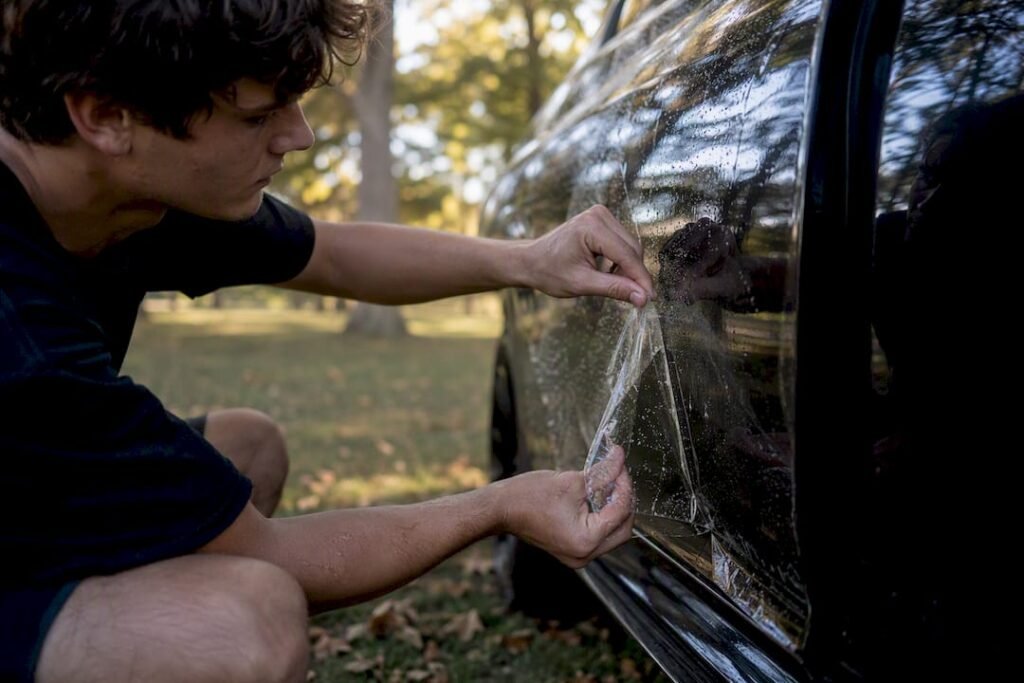
Professional PPF removal for a typical mid-size car runs $500 to $1,500 in the US, with labour making up 60 to 80% of that bill. That’s the honest middle ground before scope, film age, and adhesive condition push the number in either direction, and those three factors explain almost every quote variation you’ll see.
A single panel with fresh, high-quality film might cost $150 to $300. A full-vehicle strip job on a truck with brittle, years-old film can climb past $2,000, sometimes to $2,500 at the extreme end. The gap between those numbers isn’t random.
- Film age is the single biggest swing factor. Old, sun-baked film shatters instead of peeling, which multiplies labour time.
- Vehicle scope matters more than most owners expect. A hood and mirrors job is a different beast to a full-front or full-body wrap removal.
- Adhesive residue left behind by cheap film often needs solvent treatment and polishing that a premium film wouldn’t require.
If you’re dealing with one small panel of film that’s under two years old, DIY is genuinely on the table. Anything bigger, older, or covering curved edges and trim, call a professional before you touch a heat gun.
Key Takeaways
Professional PPF removal for a mid-size vehicle typically costs $500 to $1,500, with film age and adhesive condition driving most of the variation between quotes.
| Point | Details |
|---|---|
| Know your cost bracket | Simple jobs run $100 to $450, typical jobs $500 to $1,500, complex jobs above $2,000 to $2,500 depending on scope and film age. |
| Labour dominates the bill | Labour makes up 60–80% of most quotes, so ask for hours and hourly rate separately from materials. |
| Film age changes everything | Film past six to seven years often turns brittle and shatters, raising both time and paint-damage risk. |
| DIY has a narrow use case | DIY suits one small, recent panel only; anything bigger belongs with a professional given repaint costs of $800–$2,500. |
| Book a vetted mobile option | Isaac’s Pro Detailing offers on-site, itemised PPF removal quotes across the Sunshine Coast with polish included. |
Table of Contents
- Ppf removal cost breakdown: labour, adhesive, and paint correction
- Seven factors that change your PPF film removal cost
- What happens during a professional PPF removal job
- DIY PPF removal vs hiring a professional
- Three PPF removal cost scenarios to budget against
- Will PPF removal damage my paint, and who pays for repairs?
- How to get a PPF removal quote worth trusting
- Isaac’s Pro Detailing: PPF removal done on-site in Sunshine Coast
- Why the “cheapest quote wins” advice is backwards
- Get a same-day PPF removal quote on the Sunshine Coast
- Sources
Ppf removal cost breakdown: labour, adhesive, and paint correction
Every PPF removal quote is really four line items stacked together: labour, adhesive treatment, paint correction, and shop overhead. Understanding how these combine tells you whether a quote is fair or padded.
Labour is the dominant cost. Shops typically bill somewhere between $60 an hour in lower-cost regions and $150 an hour in expensive metro markets, and a removal job runs anywhere from 3 hours for a single panel to 12+ hours for a full vehicle. Do the maths on a full-body job at a mid-tier $90/hour rate over 10 hours, and you’re already at $900 before a single dollar of materials or adhesive cleanup gets added.
Adhesive treatment is the second biggest line, and it’s where quotes diverge the most. Fresh film with quality adhesive might need nothing more than a quick alcohol wipe. Old film that’s cross-linked with UV exposure can leave a gummy residue that needs dedicated adhesive remover, clay bar work, and multiple passes. This step alone can add one to three hours to a job that otherwise looked simple.
Paint correction, when it’s needed, is priced separately from removal in most honest quotes. A light polish to restore gloss after adhesive cleanup might involve an additional moderate cost — see more about how to remove swirl marks from your car’s paint. If the clear coat has actually lifted or hazed, you’re into paint correction or spot repair territory, which behaves more like a bodywork line item than a detailing one.
Overhead covers the shop’s consumables (blades, heat tools, adhesive remover, microfibre), plus mobile service fees if the technician is coming to you rather than you driving to a shop.
| Cost component | Typical range (USD) | What pushes it higher |
|---|---|---|
| Labour (per panel to full vehicle) | $150 to $300 | Panel count, brittle film, tight edges/trim |
| Adhesive treatment | $150 to $400 | Film age, low-quality adhesive, prior heat exposure |
| Paint correction/polish | $150 to $400 | Swirl marks, light clear coat haze under old film |
| Shop overhead/mobile fee | up to $150 | On-site service, specialty tools, travel distance |
Here’s how that decomposes in a real example. A three-year-old mid-size sedan with premium film on the hood, fenders, and mirrors comes in for removal. Labour at $90/hour for 6 hours is $540. Adhesive cleanup adds $120. A light buff to bring back gloss adds $100. Total: $760, which sits comfortably inside the $500 to $1,500 range most mid-size vehicles fall into.
- Ask for labour hours and adhesive treatment as separate line items, not a single lump figure.
- A quote with zero adhesive line item on old film is either optimistic or planning to charge you later.
- Mobile service fees are standard and shouldn’t be hidden inside an inflated labour rate.
Seven factors that change your PPF film removal cost
Cost drivers for PPF removal aren’t mysterious, but most owners only think about one or two of them before calling a shop. Here are the seven that actually move the number.
Vehicle size and panel count. A coupe with a partial front wrap has maybe four to six panels. A full-body wrap on a three-row SUV can be 15+ distinct panels including mirrors, door cups, and rocker panels. Tell the shop exactly what’s wrapped before you ask for a quote, not just “the front”.
Film age and degradation stage. Film under two years old typically peels cleanly in one motion. Between three and six years, expect some adhesive staining and slower work. Beyond six to seven years, film often becomes brittle enough to shatter during removal, which can double or triple the time needed per panel.
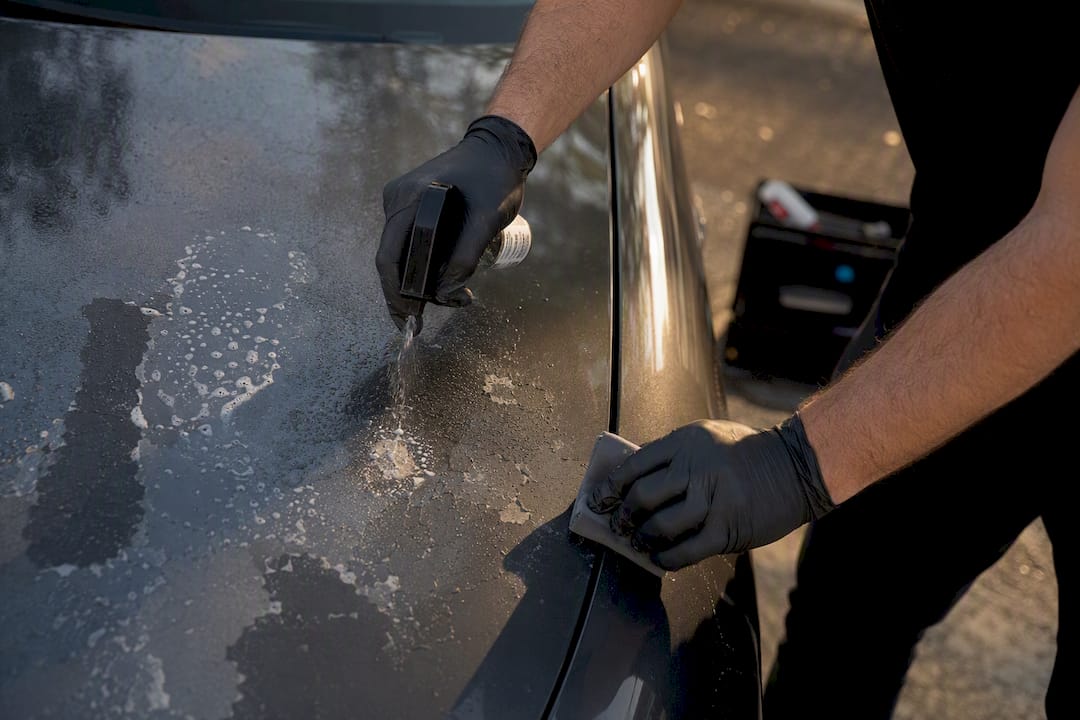
Film brand and adhesion chemistry. This one surprises people: premium automotive-grade film frequently removes more cleanly than budget film, because its adhesive is engineered to release without cross-linking into the paint over time. A cheaper film can end up costing more to remove years down the track than it saved at installation.
Edge complexity and trim. Mirrors, door handles, and body kit edges require careful hand-trimming around trim pieces. Technicians slow right down here, and that time shows up in your bill.
Existing coatings underneath. If there’s a ceramic coating or sealant applied over or under the film, adhesive removal gets trickier. The technician has to protect that coating while still fully clearing residue, which is a slower, more deliberate process.
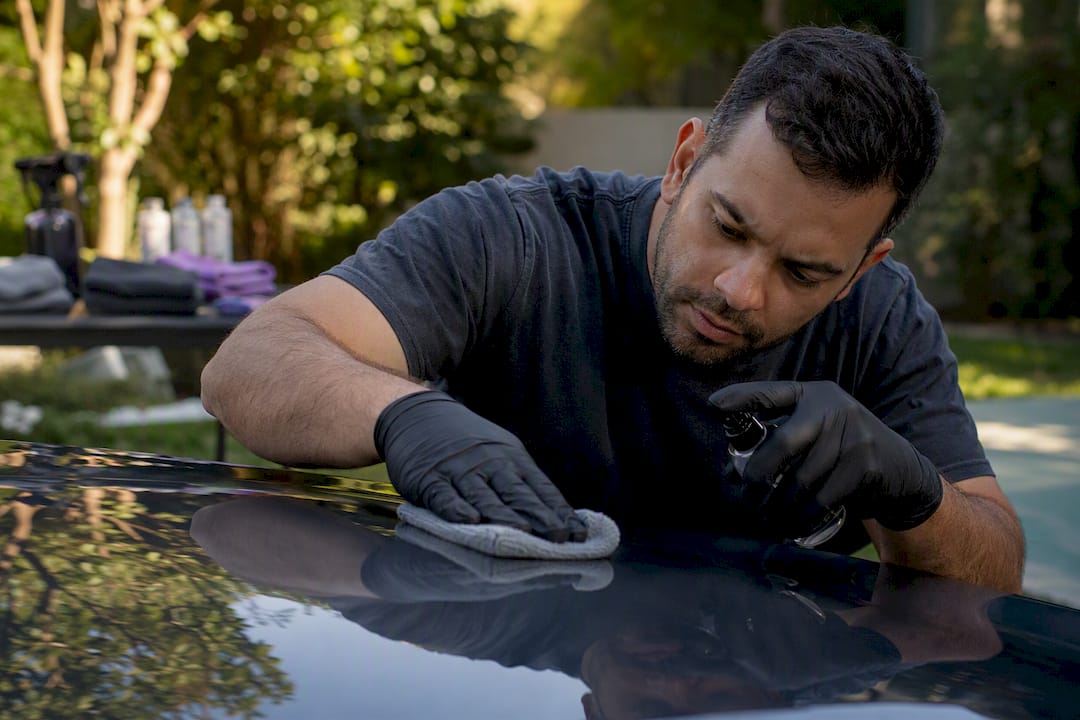
Regional labour rates. The same job in a major coastal metro can cost 40 to 60% more than the same job in a lower-cost inland market, purely on hourly rate differences.
Hidden extras. Watch for “diagnostic fees,” minimum call-out charges on top of labour, or a vague “materials” line with no breakdown.
Pro Tip: Ask the shop directly whether they charge by the hour or by the panel. Per-panel flat rates protect you from a slow technician; hourly rates protect the shop from an unexpectedly stubborn job. Neither is wrong, but you should know which one you’re agreeing to before they start.
What happens during a professional PPF removal job
A properly run removal job follows a predictable sequence, and knowing it helps you judge whether a quote actually includes the steps that protect your paint.
- Inspection and scoping. The technician checks film age, edge lifting, and any visible bubbling or yellowing before quoting final hours.
- Controlled heat application. Using a heat gun or IR heater, the technician warms the film to soften the adhesive bond without overheating the clear coat underneath.
- Slow peel at a shallow angle. Removal happens gradually at a low angle to the panel, never yanked straight up, which is the single biggest difference between a professional job and a rushed DIY attempt.
- Adhesive dwell and cleaning. A dedicated adhesive remover sits on residue for a few minutes before it’s worked off with a microfibre or plastic scraper, never a metal blade.
- Inspection and polish. The panel gets checked under good lighting for any haze or scratching, then buffed if needed.
A single, well-preserved panel might take 30 to 45 minutes start to finish. A brittle, badly degraded full-body job can stretch to 12 or more hours across multiple panels, with some sections needing repeated heat and dwell cycles. The tools that separate a careful shop from a risky one are steam or IR heat sources (gentler and more even than a straight heat gun), proper plastic trim tools, and dedicated adhesive solvents rather than generic degreasers.
DIY PPF removal vs hiring a professional
DIY removal kits cost roughly $100 to $200 for a heat gun, adhesive remover, and plastic scrapers. That sounds like an easy saving against a $500+ professional quote, but the maths only works out if everything goes right.
First-timers routinely underestimate time. A panel that takes a pro 45 minutes can eat three or four hours for someone doing it for the first time, and that’s before factoring in mistakes.
- The most common DIY error is pulling film too fast or at too steep an angle, which can lift factory clear coat with it.
- Using metal blades or razor scrapers instead of plastic tools is the second most common cause of scratches.
- Skipping the heat step entirely and just yanking cold film almost always leaves heavy adhesive residue behind, which then needs professional cleanup anyway.
As a rule of thumb: DIY makes sense for one small, recent panel (under two years old) where you’re comfortable working slowly with a heat gun. Anything covering curved edges, anything over three years old, or anything full-panel or full-vehicle belongs with a professional. The downside risk of a botched DIY job is a repaint bill that dwarfs whatever you saved on labour.
Three PPF removal cost scenarios to budget against
Most quotes fall into one of three brackets. Find the one that matches your car and film age, and you’ve got a realistic budget before you make a single call.
| Scenario | Vehicle & film condition | Estimated total (USD) |
|---|---|---|
| Simple | Compact car, premium film under 2 years old, partial front | $100 to $450 |
| Typical | Mid-size sedan/crossover, unknown film quality, 3–6 years old | $500 to $1,500 |
| Complex | Full-size truck or SUV, budget film 7+ years old, heavy residue | above $2,000 to $2,500 |
The simple scenario is close to best-case: clean adhesive, small surface area, minimal polish needed afterwards. The typical scenario is where most real-world quotes land, since most owners don’t remember exactly what film brand was installed or precisely how old it is. The complex scenario spikes because brittle film shatters into fragments during removal, and each fragment needs its own heat and peel cycle rather than one continuous pull. Add a full-size vehicle’s panel count on top of that, and hours stack up fast.
Will PPF removal damage my paint, and who pays for repairs?
The real risk in PPF removal isn’t cost blowout, it’s clear coat damage. Film older than six to seven years is the highest-risk category for shattering during removal, which raises the odds of the adhesive pulling paint with it.
If damage does happen, repair costs sit in fairly predictable bands:
- Spot polish for minor clear coat dulling: $150–$400
- Panel blend for moderate haze or light scratching: often several hundred dollars more
- Full panel repaint for actual clear coat lift: $800–$2,500
A brittle film that’s over six years old carries meaningfully higher shatter risk during removal than film under three years old, which is exactly why a technician’s pre-removal inspection matters. A reputable shop will test the film’s flexibility before quoting and alert you to any risk rather than discovering issues mid-job.
On coverage: some installers offer a removal guarantee at install time for an extra $200 to $400 fee, which is worth checking your original paperwork for. Standard auto insurance treats PPF removal as routine maintenance and won’t cover it unless the damage stems from a covered incident like an accident.
How to get a PPF removal quote worth trusting
A meaningful quote needs specific information from both sides. Skip any shop that gives you a number over the phone without asking for details.
- Request an itemised breakdown: estimated labour hours, adhesive treatment cost, polish/paint correction if needed, and warranty terms on the work.
- Send close-up photos of film edges (especially corners and mirrors), a full panel list of what’s wrapped, and your best estimate of film age.
- Ask about timeline: same-day service for a single panel is reasonable; multi-day booking for a full vehicle isn’t unusual if paint correction is involved.
- Compare quotes on the same criteria, line by line, rather than just the bottom-line total. A $600 quote with adhesive treatment included beats an $800 quote covering the same job.
- Treat vague pricing as a red flag. “We’ll figure it out once we start” usually means the final bill will be higher than the verbal estimate.
Isaac’s Pro Detailing: PPF removal done on-site in Sunshine Coast
Isaac’s Pro Detailing runs mobile PPF removal for customers across the Sunshine Coast region, using eco-friendly adhesive removers and the same controlled-heat technique outlined above. You get the job done at your home, workplace, or wherever suits, without driving to a shop and waiting.
- Full inspection and itemised quote before any work starts
- Adhesive treatment and post-removal polish included in the process, not billed as surprise extras
- Follow-up support if you want paint correction or protective coating after removal
Booking means a technician inspects your panels, quotes labour and adhesive work separately, removes the film using low-risk heat and dwell techniques, and finishes with a polish check before handover.
Why the “cheapest quote wins” advice is backwards
Most cost guides push readers toward the lowest number on the page, and that’s the wrong instinct for PPF removal specifically. Labour time is where quality actually lives here: a shop that quotes fast and cheap is usually cutting adhesive dwell time or skipping the polish step, not working more efficiently.
The conventional advice to “get three quotes and pick the cheapest” also misses the real variable, which is film age, not shop choice. A $400 quote and a $1,400 quote on the same car might both be honest, if one film is two years old and the other is eight. Comparing the number without comparing the film condition is comparing nothing.
If there’s one thing to prioritise first, it’s an honest flex test on your film before any quote gets finalised. That five-second check (does it bend or crack?) tells you more about your real cost bracket than any general pricing table, including the one earlier in this guide. Everything else, hourly rate, adhesive brand, panel count, is secondary once you know which risk category you’re actually in.
— isaac’s
Get a same-day PPF removal quote on the Sunshine Coast
Isaac’s Pro Detailing brings the entire removal process to your driveway or workplace car park, so there’s no drop-off, no waiting room, and no second trip to collect your car. For Sunshine Coast owners weighing up a shop visit against a mobile appointment, the practical edge is simple: you keep your day, and the technician still runs the same controlled-heat, adhesive-dwell process a proper removal job needs.
Every booking starts with a look at your panels and film age before any number gets locked in, so you’re not guessing which cost bracket you fall into. If your PPF is past the three-year mark or covers more than a couple of panels, that inspection is worth having before you commit to anything. Check the wash menu and service pricing to see where removal fits alongside polish and protective coating options, and book a time that suits your schedule.
Sources
- Paint Protection Film Removal Cost: Price Guide – Current Cost
- PPF Removal Cost: What You’ll Actually Pay in 2026
- Can PPF peel factory paint? Real removal risk data – HighCool