
TL;DR:
- Eco-friendly vehicle cleaning methods like steam, rinseless washing, and biodegradable products outperform traditional techniques.
- Modern ceramic coatings now cure faster and offer higher UV resistance, lasting up to several years.
- Interior cleaning in 2026 emphasizes allergen reduction, odour removal, and safe sanitization for sensitive materials.
If you think going green means going without, the 2026 car cleaning landscape is about to change your mind. Across the Sunshine Coast, vehicle owners are discovering that the latest cleaning methods deliver a sharper finish, a healthier cabin, and a much lighter environmental footprint all at once. This guide breaks down the trends that are reshaping how we care for our cars, what they mean in practical terms for local owners, and how you can start applying them whether you manage your own wash or book a mobile detailer.
Table of Contents
- The move to eco-friendly vehicle cleaning
- Breakthroughs in protective coatings and external appearance
- Interior cleaning: allergen, odour, and tech-safe focus
- Special considerations: EVs, hybrid vehicles, and regulatory compliance
- Our perspective: beyond the headline trends in vehicle cleaning
- Get expert-level results with local, trend-leading detailing
- Frequently asked questions
Key Takeaways
| Point | Details |
|---|---|
| Eco solutions lead | Steam, waterless, and biodegradable cleaning are now industry best practice. |
| Ceramic coatings evolve | Modern coatings bond faster and shield against UV, outlasting wax. |
| Interior health focus | Sanitation techniques prioritise allergen and odour control, safe for new tech surfaces. |
| EV care needs adaptation | Electric vehicles require gentler, more precise cleaning to avoid risks and comply with regulations. |
| Regulations shape choices | Water recycling, runoff management, and chemical choices are driven by environmental compliance. |
The move to eco-friendly vehicle cleaning
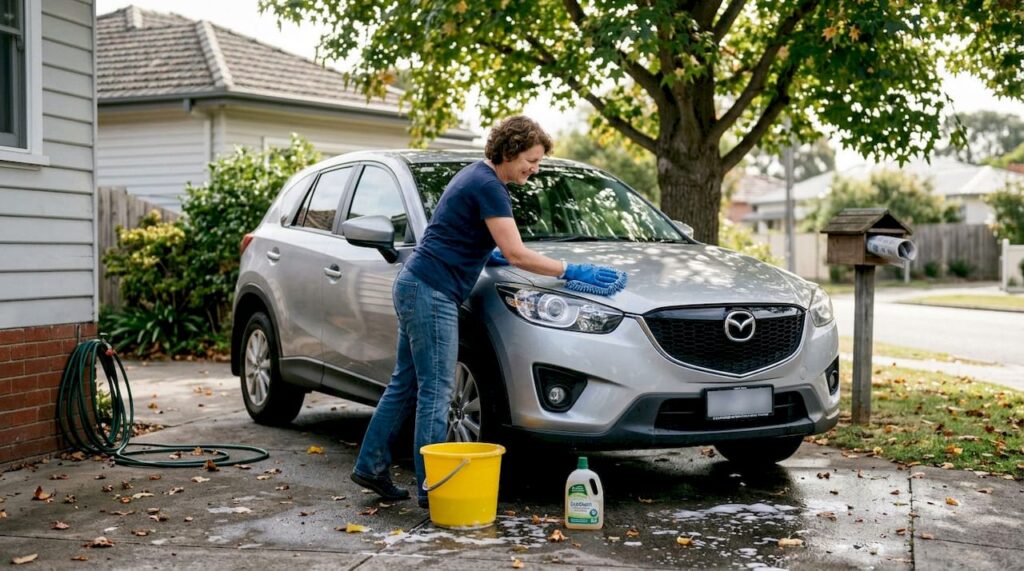
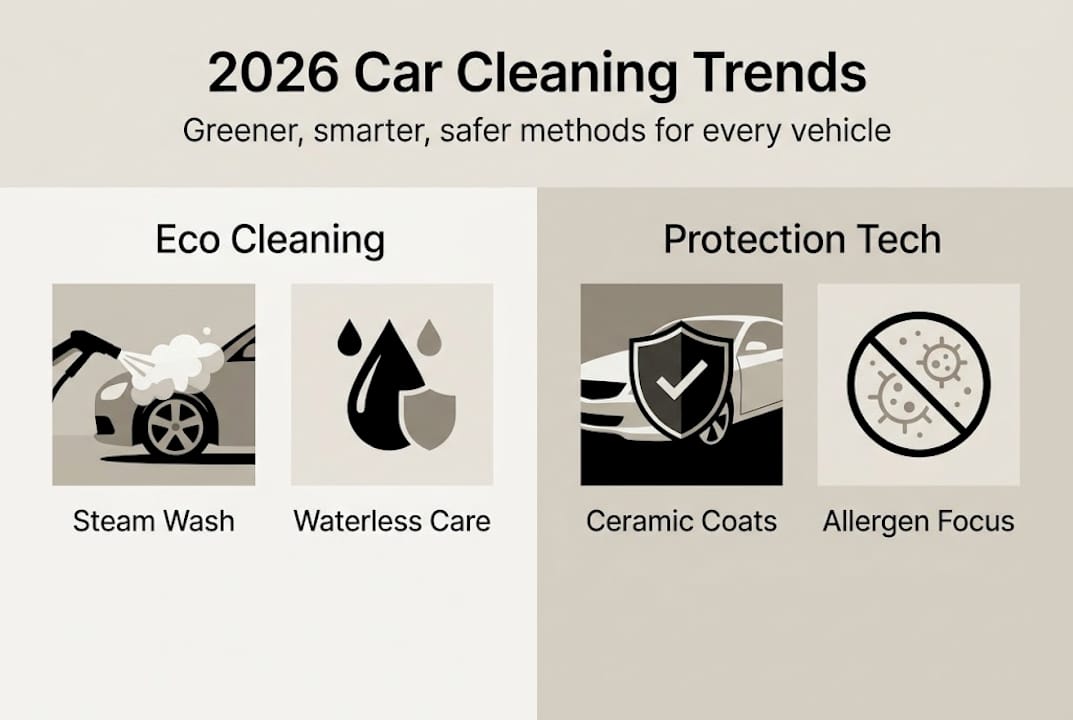
The shift toward greener car cleaning is not just a trend. It is a response to tighter water restrictions, growing environmental awareness, and genuinely better products hitting the market. Eco-friendly practices including steam cleaning, rinseless washing, biodegradable detergents, and water recycling are now leading car cleaning trends in 2026. For Sunshine Coast owners dealing with water restrictions and storm runoff rules, this timing could not be better.
What is driving the uptake? Better chemistry, mostly. Modern biodegradable detergents now lift grime, salt residue, and tree sap just as effectively as harsh solvent-based alternatives, without leaving toxic runoff on your driveway or at the kerb. Steam cleaning takes this further by using only a fraction of the water of a traditional hose-down while simultaneously sanitising surfaces and breaking down grease without added chemicals.
Water recycling systems are another headline development. Professional facilities that have adopted closed-loop systems now reclaim up to 85% of their wash water, treating and reusing it on-site. That figure matters even for mobile detailers, since using rinseless or waterless products achieves a similar conservation outcome at the residential level.
Here is a quick look at the most popular eco-friendly cleaning options available to you right now:
- Steam cleaning: Uses minimal water, no harsh chemicals, and sanitises at the same time
- Rinseless washing: A concentrated solution that lubricates and lifts dirt with almost no water
- Waterless spray products: Best for lightly soiled vehicles, great for quick touch-ups
- Biodegradable detergents: Plant-derived surfactants that break down harmlessly
- pH-neutral shampoos: Gentle on coatings and safe for sensitive surfaces
| Cleaning method | Water used per wash | Chemical load | Best suited for |
|---|---|---|---|
| Traditional hose wash | 150 to 300 litres | High | Heavily soiled vehicles |
| Rinseless wash | 2 to 4 litres | Very low | Light to moderate soil |
| Steam cleaning | Under 2 litres | None | Interior and exterior |
| Waterless spray | Under 0.5 litres | Minimal | Light dust and smears |
“The real breakthrough is not just reducing water. It is that eco-friendly methods now outperform older, wasteful techniques in both cleanliness and surface safety.” This is the message from detailing professionals across Australia who have switched their full operations to these methods.
For practical steps for a greener shine in your local environment, the product choice genuinely matters. A heavily soiled 4WD after a beach run needs a different approach than a commuter car with light dust. Match the product to the soil level and always allow dwell time before wiping.
Pro Tip: Never go straight to a high-pressure hose on a dirty panel. Use a pre-soak with a pH-neutral, biodegradable product and let it sit for two to three minutes. This lifts contaminants with far less mechanical agitation, dramatically reducing the risk of scratches and reducing your water use at the same time. The car cleaning guide Sunshine Coast has more on matching methods to local conditions.
Breakthroughs in protective coatings and external appearance
Eco-friendly cleaning is only half the equation. What you put on your car after washing it determines how long that clean actually lasts. In 2026, ceramic coatings bond faster, resist UV, and work alongside advanced maintenance programmes for a finish that genuinely holds up under the Sunshine Coast sun.
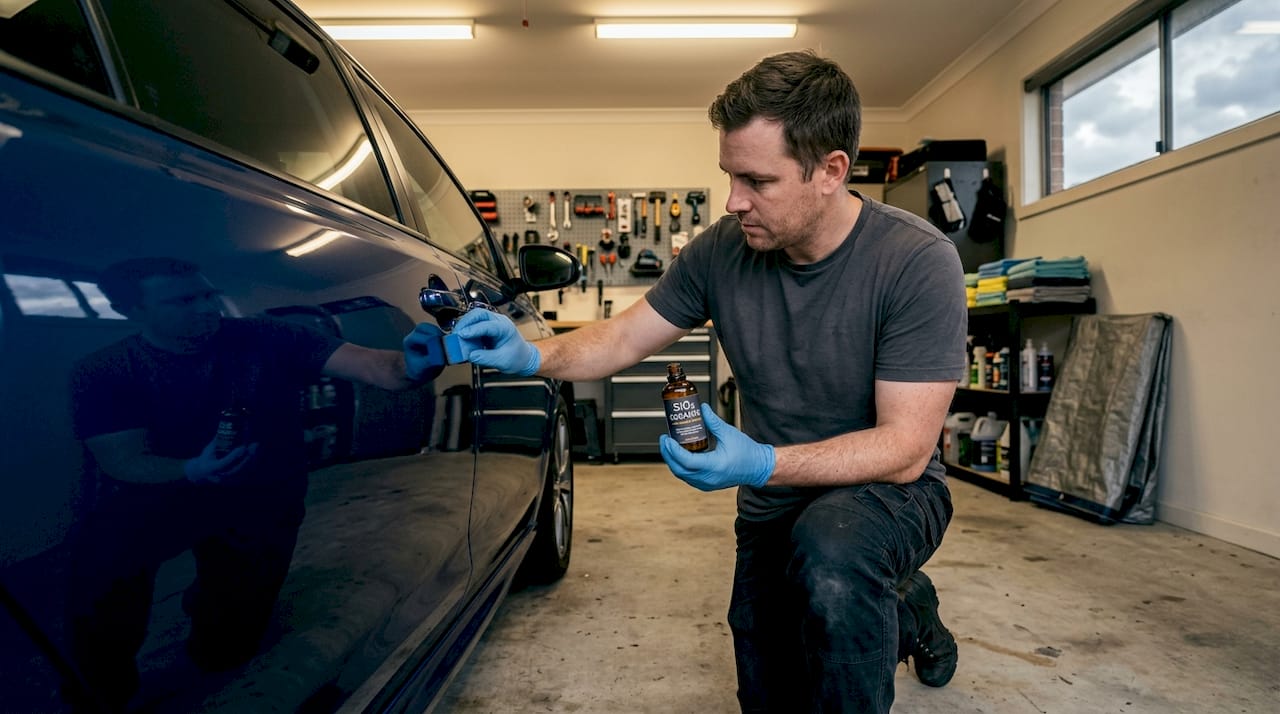
The biggest practical change is faster cure times. Older ceramic products needed 24 to 48 hours of cure time in controlled conditions, which made DIY application risky. Newer formulations can reach a working hardness in under 12 hours, opening the door for same-day application and follow-up care. UV-resistant topcoats are also now mainstream, which is critical for vehicles parked outside in Queensland’s intense sunlight.
| Protection type | Durability | UV resistance | Application time | Cost range |
|---|---|---|---|---|
| Traditional carnauba wax | 4 to 8 weeks | Low | 30 to 60 minutes | Low |
| Polymer paint sealant | 3 to 6 months | Moderate | 30 to 45 minutes | Moderate |
| 2026 ceramic coating | 2 to 5 years | High | Under 12 hours cure | Higher |
Here is how to apply a modern sealant or entry-level ceramic product correctly:
- Start with a thoroughly clean and decontaminated surface. Iron removers and clay bars are worth using first.
- Work in a shaded area and allow panels to cool before application.
- Apply the product in straight, overlapping lines using a foam or microfibre applicator.
- Allow the specified flash time before buffing. Do not rush this step.
- Follow up with a spray topper or maintenance wash product within the first week to lock in the bond.
For a full ceramic coating application guide, the process is more straightforward than most owners expect when broken into stages.
Pro Tip: Do not wait until your coating looks dull to top it up. A monthly spray of a SiO2-based booster product keeps the hydrophobic layer active and prevents UV from degrading the base coat. This habit alone can double the effective life of your coating. See best practices for lasting shine for a simple maintenance routine suited to local weather.
Interior cleaning: allergen, odour, and tech-safe focus
Keeping your vehicle shining outside is only part of the story. Interior trends in 2026 are just as important for your wellbeing and your technology. The modern vehicle cabin has large touchscreens, soft-touch plastics, perforated leather, and sophisticated HVAC systems. Each of these requires a different approach than what worked on older cars.
Interior sanitation in 2026 means better allergen reduction, odour removal, and safe steam cleaning for modern materials. Ozone treatment, in particular, has moved from being a niche add-on to a mainstream service. It works by flooding the cabin with ozone gas, which neutralises odour-causing bacteria, mould spores, and allergens at a molecular level rather than just masking them.
Here is what the most effective 2026 interior cleaning programmes include:
- Enzymatic cleaners: Break down organic matter like food spills, pet dander, and sweat in fabric and carpet without harsh solvents
- Low-moisture steam: Safely sanitises screens, air vents, and soft plastics without introducing water that causes mould
- HEPA-filter vacuums: Capture fine allergen particles rather than recirculating them
- Ozone treatment: Targets persistent odours including smoke, mildew, and pet smells at the source
- UV-C light wands: Emerging tool for surface-level germ reduction on high-touch areas
“Interior care in 2026 is not just about smell. It is a health consideration. As we spend more time in our vehicles, the air quality and surface hygiene inside matter as much as the paint outside.”
For those with allergies, asthma, or young children on board regularly, the shift toward allergen-targeting interior care is genuinely meaningful. The interior cleaning guide outlines a full routine suited to Sunshine Coast humidity conditions.
It is also worth noting that steam is safer for screens than most spray-on products. Direct chemical contact with touchscreen edges can cause delamination over time. Low-moisture steam cleans the surface and the surrounding trim without that risk. Understanding the benefits of maintaining interiors goes well beyond aesthetics when you factor in resale value and health outcomes.
Special considerations: EVs, hybrid vehicles, and regulatory compliance
Electric and hybrid vehicles are no longer a niche. On the Sunshine Coast, they are increasingly common in driveways and car parks. But these vehicles require specific cleaning adjustments that many owners do not know about until something goes wrong.
EVs and hybrids require gentle, targeted cleaning and careful runoff management due to sensitive components and local environmental regulations. High-pressure jets around charge ports, sensor clusters, and battery cooling vents can force water into areas that were never designed to handle it.
For regulatory compliance, particularly when washing at home, here is what you need to think about:
- Use permeable ground mats or wash on grass to prevent runoff entering stormwater drains
- Choose phosphate-free and biodegradable products to minimise environmental impact
- Use rinseless methods for light soil to avoid excess water pooling near gutters
- Check your local council guidelines on residential washing restrictions during water shortage declarations
For safe EV and hybrid cleaning, follow these steps:
- Close all charge ports and check that panel gaps around battery components are sealed before starting.
- Use a rinseless or low-pressure method rather than a pressure washer.
- Apply a pH-neutral pre-soak to lift grime before any physical contact with a mitt.
- Use micro-polishing with a dual-action machine for light swirl correction. Avoid aggressive compound pads on single-stage paint finishes common in EVs.
- Dry thoroughly with a clean microfibre and direct air flow away from sensors.
For a full workflow for less harmful runoff, especially if you are washing on a slope or near a drain, planning your setup in advance saves a lot of clean-up effort.
Pro Tip: Always start with the mildest product appropriate for the soil level. Apply it, wait, and let the chemistry do the work before you touch the panel. Dwell time is the most underused tool in detailing. It reduces the effort needed, the scratch risk, and the product waste all in one habit.
Our perspective: beyond the headline trends in vehicle cleaning
The detailing industry loves a big headline trend. Automation, subscription washes, AI-powered diagnostic systems. These make for great trade show content. But for most Sunshine Coast vehicle owners, they are largely irrelevant. What actually makes a difference is mastering the basics with better chemistry.
Rinseless and steam methods at home or via a mobile detailer save water and suit local regulations far more practically than any large-scale commercial automation. A good rinseless wash costs almost nothing per application, takes under an hour, and leaves a better result than a drive-through tunnel wash that uses harsh brushes and recycled water with high TDS (total dissolved solids, which leave water spots).
We also see too many owners fall for greenwashing. Not all biodegradable claims are equal. Some products labelled eco-friendly simply meet a very low bar. Always look for pH-neutral formulas with transparent ingredient lists.
Common mistakes we see regularly include:
- Using high-pressure water on sensitive areas or freshly coated panels
- Skipping dwell time and relying on mechanical scrubbing instead
- Using the same product for every surface and every soil type
- Ignoring eco detailing convenience options that would genuinely simplify their routine
The trend that matters most is not the flashiest. It is the one you will actually use consistently.
Get expert-level results with local, trend-leading detailing
When you are ready to put these trends to work, having a skilled local detailer in your corner makes a real difference. Isaac’s Pro Detailing Sunshine Coast brings fully mobile service to your home, workplace, or wherever suits you best, using eco-conscious products that match the 2026 standard.
We have seen first-hand how professional detailing creates lasting visual impact on resale value and daily satisfaction with your vehicle. Our team applies pro auto detailing tips that go well beyond a standard wash to deliver a finish your car genuinely deserves. Browse our examples of mobile detailing to see how we handle everything from daily drivers to prestige vehicles across the Sunshine Coast.
Frequently asked questions
What are the most eco-friendly car cleaning methods for 2026?
Steam, rinseless washing, biodegradable chemicals, and water recycling systems are leading the way in reducing environmental impact while maintaining a high-quality finish.
Do new cleaning trends work for electric and hybrid vehicles?
Yes, but you must use gentle, targeted cleaning away from sensors and charge ports, using low-pressure methods and chemistry suited to delicate panel finishes.
How do ceramic coatings differ from older waxes in 2026?
Ceramic coatings bond faster and deliver significantly better UV resistance and durability, making them the mainstream standard over traditional carnauba wax.
How can I safely clean modern vehicle interiors with screens and soft plastics?
Steam and enzymatic cleaners are the safest options for delicate surfaces, reducing allergens and removing odours without the risk of chemical damage to screens or trim.