
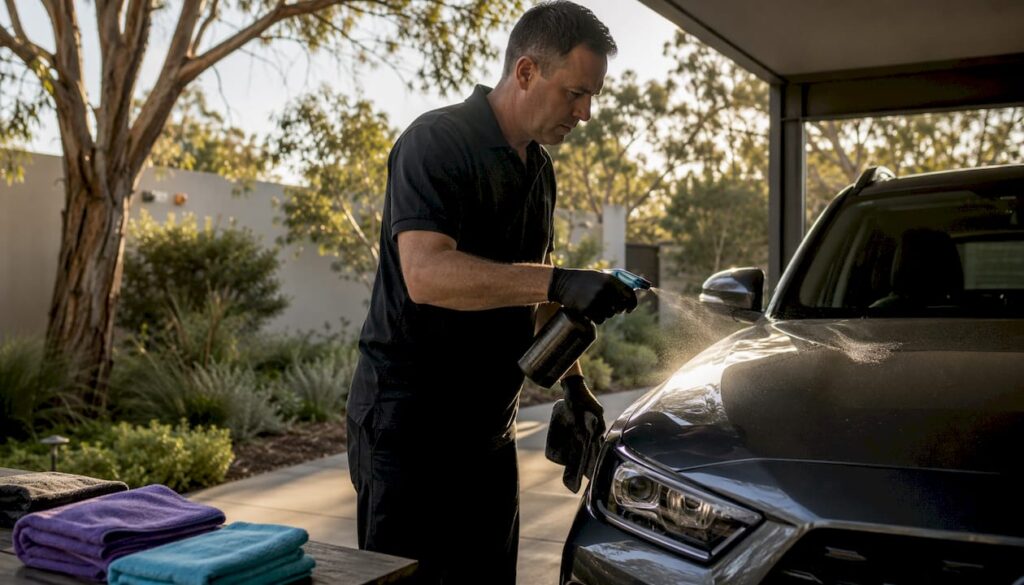
Skipping DIY car cleaning, or at least approaching it with far more care than most people do, is one of the better decisions you can make for your vehicle’s long-term condition. The damage rarely announces itself after a single wash. It builds quietly: swirl marks under streetlights, water spots that won’t shift, a clear coat that gradually loses its depth. By the time you notice, the correction bill often dwarfs whatever you saved on a bucket and sponge.
The core risks of DIY car cleaning come down to a handful of repeated mistakes:
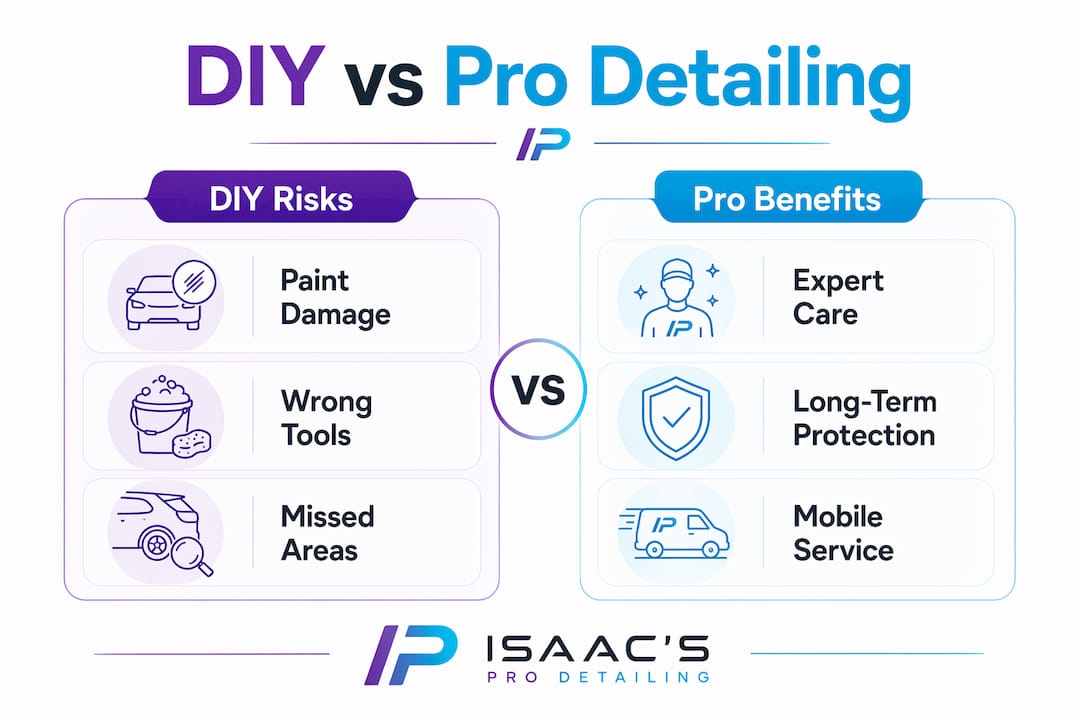
- Using household cleaners like dish soap that strip protective wax and sealants from the paint surface
- Skipping the pre-wash stage, which drags grit across the clear coat and causes scratches
- Washing in direct sunlight, which bakes mineral deposits into the finish
- Using the wrong tools, including old sponges and bath towels that trap abrasive particles
- Neglecting proper drying, leaving water spots and swirl marks behind
- Missing critical areas like wheel wells and the undercarriage entirely
Why DIY car cleaning mistakes are so easy to make
The five most damaging errors in home car washing share one thing: they feel harmless in the moment.
1. Using dish soap or household cleaners
Dish soap is formulated to cut grease aggressively. On a dinner plate, that is exactly what you want. On a car, it strips wax and sealants that protect the clear coat from UV exposure and bonded contamination. The surface still looks clean after one wash, which is why so many car owners keep doing it. The protection layer takes the hit silently, and over time the paint becomes harder to maintain and more vulnerable to oxidation.
2. Skipping the pre-wash
A thorough pre-rinse removes loose grit before any wash mitt touches the paint. Without it, you are dragging road film and dust particles across the clear coat with every stroke. That is where most swirl marks originate: not from some mysterious flaw, but from repeated contact with contaminated wash media.
3. Washing in direct sunlight
Hot panels cause water and shampoo to evaporate faster than you can manage them. The result is mineral deposits baked into the clear coat and, in worse cases, spider-web cracks from cold water hitting superheated paint. Washing in the shade or during the cooler parts of the day, early morning or late afternoon, eliminates most of this risk.
4. Wrong tools for the job
Traditional kitchen sponges trap grit against the paint rather than lifting it away. Old cotton bath towels do the same during drying. A quality microfibre wash mitt and a dedicated plush drying towel are not luxury items; they are the minimum standard for avoiding micro-scratches on modern clear coats.
5. Improper drying
Driving a wet car to air-dry it attracts dust and pollen that stick to water droplets. As the water evaporates, it leaves dirty spots across a freshly washed surface. Air-drying in hard-water areas guarantees mineral etching over time.
Pro Tip: Use the two-bucket method: one bucket for your pH-neutral shampoo solution, one for rinsing the mitt. Any grit the mitt picks up stays in the rinse bucket and never goes back onto the paint. It is the single most effective habit change for reducing wash-induced swirl marks.
When DIY car cleaning stops saving you money
The financial case for DIY washing collapses the moment something goes wrong. A single panel respray in Australia typically costs $800–$1,500, and that is before factoring in paint correction work to address swirl marks, oxidation, or buffer trails from an inexperienced machine polish attempt.
A car’s clear coat is very thin, roughly comparable to the width of a human hair. Burn through it with a machine polisher held too long in one spot, and the only fix is a full panel respray. Consistent professional care, by contrast, preserves that protective layer and keeps the paint in a condition that commands a stronger price when you sell. Buyers and dealers notice the difference between a finish that has been maintained properly and one that has been washed with whatever was under the sink.
The resale value case for professional detailing is straightforward: a flawless, well-maintained finish attracts higher offers, and the cost of periodic professional care is typically less than correcting accumulated DIY damage.
Professional detailing alternatives for Australian car owners
Professional detailing combines restoration and long-term protection in a way that typical home washing cannot replicate. The equipment alone makes the difference: dual-action polishers calibrated to specific paint hardness, professional-grade ceramic coatings, and pH-controlled products designed for automotive finishes rather than adapted from household use.
Australia’s climate adds an extra layer of urgency. Harsh UV radiation, coastal salt air, and red dust create conditions that accelerate paint degradation faster than in milder climates. A ceramic coating applied by a professional provides UV resistance and a hydrophobic surface that makes every subsequent wash safer and easier.
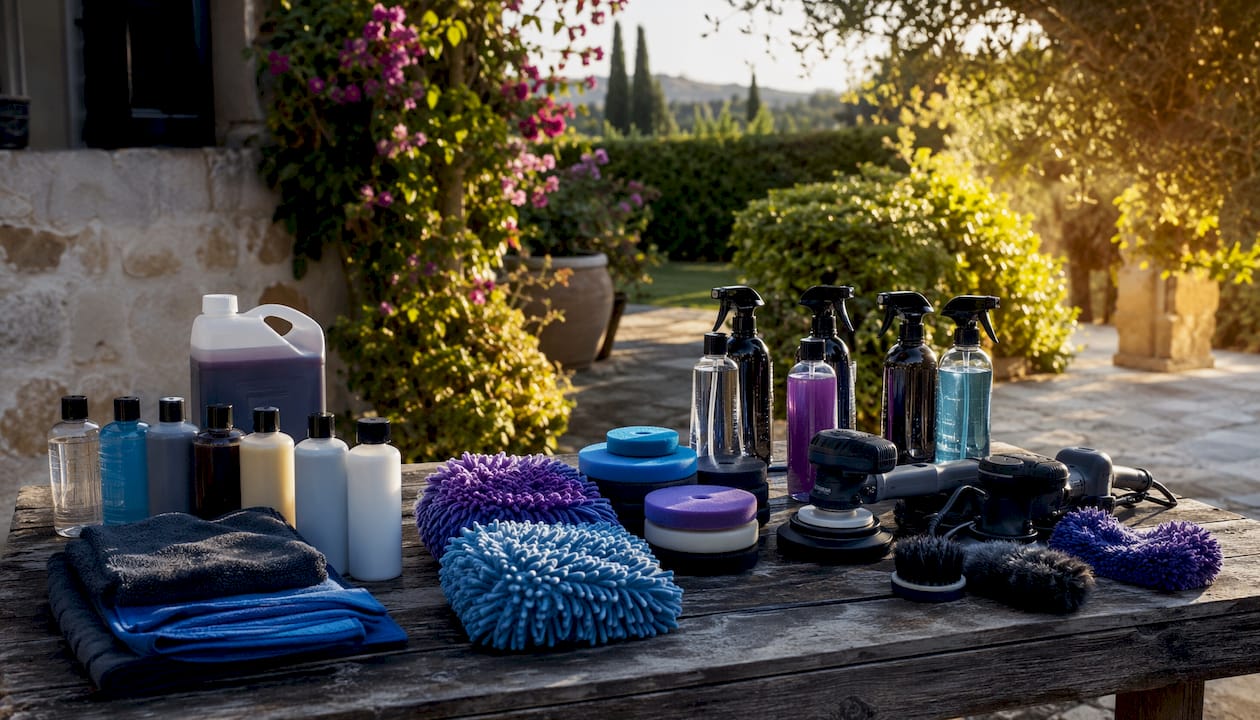
Isaac’s Pro Detailing on the Sunshine Coast operates as a fully mobile service, which means the detailing comes to you, whether you are at home, at work, or anywhere else on the Coast. Services range from interior seat and carpet extraction through to cut and polish, ceramic coatings for paint, wheels, and leather, iron removal, and ozone deodorisation. For car owners who want professional results without the inconvenience of dropping a vehicle off, that model removes the main barrier.
| Service type | DIY approach | Professional outcome |
|---|---|---|
| Paint correction | High risk of buffer trails or burn-through | Controlled removal of swirl marks and scratches |
| Protective coating | Wax strips quickly; uneven application common | Ceramic coating lasts years with proper prep |
| Interior extraction | Surface-level vacuum only | Deep extraction removes embedded dirt and allergens |
| Drying technique | Air-dry or towel risks swirl marks | Forced-air or specialist towel, no contact damage |
The areas DIY cleaning almost always misses
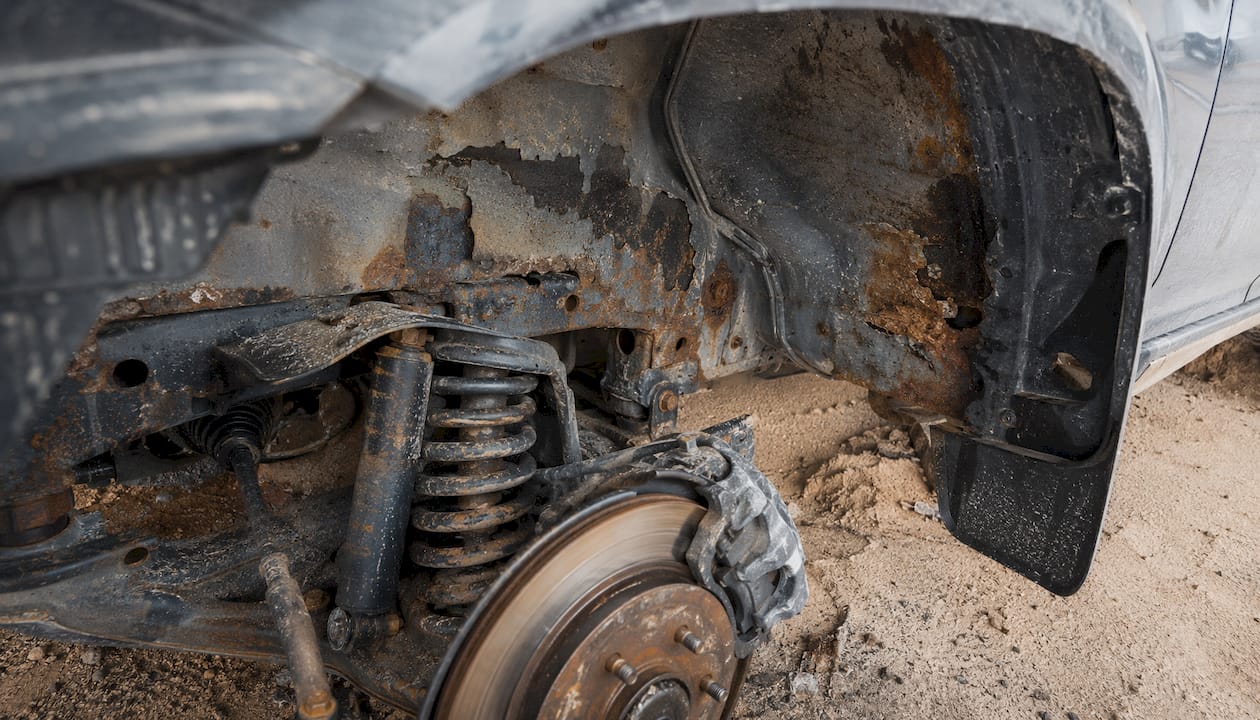
Wheel wells and the undercarriage are where long-term damage quietly accumulates. Most home washes focus on the panels and glass, leaving brake dust, road grime, and salt deposits to build up in the areas that matter most for corrosion resistance.
Wheel arches trap moisture against metal. In coastal areas like the Sunshine Coast, salt-laden air accelerates rust formation in exactly these spots. A proper undercarriage rinse, particularly after beach driving or wet weather, removes the corrosive material before it has time to work. Professional detailers treat these areas as part of a complete service; most DIY washes skip them entirely because they are awkward to reach and easy to overlook.
Rubber seals around doors and windows are another casualty of harsh household chemicals. High-pH cleaners dry out the rubber, causing cracking and eventual water ingress. The same applies to plastic trim, which fades and becomes brittle when exposed to aggressive degreasers repeatedly. These are not cosmetic problems. Cracked seals mean water leaks; faded trim means a lower resale price.
The hidden repair costs that follow DIY mistakes
The expenses that follow DIY cleaning errors tend to arrive in stages, which makes them easy to underestimate until they stack up. Paint correction to remove swirl marks and oxidation from a single car typically starts at $500 per stage and can be more for multi-stage work. A panel respray, needed when the clear coat is burned through or deeply scratched, usually costs $800–$1,500 per panel.
Window tint damaged by ammonia-based cleaners needs full replacement. Rubber seals dried out by harsh chemicals require professional reconditioning or replacement. Alloy wheels etched by the wrong cleaning products need polishing or recoating. None of these are dramatic one-off accidents. They are the cumulative result of the same small mistakes repeated over months and years, each one individually invisible, collectively expensive.
The paint protection steps that prevent these costs are not complicated, but they do require the right products, the right technique, and in many cases, professional equipment that simply is not available to most home washers.
Isaac’s Pro Detailing: mobile car care on the Sunshine Coast
Busy car owners on the Sunshine Coast get a better outcome by leaving paint correction and protective coating work to Isaac’s Pro Detailing, a fully mobile service that comes to your location with professional-grade equipment and eco-friendly products.
The practical advantage is straightforward. You avoid the risk of DIY paint damage, you get a finish that holds up against Queensland’s UV and coastal conditions, and you do not need to drive anywhere or wait in a queue. Isaac’s Pro Detailing covers everything from a basic wash through to full ceramic coating packages, cut and polish, interior extraction, and specialist treatments like iron removal and ozone deodorisation. Pricing is transparent and scaled to vehicle size, so you know what you are paying before the job starts.
Book your mobile detailing service or check the full wash menu to find the right package for your vehicle.
Key takeaways
DIY car cleaning causes more paint damage than most car owners realise, and the correction costs routinely exceed what professional care would have cost from the start.
| Point | Details |
|---|---|
| Wrong products strip protection | Dish soap and household cleaners remove wax and sealants, leaving paint exposed to UV and contamination. |
| Pre-wash prevents scratches | Skipping the pre-rinse drags grit across the clear coat, causing swirl marks that require professional correction. |
| Sunlight causes permanent damage | Washing on hot panels bakes mineral deposits into the clear coat and can cause spider-web cracking. |
| Repair costs are high | A single panel respray in Australia costs $800–$1,500; paint correction starts at $500 per stage. |
| Isaac’s Pro Detailing | Mobile professional detailing on the Sunshine Coast protects paint and vehicle value without the DIY risk. |