
TL;DR:
- A vehicle hygiene service sanitises a vehicle’s interior and exterior to remove bacteria, mould, and allergens that standard cleaning cannot reach. It uses steam cleaning, antimicrobial treatments, and ozone sanitisation to improve safety and air quality, requiring scheduled maintenance every 3 to 6 months. Owners should select providers using approved disinfectants and transparent processes for effective, health-focused vehicle decontamination.
A vehicle hygiene service is a specialised cleaning process that sanitises and decontaminates a vehicle’s interior and exterior to eliminate bacteria, mould, allergens, and biological hazards that standard washing cannot reach. The industry term for this is vehicle decontamination or auto hygiene service, and it goes well beyond cosmetic cleaning. Where a regular car wash removes surface dirt, a hygiene service targets what you cannot see: pathogens embedded in seat foam, mould growing in ventilation ducts, and contaminants trapped in carpet fibres. For vehicle owners on the Sunshine Coast, understanding what is a vehicle hygiene service is the first step toward protecting both your health and your car’s long-term value.
What is a vehicle hygiene service and how does it work?
A vehicle hygiene service is defined by its focus on safety and deep decontamination rather than appearance. This separates it clearly from both a standard car wash and cosmetic detailing. The goal is to remove biological hazards that are invisible to the naked eye, including bacteria, dust mites, mould spores, and volatile organic compounds (VOCs) that accumulate over time in every vehicle cabin.
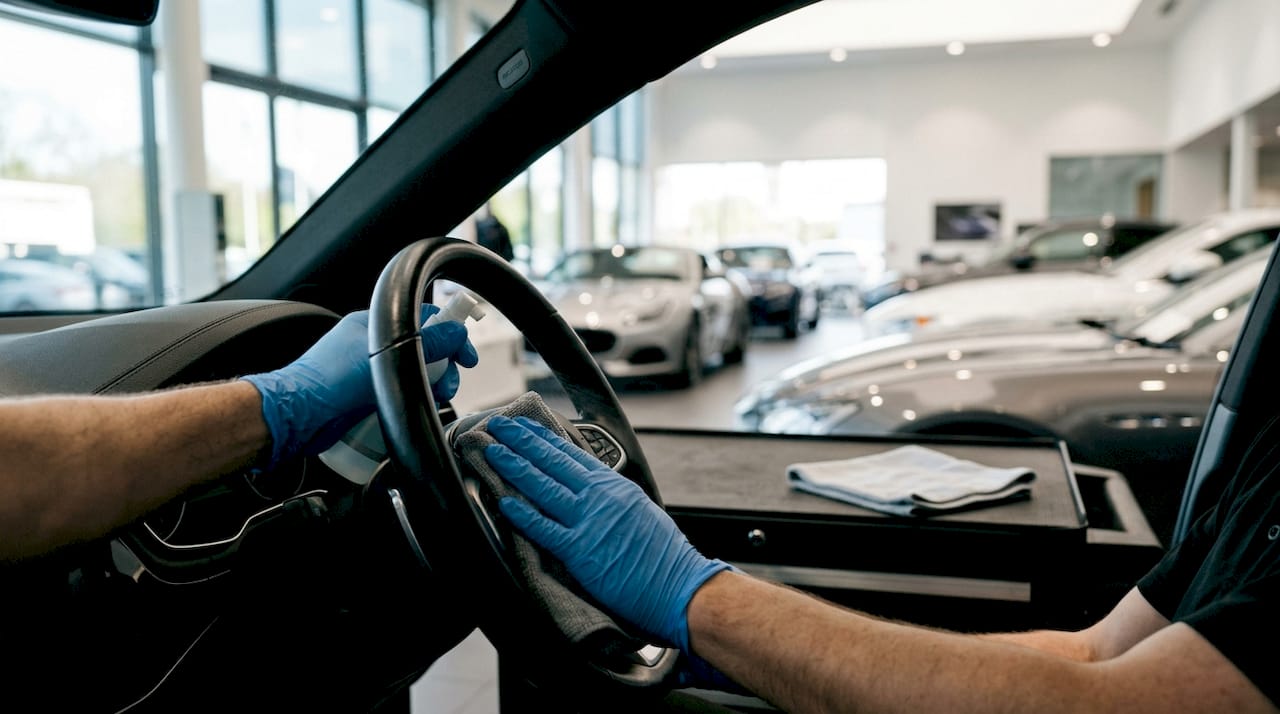
Vehicle cabin air quality is compromised by particulate matter, VOCs, and microbial growth, posing health risks from mild discomfort to chronic respiratory conditions. That means the air inside your car can be more polluted than the air outside it. A proper auto hygiene service addresses this directly by treating the surfaces and systems that harbour these contaminants.
The service typically combines steam cleaning, antimicrobial treatments, thermal extraction, and ozone sanitisation. Each method targets a different type of contaminant. Steam penetrates fabric and kills surface pathogens. Antimicrobial sprays leave a protective residue. Ozone gas reaches areas that physical cleaning cannot. Together, these techniques deliver a level of cleanliness that no car wash or standard detail can match.
How does a vehicle hygiene service differ from a car wash or detailing?
The three services serve completely different purposes, and confusing them is a costly mistake. A car wash takes 15–20 minutes and costs $20–$50. A full professional detail takes 4–8 hours and costs $300–$2,500. A vehicle hygiene service sits in its own category, focused on health outcomes rather than aesthetics.
| Service | Time required | Typical cost | Primary focus | Health benefit |
|---|---|---|---|---|
| Car wash | 15–20 minutes | $20–$50 | Surface dirt removal | Minimal |
| Cosmetic detailing | 4–8 hours | $300–$2,500 | Appearance restoration | Incidental |
| Vehicle hygiene service | 2–6 hours | Varies by scope | Pathogen and allergen removal | High |
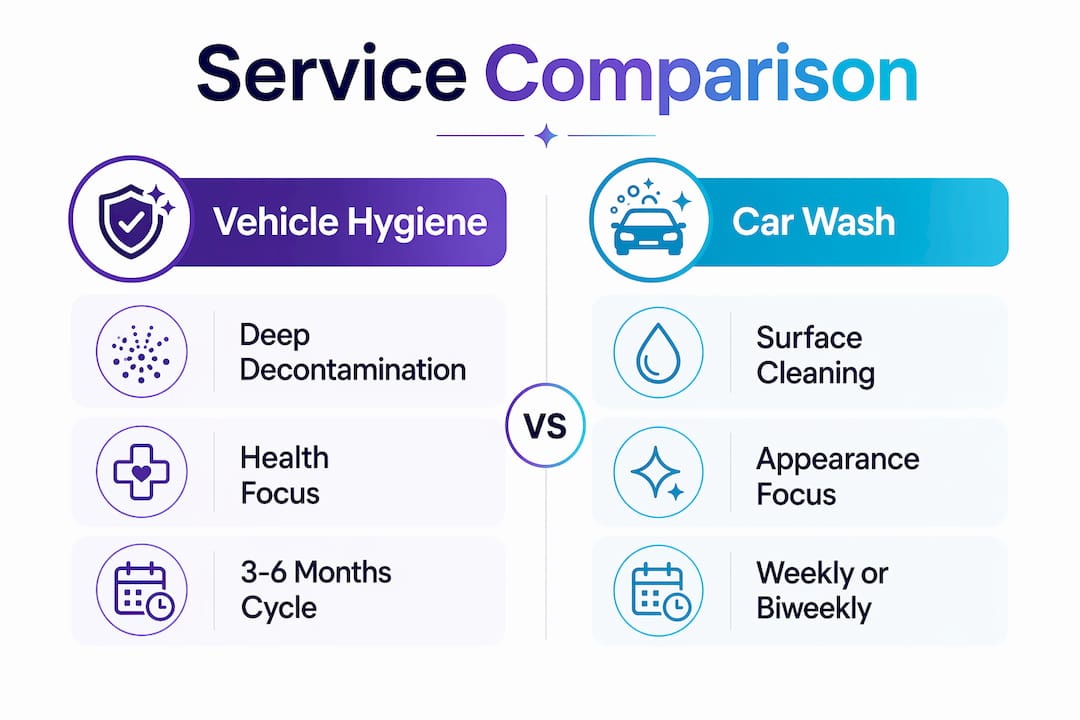
Surface cleaning misses embedded contaminants that cause long-term interior degradation and lower resale value. Owners who rely solely on express car washes often discover mould, persistent odours, and deteriorating upholstery years earlier than those who schedule regular hygiene treatments. Detailing restores how a car looks. A hygiene service restores how safe it is to be inside one.
Pro Tip: If your car has a persistent musty smell after a wash, that is a sign of mould in the ventilation system or seat foam. A car wash will not fix it. You need a dedicated vehicle sanitisation service with antimicrobial treatment.
What processes and methods are used in vehicle hygiene services?
Professional vehicle hygiene services use a combination of specialised equipment and approved chemical treatments. Each step targets a specific contamination risk.
Key steps and tools used in a professional auto hygiene service:
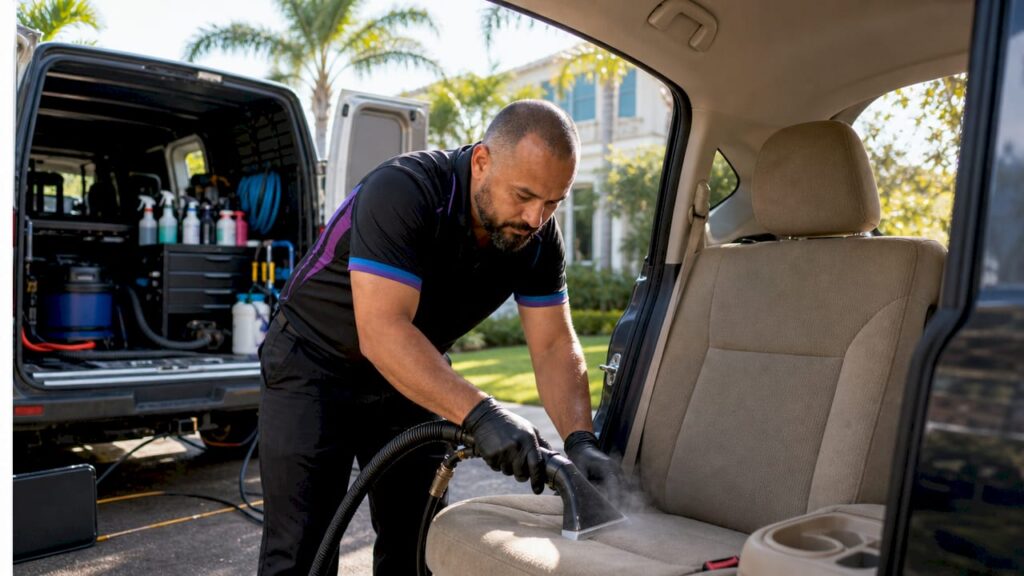
- Steam cleaning: High-temperature steam penetrates upholstery, floor mats, and door trims to kill surface bacteria and loosen embedded grime without saturating the material.
- Thermal extraction: This technique injects hot water into upholstery foam to flush out deep contaminants that vacuuming cannot reach. The waste water extracted is visibly dirty even from seats that look clean.
- Antimicrobial treatment: Approved antimicrobial sprays are applied to all interior surfaces, including plastics, leather, and fabric, to kill remaining pathogens and inhibit future microbial growth.
- Ozone sanitisation: Ozone gas is released inside the sealed cabin to neutralise odours and kill bacteria in areas that physical tools cannot access, including the HVAC system and under-seat cavities. Com’s ozone deodorisation treatment is one of the most thorough methods available for cabin air quality restoration.
- Ventilation duct disinfection: Antimicrobial sprays treat ventilation ducts to reduce bacteria buildup and improve cabin air quality. This step is overlooked by most standard cleaning services.
- Underbody and wheel well cleaning: In biosecurity contexts, high-pressure underbody cleaning removes soil, weed seeds, and pathogens using approved detergents and strict waste-water management to comply with Australian environmental laws.
- Biosecurity washdowns: Vehicles used in agricultural or sensitive environmental zones require washdowns that target soil-borne pests and invasive plant species. This is a legal requirement in some regions and a critical part of what is vehicle sanitation in an Australian context.
Professional sanitisation using steam and antimicrobial treatments can neutralise 99.9% of bacteria, mould spores, and dust mites in upholstery and ventilation systems. That figure reflects what is achievable when the right equipment and approved chemicals are used together, not separately.
How often should you schedule a vehicle hygiene service?
Industry standards recommend vehicle interior and exterior hygiene services every 3–6 months to maintain protection, cleanliness, and health. That interval assumes average use. Your actual frequency depends on several factors specific to your situation.
| Scenario | Recommended interval | Key reason |
|---|---|---|
| Daily commuter, urban environment | Every 3 months | High particulate and VOC exposure |
| Family vehicle with children or pets | Every 2–3 months | Allergens, food debris, bacteria |
| Agricultural or rural use | After each high-risk trip | Biosecurity and soil contamination |
| Low-use or weekend vehicle | Every 6 months | Mould risk from infrequent ventilation |
| Allergy or asthma sufferers | Every 2–3 months | Elevated health sensitivity |
Climate plays a significant role in how quickly contaminants build up. Queensland’s humidity accelerates mould growth in seat foam and carpet. A vehicle parked in coastal conditions on the Sunshine Coast faces salt air intrusion that compounds interior degradation. Vehicles used in farming or conservation areas carry biosecurity obligations that make hygiene services a compliance matter, not just a comfort choice.
Pro Tip: Do not wait for a smell or visible stain to book a hygiene service. By the time mould is detectable by smell, it has already colonised the seat foam and ventilation system. Schedule on a calendar interval, not on symptoms.
What are the key benefits of vehicle hygiene services for owners?
A vehicle hygiene service delivers benefits across three distinct areas: personal health, vehicle preservation, and environmental responsibility.
Health and air quality benefits:
- Eliminates bacteria, mould spores, and dust mites that trigger allergies and respiratory conditions
- Improves cabin air quality by treating ventilation ducts and removing VOC sources
- Reduces exposure to biological hazards for drivers and passengers, including children and elderly occupants
- Provides a measurable reduction in allergen load for owners with asthma or hay fever
Vehicle preservation and resale value:
- Prevents mould and moisture damage to seat foam, carpet backing, and electronic components
- Removes acidic biological residues that degrade leather and fabric over time
- Maintaining a clean vehicle interior with professional hygiene services reduces allergen exposure and improves long-term vehicle value
- A well-maintained interior commands a stronger resale price and faster sale
Biosecurity and environmental responsibility:
- Biosecurity washdowns prevent costly environmental damage by stopping the spread of invasive species on vehicles used in agricultural or sensitive zones
- Proper waste-water management during underbody cleaning protects local waterways
- Using approved sanitisers avoids surface damage and meets Australian environmental compliance requirements
The mobile service model for vehicle hygiene is growing in Australia precisely because it removes the barrier of dropping a car at a fixed location. Owners get professional results at home or at work, with no disruption to their day.
How do you choose a reliable vehicle hygiene service provider in Australia?
The quality of a vehicle hygiene service depends entirely on the provider’s equipment, chemicals, and training. Not every detailer offers true decontamination. Look for these criteria before booking.
A reputable provider uses approved biosecurity disinfectants and specialised detergents that protect surfaces while meeting environmental compliance standards. Ask specifically whether their antimicrobial products are listed on the Australian Pesticides and Veterinary Medicines Authority (APVMA) register. Providers who cannot answer that question are not operating to the required standard.
Check for transparent pricing, detailed service descriptions, and genuine customer reviews. A provider confident in their results will show before-and-after evidence and explain exactly which processes they use. Mobile services add the benefit of convenience, particularly for busy owners across the Sunshine Coast who cannot afford to leave their vehicle at a workshop for a full day.
Pro Tip: Ask your provider whether they treat the ventilation system as part of the service. Many skip this step entirely. Duct disinfection is non-negotiable for genuine cabin air quality improvement.
Key takeaways
A vehicle hygiene service is the only cleaning method that removes biological hazards from a vehicle’s interior and ventilation system, protecting both occupant health and long-term vehicle value.
| Point | Details |
|---|---|
| Definition and purpose | A vehicle hygiene service targets pathogens, allergens, and contaminants that standard washing and detailing cannot remove. |
| Core methods | Steam cleaning, thermal extraction, antimicrobial treatment, ozone sanitisation, and duct disinfection are the standard techniques. |
| Recommended frequency | Schedule every 3–6 months for most vehicles, or more often for families, allergy sufferers, and agricultural users. |
| Health impact | Professional sanitisation can neutralise 99.9% of bacteria, mould spores, and dust mites in upholstery and ventilation systems. |
| Provider selection | Choose providers using APVMA-approved disinfectants, transparent pricing, and documented processes for biosecurity compliance. |
Why vehicle hygiene is the service most owners overlook
I have been working with vehicle owners on the Sunshine Coast long enough to see a clear pattern. Most people understand detailing. They book a polish, a wax, a seat clean. They want the car to look good. What they do not realise is that a car can look immaculate and still be harbouring mould colonies in the seat foam and a bacterial load in the ventilation system that would concern any health professional.
The confusion between detailing and hygiene services is genuine and understandable. Both involve cleaning a car. But the distinction matters enormously. Detailing is about appearance. Hygiene is about safety. I have extracted waste water from seats that looked perfectly clean, and the colour of that water tells the real story. Thermal extraction reveals what the eye cannot see, and what it reveals is consistently alarming.
The other thing I have observed is that owners with allergies or young children are the most motivated to act once they understand what a hygiene service actually does. They book regularly after the first treatment because the difference in how they feel inside the car is immediate and obvious. For everyone else, I would say this: do not wait for a health symptom or a visible problem. The best car hygiene practices are preventive, not reactive. A car treated every three to six months stays ahead of the contamination curve. One treated only when something goes wrong is already behind it.
— isaac’s
Professional vehicle hygiene services on the Sunshine Coast
Com offers mobile vehicle hygiene and sanitisation services across the Sunshine Coast, bringing professional-grade equipment directly to your home, workplace, or preferred location.
The service range covers thermal extraction, antimicrobial interior treatment, ozone deodorisation, and biosecurity-grade underbody cleaning. Every treatment uses eco-friendly, approved products that protect your vehicle’s surfaces while meeting Australian environmental standards. Flexible scheduling means you do not need to rearrange your day around a workshop appointment. For a full breakdown of available packages and pricing, the mobile detailing workflow guide explains exactly what each service involves and how to choose the right option for your vehicle and usage pattern. You can also view the full wash and hygiene menu to compare packages directly.
FAQ
What is a vehicle hygiene service?
A vehicle hygiene service is a professional cleaning process that removes bacteria, mould, allergens, and biological contaminants from a vehicle’s interior and exterior using methods such as steam cleaning, thermal extraction, antimicrobial treatments, and ozone sanitisation. It focuses on health and safety rather than cosmetic appearance.
How is a hygiene service different from car detailing?
Vehicle hygiene services focus on safety by removing biological hazards and invisible contaminants, while detailing focuses on restoring a vehicle’s appearance through polishing, waxing, and surface restoration. The two services address different problems and are not interchangeable.
How often should I get a vehicle hygiene service?
Industry standards recommend a vehicle hygiene service every 3–6 months for most vehicles. Owners with children, pets, allergies, or vehicles used in agricultural environments should schedule more frequently, every 2–3 months.
Can a vehicle hygiene service improve cabin air quality?
Professional sanitisation using steam and antimicrobial treatments can neutralise 99.9% of bacteria, mould spores, and dust mites in upholstery and ventilation systems, directly improving the air quality inside your vehicle cabin.
What should I look for in a vehicle hygiene service provider?
Choose a provider that uses APVMA-approved disinfectants, offers transparent pricing, treats the ventilation system as part of the service, and can demonstrate results through customer reviews or before-and-after evidence.