
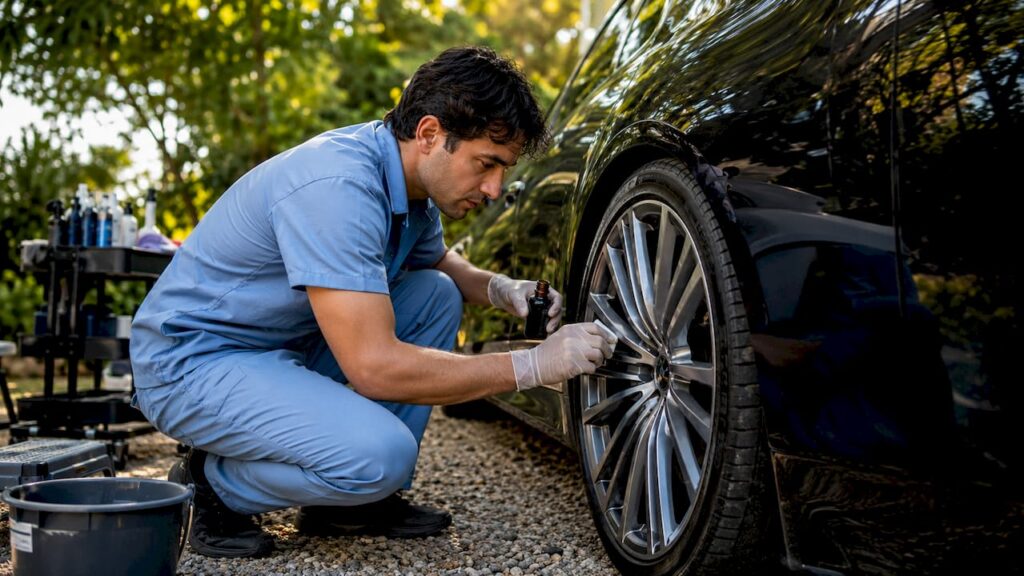
TL;DR:
- Wheel coating is a silica-based liquid polymer that forms a durable, hydrophobic barrier on wheels, lasting 1-3 years with proper care. It chemically bonds to the surface, resisting brake dust, UV rays, and heat, and reduces cleaning time significantly. Professional application involves thorough preparation and proper technique to ensure optimal protection and longevity.
Wheel coating is defined as a silica-based liquid polymer that chemically bonds to wheel surfaces, forming a semi-permanent hydrophobic barrier lasting 1–3 years with proper maintenance. The industry standard term is ceramic wheel coating, though “wheel coating” is widely used by vehicle owners and detailers alike. Unlike traditional waxes that wash away within weeks, ceramic coatings resist brake dust, UV rays, and heat at a molecular level. Brands like Velgen Wheels and suppliers like Armour Detail Supply have helped bring this technology into mainstream detailing.
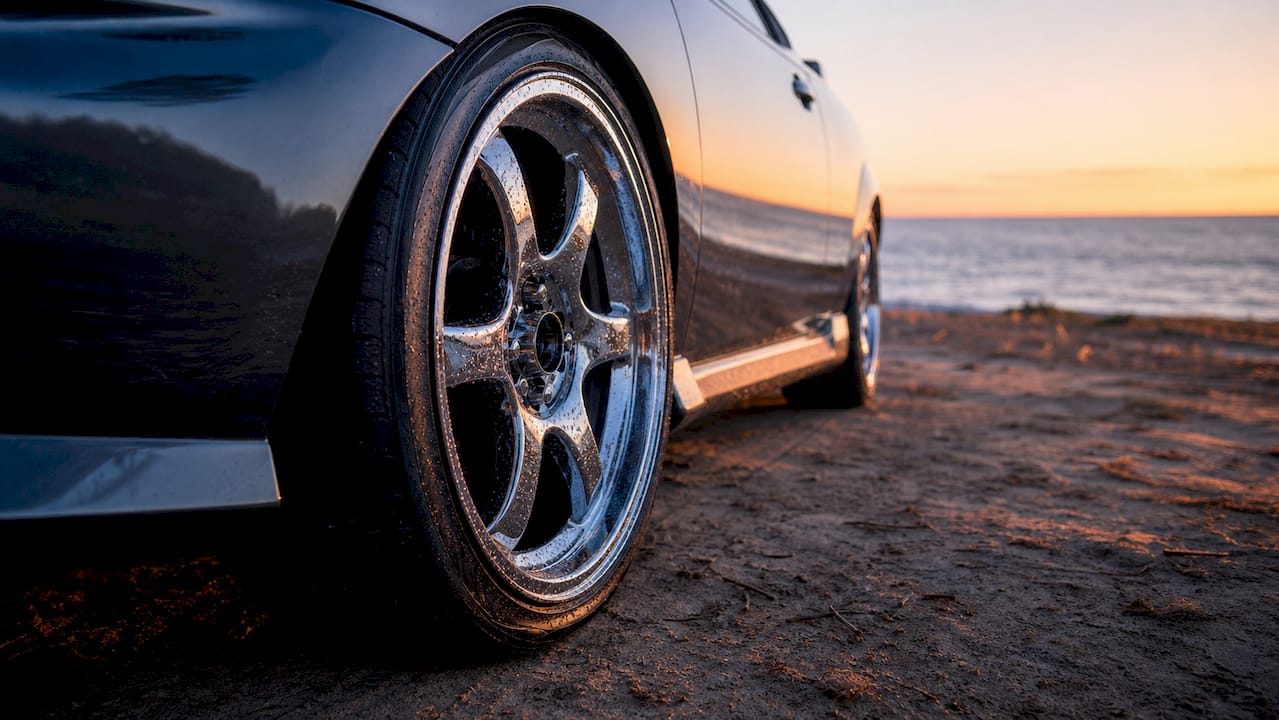
What is wheel coating and why does it matter?
Ceramic wheel coating is a SiO2 (silicon dioxide) polymer treatment that bonds directly to the wheel’s surface rather than sitting on top like a wax or sealant. That chemical bond is what separates it from every other protective product on the market. Once cured, the coating creates a surface that repels water, oils, and brake dust rather than absorbing them.
Traditional waxes offer surface-level protection at best. They soften under heat, wash away with rain, and require reapplication every few weeks. A properly applied ceramic coating holds up for 1–3 years, making it a genuinely different category of protection rather than just a premium version of wax.
For vehicle owners on the Sunshine Coast, where UV exposure and coastal grime are constant, the difference is especially noticeable. Wheels treated with a ceramic coating stay cleaner longer and require far less effort to maintain their appearance.
What are the main benefits of wheel coating?
The benefits of ceramic wheel coating go well beyond a glossy finish. The coating’s hydrophobic and oleophobic properties mean water and oily contaminants bead up and roll off rather than bonding to the surface.
Here is what you gain from a quality ceramic wheel coating:
- Durability: Protection lasts 1–3 years compared to weeks or months for traditional waxes and polymer sprays.
- Hydrophobic surface: Water beads and slides off, carrying brake dust and grime with it.
- Brake dust resistance: The slick barrier prevents corrosive brake dust from etching into the wheel finish.
- UV protection: The coating blocks ultraviolet degradation that fades and oxidises alloy finishes over time.
- Heat resistance: SiO2 polymers withstand heat from high-performance braking systems where traditional sealants melt or degrade.
- Reduced cleaning time: A coated wheel sheds contaminants so effectively that wash time drops dramatically.
- Gloss preservation: The coating locks in the wheel’s original finish rather than letting it dull over time.
The cleaning time reduction is the benefit most owners notice first. A wheel that once required 20 minutes of scrubbing per corner becomes a 3–5 minute rinse job after coating. That adds up to a significant saving across every wash.
Pro Tip: If you drive a performance vehicle with large brake callipers and aggressive brake pads, ceramic coating is not optional. The heat and dust output from high-performance braking systems will destroy an unprotected alloy finish within months.
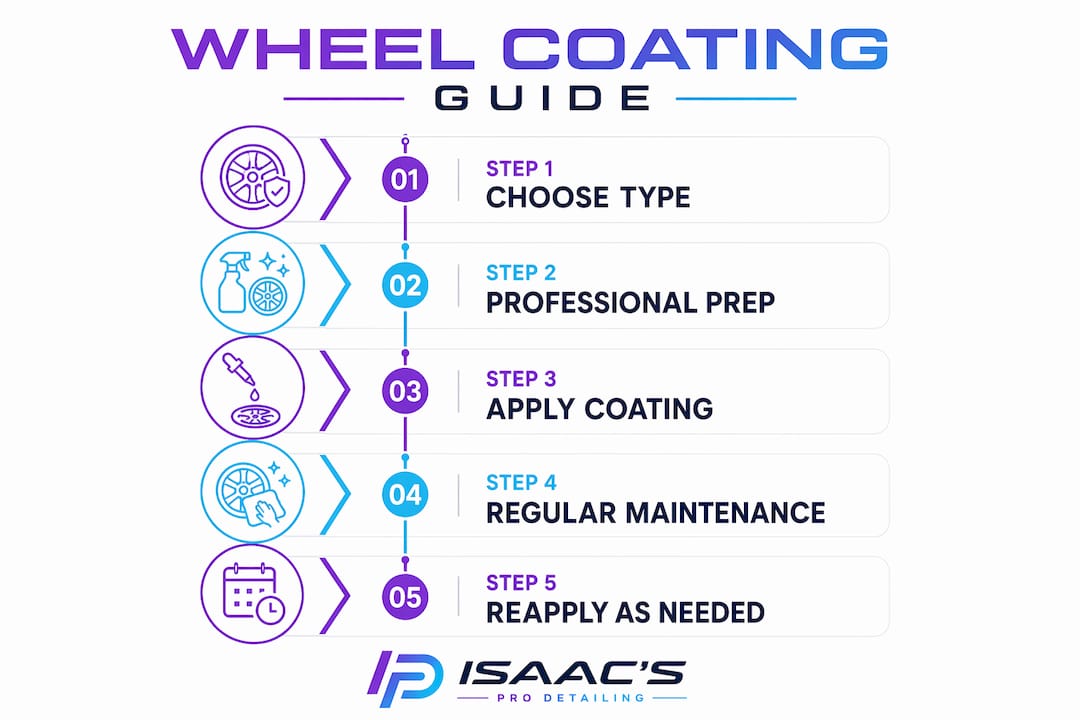
How is wheel coating professionally applied?
Professional application follows a strict process. Skipping any preparation step causes the coating to bond poorly and lift within weeks. The wheels-off method is the industry standard for a reason: it gives the detailer full access to every surface, including inner barrels and brake callipers that are impossible to reach properly with wheels still mounted.
Here is the full professional application process:
- Remove the wheels from the vehicle to access the barrel, spokes, and callipers completely.
- Wash thoroughly with a dedicated wheel cleaner to remove surface grime and brake dust.
- Apply iron remover to dissolve embedded ferrous particles that a brush cannot reach.
- Clay bar treatment to lift bonded contaminants from the wheel surface.
- Tar remover for any stubborn adhesive or road tar deposits.
- Double degrease with isopropyl alcohol or a panel wipe to remove all oils, including fingerprints. Avoiding oil contamination at this stage is critical for strong molecular bonding.
- Apply the coating in sections, working across spokes and the barrel methodically.
- Allow flashing time as directed by the product, typically 1–2 minutes per section.
- Buff off the residue with a clean microfibre cloth before it hardens.
- Inspect under LED lighting for high spots. High spots must be removed immediately before curing, as they become permanent sticky patches if left.
- Cure for 24–48 hours before the vehicle is driven or exposed to water.
Professional application takes 4–6 hours per wheel when done correctly. That figure surprises most people. It reflects how much of the work is preparation rather than the coating itself.
Pro Tip: Never touch the wheel surface with bare hands after the IPA wipe. Skin oils are enough to compromise adhesion in that section. Use nitrile gloves from the decontamination stage through to application.
For a detailed walkthrough of the full ceramic coating process, the step-by-step application guide at Isaac’s Pro Detailing covers every stage in depth.
What types of wheel coatings are available?
Not all protective wheel coatings are the same. The market includes several categories, each with different durability, heat resistance, and cost profiles. Understanding the differences helps you choose the right product for your vehicle and how you use it.
| Coating Type | Durability | Heat Resistance | Best For | Cost Level |
|---|---|---|---|---|
| Ceramic (SiO2) | 1–3 years | High | All vehicles, especially performance | High |
| Polymer sealant | 3–6 months | Moderate | Daily drivers, budget-conscious owners | Medium |
| Carnauba wax | 4–8 weeks | Low | Show cars, occasional use | Low |
| Graphene coating | 2–4 years | Very high | Performance and track vehicles | Very high |
| Spray-on sealant | 4–6 weeks | Low | Quick maintenance top-up | Low |
Ceramic coatings using SiO2 polymers are the industry standard for a reason. They offer the best balance of durability, protection, and value over time. Graphene coatings are newer and perform well in extreme heat, making them worth considering for high-performance racing wheels where brake temperatures are significantly higher.
Polymer sealants and spray-on products are not a substitute for a proper ceramic coating. They provide a surface-level barrier that degrades quickly under heat and UV exposure. For a daily driver in a mild climate, a sealant might suffice. For anyone who cares about long-term protection and reduced maintenance, ceramic is the clear choice.
The types of protective car coatings guide at Isaac’s Pro Detailing breaks down each category in further detail if you want to compare options before committing.
How do you maintain wheels after coating?
Ceramic wheel coating creates a self-cleaning surface where water and grime bead and slide off. That does not mean coated wheels never need washing. The coating makes washing quicker and safer, not unnecessary.
The biggest misconception about wheel coating is that it replaces the need to clean wheels entirely. Brake dust still accumulates. Road grime still lands on the surface. The difference is that contaminants no longer bond aggressively to the wheel, so removal requires far less effort and far less chemical intervention.
Follow these maintenance practices to get the most from your coating:
- Use pH-neutral wheel shampoo for every wash. Acidic or alkaline cleaners degrade the coating over time.
- Rinse with a pressure washer first to knock off loose contaminants before any contact washing.
- Avoid stiff-bristle brushes. A soft microfibre mitt or a dedicated soft wheel brush is all you need on a coated surface.
- Wash wheels weekly if you drive regularly, or after every track day for performance vehicles.
- Never use iron remover on a coated wheel as a routine product. Reserve it for pre-coating decontamination only.
- Inspect the coating every 6 months by running a wet hand across the surface. If water no longer beads strongly, the coating is thinning and a maintenance top-up or reapplication is due.
Pro Tip: After washing, dry your wheels with a dedicated microfibre drying towel rather than letting them air dry. Water spots from evaporation are harder to remove on a coated surface than most people expect.
Common mistakes that shorten coating life include using all-purpose cleaners with high pH, scrubbing with abrasive pads, and leaving brake dust to bake onto the surface in summer heat. Treat the coating with care and it will easily reach the upper end of its 1–3 year lifespan.
Key takeaways
Ceramic wheel coating is the most durable and practical wheel protection available, lasting 1–3 years when properly applied and maintained with pH-neutral products.
| Point | Details |
|---|---|
| Definition and chemistry | Wheel coating is a SiO2 polymer that chemically bonds to the wheel surface for lasting protection. |
| Durability advantage | Ceramic coatings last 1–3 years compared to weeks for wax and months for polymer sealants. |
| Preparation is everything | Inadequate prep causes early coating failure; iron removal, clay bar, and IPA wipe are non-negotiable. |
| Wheels-off method | Removing wheels before coating gives full access to barrels and callipers for thorough protection. |
| Maintenance reality | Coating reduces cleaning time and effort significantly but does not replace regular washing. |
Why i think wheel coating is one of the best investments you can make
After years of detailing vehicles across the Sunshine Coast, I have seen the difference between wheels that were coated properly and wheels that were not. The gap is not subtle. Uncoated alloys on a daily driver look tired and pitted within 12 months. Properly coated wheels on the same vehicle still look fresh two years later with nothing more than a weekly rinse.
The thing most people get wrong is treating wheel coating as a luxury rather than a practical decision. If you wash your car regularly, a ceramic coating pays for itself in time saved within the first year. The reduction in scrubbing, chemical use, and physical effort is real and measurable.
I also want to push back on the DIY approach for wheel coating specifically. Paint ceramic coatings are forgiving enough for a careful DIY application. Wheels are not. The heat cycling, brake dust exposure, and complex geometry of a wheel make thorough preparation genuinely difficult without the right tools and experience. A poor application is worse than no coating at all because it creates uneven bonding that looks terrible and fails quickly.
Performance drivers benefit most, but daily drivers gain plenty too. If you drive on the Sunshine Coast and your wheels are exposed to salt air, UV, and road grime every day, a ceramic coating is not a premium add-on. It is the sensible choice for anyone who wants their wheels to look good and stay protected without spending every weekend scrubbing them.
— isaac’s
Protect your wheels with isaac’s pro detailing sunshine coast
Isaac’s Pro Detailing brings professional-grade ceramic wheel coating directly to your driveway, workplace, or wherever suits you best across the Sunshine Coast. The fully mobile service means you get the same thorough wheels-off preparation and application that a fixed workshop provides, without the inconvenience of dropping your vehicle off.
Every wheel coating service at Isaac’s Pro Detailing follows the full decontamination and application process described in this article. No shortcuts. No skipped steps. If you want to understand how the mobile detailing workflow delivers consistent results, or you are ready to book a ceramic wheel coating service, the team at Isaac’s Pro Detailing is ready to help. Explore the ceramic coating Sunshine Coast service page for full details and pricing.
FAQ
What is wheel coating made of?
Wheel coating is made from silicon dioxide (SiO2) polymer, which chemically bonds to the wheel surface to form a hard, hydrophobic protective layer. Some premium products also incorporate graphene for additional heat resistance.
How long does wheel coating last?
A professionally applied ceramic wheel coating lasts 1–3 years with proper maintenance using pH-neutral products and regular washing. Skipping preparation steps or using harsh cleaners will shorten that lifespan significantly.
Is wheel coating the same as wheel paint?
Wheel coating and wheel paint are different products. Paint changes the colour and finish of a wheel, while ceramic coating is a transparent protective layer applied over the existing finish to preserve and protect it.
Does wheel coating stop brake dust from sticking?
Wheel coating significantly reduces brake dust adhesion by creating a slick, oleophobic surface. Brake dust still lands on the wheel but no longer bonds aggressively, making it easy to rinse off without scrubbing.
Can you apply wheel coating yourself?
DIY application is possible but difficult to do well. Thorough decontamination, double degreasing, and correct buffing technique are all required for the coating to bond properly. Professional application is recommended for lasting results, particularly for performance vehicles.