
TL;DR:
- Car coatings are not scratch-proof but significantly reduce UV damage and chemical contamination when maintained properly. Combining PPF with ceramic coatings provides layered protection, especially for high-impact areas, enhancing longevity and appearance. Regular maintenance, proper surface preparation, and professional application are essential for maximizing coating performance and vehicle value.
Most vehicle owners assume a coating is a magic shield that makes their car bulletproof against the world. It’s not. Understanding the real role of coatings in car care separates the owners whose paint looks sharp after five years from those who are baffled when their “protected” car still scratches and fades. Coatings are genuinely powerful tools. But they work best when you understand what they actually do, what they cannot do, and how to maintain them properly. This article covers all of it.
Table of Contents
- Key takeaways
- Types of car coatings and how they work
- How coatings protect paint over time
- Maintaining your coating to get the most from it
- Combining coatings with other protective measures
- My honest take on coatings and expectations
- Get professional coating services on the Sunshine Coast
- FAQ
Key takeaways
| Point | Details |
|---|---|
| Coatings are not scratch-proof | Ceramic coatings resist minor abrasion and chemicals but cannot prevent rock chips or deep scratches. |
| UV protection is the standout benefit | Professional-grade coatings block 88–94% of UV rays, significantly slowing paint oxidation and fading. |
| Maintenance is non-negotiable | Coatings require regular washing with pH-neutral soaps and periodic boost treatments to maintain their effectiveness. |
| Layered protection wins | Combining PPF on high-impact zones with ceramic coating over the full body delivers the best long-term results. |
| Professional application matters | Correct surface preparation and application technique directly determines how long and how well a coating performs. |
Types of car coatings and how they work
Not all coatings are the same, and treating them as interchangeable is one of the most common mistakes vehicle owners make. There are three main categories worth knowing: ceramic coatings, paint protection film (PPF), and polymer sealants. Each works differently, protects differently, and suits different situations.
Ceramic coatings are liquid polymer products that bond chemically with your vehicle’s factory paint. Once cured, they form a hard, semi-permanent layer that sits on top of the clear coat. They are typically 0.5 to 5 microns thick with a hardness rating around 4 to 5 on the Mohs scale, which sounds impressive but means they absorb minor wash-induced abrasion rather than stopping physical impacts.
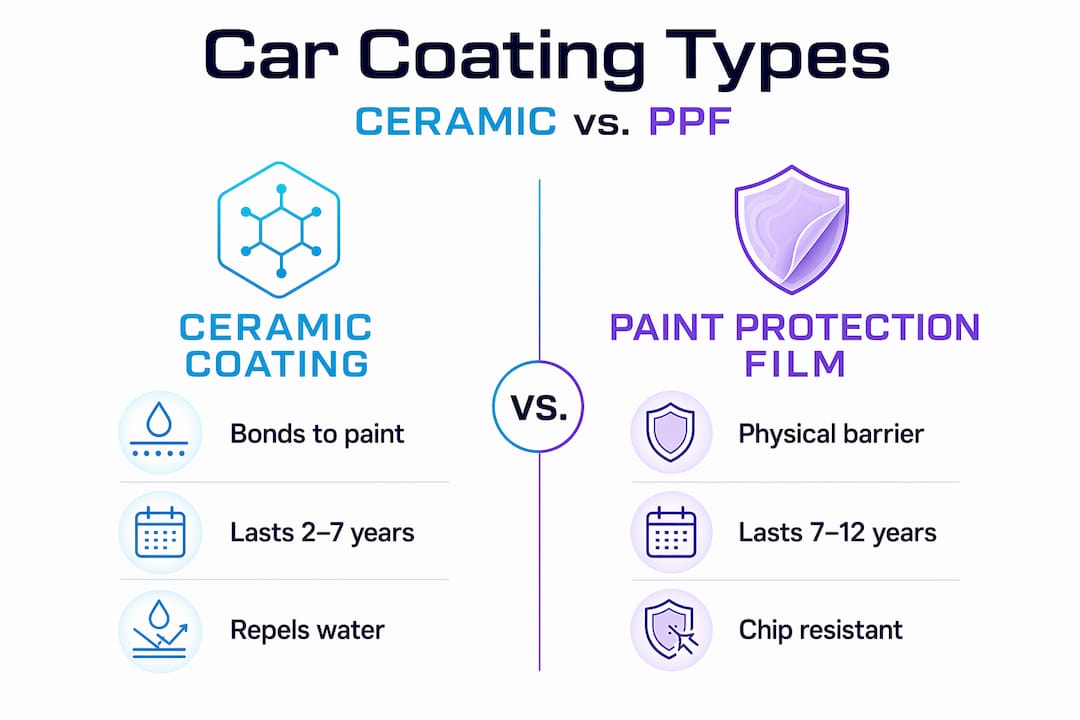
Paint protection film takes a completely different approach. PPF is a thick, thermoplastic urethane film applied physically over the paint surface. It acts as a physical barrier rather than a chemical one. PPF features self-healing properties, UV inhibitors, and hydrophobic coatings that make it genuinely durable against stone chips, minor road debris, and scratches. Quality PPF can last over a decade with proper care.
Polymer sealants sit somewhere between traditional wax and ceramic coatings. They bond to paint through chemical adhesion but do not form the same cross-linked molecular structure that ceramics do. They last several months rather than years, making them a solid option for owners who want reliable car paint protection without the cost or permanence of ceramic.
Here is how they compare at a glance:
| Feature | Ceramic coating | PPF | Polymer sealant |
|---|---|---|---|
| Lifespan | 2–7 years | 7–12+ years | 3–12 months |
| Physical impact protection | Minimal | High | None |
| UV resistance | High | High | Moderate |
| Hydrophobic effect | Very high | Moderate to high | Moderate |
| Cost (professional) | $$$ | $$$$ | $ |
| Self-healing | No | Yes | No |
One feature shared across all quality coatings is hydrophobicity. Water beads up and rolls off the surface, carrying dirt with it. This is not purely cosmetic. Ceramic coatings reduce wash time by 40% by preventing contaminants from bonding firmly to the paint surface. For anyone who washes their car regularly, that adds up quickly.
Pro Tip: If you are comparing coatings vs wax for cars, the key difference is permanence. Wax sits on top of the surface and wears away within weeks. Ceramic coatings chemically bond and last years. For long-term car paint protection on the Sunshine Coast where UV exposure is intense, wax alone simply does not hold up.
How coatings protect paint over time
The genuine, measurable value of coatings becomes clear when you look at what degrades car paint most aggressively over time: UV radiation, chemical contamination, and water-borne minerals. Quality coatings address all three directly.
UV protection is arguably the most significant benefit for Australian vehicle owners. Professional-grade ceramic coatings extend factory paint lifespan by 30–50% in high-UV climates by significantly reducing oxidation and fading. If you have ever seen a ten-year-old car with dull, chalky paint alongside one that still looks like it rolled out of the showroom, the difference is often this single factor.
Chemical resistance is the second major protection mechanism. Bird droppings, insect splatter, tree sap, and industrial fallout are all mildly to strongly acidic. Unprotected clear coat can be etched by these within hours in summer heat. Ceramic coatings provide a sacrificial chemical barrier that absorbs this contact before it reaches the paint below. The coating takes the damage rather than your paint.
The hydrophobic effect ties into maintaining a cleaner surface between washes, which directly reduces the risk of swirl marks. Most paint damage happens during washing, not driving. When less dirt and grime bonds to the surface, washing requires less agitation and less pressure. Less agitation means fewer micro-scratches.
That said, there are clear limits. Coatings cannot prevent rock chips or deep scratches. No ceramic coating, regardless of how it is marketed, stops a stone from cracking clear coat or gouging paint. This is where PPF becomes critical. A coating also will not repair existing paint damage. Any swirl marks, oxidation, or scratches present before application will be sealed under the coating, not corrected by it.
From a resale value perspective, the importance of protective coatings is real and quantifiable. A vehicle with well-maintained paint commands a noticeably higher price than one showing oxidation or swirl-heavy paintwork. Professional ceramic coating costs range from $1,200 to $3,500 depending on vehicle size, and for most owners this investment returns value across years of reduced maintenance costs and preserved resale price.
Maintaining your coating to get the most from it
This is the section most people skip, and it is the reason many coatings underperform. A coating is not a “set and forget” product. Maintenance of car coatings is what separates a coating that lasts two years and looks ordinary from one that performs beautifully for six or seven years.
Follow these core maintenance practices after having a coating applied:
- Wash with pH-neutral soaps every one to two weeks. Regular gentle washing prevents contaminant build-up that degrades the coating surface. Using harsh alkaline or acidic cleaners strips the hydrophobic layer faster than almost anything else.
- Use the two-bucket wash method. One bucket holds clean soapy water, the other is a rinse bucket for your wash mitt. This prevents you from dragging grit back across the paint, which is the main cause of swirl marks during washing.
- Apply a ceramic maintenance spray or SiO2 booster every two to three months. These products extend coating lifespan and restore gloss by replenishing the hydrophobic layer. Think of it as topping up a sunscreen that has been partially worn away.
- Avoid automated brushed car washes entirely. The rotating brushes in these washes are often contaminated with grit from previous vehicles and create exactly the swirl damage coatings are meant to prevent.
- Address contaminants quickly. Bird droppings and bug splatter should be removed within a few hours where possible, especially in warmer months. Even with a ceramic coating protecting the base paint, leaving aggressive acids on the coating surface long enough will eventually etch through it.
- Book a professional inspection once a year. A detailer can assess whether the coating is still performing, identify areas of early degradation, and perform a professional boost treatment if needed.
Pro Tip: Hydrophobicity fades gradually over a coating’s life. The water contact angle starts around 115 degrees and gradually declines to around 95 degrees over the years. Water goes from dramatic tight beads to a smoother sheeting behaviour. It is still repelling water effectively. If you notice this change and panic, do not. Apply a SiO2 booster spray and you will restore the beading performance quickly.
Combining coatings with other protective measures
The most effective car paint protection strategy is not choosing between a ceramic coating and PPF. It is using both in a complementary way. Each product covers gaps the other cannot address.
Ceramic coatings excel at UV resistance, chemical barrier performance, and creating the hydrophobic surface that makes maintenance easier. Combining PPF with ceramic coating over the full body is the preferred modern protection approach among professional detailers. PPF handles the physical impacts on high-risk panels, while the ceramic coating provides the hydrophobic and UV protection across the entire vehicle.
The typical layered approach looks like this:
- PPF applied to the front bumper, bonnet, front guards, door leading edges, and mirror caps. These are the areas that receive the most stone chip and road debris impact.
- Ceramic coating applied over the entire vehicle, including on top of the PPF where it is present.
- Periodic maintenance sprays applied every few months to maintain the ceramic layer.
The cost is higher than either product alone, but the protection level is genuinely superior. Exterior detailing performed before coating application also plays a significant role in outcomes. A thorough paint correction prior to coating application removes existing defects and ensures the coating bonds to a pristine surface rather than sealing in swirl marks and oxidation.
The table below outlines when each approach makes the most sense for different ownership situations:
| Vehicle type / use | Recommended approach |
|---|---|
| Daily driver in high-UV area | Ceramic coating, minimum 2-year grade |
| New or luxury vehicle | PPF on front panels plus full-body ceramic coating |
| Track or off-road vehicle | Full PPF with ceramic coating on top |
| Vehicle kept mainly garaged | High-grade ceramic coating, no PPF needed |
| Budget-conscious owner | Quality polymer sealant with annual reapplication |
My honest take on coatings and expectations
I have seen hundreds of vehicles come through the detailing bay, and the pattern is consistent. Owners who invest in a quality coating and maintain it properly are always satisfied. Owners who treat a coating as a permanent solution that requires nothing from them are always disappointed.
What I have learned is that the importance of protective coatings is real, but it is only half the story. The other half is realistic expectations. A ceramic coating is not armour. It is a highly effective, long-lasting protective layer that reduces the work your paint has to do against the environment. It buys you time, makes maintenance easier, and genuinely preserves paint condition in ways that nothing else does at the same price point over a five-year ownership period.
My recommendation for most Sunshine Coast vehicle owners is to start with a professional-grade ceramic coating, maintain it properly with pH-neutral washes and booster sprays, and consider adding PPF to the front of the vehicle if you do significant highway driving. That combination covers the real threats without overspending.
The biggest mistake I see is skipping proper paint preparation before coating application. You are sealing whatever is under that coating for years. If there are swirl marks and light scratches, invest in a paint correction first. A coating applied over damaged paint does not hide the damage. It preserves it.
— Isaac’s Pro Detailing Sunshine Coast
Get professional coating services on the Sunshine Coast
Whether you are considering your first ceramic coating or want to understand how coatings and PPF work together for your specific vehicle, the team at Isaac’s Pro Detailing Sunshine Coast comes to you. Fully mobile, professional, and working with premium products, they make protecting your investment straightforward.
From thorough paint correction before application to quality ceramic coating and professional detailing services that keep your coating performing at its best, the process is handled at your home, workplace, or wherever suits you. You can also explore their full detailing guide to understand the complete care picture before booking. For vehicle owners who want a result that lasts and maintains its shine through Queensland conditions, professional application is always worth the investment over a DIY approach.
FAQ
What does a ceramic coating actually protect against?
Ceramic coatings protect against UV radiation, chemical contaminants such as bird droppings and insect splatter, water spotting, and minor surface abrasion from washing. They do not protect against rock chips or deep physical scratches, which require paint protection film.
How long does a ceramic coating last?
Quality professional-grade ceramic coatings typically last between two and seven years, depending on the grade applied and how well the vehicle is maintained. Regular washing with pH-neutral soaps and periodic SiO2 booster sprays significantly extend coating lifespan.
Are coatings better than wax for cars?
Yes, for long-term protection. Wax provides a surface-level barrier that lasts weeks, while ceramic coatings chemically bond to paint and last years. The durability of automotive coatings makes them significantly more cost-effective for owners who plan to keep their vehicles long-term.
Do I still need to wash my car after getting a coating?
Absolutely. Coatings make washing easier and less frequent, but they do not eliminate the need for washing. Contaminants still accumulate on the surface, and regular gentle washing is part of the maintenance of car coatings that keeps them performing well.
Can I apply a ceramic coating myself?
You can, but surface preparation is critical and difficult to achieve without professional equipment and experience. Any paint defects present before application will be sealed under the coating. For most vehicle owners, professional application produces a better long-term result.