
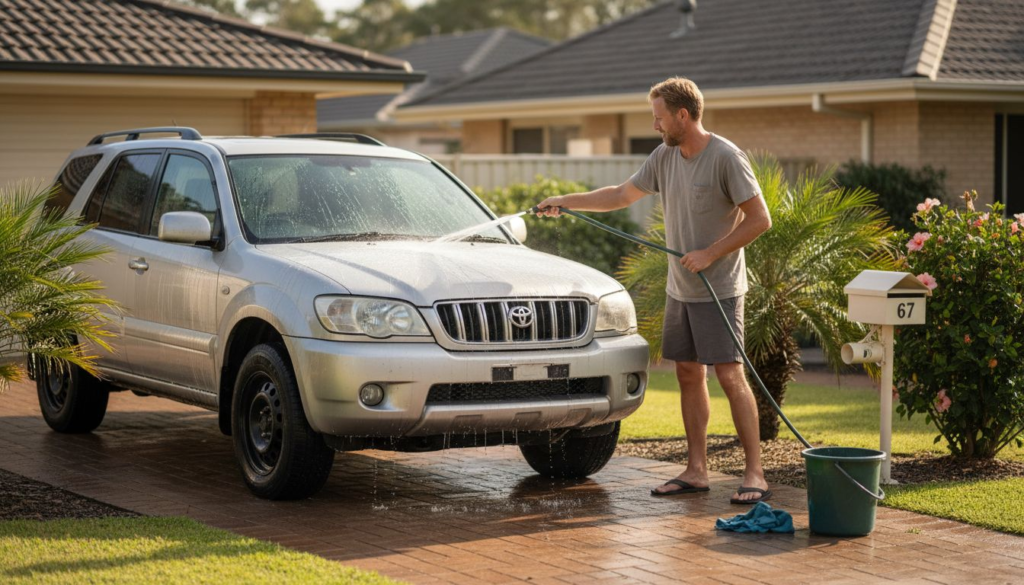
Busy Sunshine Coast vehicle owners often struggle to find time for proper exterior detailing, settling for quick washes that barely scratch the surface. Yet these rushed sessions fail to protect your paint from harsh UV rays and salt air, leaving your vehicle vulnerable to premature wear. This guide delivers a professional-grade, step-by-step detailing method designed for your schedule, helping you preserve your vehicle’s appearance and resale value without sacrificing entire weekends.
Table of Contents
- Introduction To Vehicle Exterior Detailing
- Prerequisites And Tools Needed For Exterior Detailing
- Step-By-Step Exterior Detailing Process
- Common Mistakes And How To Avoid Them
- Expected Results And Maintenance Recommendations
- Discover Expert Mobile Detailing Services On The Sunshine Coast
- Frequently Asked Questions
Key takeaways
| Point | Details |
|---|---|
| Detailing vs washing | Exterior detailing provides deeper paint protection and restoration beyond basic washing. |
| Essential process | Follow a methodical sequence: wash, decontaminate, polish, protect, and finish. |
| Common errors | Avoid working in direct sun, using dirty towels, or skipping decontamination steps. |
| Maintenance frequency | Detail every 3-6 months to maintain protection and vehicle value. |
| Professional option | Mobile services save 70-90% of time whilst delivering showroom results. |
Introduction to vehicle exterior detailing
Vehicle exterior detailing goes far beyond a simple wash. Washing removes surface dirt, but detailing adds layers of care through decontamination, polishing, and protective coatings that defend your paint against environmental damage. For Sunshine Coast owners, this distinction matters tremendously. The region’s intense sunlight and salt-laden coastal air accelerate paint oxidation and clear coat breakdown, making proper protection essential for maintaining your vehicle’s appearance and market value.
The benefits extend well beyond aesthetics. Mobile detailing services using eco-friendly products achieve results matching fixed-location shops, with added convenience for busy owners. Professional-grade care removes bonded contaminants, restores gloss, and creates hydrophobic barriers that repel water and pollutants. Your vehicle looks showroom-fresh whilst gaining genuine protection against UV degradation and corrosion.
Sunshine Coast conditions demand proactive care. Salt spray from ocean breezes bonds to paint surfaces, creating microscopic pitting that dulls your finish over time. Relentless UV exposure breaks down wax and sealant layers faster here than in cooler climates. Without regular detailing, these factors combine to reduce your vehicle’s resale value by thousands of dollars within just a few years.
Mobile detailing transforms this challenge into an opportunity. Services come to your home, workplace, or even beachside car parks, eliminating travel time and waiting rooms. You maintain your busy schedule whilst professionals handle the labour-intensive work using comprehensive car detailing methods that would take you an entire weekend to replicate.
Key advantages of proper exterior detailing include:
- Enhanced paint depth and mirror-like gloss that turns heads
- UV and salt protection extending your paint’s lifespan by years
- Easier future cleaning as protected surfaces repel dirt naturally
- Preserved resale value through documented maintenance and visible condition
- Time savings when choosing professional mobile workflows over DIY efforts
Understanding these fundamentals helps you appreciate why shortcuts compromise results. Detailing is an investment in your vehicle’s longevity, not merely cosmetic vanity. The comprehensive detailing approach addresses multiple paint care layers simultaneously, creating synergistic protection that simple washing cannot match.
Prerequisites and tools needed for exterior detailing
Successful detailing starts before you touch your vehicle. Environmental conditions dramatically affect product performance and final results. Always work in shaded areas, away from direct sunlight that causes cleaners and polishes to dry prematurely, leaving streaks and hazing. Well-ventilated spaces prevent fume buildup from products whilst allowing proper airflow for drying. Choose calm days when wind won’t blow dust onto freshly polished surfaces.
Essential tools form the foundation of quality work. A dual-bucket wash system prevents dirt contamination by separating rinse water from clean solution. Microfibre towels in various weights handle different tasks without scratching paint. Clay bars lift bonded contaminants that washing misses. Polishing compounds and pads remove light scratches and restore clarity. Wax or synthetic sealants provide the protective barrier your paint needs.
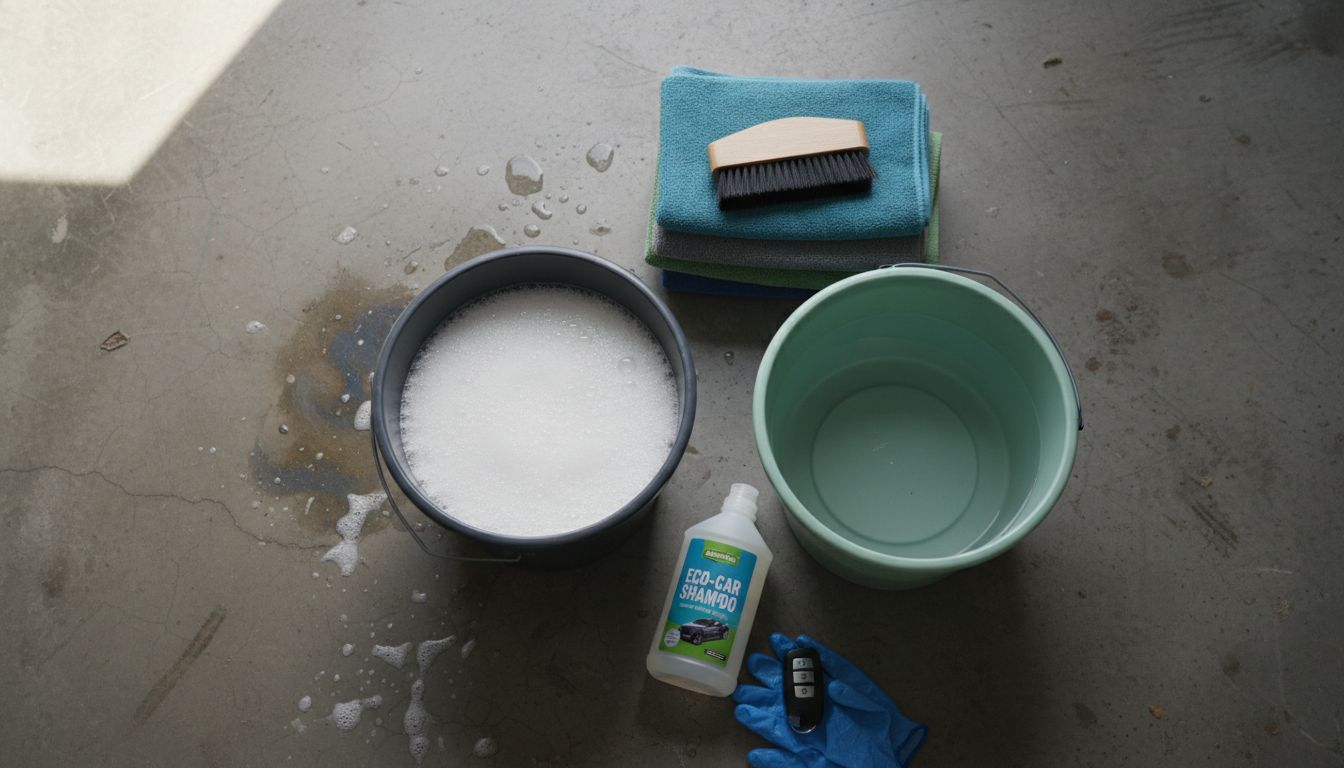
Product selection matters enormously for both results and environmental responsibility. pH-neutral, eco-friendly shampoos clean effectively without stripping existing protection or harming local waterways. These formulas meet Sunshine Coast environmental standards whilst preserving your existing wax or sealant layers. Avoid harsh alkaline or acidic cleaners that accelerate clear coat breakdown.
Proper workspace setup includes water access for rinsing, adequate lighting to spot imperfections, and comfortable temperatures between 15-25°C. Extreme heat or cold affects product chemistry, reducing effectiveness. Gather all tools beforehand to maintain workflow efficiency and prevent products from dwelling too long on surfaces.
| Tool/Product | Primary Use | Key Benefit |
|---|---|---|
| Dual-bucket system | Washing | Prevents swirl marks from dirt transfer |
| Clay bar kit | Decontamination | Removes bonded pollutants and overspray |
| Microfibre towels | Drying and buffing | Scratch-free paint contact |
| Polish compound | Paint correction | Restores gloss and removes light scratches |
| Wax or sealant | Protection | Creates UV and water barrier |
| Wheel brushes | Wheel cleaning | Reaches brake dust in tight spaces |
| Glass cleaner | Window finishing | Streak-free clarity |
Investing in quality tools pays dividends through better results and tool longevity. Cheap microfibre often contains hard fibres that scratch paint. Low-grade polishes use fillers that wash away quickly rather than genuinely correcting defects. Professional-grade products from mobile detailing specialists deliver superior performance because formulation quality directly impacts protection duration.
Step-by-step exterior detailing process
Following a logical sequence ensures thorough coverage whilst building protection layers correctly. Each step prepares the surface for the next, creating cumulative benefits that shortcuts cannot replicate. This process suits busy Sunshine Coast owners by breaking work into manageable stages you can complete across multiple sessions if needed.
-
Rinse thoroughly to remove loose dirt and debris. Start from top to bottom, using moderate water pressure that won’t force particles into paint. This pre-rinse prevents scratching during washing.
-
Wash using dual-bucket method with one bucket for soapy solution and another for rinsing your mitt. Work panel by panel in straight lines, never circular motions that create swirl marks. Rinse each section before moving on.
-
Decontaminate with clay bar after washing and drying. Spray lubricant on small sections, then glide the clay across the surface using light pressure. You’ll feel roughness disappear as bonded contaminants lift away. Fold and knead the clay frequently to expose clean surfaces.
-
Polish to restore gloss using a dual-action polisher for best results, or apply by hand if time permits. Work small areas with overlapping passes, removing light scratches and oxidation. Buff residue immediately with clean microfibre. This step reveals your paint’s true colour depth.
-
Apply protective wax or sealant in thin, even coats. Less is more here; thick application wastes product and creates buffing challenges. Allow proper cure time per manufacturer instructions before buffing to high gloss. This layer shields against UV damage and makes future cleaning effortless.
-
Detail wheels and tyres using dedicated brushes that reach behind spokes and into crevices. Remove brake dust completely before applying tyre dressing. Clean wheels showcase your overall attention to detail and prevent corrosive buildup.
-
Clean windows and trim as final touches. Use ammonia-free glass cleaner for streak-free clarity. Treat plastic and rubber trim with UV protectant to prevent fading and cracking.
Pro Tip: Always work in shaded conditions and keep surfaces cool to touch. Products applied to hot paint dry too quickly, leaving residue that requires extra buffing and potentially damaging your finish.
This mobile detailing workflow typically requires 3-8 hours depending on vehicle size and condition. Breaking the process across two sessions keeps the work manageable without compromising results. The exterior detailing benefits become immediately visible through enhanced gloss and water beading behaviour.
Maintaining detailing intervals of every 3-6 months prevents paint degradation whilst keeping the workload reasonable. Frequent light maintenance beats infrequent intensive correction for both results and time investment.
Common mistakes and how to avoid them
Even motivated DIYers fall into predictable traps that undermine their detailing efforts. Understanding these errors helps you achieve professional results whilst protecting your investment. Most mistakes stem from rushing or skipping preparatory steps that seem optional but prove essential.
Failing to rinse thoroughly between wash and clay bar stages leaves grit on the surface. When you drag clay across dirty paint, those particles create the very scratches you’re trying to avoid. Always rinse and dry completely before decontamination, and check your clay frequently for embedded debris.
Applying wax or polish on hot surfaces ranks among the most common errors. Direct sunlight heats paint beyond ideal working temperatures, causing products to flash dry before you can buff them properly. The result is uneven coverage, hazing, and wasted product. Even on cloudy days, choose shaded spots and ensure panels feel cool.
Using abrasive or contaminated towels scratches paintwork faster than any other mistake. Dirty microfibre grinds particles into your clear coat with every wipe. Cheap towels often contain hard synthetic fibres that mar surfaces. Always use dedicated, freshly laundered microfibre cloths and replace them when they show wear.
Skipping clay bar or polishing steps seems like a time-saver but severely limits your results. Wax applied over contaminated paint bonds poorly and fails quickly. Without polishing, you’re sealing in existing imperfections rather than correcting them. These preparatory steps determine how long your protection lasts and how good it looks.
Neglecting wheels and tyres creates visual discord. Gleaming paintwork beside grimy wheels undermines your entire effort. Brake dust is corrosive and becomes harder to remove the longer it sits. Regular wheel cleaning prevents permanent staining and maintains your vehicle’s complete appearance.
Pro Tip: Rinse all tools frequently during use and inspect them for contamination. A single piece of grit trapped in your wash mitt can scratch multiple panels before you notice. Prevention beats correction every time.
Avoiding these common detailing errors separates amateur results from professional finish. The extra minutes spent on proper technique save hours of correction work later.
Expected results and maintenance recommendations
Proper exterior detailing delivers immediately visible improvements that justify your time investment. Showroom-level shine emerges as polishing removes the dull oxidation layer obscuring your paint’s true colour. Surfaces feel glass-smooth after clay bar treatment removes bonded contaminants. Most dramatically, water beads and sheets off protected paint rather than spreading into flat puddles, demonstrating effective sealant bonding.
These results prove more than cosmetic. Detailing every 3-6 months reduces paint degradation by 15-20% annually compared to washing alone. This protection translates directly to maintained resale value and avoided repainting costs. Your investment compounds over ownership duration.
Time commitment varies by vehicle size and condition. Small sedans in good condition require 3-4 hours for complete exterior detailing. Larger SUVs or neglected vehicles may need 6-8 hours initially, with maintenance sessions dropping to 3-5 hours once protection is established. Most Sunshine Coast owners find this manageable when scheduled quarterly.
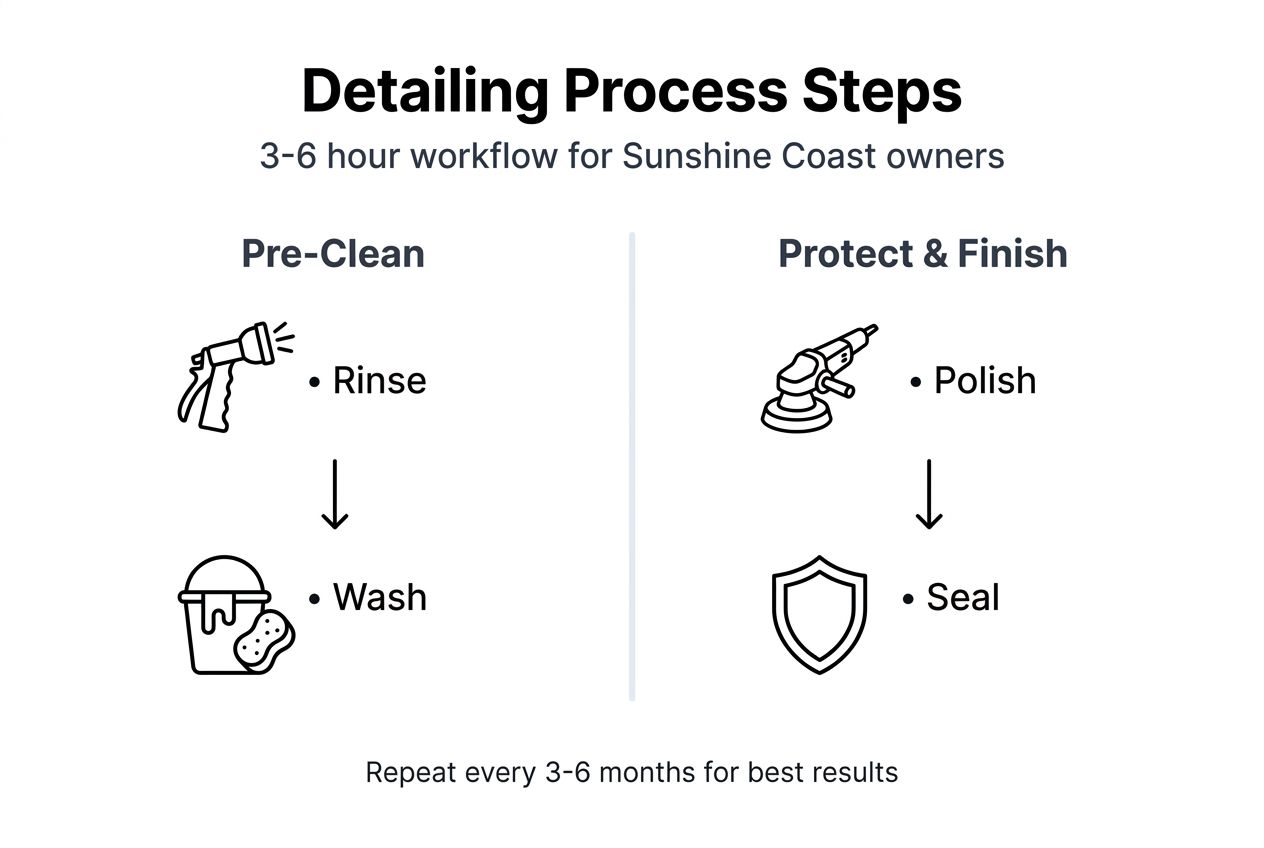
Regular maintenance preserves your initial work. Washing every 2-3 weeks prevents heavy contamination buildup. Touch-up waxing between full details extends protection in high-wear areas like bonnets and roofs. This approach maintains results without repeating the entire process monthly.
| Factor | DIY Detailing | Professional Mobile Service |
|---|---|---|
| Time required | 4-8 hours | 2-4 hours (your time saved) |
| Cost per session | $80-150 (products/tools) | $200-400 (all-inclusive) |
| Convenience | Requires workspace, weather planning | Done at your location, any weather |
| Quality | Variable, learning curve | Consistent, expert results |
| Equipment | Initial investment required | Professional-grade included |
Choosing between DIY and professional service depends on your priorities. DIY suits enthusiasts who enjoy the process and have suitable workspace. Mobile professionals deliver superior results whilst returning 70-90% of your time, making them ideal for busy schedules. The exterior detailing role in vehicle preservation remains constant regardless of who performs the work.
Eco-friendly products align with Sunshine Coast environmental values whilst protecting your finish effectively. These formulations biodegrade safely and avoid harsh chemicals that damage local waterways. Using them demonstrates environmental responsibility without compromising results.
Discover expert mobile detailing services on the Sunshine Coast
Busy Sunshine Coast vehicle owners deserve professional results without sacrificing entire weekends. Isaac’s Pro Detailing brings expert exterior care directly to your location, using eco-friendly products and professional-grade equipment that deliver showroom finish whilst you focus on what matters. Their mobile detailing workflow saves 70-90% of your time compared to DIY efforts or driving to fixed locations.
Every service includes the complete detailing process: thorough washing, clay bar decontamination, paint polishing, and protective sealant application. Their professional mobile service protects your paint from Sunshine Coast’s harsh UV and salt air whilst maintaining that head-turning gloss you value. Flexible booking accommodates your schedule, with tailored packages matching your vehicle’s specific needs. Discover their mobile detailing services and experience convenience without compromising quality.
Frequently asked questions
What is the difference between car washing and exterior detailing?
Washing removes surface dirt and grime using soap and water, providing basic cleanliness. Detailing includes decontamination, polishing, and protective coatings that restore paint depth and shield against UV damage and environmental contaminants for months.
How often should I detail my vehicle to maintain protection?
Most Sunshine Coast vehicles benefit from full exterior detailing every 3-6 months, with regular washing every 2-3 weeks between sessions. This frequency balances protection needs against time investment whilst preventing heavy contamination buildup.
Can I do effective exterior detailing myself or should I choose mobile professionals?
DIY detailing works well if you have proper tools, suitable workspace, and 4-8 hours available. Mobile professionals deliver superior results whilst saving 70-90% of your time, making them ideal for busy schedules.
What eco-friendly products are best for the Sunshine Coast climate?
pH-neutral shampoos, biodegradable degreasers, and water-based sealants perform excellently in coastal conditions whilst meeting environmental standards. These products protect paint effectively without introducing harsh chemicals into local waterways.
What are the risks of detailing in direct sunlight and how to avoid them?
Direct sun causes products to dry prematurely, creating streaks, hazing, and uneven protection. Always work in shaded areas with cool paint surfaces, choosing early morning or late afternoon for outdoor detailing when necessary.