
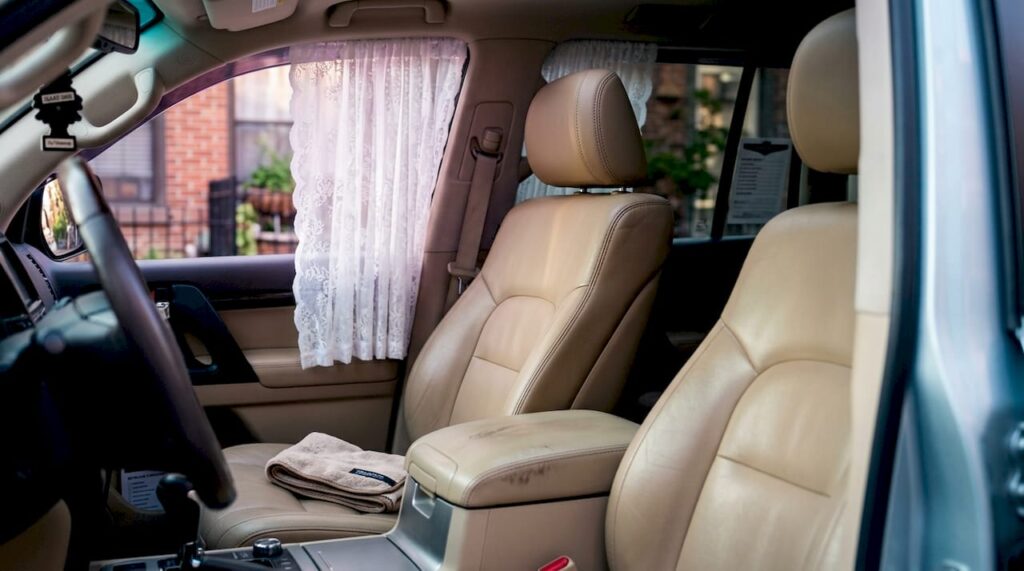
TL;DR:
- Leather interior protection prevents UV, heat, and abrasion damage, preserving its flexibility and appearance over time. Regular cleaning, conditioning, and applying advanced coatings effectively extend seat lifespan, especially in high-UV conditions like Australia. Consistent care, combined with physical barriers and heat management habits, is essential to prevent irreversible cracking and fading.
Leather interior protection is the practice of shielding your vehicle’s upholstery from UV radiation, heat, oils, and abrasion to preserve its suppleness, colour, and structural integrity. Without it, UV penetrates leather and collapses collagen fibre flexibility, turning a premium cabin into a cracked, faded disappointment. Products like ceramic coatings, elastomer sealants, and dedicated conditioners from brands such as Chemical Guys and Titan Coatings address this degradation at the fibre level. For Australian vehicle owners facing some of the highest UV indices on the planet, understanding why you protect leather interiors is not optional. It is the difference between seats that last a decade and seats that need replacing in three years.
Why protect leather interiors: the science of degradation
Leather is a natural material, and that is precisely its vulnerability. The collagen fibres that give leather its strength and flexibility are sensitive to both ultraviolet light and thermal stress. When your car sits in the sun, vehicle interior temps rise 20°C in as little as ten minutes, creating a greenhouse effect that accelerates fibre breakdown far beyond what outdoor exposure alone would cause.
UV radiation does not just fade colour. It breaks the molecular bonds within collagen, reducing the leather’s ability to flex and recover. Over time, this produces the characteristic cracking you see along seat bolsters and headrests, the areas that flex most with every entry and exit. Heat compounds this by drawing out the natural oils that keep fibres lubricated, leaving them brittle and prone to splitting.
Protection matters not just for appearance. It slows fibre degradation that leads to cracking at the exact flex points where leather is under the most mechanical stress.
The greenhouse effect inside a parked vehicle is particularly punishing. Glass amplifies UV and traps heat simultaneously, meaning even a mild sunny day in Noosa or Maroochydore can push seat surface temperatures well above 70°C. At those temperatures, unprotected leather loses moisture rapidly and begins the irreversible process of hardening.
- UV radiation breaks down collagen bonds, reducing flexibility
- Heat draws out natural oils, leaving fibres brittle
- Thermal cycling (hot days, cool nights) accelerates cracking at flex points
- The greenhouse effect inside parked vehicles multiplies both UV and heat load
- Australian UV conditions intensify all of the above year-round
What are the main methods to protect leather interiors?
Three broad strategies exist for protecting leather upholstery: physical barriers, conditioning treatments, and advanced protective coatings. Each works differently, and the best approach for your vehicle depends on your leather type, your parking habits, and how much maintenance you are willing to commit to.
Physical barriers: seat covers and window tinting
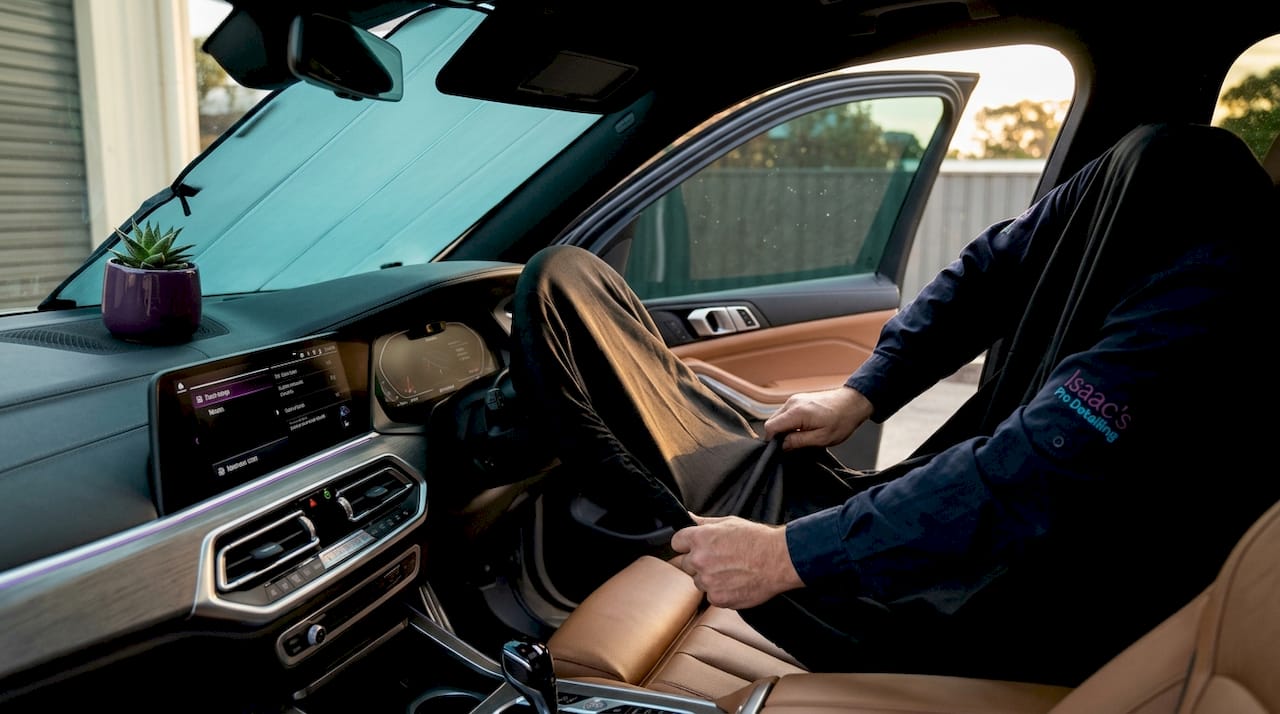
Seat covers are the most direct form of UV protection because they block radiation at the seat surface itself. Seat covers prevent UV reaching upholstery completely at the contact point, which no window film can replicate. Window tinting reduces UV entering the cabin but varies significantly in UVA rejection depending on film quality and age. A cheap tint may block visible light while allowing the UV wavelengths that damage leather to pass through freely.
Conditioning: replenishing what heat and UV remove
Conditioning is the most widely practised form of leather care, and it works by replenishing the oils and moisture that UV and heat strip away. Conditioning every 3 to 6 months maintains suppleness and prevents brittle cracks in daily driver vehicles, with more frequent applications needed in high-UV climates like Queensland. The critical distinction is between conditioners and protective coatings. Conditioners feed the leather; coatings shield it from future attack.
Advanced coatings: ceramic and elastomer protection
Ceramic and elastomer coatings represent the most durable form of leather protection currently available. Elastomer coatings are hard but elastic, absorbing the flex that occurs during hot summers and cool winters without cracking themselves. This makes them particularly well suited to Australian conditions where thermal swings between seasons are significant.
| Method | Best for | Limitation |
|---|---|---|
| Seat covers | Maximum UV blocking at seat surface | Covers the leather; does not treat it |
| Conditioning | Restoring moisture and flexibility | Does not shield from future UV damage |
| Ceramic or elastomer coating | Long-term UV and abrasion resistance | Requires correct application; can be degraded by heavy conditioners |
| Window tinting | Reducing cabin UV and heat load | Variable UVA rejection; does not protect seat surface directly |
Pro Tip:Before applying any conditioner or coating, identify whether your leather has a factory top coat. Most modern vehicles use coated leather, and applying heavy oil-based conditioners to a coated surface can leave residue that actually reduces the protection the factory finish provides.
What is the correct routine for cleaning, conditioning, and protecting leather?
The sequence of leather care matters as much as the products you choose. Skipping steps or reversing the order traps contaminants under conditioner, which accelerates deterioration rather than preventing it. Here is the correct maintenance sequence for upholstery cleaning best practices that professional detailers follow.
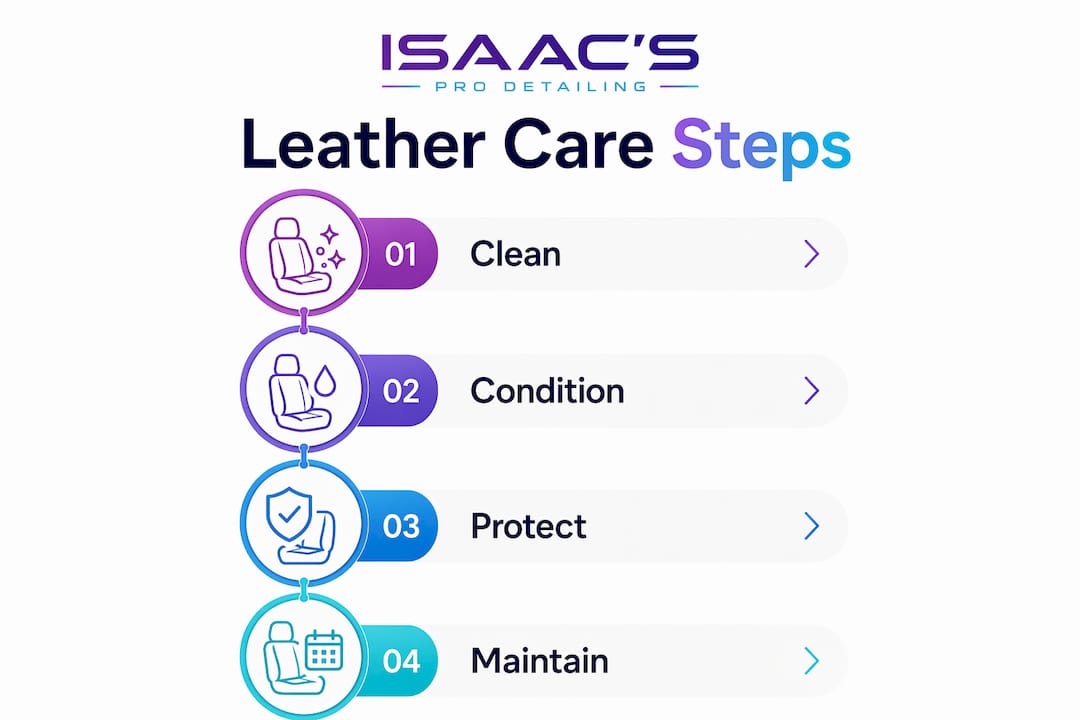
- Vacuum thoroughly. Remove loose grit and debris from seat surfaces and crevices. Cleaning removes 80% of abrasive grit that causes wear, but vacuuming alone is not sufficient without a follow-up clean.
- Clean with a dedicated leather cleaner. Use a pH-neutral leather cleaner applied with a soft brush or microfibre cloth. This lifts oils, body sweat, and embedded grime. Proper cleaning order is crucial per Car and Driver testing; conditioners applied over dirty leather lock contaminants into the fibre.
- Condition the leather. Apply a leather conditioner to replenish the moisture and nutrients removed during cleaning. Focus on high-wear zones: seat bolsters, the driver’s seat base, and headrests. These areas flex and abrade most frequently and dry out fastest.
- Apply a UV protectant or coating. Once the conditioner has been absorbed, apply a UV-blocking protectant or a ceramic or elastomer coating over the top. This layer shields the freshly conditioned leather from the next round of UV and heat exposure.
- Repeat on schedule. Condition every 3 to 6 months. Apply UV protectants every 6 to 12 months, or more frequently if your vehicle parks outdoors daily.
Climate matters when setting your schedule. A vehicle garaged nightly in Buderim needs less frequent conditioning than one parked on an exposed driveway in Caloundra all day. Adjust based on how much direct sun your interior actually receives.
Pro Tip:Pay extra attention to the driver’s seat bolster on the entry side. This is the first area to crack because it flexes every time you slide in and out. Targeted conditioning here every two months, even if you do the full routine less often, extends seat life noticeably.
How to minimise heat damage in Australian conditions
Heat management is as important as UV protection for prolonging leather life, particularly in Queensland where summer cabin temperatures can be extreme. The goal is to reduce seat surface temperature during parking, which directly slows the rate of moisture loss and fibre degradation.
- Place a windshield sunshade across the front windscreen whenever you park in direct sun. This alone can reduce cabin temperature by 15 to 20 degrees.
- Cover leather seats with a blanket or jacket when parked under direct sun. RAC-backed advice recommends this specifically to combat the hotplate effect, where leather absorbs radiant heat and reaches temperatures that cause immediate surface damage.
- Park in shade or a garage whenever possible. Even partial shade from a tree or building significantly reduces UV and thermal load on your interior.
- Use seat covers on vehicles that park outdoors regularly. They serve double duty as both UV blockers and heat insulators, keeping the leather surface cooler and protected simultaneously.
- Crack windows slightly when parked to allow some heat to escape, reducing the greenhouse effect inside the cabin.
For Sunshine Coast vehicle owners, these habits are not optional extras. The combination of high UV index, long sunny days, and warm temperatures year-round means leather deteriorates faster here than in cooler, cloudier climates. Building these habits into your parking routine costs nothing and extends the life of your interior significantly.
What common mistakes should be avoided when protecting leather?
Most leather damage is not caused by neglect alone. It is caused by well-intentioned care done incorrectly. Knowing what not to do is as valuable as knowing the right routine.
- Applying heavy conditioners to top-coated leather.Modern leather interiors often have UV-resistant top coats, and heavy oil-based conditioners can degrade this factory layer. Water-based protectants are often the better choice for newer coated interiors.
- Using household cleaners. Products like dish soap, all-purpose spray, or baby wipes are not pH-neutral for leather. They strip protective finishes and dry out fibres over time.
- Skipping the cleaning step. Applying conditioner over dirty leather traps grit and oils beneath the surface, which then grind against fibres from the inside. Always clean before you condition.
- Ignoring UV protection entirely. Unprotected leather absorbs oils and contaminants 15 to 20% faster, and nearly 40% of high-use vehicles develop permanent stains within five years without protection. UV damage is irreversible once cracking begins.
- Not testing new products first. Always apply a new cleaner, conditioner, or coating to a hidden area such as the underside of a seat before treating visible surfaces. Different leather finishes react differently to the same product.
- Treating all leather the same. Genuine full-grain leather, corrected-grain leather, and bonded or eco leather each require different care approaches. Using the wrong product for your leather type accelerates the damage you are trying to prevent.
Key takeaways
Protecting leather interiors requires a consistent clean-condition-protect cycle, physical UV blocking, and product choices matched to your specific leather type and Australian climate conditions.
| Point | Details |
|---|---|
| UV and heat are the primary threats | Vehicle cabin temperatures and UV radiation break down collagen fibres, causing irreversible cracking. |
| Seat covers outperform window tinting | Physical barriers at the seat surface block UV more reliably than cabin-wide treatments alone. |
| Clean before you condition | Skipping cleaning traps contaminants under conditioner, accelerating fibre deterioration from within. |
| Match products to leather type | Top-coated leather needs water-based protectants; heavy conditioners can degrade factory UV-resistant finishes. |
| Australian conditions demand more frequent care | High UV index and heat require conditioning every 3 months and consistent heat management habits when parking. |
What I have learned from years of detailing leather interiors
After working on hundreds of vehicles across the Sunshine Coast, the pattern I see most often is this: owners invest in a quality vehicle with premium leather seats, then do nothing to protect them for two or three years. By the time they notice cracking along the bolsters or fading on the headrests, the damage is already permanent. No conditioner reverses cracked collagen. You can only slow what is left.
The vehicles that hold up best are not always the ones with the most expensive leather. They are the ones whose owners follow a simple, consistent routine. Clean, condition, protect. Repeat every few months. Park in shade when you can. Cover the seats when you cannot. That is genuinely all it takes for most daily drivers.
What surprises people most is the product question. Many assume more conditioner means better protection. It does not. On modern coated leather, over-conditioning is one of the fastest ways to degrade the factory UV protection your seats already have. I have seen brand-new interiors made worse by well-meaning owners applying the wrong product too often. Understanding your leather type before you open a bottle is the single most underrated step in the entire process.
Professional detailing every six to twelve months, combined with simple at-home habits between visits, is the approach that consistently delivers the best results. You do not need to choose between DIY and professional care. The two work best together.
— Isaac’s
Keep your leather looking its best with Isaac’s Pro Detailing
Isaac’s Pro Detailing Sunshine Coast offers fully mobile leather care services across the region, from Caloundra to Noosa, so your vehicle gets professional attention without leaving your driveway. The team applies dedicated leather cleaners, conditioners, and advanced ceramic coatings matched to your specific interior type, whether you drive a daily commuter or a prestige SUV. For vehicle owners who want the clean-condition-protect cycle done properly the first time, Isaac’s brings the expertise and products directly to you. Explore the mobile detailing workflow to see exactly how each service is structured, or browse the full wash menu to find the right package for your vehicle.
FAQ
How often should I condition my leather car seats?
Condition leather seats every 3 to 6 months as a baseline, and increase to every 2 to 3 months if your vehicle parks outdoors in high-UV conditions like Queensland summers. High-wear zones such as seat bolsters benefit from more targeted, frequent attention.
Do seat covers actually protect leather better than window tinting?
Seat covers block UV directly at the seat surface, making them more reliable than window tinting alone. Window films vary significantly in UVA rejection and do not prevent radiant heat from reaching the leather once it enters the cabin.
Can I use any conditioner on my leather seats?
Not all conditioners suit all leather types. Top-coated leather needs specially designed protectants rather than heavy oil-based conditioners, which can degrade the factory UV-resistant finish. Always identify your leather type and test any new product on a hidden area first.
What happens if I never protect my leather interior?
Unprotected leather absorbs contaminants faster, fades under UV exposure, and develops permanent cracking at flex points that no product can reverse. The interior cleaning guide from Isaac’s outlines what consistent protection prevents and why starting early matters.
Is ceramic coating worth it for leather seats?
Ceramic and elastomer coatings provide the most durable long-term protection available, resisting UV, abrasion, and temperature swings. They are particularly well suited to Australian conditions and are best applied by a professional detailer who can match the coating to your specific leather finish.