
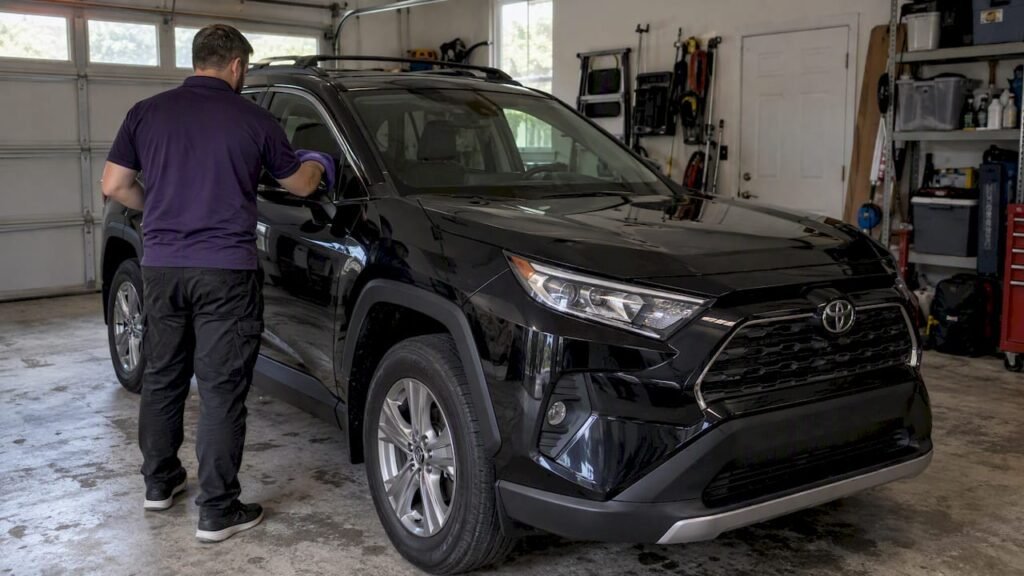
A standard ceramic coating application takes between 2 and 6 hours depending on vehicle size and paint condition. Most cars are safe to drive away once buffing finishes, but the coating still needs time to mature. Expect an initial dry window of 24 to 72 hours before full handling, and a full molecular cure of up to 2 to 3 weeks before the paint has maximum resistance.
TL;DR:
- A small hatchback may take 1–3 hours, while a large SUV can need 4–6 hours or more; paint correction and extra coats extend either job.
- A one to two hour quote suits a spray top up on clean, corrected paint; without decontamination or correction, that pace may signal skipped preparation.
- Wait until the coating has firmed before hand washing with pH neutral soap, and avoid automated brush washes because their bristles can mark the surface.
- For the first 7–14 days, avoid close pressure washing, harsh detergents, polishing, and clay treatment, which can mark or thin a coating before it hardens.
- Mobile appointments may need rescheduling in rain or extreme heat; clear the parking area and arrange power or shelter if the technician requests it.
Table of Contents
- How long does ceramic coating application take?
- What’s the difference between initial dry time and full cure?
- When can you drive and wash the car after coating?
- What changes how long application and curing take?
- What happens during a mobile ceramic coating appointment?
- How Isaac’s Pro Detailing approaches timing and cure guidance
- When a quick job is fine and when it isn’t
- Get your ceramic coating done properly, on your schedule
- FAQ
- Sources
How long does ceramic coating application take?
When we book a coating appointment, the quoted hours cover more than spraying product onto panels. A typical session includes a full inspection, wash and decontamination, any paint correction the car needs, panel-by-panel application, and a final buff and check before handover.
- Small hatchback: roughly 1 to 3 hours for a well-prepped car with minimal correction.
- Medium sedan: roughly 2 to 4 hours, depending on paint condition and coat count.
- Large SUV, 4×4 or tray truck: 4 to 6 hours or more, given the extra panel area and detailing work.
These ranges are examples rather than guarantees. A car with swirl marks, oxidation or old wax residue needs correction before the coating goes on, which adds time regardless of size. Multiple coats also extend the job, since each layer typically needs a flash period before the next goes on.
If you see a quote around 1 to 2 hours for a full vehicle, that can be legitimate for a spray-on top-up applied over paint that’s already in excellent condition. On a car that hasn’t been corrected or properly decontaminated, a job that short usually means the prep steps have been skipped rather than streamlined.

What’s the difference between initial dry time and full cure?
“Dry” and “cured” aren’t the same thing, and mixing them up leads to coatings that get damaged in their first week. Flash time, or initial dry, is the short window right after application when solvents evaporate and the product is ready to be buffed off, typically a few minutes per panel depending on temperature.
Full cure is a different process entirely. It’s when the coating’s silane and siloxane molecules finish cross-linking into a hard, bonded network on the paint surface. Technical research into silane and siloxane coatings shows this condensation reaction depends heavily on time and temperature, which is why a coating that feels dry to the touch can still be weeks away from full strength.
24 to 72 hours is the common initial handling window many coating manufacturers and installers quote before the car can be handled and lightly used normally, with full cross-linking and maximum chemical resistance arriving over the following 2 to 3 weeks.

Warmer, drier conditions speed up evaporation and push the cure along faster, while cool or humid weather slows it down. Product chemistry matters too: graphene-enhanced coatings and different silane formulations behave differently in that cross-linking window. Installers judge progress by watching for consistent water beading, resistance to light solvents, and a surface that no longer feels tacky when touched.
When can you drive and wash the car after coating?
Driving away is usually fine once your detailer finishes the final buff and inspection. The concern in the first 24 to 72 hours isn’t the drive itself, it’s prolonged exposure to rain, bird droppings or heavy road grime before the coating has had a chance to firm up.
First washes should wait until that initial window has passed. A hand wash with pH-neutral soap after 24 to 72 hours is the safest approach, and automated brush washes should be avoided well beyond that, since the brushes can mark a coating that hasn’t fully hardened.
For the first 7 to 14 days, skip high-pressure jets held close to the panel, harsh or alkaline detergents, and any abrasive polish or clay treatment. Here’s a simple checklist for those first two days:
- Avoid parking under trees or near sprinklers for the first 24 hours.
- Keep the car out of automated car washes entirely during this period.
- Wipe off bird droppings or sap promptly with water only, no chemicals.
- Hold off on waxes, sealants or spray detailers until the cure window has passed.
Our own cure time guide covers this first 48 to 72 hour period in more depth if you want the full rundown.
What changes how long application and curing take?
Weather is the biggest variable outside anyone’s control. Hot, dry days shorten flash time to a minute or two per panel, while cool or humid conditions can stretch that to several minutes, which adds up across a whole vehicle. Temperature swings also affect how fast the molecular cure progresses once the car leaves the workshop.
On the application side:
- Paint correction, clay decontamination and multiple coats each add measurable hours to the job.
- Solvent-based, waterborne and graphene-enhanced coatings all cure at different rates due to differences in their underlying chemistry.
- A coating’s open pot life limits how long it can sit once mixed, which shapes how installers pace their work across a large vehicle.
- Working area size and a technician’s experience level affect how evenly and quickly panels get covered.
Mobile setups sometimes need wider booking windows than a fixed workshop, since weather and site conditions can shift the plan on the day.
Pro Tip: Park your car in a shaded, sheltered spot ahead of a mobile appointment. It keeps panels cooler and more workable, and it gives your detailer a controlled space to finish the job without rushing.
What happens during a mobile ceramic coating appointment?
A typical booking starts with arrival and setup, followed by a wash and decontamination pass to strip the paint back to a clean base. If correction work is part of the package, that happens next, often tested on a small panel first to confirm the approach before committing to the full vehicle.
From there, coating goes on panel by panel, with each section buffed and inspected before moving to the next. Multi-hour booking windows are standard for mobile jobs, since the technician is managing both the vehicle and the work environment at once.
Weather on the day can shift the plan: light cloud cover is fine, but rain or extreme heat may mean rescheduling or adjusting the sequence of tasks. To help things run smoothly, we ask customers to:
- Clear the driveway or parking space ahead of time.
- Provide access to power or a sheltered area if the booking requires it.
- Empty the car of personal items before we arrive.
How Isaac’s Pro Detailing approaches timing and cure guidance
Our Workflow For Ceramic Coating: The Complete 2026 Guide sets out staged checkpoints for every coating job, from decontamination through to the flash and buff windows on each panel. Rather than treating application as one block of time, we check progress panel by panel so nothing gets rushed past its proper flash period.
The guide also includes published advice on the first wash, rain avoidance and the cautious 7 to 14 day window where abrasive products and high-pressure washing should wait.
A coating is only as good as the prep and patience behind it. Rushing the flash window or skipping decontamination shows up months later as patchy water behaviour, not on day one.
When a quick job is fine and when it isn’t
A short quoted time makes sense for a single-panel top-up on paint that’s already corrected, or for warm, dry conditions where flash times are naturally faster. Most vehicles benefit from the longer route though: proper decontamination and correction add hours up front but extend how long the coating performs well.
Some packages bundle the full workflow rather than a rushed spray-and-go.
— isaac’s
Get your ceramic coating done properly, on your schedule
Booking a coating means the full workflow can happen at your home, workplace or wherever suits, with the prep, application, and cure guidance handled by experienced detailers.
For owners after complete paint protection, our Ultimate Protection Package covers full correction and coating in one booking, while the standalone ceramic coating service suits paint that’s already in solid condition. If you want a lighter, faster option, the Graphene spray sealant coating package is worth a look too.
- Booking typically includes on-site time for wash, correction (if needed), application, and a final inspection.
- Customers receive guidance on first-wash timing and the first two weeks of aftercare before completion.
- Jobs may be backed by a satisfaction guarantee.
Reach out through our booking page to lock in a time that works for you.
FAQ
How long after ceramic coating can I drive?
Most cars can be driven away as soon as the final buff and inspection are done. The main thing to manage in the following 24 to 72 hours is avoiding heavy rain exposure or contamination while the coating firms up.
How long do I let ceramic coating sit before wiping?
Flash time before wiping or buffing a panel is usually just a few minutes, though it runs longer on cooler days. Autoglym’s UHD kit instructions note 1 to 2 minutes on warm days versus 3 to 5 minutes on cooler ones, with the first panel used as a timing guide for the rest of the car.
What destroys ceramic coating?
Automated brush car washes, high-pressure jets held close to the panel, and harsh or abrasive detergents all shorten a coating’s lifespan, particularly during the early cure window. Abrasive polishing or clay treatment within the first 7 to 14 days can also strip or thin a coating before it’s fully hardened.
What should I check before choosing a ceramic coating service?
Look for a provider who explains both the initial handling window and the full cure period, since a coating that’s driveable isn’t the same as one that’s fully cross-linked. It’s also worth asking whether correction and decontamination are included, since skipping those steps shortens the job but weakens the result.
How long does the entire ceramic coating process take from booking to full protection?
The on-site appointment typically runs 2 to 6 hours depending on vehicle size and paint condition, with initial handling safe after 24 to 72 hours. Full protection, meaning complete molecular cure, generally arrives within 2 to 3 weeks of application.
Sources
- Autoglym UHD CERAMIC COATING KIT (product instructions via Variety Paints)
- Ceramic Coating Cure Time Explained: A Complete Guide (Kovalent Coatings)
- Silane and epoxy coatings: a bilayer (technical study)