
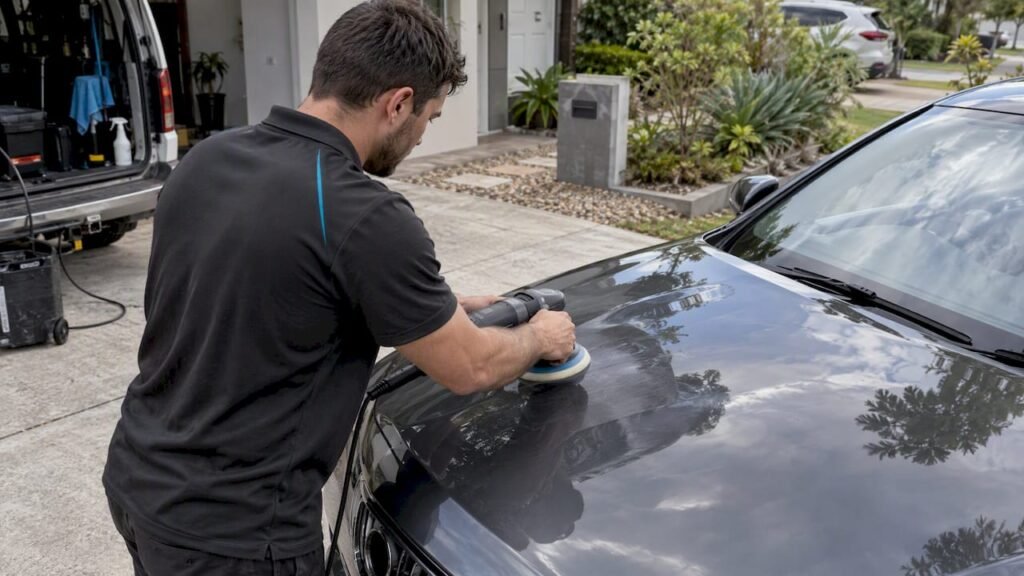
Yes, a ceramic coating can be removed, but doing it safely almost always means abrasion rather than a wipe-off solvent, and that abrasion carries a genuine risk of thinning or cutting through the clear coat; for detailed methods, see removing ceramic coating safely without stripping your clear coat. The main danger is sanding or polishing too aggressively and exposing primer or base colour underneath. For most owners, a controlled, progressive professional approach keeps that risk low; attempting it yourself with a power buffer and no testing routine is where most damage happens.
TL;DR:
- Test water beading and a small solvent area across each panel first; uneven results show where coating remains and guide the initial polish.
- Start with a light polish, then increase pad and compound strength only after retesting; solvents can clean contamination but rarely break down cured coating.
- Stop if the clear coat smears, turns hazy, develops deeper swirls, or transfers color to the pad; soft, thin, or damaged paint may need refinishing.
- Use gloves, eye protection, and a fitted respirator for sanding or poorly ventilated work, and keep solvent products away from heat and sparks.
Table of Contents
- How ceramic coatings bond to paint and why that matters for removal
- Removal methods: polishing, sanding and chemical cleaners compared
- Risks to paint and clear coat during removal and how to spot them early
- How professional repair shops remove coatings safely
- Chemical and safety considerations for anyone handling removal products
- When removal requires a refinish instead of a polish
- How we approach coating removal on-site
- When to attempt it yourself and when to call in a professional
- Getting your coating assessed and corrected
- FAQ
- Sources
How ceramic coatings bond to paint and why that matters for removal
A ceramic coating sits on the clear coat as an extremely thin film, often just a very small fraction of a millimetre thick once cured. That thinness is exactly why it resists easy removal: there is very little material to dissolve, and most solvents simply bead on the surface rather than breaking the coating down. Industry guidance on ceramic coatings notes that abrasion, not chemical stripping, is the standard route to removal, which is why body shops reach for a compound and a pad before they reach for a cleaner.
Curing state changes the risk profile considerably. A coating that cured correctly sits as a hard, glass-like layer, while one that was applied too thick or left to cure in poor conditions can remain soft underneath a seemingly hard surface. Trapped solvents in an undercured film can migrate into the clear coat over time, and that softened clear coat is far more vulnerable to heat and friction during removal.
Before anyone picks up a polisher, a few checks tell you what you are dealing with:
- Water bead test: a fresh, intact coating causes water to bead tightly; patchy or flat beading suggests the coating has already broken down in places.
- Solvent wipe test: wiping a small area with isopropyl alcohol or a panel wipe and checking whether it beads or streaks helps confirm whether coating is still present.
- Visual and tactile check: running a clean microfibre over the panel and looking for swirl patterns, haze or an uneven texture flags areas that may already be compromised.
These checks matter because they tell a detailer or repairer how much coating is actually left and where it is thickest, which shapes how aggressive the first removal pass needs to be. Skipping this step is how people end up over-polishing a panel that barely needed touching, or under-treating one that still has heavy film build.
Removal methods: polishing, sanding and chemical cleaners compared
Three broad approaches exist, and they are rarely interchangeable.
- Polishing and compounding: the standard starting point, using a progressively more aggressive compound and pad combination until the coating lifts and the surface stops beading.
- Mechanical abrasion with finer abrasives: for stubborn or thick coating build-up, a finishing compound on a firmer pad, run at controlled speed, removes residue that a lighter polish leaves behind.
- Sanding: reserved for cases where polishing alone will not shift the coating, typically using fine grit sandpaper used in automotive refinishing, followed by careful blending so the sanded area does not leave a visible line against the surrounding panel.
- Chemical or solvent cleaners: useful for surface contamination but rarely sufficient on their own, since most ceramic chemistries are designed specifically to resist solvents.
Trade commentary on dealing with ceramic coatings describes a PPG-recommended sequence using a red scouring disc with a water and methylated spirits cleaner, followed by compounding, to remove coating before refinish work begins. That sequence reflects why solvents alone so often fail: they clean the surface without touching the cross-linked film sitting on top of the clear coat.
Confirming removal is as important as the removal itself. A panel is ready for recoating or refinishing only once repeated wipe tests stop beading and the surface feels uniformly smooth across the whole area, not just in patches.
Pro Tip: Work one small section at a time and re-test it before moving to the next, rather than polishing an entire panel and hoping it all came off evenly.
Risks to paint and clear coat during removal and how to spot them early
The clear coat is thin by design, and every removal method shaves a little of it away. The real risk is in how much, and where.
- Sanding through: aggressive grit or uneven pressure can cut straight through the clear coat into primer or base colour, leaving a dull patch that no amount of polishing will restore.
- Heat-induced haze or micro-cracking: high-speed buffing on one spot for too long generates heat that can scorch the clear coat, leaving a cloudy or cracked finish that only refinishing corrects.
- Soft or overbuilt clear coats: a coat that was applied too thick or never fully cured can behave almost like a thermoplastic under friction, softening and smearing rather than cutting cleanly.
- Edge and blend lines: sanding or compounding a single panel without blending into the adjacent one often leaves a visible transition line once the paint is viewed in direct light.
Industry collision-repair guidance notes that failing to fully remove existing coating before refinishing increases the risk of paint defects or adhesion failure, which is why repair-sector notes on ceramic coatings stress re-cleaning until surfaces stop beading before any new product goes on.
Early warning signs are usually subtle: a faint haze that shows up only in sunlight, a slightly rougher feel under a clean cloth, or a panel that looks fine wet but shows swirl marks once dry. Catching these before they spread across a whole panel is the difference between a quick correction and a full respray.
How professional repair shops remove coatings safely
A competent shop follows a sequence built around testing before cutting, not the other way around.
- Initial enquiry and history check: establishing when the coating was applied, by whom, and whether the owner has noticed any defects helps predict how stubborn it will be.
- Bead and solvent testing across the panel: confirming where coating is still intact and where it has already broken down, rather than assuming uniform coverage.
- Starting with the least aggressive method: a light polish first, escalating only if the coating resists, which protects clear coat thickness.
- Correct pad, compound and speed selection: matching the abrasive to the panel’s condition rather than using one setting for the whole car.
- Repeat wipe testing: re-checking for beading after each pass and inspecting panel edges and seams where coating tends to pool thicker.
- Escalating only when necessary: moving to fine-grit sanding or recommending a full refinish when the clear coat shows signs of being too thin, too soft, or already damaged, in line with manufacturer refinish guidance from paint suppliers such as PPG, AkzoNobel and Axalta.
This progressive approach exists because reversing an over-aggressive first pass is far harder than simply doing a second, slightly stronger pass after the first one proves insufficient.
Chemical and safety considerations for anyone handling removal products
Compounds, solvent wipes and some coating-prep products carry real handling hazards, and these are documented on their safety data sheets. A representative safety data sheet for a refinish product lists flammability, skin and eye irritation, and respiratory effects among its hazard statements, alongside recommended controls.
- Flammability: many solvent-based cleaners and preparation products are flammable and need to be kept away from heat sources and sparks.
- Skin and eye irritation: direct contact with concentrated solvents or compounds can irritate skin and eyes, so nitrile or chemical-resistant gloves and eye protection are standard.
- Respiratory effects: airborne vapours and sanding dust warrant a properly fitted respirator where ventilation is limited, particularly indoors.
- Environmental handling: several of these products carry aquatic toxicity warnings, which is why proper storage, spill containment and disposal through local waste facilities matter, rather than rinsing residue into stormwater.
Anyone watching a shop do this work should expect to see gloves, eye protection and, where sanding is involved, dust extraction or a respirator in use as a matter of routine rather than an afterthought.
When removal requires a refinish instead of a polish
Not every coating removal ends with a clean, polished panel. Some situations point straight to a refinish.
- Soft or overly thick clear coat: if the clear coat smears or feels tacky under light compounding rather than cutting cleanly, it likely needs to be removed and replaced rather than polished further.
- Colour mismatch after correction: uneven fading or discolouration that only becomes visible once the coating is off can mean the panel needs fresh colour and clear.
- High risk of sanding through: on panels where clear coat is already thin from prior repairs or ageing, a refinish is often safer than continued abrasion.
A full refinish typically means stripping or sanding back to a sound substrate, priming, applying colour, then clear coat, and blending into the adjacent panels so the repair is not visible under direct light. Cost and timeline depend on how many panels are involved, the complexity of the colour (metallics and pearls generally need more blending than solid colours), and local labour rates, so a single-panel correction and a multi-panel respray sit at very different ends of the scale. Most owners can expect an initial inspection to identify straight away whether they are looking at a same-day polish or a multi-day refinish booking.
How we approach coating removal on-site
When a vehicle comes to us with a coating that needs correcting, we start with bead and solvent testing across each panel, photographic documentation of the existing condition, and a conservative first polish rather than jumping straight to a heavy cut. That sequence tells us how much coating is actually left, where it has broken down unevenly, and whether the clear coat underneath feels sound before we commit to anything more aggressive.

For most jobs, this sits within our cut and polish service, which corrects coating residue, swirl marks and light defects without needing to touch bare metal. Where the existing coating has failed or the finish needs fresh protection afterwards, we offer ceramic recoating as part of that visit. If an inspection turns up a soft or damaged clear coat that needs stripping back to substrate, we tell owners plainly and point them toward a panel refinish rather than attempting a correction the paint cannot support.
Before we arrive, it helps to know the coating’s approximate age and whether it was applied professionally, along with any product receipts if you have them, since that history shapes how we approach the first test panel. We walk through what we find during the inspection, show the test results, and quote based on the actual condition of the paint rather than a flat rate, so you know what you are paying for before any polishing starts.
When to attempt it yourself and when to call in a professional
Light coating residue or a small, low-risk panel is reasonable to polish yourself if you have the right pads and compounds, and you stop the moment you see haze, swirl marks deepening, or any colour transfer onto your pad. Anything suggesting a soft or undercured clear coat, or a finish you want guaranteed rather than guessed at, is worth handing to a professional. Before booking, ask about their inspection process, the likely outcome for your specific paint, any warranty on the work, and how they handle product disposal and safety.
Owners often assume a ceramic coating makes paint maintenance optional, when in practice it only buys time, and the panels that suffer most during removal are the ones that were never washed properly in between. The coating was never the finish line. It was a layer sitting on top of paint that still needs the same care it always did, and skipping that care is what turns a routine recoat into a correction job.
— isaac’s
Getting your coating assessed and corrected
If your existing coating has broken down, left haze, or you simply want it professionally stripped back and redone, we offer a straightforward path: an on-site inspection, a transparent quote based on what we actually find, and the mobile convenience of having it done at your home or workplace rather than dropping the car off somewhere.

Our cut and polish service handles most coating correction work, and where you want fresh protection afterwards, our Ultimate Protection Package or ceramic coating reapplication covers that in the same visit. Where a panel needs more than correction, we will tell you honestly and point you toward a refinish rather than push a polish that will not hold. Get in touch to arrange a visual inspection and an accurate quote for your vehicle.
FAQ
What are the disadvantages of ceramic coating?
Ceramic coating adds labour and cost when it eventually needs removing or recoating, since most chemistries resist solvents and require abrasion to shift. Consumer guidance on paint protection extras also notes that many aftermarket coatings are unnecessary for average owners, since factory paint and regular washing often cover the same ground. Coatings also do not eliminate the need to wash off contaminants promptly, as residue left sitting on a coated surface can still bond to the finish over time.
Is ceramic coating toxic free?
Ceramic coating products vary by formulation, and some contain solvents that carry flammability or irritation warnings on their safety data sheets during application. Once fully cured, the coating itself is a stable, inert film, but handling the uncured product calls for gloves, eye protection and good ventilation as a standard precaution.
Which is better, car wax or ceramic coating?
Wax is cheaper, easier to apply and remove, and suits owners who want a quick refresh every few months without specialised tools. Ceramic coating lasts considerably longer and offers stronger resistance to contaminants, but it costs more upfront and is harder to remove if the finish needs correcting later. The right choice depends on how long you want the protection to last against how much maintenance effort and removal hassle you are willing to accept down the track.
Is there anything better than ceramic coating for cars?
Paint protection film offers a physical barrier against stone chips and scratches that a ceramic coating cannot provide on its own, though it is typically used alongside rather than instead of a coating. Graphene-based sealants are another option, offering similar hydrophobic properties to ceramic coatings with their own application and removal characteristics. Which option suits you best depends on whether you are prioritising chip resistance, gloss, or ease of future removal.
Sources
- Ceramic Coatings Considerations
- Dealing with ceramic coatings
- Are new car extras packages worth it?
- Safety data sheet (sample refinish product)