
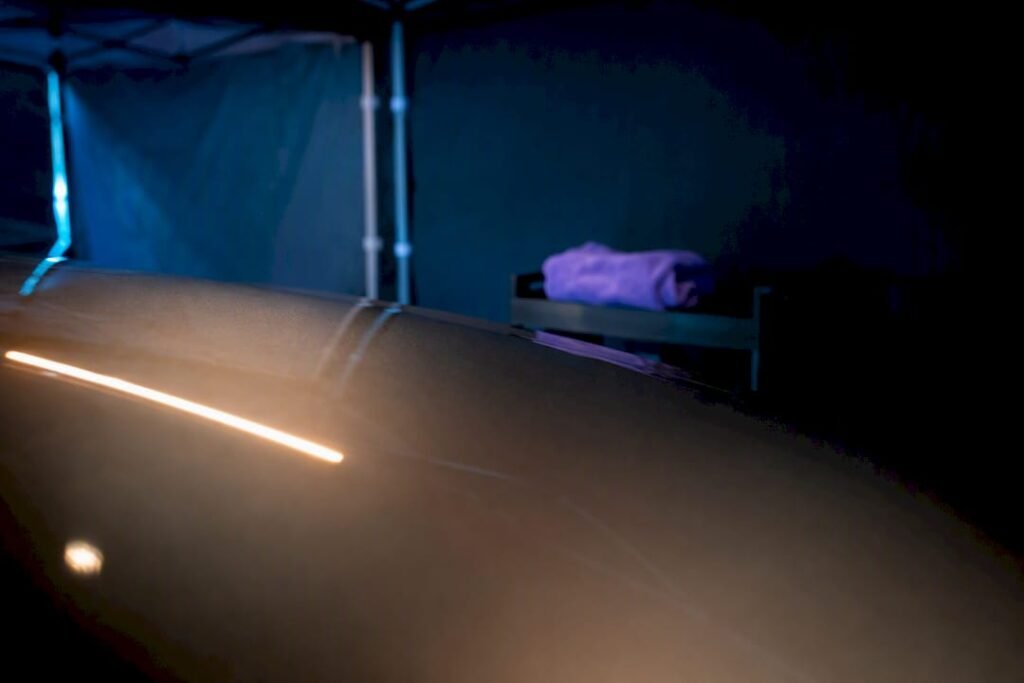
Ceramic coating typically feels dry to the touch within 24 to 72 hours, but it needs 7 to 21 days to reach full hardness depending on the product and the weather. The one thing that matters most in that window: keep the vehicle dry, uncovered surfaces protected, and avoid touching the paint during the initial cure period. Rain, dew, or a stray hand can leave a permanent mark that no amount of polishing will fix later.
TL;DR:
- The full curing process for ceramic coating can take from 7 to 21 days depending on the product and environmental conditions.
- During the first 48 hours, any exposure to water, dust, or touch can cause permanent marks or weak patches that compromise the finish.
- Temperature, humidity, and airflow heavily influence cure speed, with controlled heat and ventilation speeding up the process.
- Applying thicker coats or multiple layers extends curing time and may require longer controlled conditions to ensure proper bonding.
- Proper aftercare involves avoiding washing, touching, or contaminating the surface during the first week, and using gentle, pH-neutral products for washing after full cure.
Table of Contents
- Ceramic coating cure time: the day-by-day timeline
- What changes ceramic coating cure time?
- What not to do while ceramic coating cures
- Washing your car during and after cure
- Can you speed up ceramic coating curing?
- How Isaac’s manages the cure process on every job
- Why manufacturer cure charts undersell the real risk window
- Get a coating that cures right the first time
- Sources
- FAQ
Ceramic coating cure time: the day-by-day timeline
Cure time isn’t one number. It’s a sequence of stages, and knowing which stage your car is in tells you what’s safe and what isn’t.
Hours 0 to 24 are the riskiest. This is when solvents evaporate off the surface and a thin skin forms over the coating. The paint looks finished, but underneath, the chemistry has barely started. Any contact with water, dust, or fingers during this window can disrupt that skin before it sets, leaving permanent marks embedded in the finish.
Hours 24 to 72 bring the surface to a dry, touchable state, but this is deceptive. The visible layer has hardened while the internal cross-linking, the molecular bonding that gives ceramic coating its scratch resistance and gloss, is still happening underneath. Initial surface dry commonly appears within 24 to 72 hours, but full molecular cross-linking and maximum hardness often take 7 to 21 days depending on the specific product and ambient conditions.
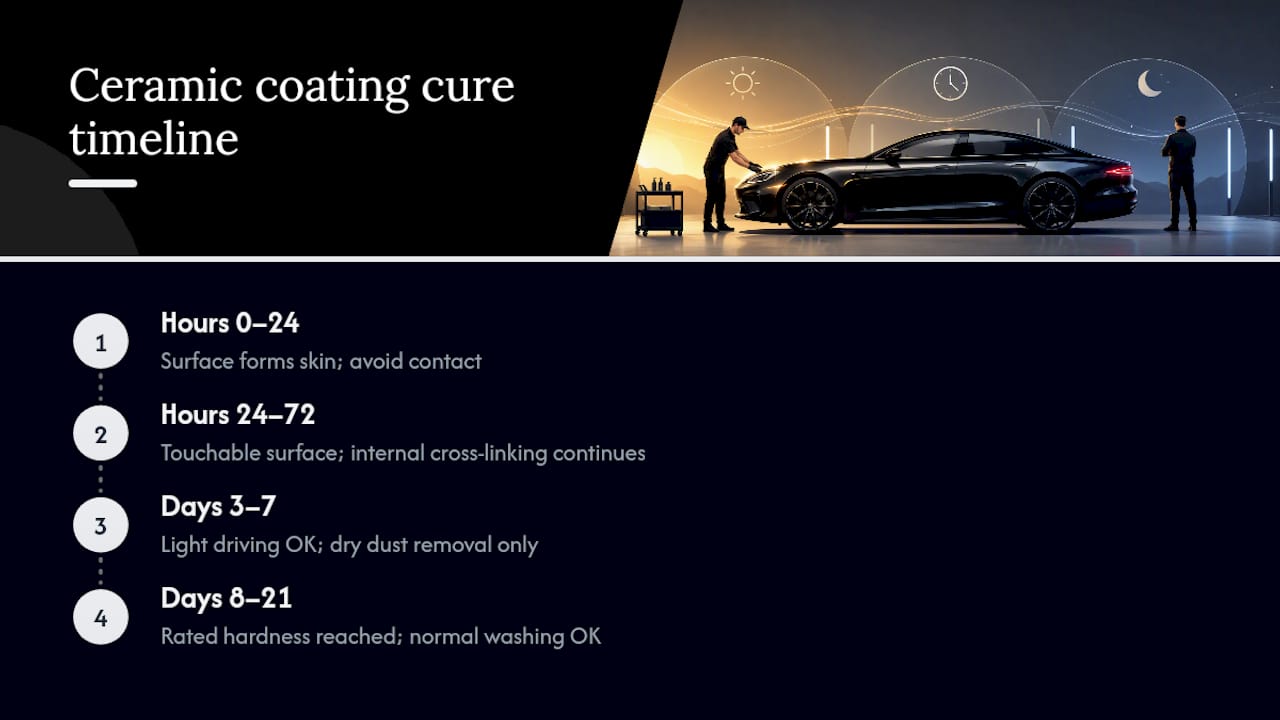
Days 3 to 7 are the strengthening phase. The coating can tolerate light driving, but this isn’t the time for a car wash or a run through pollen-heavy backstreets. Dust removal should be dry only, using a clean microfibre and gentle strokes, never a hose or detergent.
Days 8 to 14, extending to 21 for some products, is when the coating reaches its rated hardness. This is generally when normal washing and more aggressive treatments become safe again.
Why the spread? Coating chemistry varies. SiO2-based coatings cure through a condensation reaction that behaves differently to polymer-based or clearcoat-style products, which is part of why one brand’s datasheet says 7 days and another insists on 21. Some manufacturers explicitly require 14 to 21 days of controlled conditions before their warranty terms even apply.
What changes ceramic coating cure time?
Temperature, humidity, and airflow all affect cure time, and incorrect conditions can substantially extend the process.
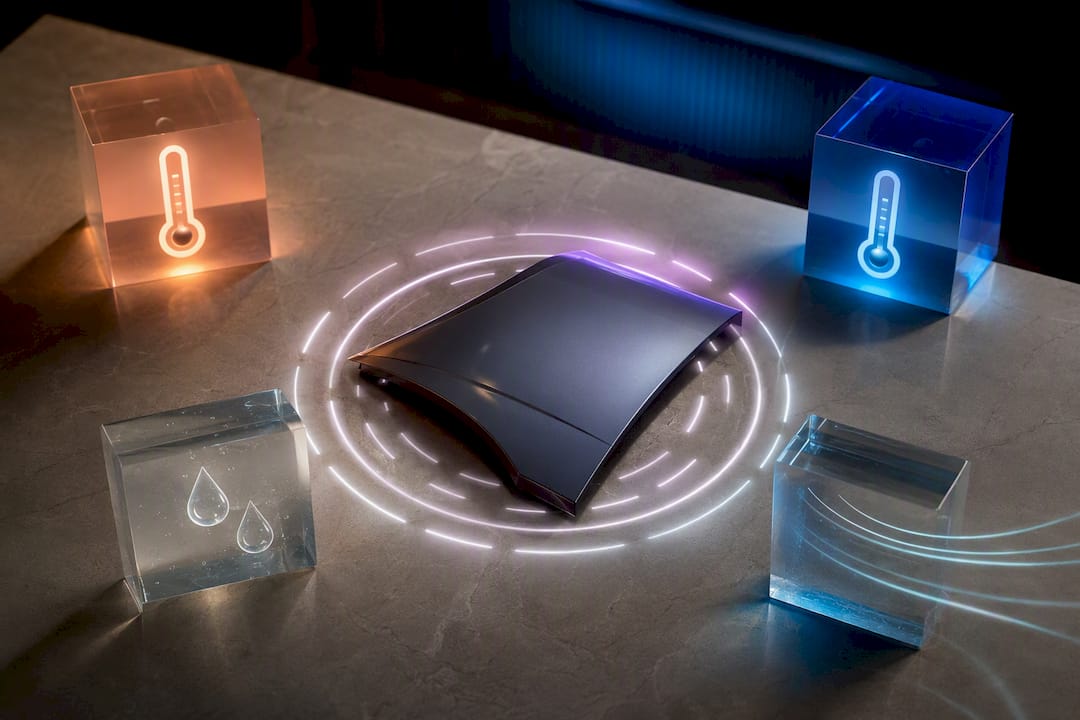
Heat speeds up the chemical reaction. Warmer conditions accelerate solvent evaporation and cross-linking, while cold slows everything down. Below 10°C, curing slows dramatically, and a coating that would normally reach full hardness in ten days might need several weeks in a cold garage over winter.
Humidity has a sweet spot. A relative humidity of roughly 40% to 80% is the target window most professionals work within. Too dry, and the surface can skin over before the layers beneath finish bonding. Too wet, and solvents get trapped instead of evaporating, leaving soft patches that never reach full hardness.
Airflow matters more than most owners expect. Stagnant air around the vehicle slows solvent evaporation regardless of temperature, which is one reason mobile detailers avoid sealing a car inside a garage with the doors shut on a humid night.
Pro Tip: If you’re applying or having a coating applied in a garage, crack a door or window slightly. Trapped humidity from the coating itself can slow curing even in an otherwise dry room.
Product thickness and chemistry round out the picture. A thicker, multi-layer application takes longer to cure through than a single thin coat, and this is exactly why warranty terms often specify controlled environmental conditions rather than a flat number of days.
- Higher temperatures shorten cure time; below 10°C, expect a much longer wait
- Humidity between 40% and 80% supports even cross-linking
- Poor airflow traps solvents and slows the whole process
- Thicker or multi-layer applications need more time than a single thin coat
What not to do while ceramic coating cures
The damage done in the first week is rarely undone. Here’s what to avoid, in order of severity.
- Avoid water contact with the coating during the initial 48 hours after application. Rain, sprinklers, or dew on a car left outside overnight can cause spotting that sets permanently into the surface.
- Avoid touching or wiping the paint during the initial cure period. Even a light brush of a hand can leave a mark in a coating that hasn’t finished skinning over.
- Don’t wash with detergent or use physical abrasion between days 3 and 7. The coating is still strengthening, and chemical cleaners or brushes can disrupt bonding that isn’t complete.
- Don’t park under trees or near heavy pollen and dust during the early cure window. Debris that lands on an uncured coating can bond into the surface rather than sitting on top of it.
Shortcuts here don’t just cost you a wash and rewax. Water spots and soft patches from early exposure are often permanent, and most manufacturers won’t honour a warranty claim if you can show contamination happened inside the mandated cure window.
Washing your car during and after cure
The safest approach follows the cure timeline itself, not your usual wash-day routine. A plain water rinse is generally fine from around day 7, once the coating has moved past its most vulnerable phase. Hold off on shampoo until closer to day 14, and use a pH-neutral product when you do.
Stick to the two-bucket method with a clean microfibre wash mitt, rinsing from the top of the vehicle down. This limits the risk of dragging grit across a surface that’s still building hardness.
- Rinse with plain water only from around day 7
- Introduce pH-neutral shampoo from around day 14
- Use two buckets and a microfibre mitt, never a sponge
- Rinse top to bottom to avoid dragging contaminants across the paint
- Skip automatic car washes, high-pressure jets, and brush washes until the coating has fully cured
For more detail on products and technique, our guide to the first wash after ceramic coating walks through the full process step by step, and Diamondbrite’s maintenance advice covers ongoing upkeep once the coating is fully set.
Can you speed up ceramic coating curing?
Professional shops can accelerate curing with controlled heat and humidity, but DIY heating methods risk damaging the coating. Infrared lamps and heated spray booths accelerate solvent evaporation and cross-linking in controlled settings, often cutting cure time significantly when humidity is managed alongside the heat.
Done wrong, heat causes real problems. Uneven or excessive heating can flash-cure the surface while trapping solvents underneath, creating weak zones or a fish-eye texture that never fully hardens. This is the exact failure mode DIY heat guns and garage heaters risk.
- IR booths work because temperature and humidity are controlled together, not just cranked up
- Uneven heating traps solvents rather than releasing them
- Ask your installer whether accelerated cure is available and how it affects warranty terms
How Isaac’s manages the cure process on every job
Ceramic coating applications are often scheduled around the forecast, not just the calendar, using covered or climate-aware setups where the job allows. That means fewer surprises from an unexpected shower rolling through on hour six of the cure window.
Clients generally receive clear instructions for the first 48 hours, the first week, and the first wash, timed to the coating actually applied rather than a generic rule of thumb. If you’d rather hand the scheduling and guesswork to someone who does this daily, our step-by-step application guide and full ceramic coating workflow lay out exactly how the process runs from booking to final wash.
Why manufacturer cure charts undersell the real risk window
Manufacturer datasheets quote conservative ranges, usually 14 to 21 days for full cure, because warranty terms need to hold up across wildly different climates. A coating applied in a Brisbane summer and one applied in a Melbourne winter garage won’t hit full hardness at the same pace, so the number on the sheet is built for the slowest realistic scenario.
That’s where most owners get tripped up. They read “7 days” on a forum, treat it as gospel, and run their car through an automatic wash on day 8 in cold, damp weather where the coating is nowhere near full strength. The conventional advice isn’t wrong, it’s just incomplete. It gives you a number without telling you which conditions that number assumes.
If there’s one thing worth prioritising above the calendar, it’s the first 48 hours. Owners who nail that window and stay patient through week one rarely have problems, even if their full cure runs closer to 21 days than 7. Owners who ignore it are the ones posting photos of water spots and asking what went wrong.
— isaac’s
Get a coating that cures right the first time
Professional ceramic coating services can help remove guesswork on cure timing by considering weather-aware scheduling and on-site application to apply coatings under suitable conditions.
Ceramic coating services often include application for paint, wheels, and leather, alongside cut and polish prep work to create the best surface for bonding. After application, clients typically receive plain-language aftercare instructions covering the first 48 hours, the first week, and recommendations for the first safe wash. Check out the full ceramic coating workflow to see how a booking runs from start to finish, or head to the wash menu to book your first professional wash once your coating’s ready for it.
Sources
Product-specific cure times vary, so always check your installer’s datasheet against the general curing guide and manufacturer aftercare terms before setting your own schedule.
- How long for ceramic coating to cure? — AF Solution
- The science of shine — Waxisdead
- Ceramic Pro — Aftercare
FAQ
How long after ceramic coating can I drive?
Light driving is generally fine after the first 48 hours, but avoid long trips, rain, or dusty roads until the coating passes the day 7 mark.
What destroys ceramic coating during the cure period?
Water contact, touching, chemical cleaners, and physical abrasion within the first week are the most common causes of permanent damage.
What happens if ceramic coating gets wet before it cures?
Water landing on an uncured coating, especially in the first 48 hours, can cause spotting or weak patches that don’t resolve once the coating fully hardens.
How long do you let ceramic coating sit before wiping?
Most professional guidance calls for leaving the coating completely untouched for the first 48 hours before any wiping or contact happens.
When can I wash my car after ceramic coating?
A plain water rinse is usually safe from around day 7, with pH-neutral shampoo and the two-bucket method appropriate from around day 14.