
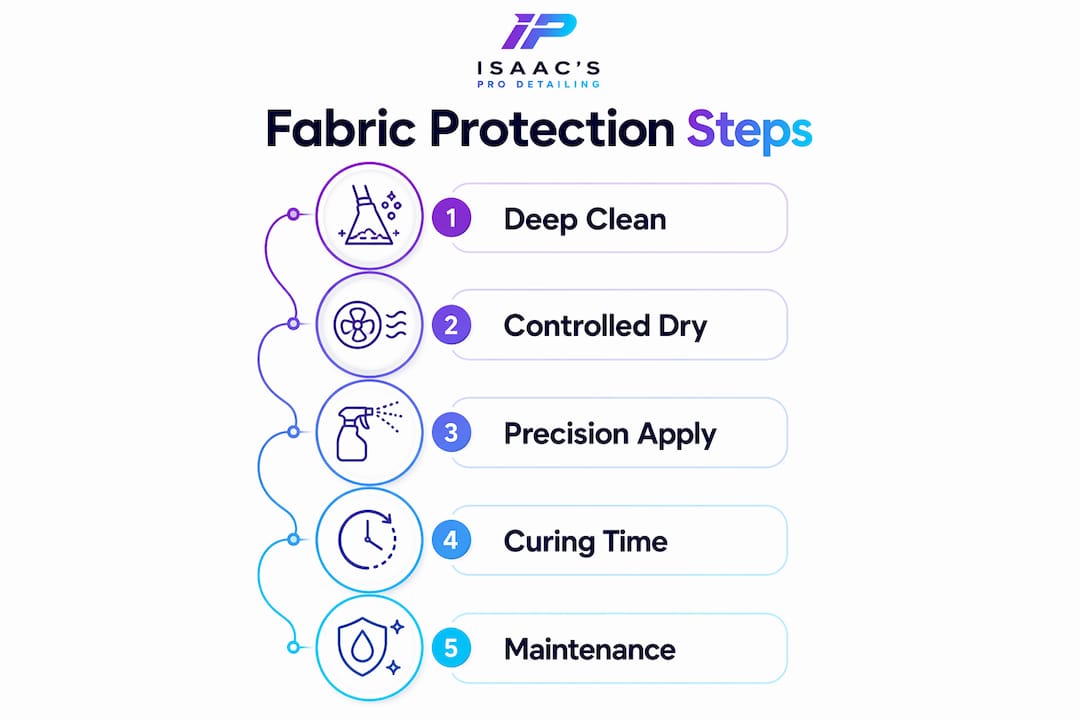
Fabric protection is a chemical treatment applied to car upholstery and carpets that forms an invisible barrier on textile fibres, slowing liquid absorption so spills can be wiped away before they stain. For most Australian vehicle owners, a professionally applied treatment is worth it. The three-stage professional process — deep clean, controlled dry, precision application — produces a bond that store-bought sprays rarely match, and professional treatments commonly last for an extended period, varying with usage. Isaac’s Pro Detailing Sunshine Coast offers this service as a mobile visit, so your car gets treated at home or work without any disruption to your day.
Quick benefits at a glance:
- Stain resistance: liquids bead on the surface, giving you time to blot before absorption occurs
- UV fade protection: the coating shields fibres from sun damage that causes fading and discolouration
- Reduced abrasion: the barrier cuts friction from daily entry and exit, slowing visible wear on high-traffic seat areas
Families, pet owners, rideshare drivers and regular commuters get the clearest payback. If you rarely carry passengers and keep your interior spotless, a DIY spray may be enough.
Table of Contents
- What is fabric protection and how is it applied professionally?
- What fabric protection actually does for your car interior
- Professional treatment vs DIY spray: what are the real trade-offs?
- How long does fabric protection last, and when should you reapply?
- What fabric protection will not do
- How to choose a professional fabric protection service in Australia
- Typical timeline and pricing for fabric protection in Australia
- Aftercare: how to keep fabric protection working longer
- Are fabric protection products safe to use in your car?
- Environmental impact and disposal of fabric protection products in Australia
- Which car interior materials benefit most from fabric protection in Australia?
- Key takeaways
- Why professional fabric protection is worth prioritising
- Book a mobile fabric protection service with Isaac’s Pro Detailing
- Further reading and sources
What is fabric protection and how is it applied professionally?
Professional fabric protection is not just a spray-and-walk-away job. The three-stage application process is what separates a lasting result from a coating that washes out in weeks.
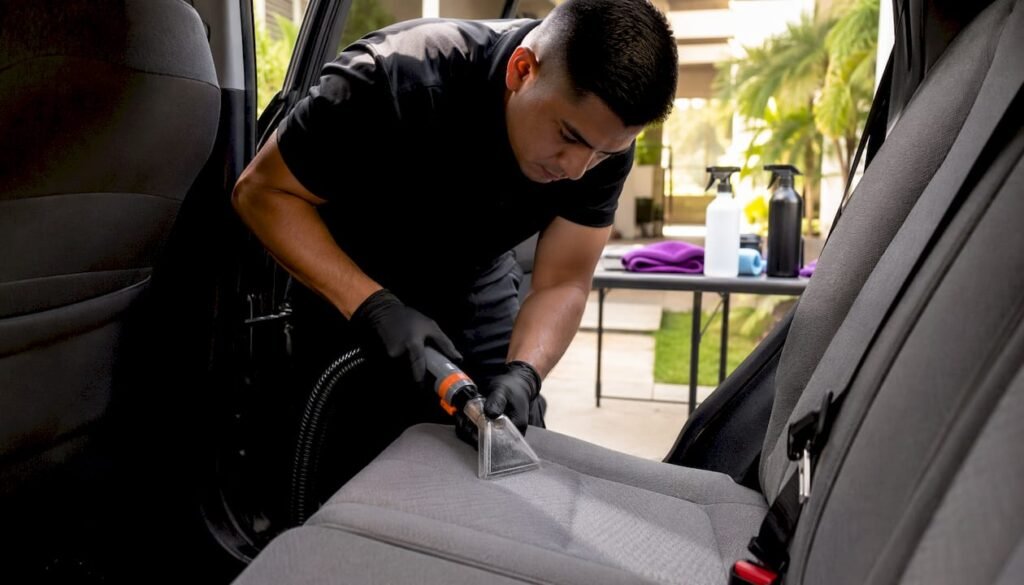
Stage 1: Deep clean and extraction. The technician hot-water extracts the seats and carpets to remove embedded dirt, oils and old residues. Skipping this step is a serious problem: applying protectant over dirty fabric locks contaminants under the coating, causing uneven appearance and potential odours. The substrate has to be genuinely clean.
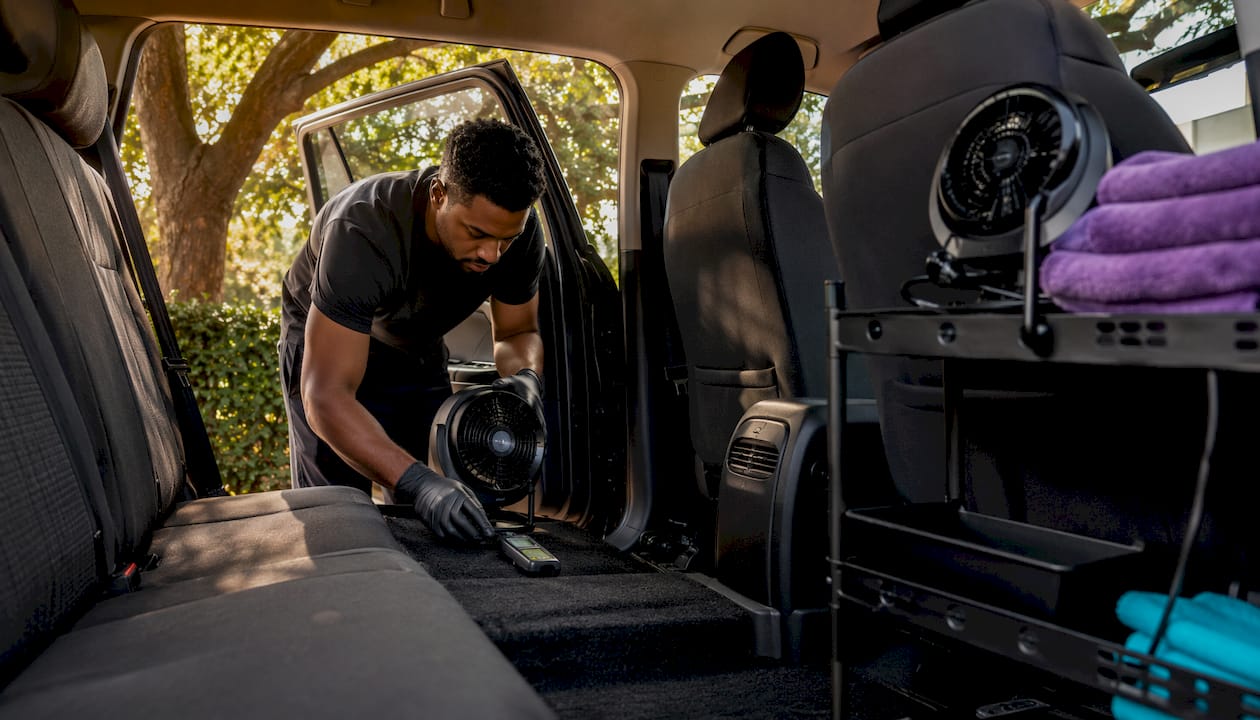
Stage 2: Controlled drying. The interior must reach the correct moisture level before any coating goes on. Professional-grade polymer and ceramic formulations need precise surface dryness to bond correctly. A rushed or humid application reduces effectiveness significantly.
Stage 3: Precision application. The protectant is applied evenly across all fabric surfaces. Modern formulations use polymer or ceramic chemistry that bonds to individual fibres, creating a breathable, invisible layer. The result is a surface that causes liquids to bead rather than soak in immediately, buying you time to clean up.
Pro Tip: Ask your detailer to do a test patch on a hidden area before full application, and confirm the required curing time before you use the seats again. Sitting on a freshly coated seat too early can compromise the bond.
What fabric protection actually does for your car interior
The practical benefits go beyond just “it repels water.” Professional fabric protection reduces spill clean-up time, resists everyday stains, protects against UV-induced fading and reduces friction-related wear in high-traffic areas.
- Easier spill clean-up: coffee, juice and food spills sit on the surface long enough to blot away cleanly
- Stain prevention: the barrier blocks common culprits including sunscreen, makeup, pet mess and muddy shoes
- UV fade protection: interior fabrics in Australian conditions are exposed to intense sun; the coating shields fibres from the UV rays that cause fading and brittleness
- Abrasion reduction: daily sliding in and out of seats creates friction wear; the coating reduces that contact damage
- Resale presentation: a well-maintained cabin with no staining or fading reads as a cared-for vehicle at trade-in time
The value scales with how hard the car works. Families with young children, pet owners and high-use vehicles like rideshare or fleet cars see the most obvious return. It also works on used cars, provided the interior has been properly cleaned and brought back to a good standard first.
Think of it as insurance for your upholstery. Its chief value is buying time and slowing damage from oils, friction and everyday contact, not preventing every stain forever.
Professional treatment vs DIY spray: what are the real trade-offs?
DIY fabric protection products in Australia are commonly available for under $50. Professional-grade application costs more, offering better durability and bonding quality than DIY sprays.
- Durability: professional treatments using polymer or ceramic formulations last significantly longer than most consumer aerosols, which require frequent reapplication
- Bond quality: a controlled application environment means the chemistry bonds correctly; a home spray applied to a damp or dusty seat rarely achieves the same result
- Finish and feel:
are engineered to remain breathable and invisible — seats keep their natural texture and softness after correct application
- Prep included: a professional service includes the extraction step; DIY skips this, which risks trapping dirt under the coating
Pro Tip: When comparing providers, ask specifically whether they use a polymer or ceramic-based product rather than a simple silicone spray. Silicone coatings feel slick initially but wear off quickly and can attract dust. Ask for a written workmanship guarantee and confirm what prep is included in the quoted price.
How long does fabric protection last, and when should you reapply?
Professional-grade treatments commonly last up to a year or more, but real-world longevity varies widely. A family SUV used daily in Queensland sun will need attention sooner than a weekend car garaged most of the week.
Factors that shorten protection life:
- Frequency of use: more entries and exits mean more friction and faster coating wear
- Sun exposure: the Sunshine Coast’s UV intensity accelerates degradation of the coating layer
- Cleaning methods: harsh detergents and solvent-based cleaners strip the protectant faster than pH-neutral products
- Pets and children: claws, grit and constant contact wear through the barrier more quickly
Signs it’s time to reapply: liquids no longer bead on the surface, spills absorb faster than they used to, or you notice the fabric staining more readily after a clean. As a general guide, maintaining vehicle interiors with a scheduled reapplication every 12 months keeps protection consistent for regular-use vehicles.
What fabric protection will not do
Fabric protection is not a permanent shield. It slows absorption and gives you a reaction window, but it has real limits.
- Long-sitting spills will eventually penetrate even a well-coated surface; the barrier buys minutes, not hours
- Abrasive damage, cuts or structural tears to fabric are not prevented by any coating
- Ground-in grit and heavy soiling that is physically worked into fibres will bypass the surface barrier
- Heavily saturated stains left overnight can still set, particularly oil-based substances
Pro Tip: Even on protected fabric, blot spills immediately with a clean cloth. Never rub — rubbing spreads the liquid and works it deeper into the weave. The coating gives you time; acting on that time is still your job.
The coating is best understood as a sacrificial layer that delays damage rather than eliminates it. Prompt action on spills remains the single most effective thing you can do.
How to choose a professional fabric protection service in Australia
Not all services are equal. A few targeted questions will separate a thorough provider from one who sprays over a dirty interior and calls it done.
Checklist before you book:
- Confirm the process includes extraction before application, not just a vacuum
- Ask which product class is used (polymer, ceramic or silicone) and request the product name
- Ask for before-and-after photos from previous jobs
- Request a written quote that itemises prep, application and any follow-up
- Ask whether mobile application is available and what that includes
- Check whether a workmanship guarantee or warranty is offered
Trust signals worth requesting: documented customer testimonials, a Safety Data Sheet (SDS) for the product used, and clear booking terms for reapplication visits. For fleet or high-use vehicle maintenance, a provider who can schedule regular reapplication visits is worth prioritising.
Typical timeline and pricing for fabric protection in Australia
Application time depends on vehicle size and whether extraction is included. As a rough guide:
| Vehicle size | Typical service time | Ballpark professional cost |
|---|---|---|
| Small car (hatch/sedan) | 2–3 hours | From ~$100 |
| Medium SUV / wagon | 3–4 hours | — |
| Large SUV / van | 4–5 hours | — |
These are estimates only. Professional treatments are commonly quoted from roughly $100–$300 depending on vehicle size and scope. DIY products sit under $50 but exclude the extraction step and professional-grade bonding. Always request a written quote that confirms what prep is included, whether the visit is mobile, and the product being used. Check the wash menu at Isaac’s Pro Detailing for current pricing by package and vehicle size.
Aftercare: how to keep fabric protection working longer
- Allow full curing time after application before using the seats. Your technician will specify the window; typically several hours minimum, longer in humid conditions.
- Avoid moisture on treated surfaces during the curing period. Keep windows up and avoid parking in rain immediately after treatment.
- Vacuum regularly with a soft brush attachment to lift surface grit before it works into fibres.
- Use pH-neutral cleaners only for spot cleaning. Harsh detergents, bleach-based products and solvent sprays degrade the coating faster.
- Blot spills immediately with a clean, non-coloured cloth. Do not scrub.
- Avoid silicone-based interior dressings on treated fabric; they can interfere with the coating’s breathability.
- Book a professional re-extraction if heavy soiling occurs rather than attempting aggressive home cleaning, which can strip the protectant unevenly.
For a full vehicle interior maintenance routine, pairing regular vacuuming with annual professional reapplication keeps the cabin in the best condition between detail visits.
Are fabric protection products safe to use in your car?
Modern professional-grade fabric protectants have improved significantly in terms of safety. Many current formulations are water-based, solvent-free and zero-VOC (volatile organic compound), meaning they produce no harmful fumes during or after application. Products meeting these standards are safe for use around children and pets once fully cured.
During application, ventilation matters. A professional technician will open doors and windows to allow airflow, which speeds curing and disperses any residual product vapour. If you are sensitive to chemical products, let your provider know before the appointment so they can confirm the formulation being used.
Always ask for the Safety Data Sheet (SDS) for any product applied to your vehicle. Reputable providers supply this without hesitation. It lists ingredients, any hazard classifications and first-aid guidance. In Australia, SDS documents follow the Globally Harmonised System (GHS) format regulated by Safe Work Australia, so the information is standardised and straightforward to read.
Environmental impact and disposal of fabric protection products in Australia
The shift toward water-based, low-VOC formulations has reduced the environmental footprint of fabric protection products considerably. Solvent-heavy aerosols, once common, are being replaced by water-based coatings that carry lower toxicity ratings and produce less atmospheric pollution during application.
In Australia, disposal of chemical products including fabric protectants is governed by state environment protection authority guidelines and the national Product Stewardship Act 2011. Empty aerosol cans should go through a local steel recycling programme rather than general waste. Partially used liquid products should not be poured down drains or into stormwater; contact your local council for chemical drop-off options or check the Paintback scheme, which accepts some coating and chemical products.
Professional detailers operating responsibly dispose of waste rinse water through trade waste agreements with their local council, not into stormwater drains. When choosing a provider, asking about their waste disposal practice is a reasonable question, and a good operator will answer it directly.
Which car interior materials benefit most from fabric protection in Australia?
Fabric protection is not a one-size-fits-all product, and the right formulation depends on what your interior is made of.
Woven cloth and polyester upholstery are the primary candidates. These porous materials absorb spills quickly without protection, and they respond well to polymer and ceramic coatings that bond to individual fibres.
Carpet and floor mats benefit significantly, particularly in Australian conditions where sand, red dirt and wet footwear are constant threats. A treated carpet resists ground-in grit and dries faster after wet-weather entry.
Alcantara and microsuede require a formulation specifically tested on these materials. Standard coatings can alter the nap texture if applied incorrectly; always confirm compatibility before proceeding.
Leather and vinyl are not fabric and require a different product class entirely. Fabric protectants should not be applied to leather surfaces; dedicated leather conditioners and ceramic coatings for leather serve that purpose. Isaac’s Pro Detailing offers leather protection as a separate service.
Roof linings are often overlooked but benefit from protection, particularly in convertibles or vehicles with sunroofs where moisture ingress is a risk.
Key takeaways
Professional fabric protection is worth it for most Australian vehicle owners: the three-stage process delivers a durable, breathable barrier that DIY sprays cannot reliably replicate.
| Point | Details |
|---|---|
| Three-stage process matters | Deep clean, controlled dry, then precision application — skipping any stage reduces bonding and longevity. |
| Longevity varies by use | Professional treatments last up to a year or more; high-use vehicles in harsh sun may need reapplication sooner. |
| Limitations are real | Protection buys reaction time on spills; long-sitting liquids and abrasive damage can still penetrate or harm fabric. |
| DIY vs professional cost | DIY products sit under $50 but lack the prep and bonding quality; professional treatments typically cost more than DIY options, with prices varying by vehicle size and scope. |
| Isaac’s Pro Detailing | Mobile fabric protection service on the Sunshine Coast — extraction included, written quotes available, eco-friendly product options. |
Why professional fabric protection is worth prioritising
The interiors we see most often at Isaac’s Pro Detailing tell a consistent story. Cloth seats in family SUVs, rideshare vehicles and tradies’ utes take a beating that no amount of careful driving prevents. Sunscreen, pet hair, coffee cups and muddy boots are just the reality of a working car in Queensland. What surprises most owners is how quickly an unprotected interior goes from presentable to permanently stained.
The case for professional treatment is not about perfection. It is about buying yourself enough time to deal with the inevitable. A properly applied coating means a spill stays on the surface while you find something to blot it with, rather than soaking into the weave in seconds. That difference, over the life of a vehicle, shows up clearly at trade-in time.
Mobile application makes the decision easier. There is no need to drop the car off or rearrange your day. Isaac’s Pro Detailing comes to your home, workplace or wherever suits you across the Sunshine Coast, completes the extraction and application on-site, and leaves you with a treated interior and a clear aftercare plan. Transparent pricing by vehicle size, documented service descriptions and eco-friendly product options are standard, not extras.
Book a mobile fabric protection service with Isaac’s Pro Detailing
Isaac’s Pro Detailing Sunshine Coast brings professional fabric protection directly to your driveway. Every service includes hot-water extraction before application, so the coating bonds to a genuinely clean surface rather than locking in existing grime. Trained technicians use breathable, eco-friendly formulations suited to Australian conditions, and pricing is transparent by vehicle size with no hidden charges.
Whether you drive a family SUV, a work ute or a weekend car you want to keep in top condition, the process is straightforward: request a written quote, confirm your preferred location on the Sunshine Coast, and let the technician handle the rest. View the full range of mobile detailing services or check the wash menu and special services for current pricing and package inclusions. Get in touch to book your fabric protection appointment today.
Further reading and sources
- Isaac’s Pro Detailing wash menu and pricing — service packages by vehicle size
- Isaac’s Pro Detailing special services — fabric protection, leather treatment and mobile service scope
- Step-by-step car interior cleaning guide — pre-protection extraction and cleaning workflow
- Car fabric and leather protection: is it worth it? — CarsGuide — independent Australian overview of professional vs DIY treatments
- How fabric guard preserves your car’s upholstery — Steve’s Detailing — process detail and application warnings
You can request a Safety Data Sheet (SDS) for any product Isaac’s Pro Detailing uses — ask at the time of booking or quote request. Before-and-after photos are available on request and documented in service records.