
TL;DR:
- A waterless car wash uses sprays with polymers and surfactants to clean vehicles without water. It is a practical, eco-friendly method suited for light dust in water-restricted regions like Australia. Proper technique ensures safety for paint and compliance with environmental laws.
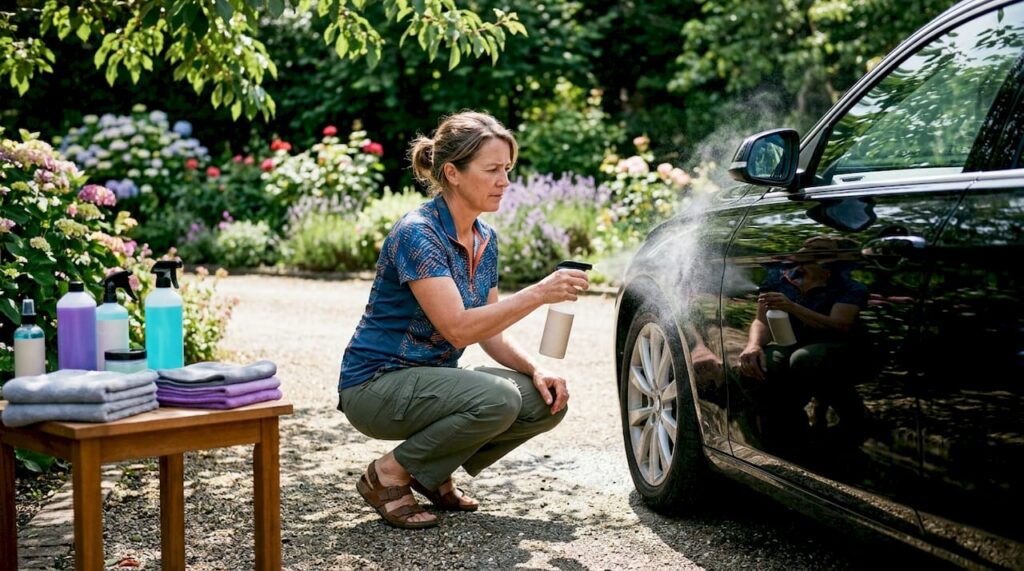
A waterless car wash is defined as a vehicle cleaning method that uses no additional water, relying instead on specially formulated sprays containing polymers and surfactants to encapsulate and lift dirt from paint surfaces. The technique replaces the hose, bucket, and rinse cycle entirely. A traditional wash uses 150 to 500 litres of water per vehicle. Waterless washing uses virtually zero. For car owners across drought-prone Australia, that difference is no longer a novelty. It is a practical necessity, and in some locations, a legal one.
What is waterless car wash and how does the chemistry work?
Waterless car wash products work because of two key ingredients: polymers and surfactants. Surfactants break the bond between dirt particles and your paint surface. Polymers then wrap around those loosened particles, suspending them safely above the paint so they can be wiped away without scratching. Less than 300ml of product is typically enough to clean an entire vehicle. That concentration is what makes the method viable without any rinsing step.
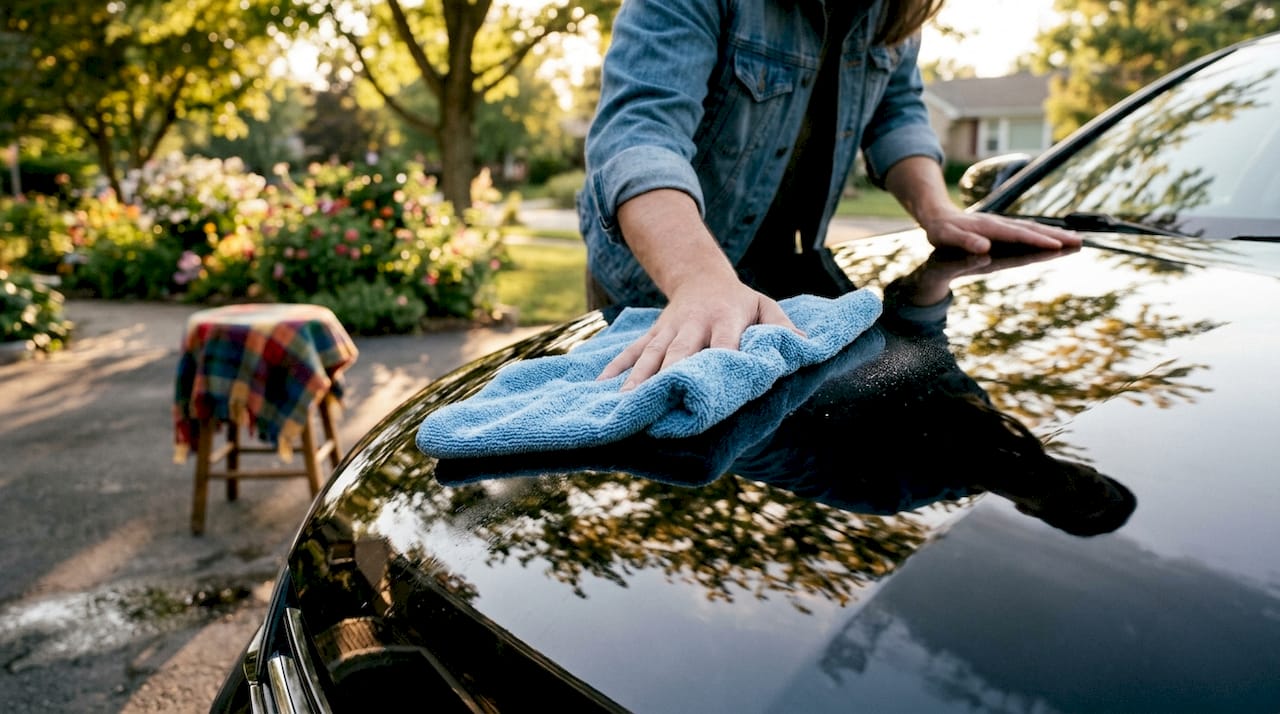
The mechanical side of the process is just as important as the chemistry. A high-quality microfiber cloth picks up the polymer-encapsulated dirt and holds it within the cloth fibres rather than dragging it back across the paint. This is why cloth quality and rotation matter as much as the spray itself.
Waterless washing is often confused with rinseless washing. They are not the same method. Rinseless wash uses under one litre of water mixed into a bucket solution, offering more cleaning power for moderate dirt. Waterless products require no water at all, making them the better choice for light surface dust and quick maintenance cleans between full details.
Key differences between waterless and rinseless methods:
- Waterless: zero water, spray-and-wipe application, best for light dust and fingerprints
- Rinseless: under one litre of water, bucket-based, better for moderate grime
- Traditional: 150–500 litres of water, full rinse cycle, suited to heavy soiling
Pro Tip: Always work in a shaded area when using a waterless detailing solution. Direct sunlight causes the product to dry before you can wipe it away, which reduces lubrication and increases scratch risk.
What are the environmental and regulatory benefits?
The environmental case for waterless washing goes beyond saving water. Waterless washing eliminates runoff entirely, which removes a significant source of chemical contamination from stormwater systems. Traditional washing sends detergent, oil residue, and heavy metal particles directly into drains. That contamination is both an ecological problem and a legal one.
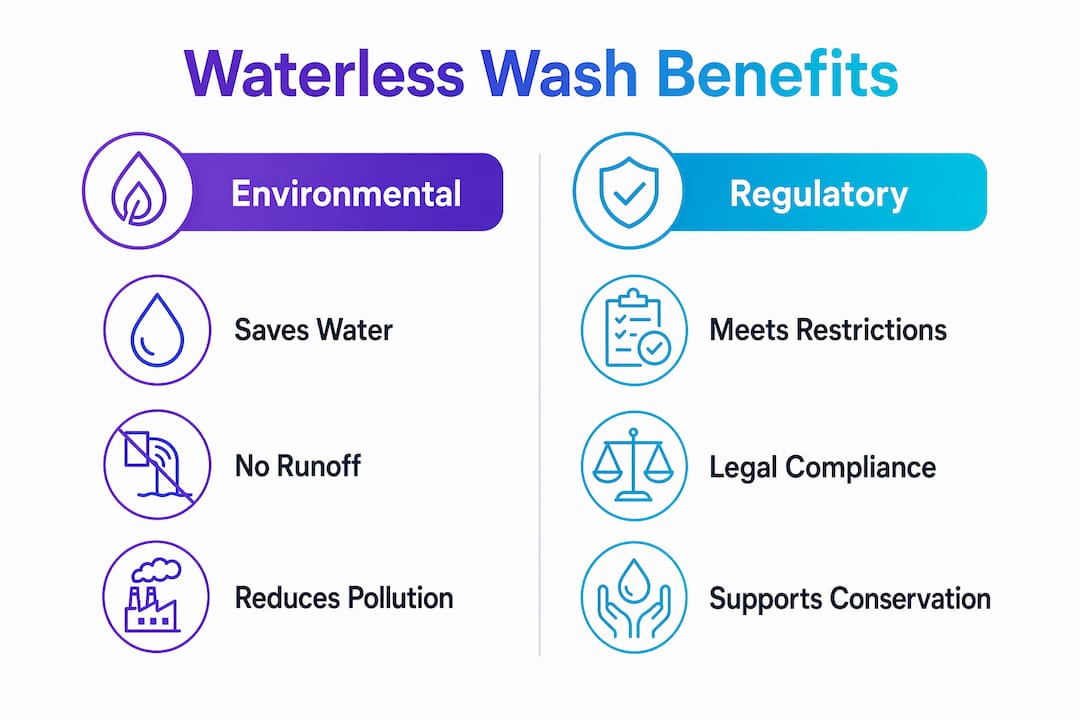
Queensland law makes the legal risk explicit. Under section 440ZG of the Environmental Protection Act 1994, vehicle wash runoff is a prescribed contaminant prohibited from entering stormwater systems. Breaching this carries real penalties. Waterless washing removes the risk completely because there is no runoff to manage.
The advantages of eco-friendly car care extend further than water volume alone:
- No energy required to heat or pump water
- No chemical-laden wastewater requiring treatment or disposal
- Reduced carbon footprint for mobile operators who carry no water tanks
- Compliance with water restriction orders in drought-affected regions
- Eligibility for green fleet certification programmes in commercial operations
Australia’s climate makes these advantages concrete rather than theoretical. Water restrictions are a recurring reality across Queensland, New South Wales, and South Australia. A method that sidesteps water use entirely does not just save resources. It keeps operators working legally when restrictions are in force.
How to perform a waterless car wash safely and effectively
Safe waterless washing depends on technique far more than product choice alone. The single biggest cause of paint damage during waterless washing is dragging grit across the surface with an insufficiently lubricated or already-dirty cloth. The steps below prevent that outcome.
Step-by-step waterless wash technique:
- Assess the dirt level first. Waterless washing suits light to moderate dust only. If the vehicle has heavy mud or thick grime, rinse the worst of it off before proceeding. Skipping this step risks deep scratches.
- Gather at least six to eight clean microfiber cloths. You will rotate through them constantly. One cloth per panel is a reasonable starting point.
- Spray the waterless product generously onto one panel at a time. Work in sections no larger than 60 x 60 centimetres. This keeps the product wet and lubricating while you work.
- Wipe gently in straight lines, not circles. Straight-line wiping limits the spread of any trapped particles. Circular motions create swirl marks that show up clearly in direct sunlight.
- Flip the cloth after each wipe. Once both sides are used, set the cloth aside and pick up a fresh one. Never re-use a cloth that has picked up visible dirt.
- Buff with a dry microfiber cloth immediately after wiping. This removes any product residue and brings up the shine. The lubricating polymers in quality products leave a light protective layer as they dry.
- Work from the roof down. Gravity pulls loosened dirt downward. Starting at the top prevents already-cleaned panels from being contaminated by runoff from panels above.
Pro Tip: Keep a dedicated set of microfiber cloths for waterless washing and wash them separately from household cloths. Fabric softener coats microfiber fibres and destroys their ability to trap dirt safely.
Knowing when not to use the waterless method is just as important as knowing how to use it. Heavily soiled vehicles require pre-cleaning before any waterless product is applied. Bird droppings, tree sap, and road tar also need targeted pre-treatment rather than a straight waterless wipe. For exterior cleaning best practices that cover these edge cases in detail, the technique principles carry across from traditional to waterless methods.
What are the practical applications for car owners and fleet operators?
Waterless washing removes location as a barrier to vehicle cleaning. No runoff means no drainage requirement, which opens up indoor car parks, apartment complexes, shopping centre car parks, and office buildings as viable wash locations. For car owners without a driveway or outdoor hose access, this is a genuine solution rather than a workaround.
For commercial fleet operators, the operational benefits compound quickly. Mobile waterless detailing reduces labour time, eliminates vehicle movement costs to wash facilities, and shrinks the operational water footprint across an entire fleet. Fleets operating under sustainability reporting requirements can count waterless washing directly toward their environmental metrics.
| Factor | Traditional wash | Waterless wash |
|---|---|---|
| Water per vehicle | 150–500 litres | Zero additional water |
| Runoff risk | High | None |
| Location flexibility | Outdoor with drainage | Anywhere |
| Equipment required | Hose, buckets, pressure washer | Spray product, microfiber cloths |
| Regulatory compliance risk | Moderate to high | Minimal |
| Suitable dirt level | Light to heavy | Light to moderate |
Private car owners benefit from the time saving as much as the water saving. A full waterless clean on a lightly dusty vehicle takes 20–30 minutes with no setup or pack-down time for hoses and buckets. For busy owners who want their car clean between professional details, it is the most practical option available. Exploring eco detailing solutions gives a broader picture of where waterless washing fits within a complete green car care routine.
Key takeaways
Waterless car washing is the most practical, legally compliant, and water-efficient cleaning method available for lightly soiled vehicles in Australia’s water-restricted environment.
| Point | Details |
|---|---|
| Core chemistry | Polymers and surfactants encapsulate dirt, allowing safe removal with under 300ml of product per vehicle. |
| Water savings | Traditional washing uses 150–500 litres per vehicle; waterless washing uses virtually zero. |
| Legal compliance | Queensland’s Environmental Protection Act 1994 prohibits wash runoff in stormwater; waterless washing eliminates this risk entirely. |
| Technique is critical | Multiple clean microfiber cloths, straight-line wiping, and working panel by panel prevent paint scratches. |
| Know the limits | Waterless washing suits light to moderate dust only; heavy mud or soiling requires pre-rinsing or a traditional wash first. |
Why waterless washing is more than a trend in Australia
The most common misconception I hear is that waterless washing is a compromise. People assume that if you are not using water, you are not really cleaning the car properly. After years of working with vehicles across the Sunshine Coast, I can tell you that belief is wrong, but only when the technique is right.
The product chemistry in a quality waterless detailing solution is genuinely sophisticated. The polymers do the heavy lifting. What causes paint damage is not the absence of water. It is the absence of care: dirty cloths, scrubbing motions, and trying to clean a vehicle that was never suitable for the method in the first place.
Australia’s climate makes this conversation urgent. Drought cycles are not a future scenario here. They are a present reality. Waterless methods have shifted from a niche option to a professional standard, and I expect commercial adoption to accelerate as water restriction periods become longer and more frequent. The operators who build waterless washing into their workflow now will not be scrambling to adapt later.
— isaac’s
Professional waterless detailing on the Sunshine Coast
Isaac’s Pro Detailing brings a fully equipped mobile service directly to your location, whether that is your home, workplace, or car park. Every detail uses eco-conscious products and proven technique, so your paint is protected and your vehicle leaves looking its best.
The mobile detailing workflow at Isaac’s Pro Detailing is built around waterless and low-water methods that meet Queensland’s environmental standards without sacrificing results. No hose required. No drainage needed. Just a clean car wherever you are. Check the wash menu to find the right service for your vehicle and book a time that suits you.
FAQ
What is a waterless car wash?
A waterless car wash is a cleaning method that uses polymer and surfactant-based sprays to encapsulate and lift dirt from a vehicle’s surface, which is then safely removed with microfiber cloths and no water rinsing.
Is waterless car wash safe for paint?
Waterless washing is safe for paint when performed correctly, using multiple clean microfiber cloths, gentle straight-line wiping, and quality product. Scrubbing or using dirty cloths causes scratches regardless of the method.
How much water does a waterless car wash save?
A traditional car wash uses 150–500 litres of water per vehicle. A waterless wash uses virtually zero, making it the most water-efficient cleaning option available for lightly soiled vehicles.
Can you do a waterless car wash on a heavily dirty car?
Waterless washing is not suitable for heavy mud or thick grime. Heavily soiled vehicles require pre-rinsing or a traditional wash first to remove abrasive particles before any waterless product is applied.
Is waterless car washing legal in Queensland?
Waterless washing is fully compliant with Queensland law. It produces no runoff, which means it does not breach section 440ZG of the Environmental Protection Act 1994, which prohibits vehicle wash water from entering stormwater systems.