
TL;DR:
- A rapid exterior detail offers a quick, comprehensive cleaning that maintains a vehicle’s appearance in 60 to 90 minutes. It includes washing, wheel cleaning, door jamb wipe-down, spray sealant, and window cleaning, but excludes paint correction or deep interior work. Regular service every four to six weeks helps protect paint, prevent damage, and reduce costs over time.
A rapid exterior detail is a fast, thorough cleaning service that maintains your car’s outer surfaces without the time commitment of a full detail. In the detailing industry, this service is also called an express exterior detail. It covers washing, protecting, and finishing a vehicle that is already reasonably well kept, typically completed in 60–90 minutes. That time frame is the defining difference from a full detail, which can run 3–6+ hours depending on the vehicle’s condition. If you want your car looking sharp between major services, a rapid exterior detail is the most practical tool available.
What does a rapid exterior detail include?
A rapid exterior detail follows a clear sequence of steps, each targeting a specific part of the vehicle’s outer surfaces. Understanding these steps helps you know exactly what you are paying for and what to expect when the job is done.
-
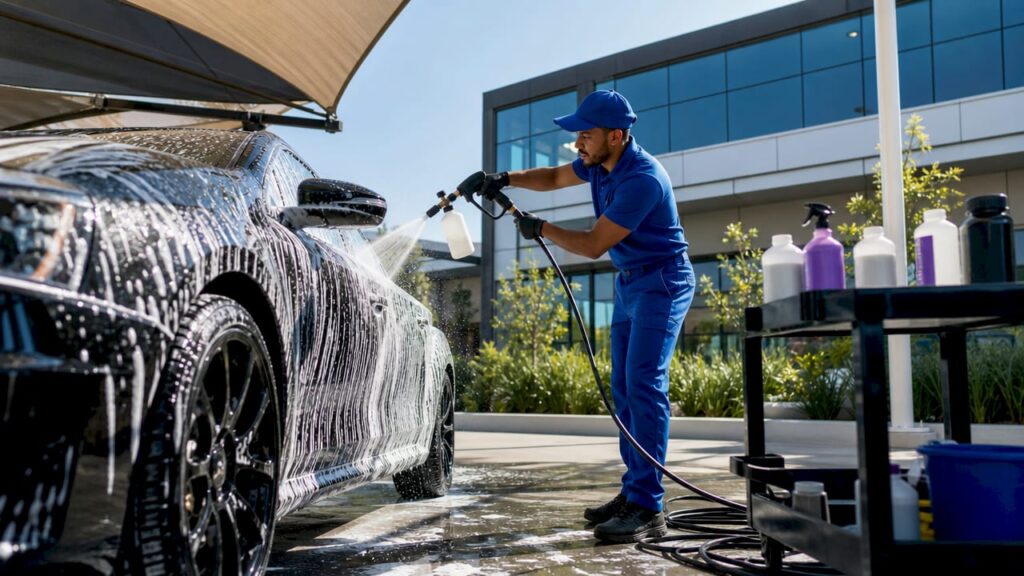
Foam cannon pre-rinse. A foam cannon applies a thick layer of pH-neutral shampoo across the entire vehicle. This loosens surface dirt before any physical contact, which reduces the risk of scratching the paint.
-
Hand wash. A detailer uses a wash mitt and pH-neutral shampoo to clean every panel. This is safer than an automated car wash because the pressure and technique are controlled by hand.
-
Wheel and tyre cleaning. Specialised wheel cleaners dissolve brake dust and road grime from alloy surfaces. Tyre dressing is then applied to restore a clean, dark finish to the rubber.
-
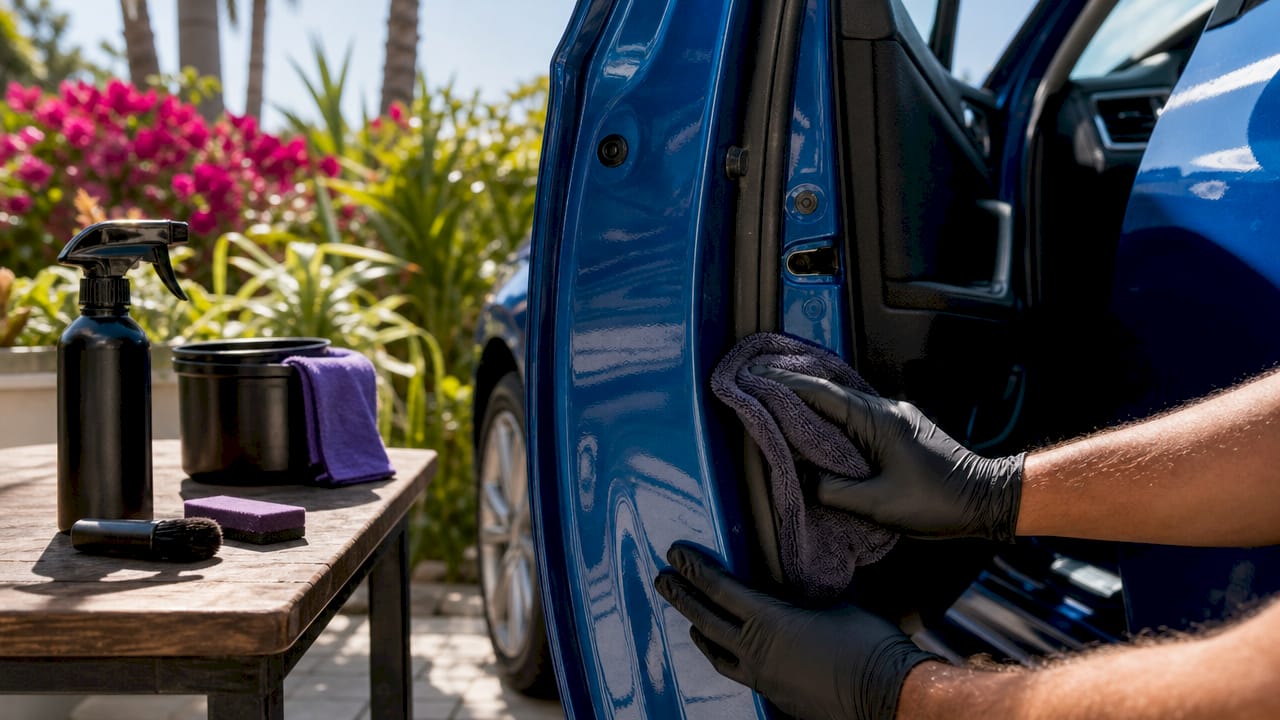
Door jamb wipe-down. The inner edges of each door are wiped clean. This area collects grime quickly and is often skipped in a basic wash, so including it lifts the overall result noticeably.
-
Spray sealant or polymer protection. A spray sealant application bonds to the paint and provides short-term protection against UV exposure, water, and light contamination. This step is what separates an express detail from a simple car wash.
-
Streak-free window cleaning. All exterior glass is cleaned with a dedicated glass cleaner and a microfibre cloth to eliminate smears and water spots.
Pro Tip: Quick detailing products work best on surfaces that are already clean and protected. Applying them over heavy dirt can cause fine surface scratches, so always start with a proper wash.
Express detailing does not include clay bar treatment, paint correction, or deep interior extraction. Those processes belong to a full detail and require significantly more time and preparation.
How does rapid exterior detailing compare to a full detail?
The clearest way to understand express detailing is to place it alongside a full detail. Both services clean a vehicle, but they serve very different purposes.
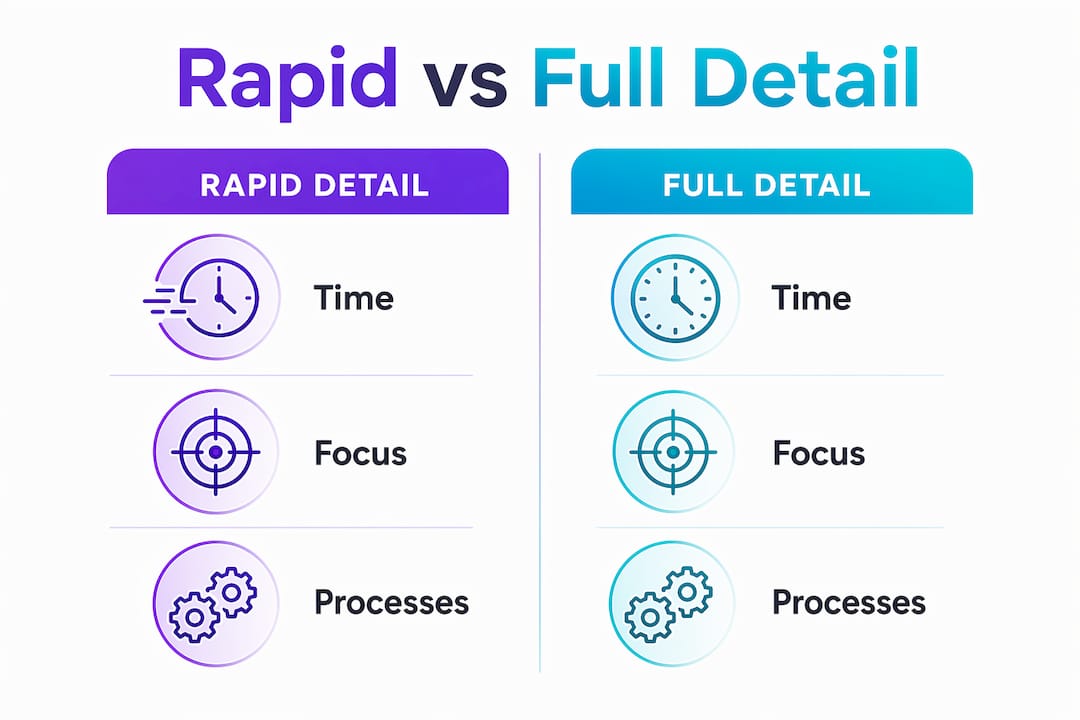
| Feature | Rapid exterior detail | Full exterior detail |
|---|---|---|
| Time required | 60–90 minutes | 3–6+ hours |
| Best suited for | Well-maintained vehicles | Neglected or heavily soiled vehicles |
| Paint decontamination | Not included | Clay bar treatment included |
| Paint correction | Not included | Included where needed |
| Interior work | Not included | Deep extraction and stain removal |
| Protection applied | Spray sealant | Long-term wax, sealant, or coating |
| Cost | Lower | Higher |
Express detailing assumes the vehicle is already in a maintained state. It refreshes and protects rather than restores. A full detail, by contrast, is a restorative service. It removes bonded contaminants, corrects paint defects, and addresses interior issues that a quick service cannot touch.
The practical rule is straightforward. If your car is washed regularly and parked in reasonable conditions, a rapid exterior detail keeps it in excellent shape. If the paint feels rough after washing, or if the vehicle has been neglected for months, a full detail is the correct starting point. Choosing the wrong service wastes money and leaves the underlying problems unresolved.
What are the benefits of regular rapid exterior detailing?
Regular express detailing does more than keep a car looking clean. It functions as preventative maintenance that protects the paint from damage that builds up over time.
- Prevents bonded contamination. Bird droppings, industrial fallout, and tree sap bond to paint quickly. Removing them regularly stops them from etching into the clear coat permanently.
- Preserves resale value. A vehicle with well-maintained paintwork commands a stronger price at resale. Consistent upkeep signals to buyers that the car has been cared for.
- Reduces swirl marks. Professional express detailing uses pH-neutral chemicals and careful hand washing, which causes far less paint damage than abrasive automated car washes.
- Makes future cleaning easier. A sealant applied during each express detail creates a slick surface that repels dirt. The next wash takes less effort and produces a better result.
- Saves time without sacrificing quality. You get a clean, protected vehicle in under 90 minutes. That is a realistic commitment for a busy schedule, unlike a full detail that requires half a day or more.
Regular express detailing every 4–6 weeks keeps your vehicle at a high maintenance baseline. It means less effort per wash, less frequent full details, and a paint finish that holds up far longer against the Australian sun and coastal conditions.
Pro Tip: If your vehicle is parked outdoors regularly on the Sunshine Coast, the combination of UV exposure and salt air accelerates paint degradation. An express detail with a quality spray sealant every month is one of the most cost-effective ways to protect your investment. Learn more about car paint protection steps specific to Australian conditions.
The benefits of express detailing extend beyond appearance. Owners who maintain a regular express schedule report spending less on full details over time because the paint never deteriorates to a point requiring correction.
How do you know if your car needs a rapid or full detail?
Choosing the right service starts with an honest assessment of your vehicle’s current condition. These indicators will point you in the right direction.
- Run your hand across a clean, dry panel. If the surface feels smooth and glassy, your car is a good candidate for an express detail. If it feels gritty or rough, bonded contaminants are present and a clay bar treatment is needed before any sealant will bond properly.
- Check your washing frequency. Vehicles washed every two to four weeks rarely need more than an express service. Cars that go months between washes almost always need a full detail to reset the baseline.
- Look at the paint under direct sunlight. Swirl marks, water spots, and oxidation are visible in bright light. Light swirling can sometimes be managed with a quality spray sealant, but heavy defects require machine polishing.
- Assess your parking conditions. Garaged vehicles in low-pollution areas stay cleaner longer. Vehicles parked under trees, near the coast, or in industrial areas accumulate contamination faster and may need more frequent full details.
- Consider the interior separately. A rapid exterior detail does not address the interior. If the cabin has deep stains, strong odours, or heavily soiled carpets, those issues need a dedicated interior detailing service regardless of what the exterior requires.
A common misconception is that an express detail can fix dull or oxidised paint. It cannot. Express detailing maintains paint that is already in good condition. Restoration requires correction, and correction takes time that an express service does not allow for. Knowing this distinction saves you from disappointment and helps you choose the right service from the start.
One more point worth understanding: quick detailing products used between washes are not a substitute for a proper express detail. They refresh shine on already-clean surfaces but cannot replace the wash, decontamination, and sealant steps that a full express service delivers. Using them incorrectly on dirty paint causes fine scratches that accumulate over time. Understanding the difference between a proper mobile car wash and a quick spray-and-wipe helps you avoid this mistake.
Key takeaways
A rapid exterior detail is the most time-efficient way to maintain a well-kept vehicle’s paint, protection, and appearance between full detailing services.
| Point | Details |
|---|---|
| Time commitment | Express detailing takes 60–90 minutes versus 3–6+ hours for a full detail. |
| Service scope | Express detailing maintains clean vehicles; it does not restore neglected or damaged paint. |
| Paint protection | Spray sealant applied during each session shields paint from UV, water, and contamination. |
| Recommended frequency | Detailing experts recommend express services every 4–6 weeks for best results. |
| Surface readiness test | Run your hand across a clean panel; rough texture means a full detail is needed first. |
Why I think express detailing is the most underrated car care habit
Most vehicle owners think about detailing in two modes: either they ignore the car entirely, or they book a full detail when things get bad enough. The express detail sits in the middle, and that middle ground is where the real value lives.
In my experience working with vehicles across the Sunshine Coast, the owners who maintain the best-looking cars are not the ones who spend the most on detailing. They are the ones who show up consistently with a well-kept vehicle and let an express service do its job. Prevention is always cheaper than restoration. A paint correction job costs significantly more than a year’s worth of express details, and it only becomes necessary when regular maintenance is skipped.
The other thing I have noticed is that people underestimate how much damage an automated car wash does over time. The brushes and abrasive chemicals in a drive-through wash create swirl marks that dull the paint gradually. Switching to a professional express detail, even just once a month, makes a visible difference within a few services. The role of exterior detailing in long-term paint health is something most owners only appreciate after they have seen the difference firsthand.
My honest advice: treat the express detail as a non-negotiable part of your vehicle maintenance schedule, not an optional luxury. Your paint will last longer, your car will be worth more, and you will spend less on corrective work over the life of the vehicle.
— Isaac’s
Professional rapid exterior detailing on the Sunshine Coast
Isaac’s Pro Detailing brings professional express exterior services directly to your home, workplace, or wherever your vehicle is parked.
Every express service uses pH-neutral products, foam cannon pre-rinse, hand washing, and quality spray sealants chosen for Australian conditions. There are no abrasive shortcuts. The mobile detailing workflow Isaac’s Pro Detailing follows is built around protecting your paint at every step, not just making the car look clean for a day. If you are ready to see what a consistent express schedule does for your vehicle’s appearance and value, browse the full wash menu and find the service that fits your car and your schedule.
FAQ
What is included in a rapid exterior detail?
A rapid exterior detail typically includes a foam cannon pre-rinse, hand wash, wheel and tyre cleaning, door jamb wipe-down, spray sealant application, and streak-free window cleaning. It does not include clay bar treatment, paint correction, or interior work.
How long does an express exterior detail take?
An express exterior detail takes between 60 and 90 minutes, compared to a full detail which requires 3–6+ hours depending on the vehicle’s condition and size.
How often should I book a rapid exterior detail?
Detailing professionals recommend booking an express detail every 4–6 weeks. This frequency prevents contaminant build-up and keeps the paint protected without requiring frequent full details.
Can a rapid exterior detail fix scratches or dull paint?
No. Express detailing maintains paint that is already in good condition. Scratches, swirl marks, and oxidation require paint correction as part of a full detail, which involves machine polishing and significantly more time.
Is an express detail better than an automated car wash?
Professional express detailing is safer for your paint than an automated car wash. Hand washing with pH-neutral products avoids the abrasive brushes and harsh chemicals that cause swirl marks and long-term paint damage in drive-through systems.