
TL;DR:
- Regular vehicle maintenance, safety checks, and exterior and interior care extend a car’s lifespan and preserve its value. Following factory-recommended schedules and performing pre-trip inspections reduce breakdowns and ensure safety, especially on the road. Professional detailing can enhance protection and resale value by maintaining the vehicle’s appearance beyond mechanical upkeep.
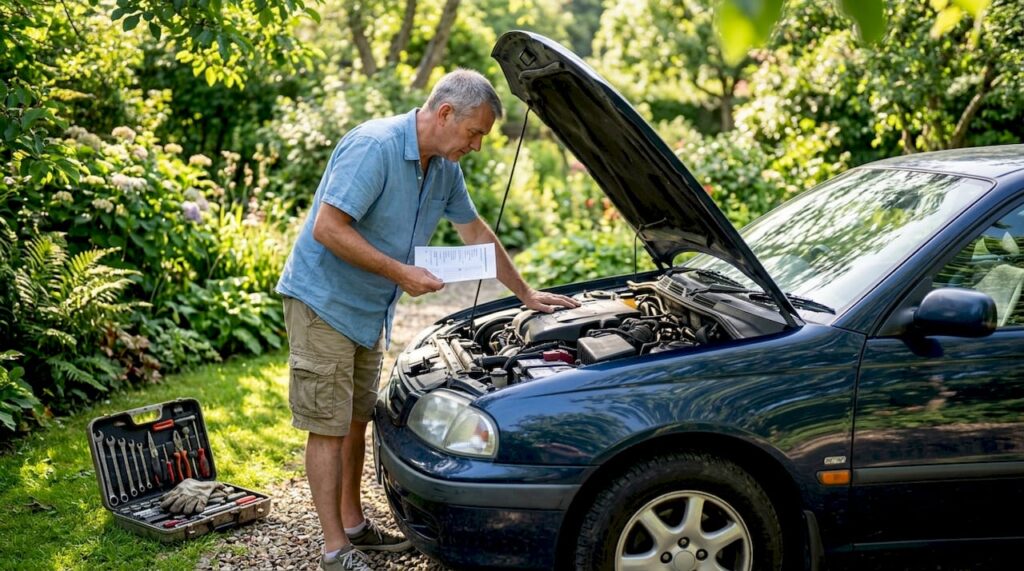
A vehicle protection checklist is a structured set of maintenance tasks and inspections designed to safeguard your car’s condition, safety, and resale value. Most breakdowns and costly repairs trace back to skipped routine checks rather than sudden mechanical failure. Following a consistent checklist for car care keeps your vehicle reliable, extends its working life, and protects what is often your second largest financial asset. This guide covers every key area, from tyre pressure and fluid levels to paint protection and interior care, tailored for Australian conditions.
1. What belongs on your vehicle protection checklist?
A complete vehicle protection checklist covers mechanical health, safety systems, exterior condition, and interior cleanliness. Skipping any one category creates gaps that compound over time. The most effective approach treats the checklist as a living document, updated by season and mileage rather than a one-off task.

The checklist divides into three cycles: daily or pre-trip checks, monthly inspections, and service-interval tasks tied to your manufacturer’s schedule. Each cycle catches different failure points. Pre-trip checks catch overnight fluid leaks or flat tyres. Monthly inspections catch slow deterioration. Service-interval tasks catch wear that only a trained eye or specialist tool can detect.
2. What are the essential regular maintenance checks?
Routine maintenance at manufacturer-specified intervals is the single most effective way to avoid costly repairs and mechanical failure. Oil changes every 5,000–10,000 miles, depending on your vehicle and oil type, keep the engine clean and lubricated. Skipping even one interval accelerates wear on bearings, camshafts, and seals.
Key recurring checks include:
- Engine oil and coolant levels: Check monthly and top up with the grade specified in your owner’s manual.
- Brake fluid and power steering fluid: Inspect every three months. Low brake fluid often signals worn brake pads.
- Tyre pressure: Check when tyres are cold, after parking for at least three hours, to avoid false high readings caused by heat expansion.
- Battery terminals: Inspect for corrosion every six months. A white or blue crust on terminals signals a failing connection.
- Air filter: Replace every 15,000–30,000 kilometres or when visibly clogged. A blocked filter reduces fuel efficiency noticeably.
- Wiper blades: Replace at least once a year, or before the wet season in Queensland.
Pro Tip: Strictly following your factory-prescribed maintenance schedule is sufficient for warranty and vehicle health. More frequent servicing is often an unnecessary upsell that adds cost without benefit.
3. How to perform a pre-trip inspection to prevent breakdowns
A 30-minute pre-trip inspection covering tyres, fluids, brakes, lights, battery, wipers, and belts reduces breakdown risk significantly. Most common roadside breakdowns trace directly to these seven areas. Running through them before a long drive takes less time than waiting for a tow truck.
Work through this pre-departure checklist before any trip over two hours:
- Tyres: Check pressure and look for cuts, bulges, or uneven wear.
- Fluids: Confirm oil, coolant, brake fluid, and washer fluid are at correct levels.
- Brakes: Listen for grinding or squealing when you reverse out of the driveway.
- Lights: Walk around the car and confirm all indicators, brake lights, and headlights work.
- Battery terminals: Check for corrosion and confirm the connection is tight.
- Wiper blades: Run them once to confirm they clear the screen without streaking.
- Belts and hoses: Look for cracking, fraying, or soft spots under the bonnet.
Pro Tip: Set your infotainment system, GPS route, and climate controls before you start driving. Looking at a phone for just 2 seconds while driving doubles crash risk. Pre-setting everything removes the temptation entirely.
4. Why tyre care is the most overlooked safety item
Tyre condition is the most direct link between your car and the road, yet it is the most commonly neglected item on any maintenance checklist for cars. Pressure, tread depth, and alignment all affect braking distance and handling, particularly on wet roads.
Tyre pressure must be checked when tyres are cold. Driving heats the air inside the tyre, which raises pressure and produces a falsely high reading. Check first thing in the morning or after the car has been parked for at least three hours.
Tread depth is where many owners get the legal minimum confused with the safe minimum. The legal minimum in Australia is 1.5mm, but 4/32 inch tread depth (roughly 3.2mm) is the practical minimum for safe wet-weather performance. Worn tread below this level significantly increases hydroplaning risk on Queensland’s summer roads.
5. How cleaning and protective coatings preserve vehicle condition
Regular detailing prevents oxidation and fabric degradation, protecting both paint and interior surfaces beyond what mechanical maintenance can achieve. Owners who skip exterior washing and interior cleaning lose value steadily through faded paint, cracked trim, and stained upholstery. These are not cosmetic concerns. They directly affect resale price.
The exterior protection hierarchy works like this:
- Regular washing: Remove road grime, bird droppings, and salt before they etch into the clear coat. Wash at least fortnightly in coastal areas like the Sunshine Coast.
- Paint decontamination: Use an iron remover to lift embedded brake dust and metallic particles that washing alone cannot shift.
- Paint protection film (PPF): A physical barrier applied to high-impact areas like the bonnet and front bumper. PPF absorbs stone chips and scratches without affecting paint. Learn more about what PPF does for your car’s surface.
- Ceramic coating: A chemical bond to the paint surface that repels water, UV rays, and contaminants. A quality ceramic coating on the Sunshine Coast lasts years with minimal maintenance.
- Interior fabric and leather protection: Apply fabric protector to seats and carpet after a deep clean to resist staining and moisture absorption.
| Protection method | Best for | Longevity |
|---|---|---|
| Regular wash | Removing surface contaminants | Weekly to fortnightly |
| PPF | Physical impact protection | 5–10 years |
| Ceramic coating | UV and chemical resistance | 2–5 years |
| Fabric protector | Interior stain resistance | 6–12 months |
Pro Tip: UV protection for your paint is not optional in Queensland. The Sunshine Coast’s UV index regularly hits extreme levels, and unprotected clear coat oxidises within a few years without a ceramic or wax barrier.
6. How to maintain your vehicle interior as part of your auto protection plan
Interior cleaning prevents wear and preserves vehicle value in ways that are easy to overlook until the damage is done. Dust, moisture, and UV exposure degrade fabric, leather, and plastic trim over time. A clean interior also reduces allergens and odours, which matter for daily comfort and resale appeal.
A practical interior maintenance routine covers vacuuming seats and carpet monthly, wiping down hard surfaces with a pH-neutral cleaner, and treating leather with a conditioner every three months. Salt air on the Sunshine Coast accelerates corrosion on metal fittings and degrades rubber seals faster than inland climates. Addressing this regularly prevents expensive trim replacement later.
7. Common misconceptions that undermine your vehicle maintenance guide
The biggest misconception in vehicle care is that more frequent servicing equals better protection. Factory-prescribed intervals are engineered to preserve warranty and vehicle health efficiently. Servicing more often than recommended adds cost without mechanical benefit.
Other common myths worth correcting:
- “Modern cars don’t need pre-trip checks.” Advanced driver assistance systems (ADAS) detect hazards but do not check tyre pressure, fluid levels, or wiper condition. The driver still owns those checks.
- “The legal tread depth minimum is safe enough.” The legal minimum of 1.5mm in Australia is a floor, not a recommendation. Safety engineers recommend replacing tyres well before that point for wet-weather grip.
- “Touchscreen controls are safer than physical buttons.” Many modern dashboard controls buried in touchscreen menus increase distraction risk. Locating headlights or demister controls in a menu during poor weather is genuinely dangerous.
“Routine maintenance and early fixing of minor issues are critical to prolonging vehicle life and saving money on repairs.” — Consumer Reports
8. When to call a professional versus doing it yourself
DIY maintenance covers a clear range of tasks: checking and topping up fluids, inspecting tyre pressure and tread, replacing wiper blades, and keeping the car clean. These require no specialist tools and carry no risk of voiding your warranty when done correctly.
Professional help is needed when the task involves sealed systems, calibrated torque settings, or diagnostic equipment. Brake pad replacement, wheel alignment, timing belt service, and ceramic coating application all fall into this category. Attempting these without the right tools creates safety risks or damages the finish you are trying to protect.
The practical rule is straightforward. If the task requires lifting the car, accessing the brake system, or applying a permanent coating, book a professional. Everything else is within reach of a careful owner with a basic toolkit and a reliable checklist.
Key takeaways
A complete vehicle protection checklist combines mechanical maintenance, safety inspections, and exterior and interior care to protect vehicle value, safety, and longevity.
| Point | Details |
|---|---|
| Follow factory service intervals | Manufacturer-specified schedules preserve warranty and avoid unnecessary costs. |
| Check tyres cold | Accurate pressure readings require tyres parked for at least three hours. |
| Use the 4/32 inch tread rule | Replace tyres before the legal minimum for safe wet-weather performance. |
| Add exterior and interior care | Regular washing, ceramic coating, and interior cleaning protect resale value. |
| Pre-trip checks prevent breakdowns | A 30-minute inspection of seven core areas reduces roadside risk significantly. |
What I’ve learned from years of seeing neglected vehicles
The vehicles that arrive at Isaac’s Pro Detailing in the worst condition are rarely the oldest ones. They are the ones whose owners assumed that a service stamp in the logbook covered everything. Mechanical servicing and protective care are two separate disciplines, and most owners only practise one.
Paint oxidation on the Sunshine Coast happens faster than most people expect. I have seen clear coat failure on vehicles less than four years old that were never waxed or coated. A ceramic coating applied early costs a fraction of a respray. The same logic applies inside the car. Fabric that is never protected stains permanently. Leather that is never conditioned cracks. Neither failure is dramatic or sudden. Both are entirely preventable.
The owners who get the most from their vehicles treat the checklist as a habit, not a chore. They check tyres before a long drive, book a detail every few months, and follow the factory service schedule without adding unnecessary extras. That combination keeps vehicles on the road longer, looking better, and worth more when it is time to sell.
— Isaac’s
Professional detailing as part of your vehicle care routine
Mechanical checks protect what is under the bonnet. Professional detailing protects everything else.
Com offers fully mobile detailing across the Sunshine Coast, coming to your home, workplace, or wherever suits you. Services cover seat and carpet extraction, exterior cut and polish, ceramic coating application, fabric and leather protection, and iron removal. For owners who want a complete mobile detailing workflow that covers every surface, Com brings the full service to your door. No drop-off, no waiting, and no compromise on the finish. Book a session and add professional protection to your checklist today.
FAQ
What is a vehicle protection checklist?
A vehicle protection checklist is a structured list of maintenance tasks, safety inspections, and protective care steps designed to keep a car safe, reliable, and in good condition. It covers mechanical checks, tyre care, exterior protection, and interior cleaning.
How often should I check tyre pressure?
Check tyre pressure monthly and always before a long trip. Tyres must be cold for an accurate reading, meaning the car should be parked for at least three hours before checking.
What tread depth is safe for wet roads in Australia?
The legal minimum tread depth in Australia is 1.5mm, but safety experts recommend replacing tyres at 4/32 inch (approximately 3.2mm) for reliable wet-weather grip and to reduce hydroplaning risk.
Does regular detailing actually protect resale value?
Regular detailing prevents paint oxidation, fabric staining, and trim degradation, all of which reduce resale value. Owners who maintain exterior and interior condition consistently achieve better resale outcomes than those who rely on mechanical servicing alone.
When should I use a professional detailer instead of DIY cleaning?
Use a professional detailer for ceramic coating application, paint decontamination, deep seat extraction, and any treatment involving permanent or semi-permanent surface products. Basic washing, vacuuming, and fluid top-ups are well within DIY reach.