
TL;DR:
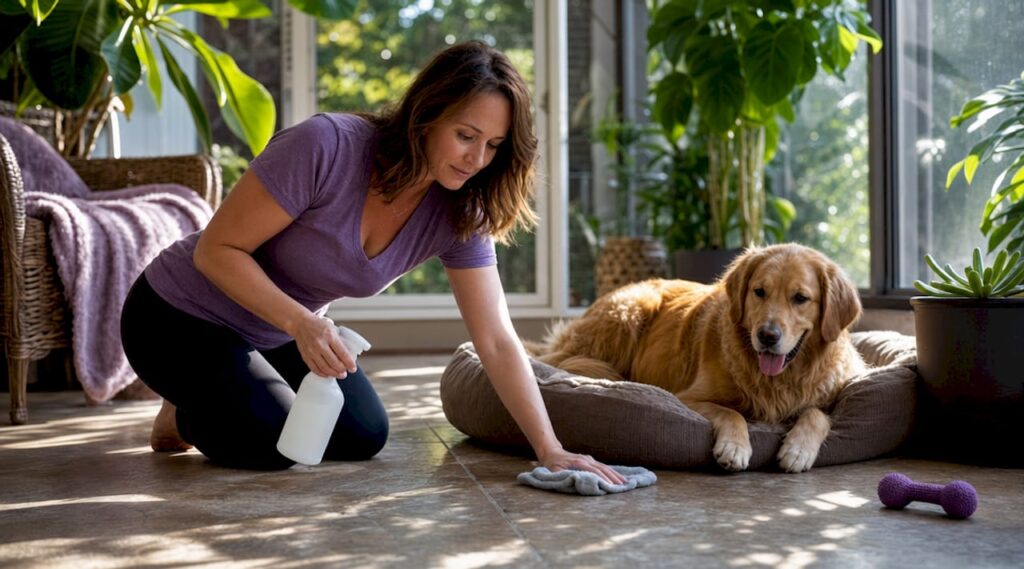
- Safe pet cleaning products avoid toxic ingredients like ammonia, bleach, phenols, and synthetic fragrances, relying instead on verified certifications such as EPA Safer Choice or Green Seal. Natural solutions like baking soda, diluted vinegar, and castile soap are effective and generally safe when surfaces are fully dried before pets re-enter. Proper application practices, including removing pets during cleaning and ensuring thorough drying, are essential to minimize health risks for cats and dogs.
Safe cleaning products for pets are formulations that do not expose animals to toxic chemicals through inhalation, skin contact, or ingestion. Most households contain at least one cleaner with ammonia, bleach, or phenols, and these ingredients pose genuine health risks to cats and dogs even at low concentrations. Labels like “non-toxic” and “natural” are marketing terms with no regulatory definition, which means ingredient-class screening is the only reliable way to protect your animals. Certifications from the EPA Safer Choice programme and Green Seal provide a verified alternative to guesswork, and simple DIY options like diluted vinegar and baking soda cover most everyday cleaning tasks safely.
Which ingredients should you avoid in pet-safe cleaning products?
The chemicals that harm pets most are the ones found in the most common household cleaners. Ammonia, present in many glass and multi-surface sprays, irritates the respiratory tract of dogs and cats even at concentrations safe for humans. Bleach causes skin and eye irritation, and in concentrated form can produce chemical burns on paws that contact wet surfaces. These are not rare edge cases. They are everyday risks in homes where pets walk across freshly mopped floors or groom themselves after lying on cleaned surfaces.
Cats carry a specific vulnerability that dog owners often overlook. Phenols in pine-based disinfectants can cause liver damage and seizures in cats because their livers lack the enzyme needed to metabolise phenolic compounds. Products marketed as “pine fresh” or “forest scent” frequently contain these compounds. A cat that walks across a floor cleaned with a pine disinfectant and then grooms its paws is directly ingesting a substance its body cannot safely process.
Other ingredients to screen for include:
- Benzalkonium chloride found in many antibacterial sprays and wipes, which causes oral ulcers and respiratory distress in cats
- Isopropyl alcohol present in surface sanitisers, which is toxic when inhaled or absorbed through skin
- Formaldehyde used as a preservative in some floor cleaners and fabric treatments
- Synthetic fragrances which are catch-all terms for dozens of undisclosed chemicals, many of which are respiratory irritants
- Essential oils including tea tree and pennyroyal, which the ASPCA links to liver damage and neurological symptoms in pets
Pro Tip: Check the ingredient list on your current cleaning products against this list before your next clean. If a product contains phenols, benzalkonium chloride, or undisclosed “fragrance,” replace it before your next use around pets.
Exposure happens through three routes: inhalation of fumes during and after application, direct paw or skin contact with residue on surfaces, and ingestion through grooming. Cats are at higher risk from the grooming route because they clean themselves so thoroughly. Dogs are more likely to lick floors and surfaces directly. Both routes are preventable with the right product choices and application habits.
What certifications and labels guarantee pet-safe cleaning products?
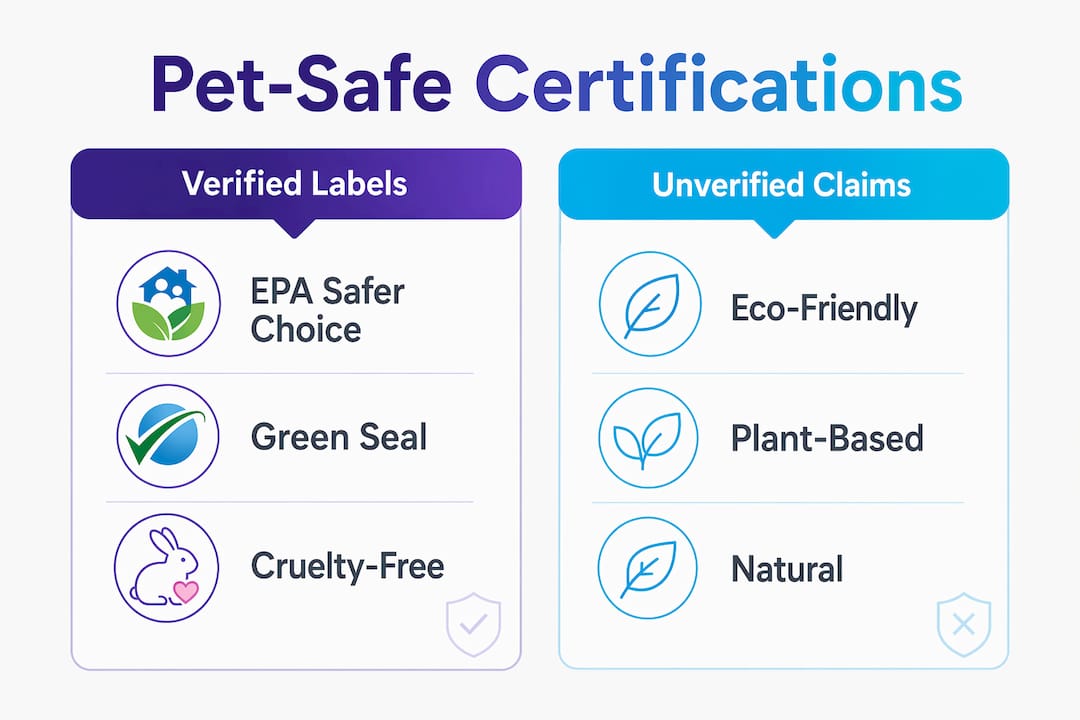
No certification guarantees a product is completely risk-free, but verified programmes come far closer to that standard than marketing claims alone. The two most reliable in Australia are the EPA Safer Choice label and Green Seal certification. EPA Safer Choice and Green Seal verify safer ingredient profiles against established hazard criteria, covering both human health and environmental impact. A product carrying either label has had its full ingredient list assessed, not just its active ingredients.
Green Seal additionally requires low volatile organic compound (VOC) levels and cruelty-free testing practices, with the Leaping Bunny logo confirming no animal testing in the supply chain. This matters for pet owners who want their cleaning choices to align with broader animal welfare values. The Environmental Working Group (EWG) also publishes ingredient transparency ratings through its Guide to Healthy Cleaning database, which lets you look up specific products and see how each ingredient scores for health and environmental risk.
| Certification | What it verifies | Best for |
|---|---|---|
| EPA Safer Choice | Full ingredient hazard profile, human health and environment | General household cleaners |
| Green Seal | Low VOCs, cruelty-free testing, environmental performance | Multi-surface and floor products |
| Leaping Bunny | No animal testing across supply chain | Ethically minded pet owners |
| EWG Guide to Healthy Cleaning | Ingredient transparency ratings per product | Researching specific brands |
Pro Tip: Search any cleaning product on the EWG’s Guide to Healthy Cleaning database before buying. A product rated A or B has passed ingredient transparency screening and is far less likely to contain hidden hazardous compounds.
The critical distinction is between verified certification and unverified claims. Words like “green,” “eco,” “plant-based,” and “gentle” carry no regulatory weight. A product can legally use all four of those terms and still contain benzalkonium chloride or synthetic fragrances. Ingredient-class screening combined with certified labels is the most reliable approach available to Australian pet owners in 2026.
Which natural and DIY cleaning solutions are safe around pets?
Natural cleaning agents are genuinely effective for most household tasks, and several are well-suited to pet households when used correctly. The three most reliable are baking soda, diluted white vinegar, and castile soap. Baking soda is safe for pets, works on sinks, tubs, counters, and carpets, and doubles as a natural deodoriser for pet bedding and litter areas. It leaves no toxic residue and is one of the few cleaning agents that is genuinely low-risk even if a pet makes brief contact with a treated surface.
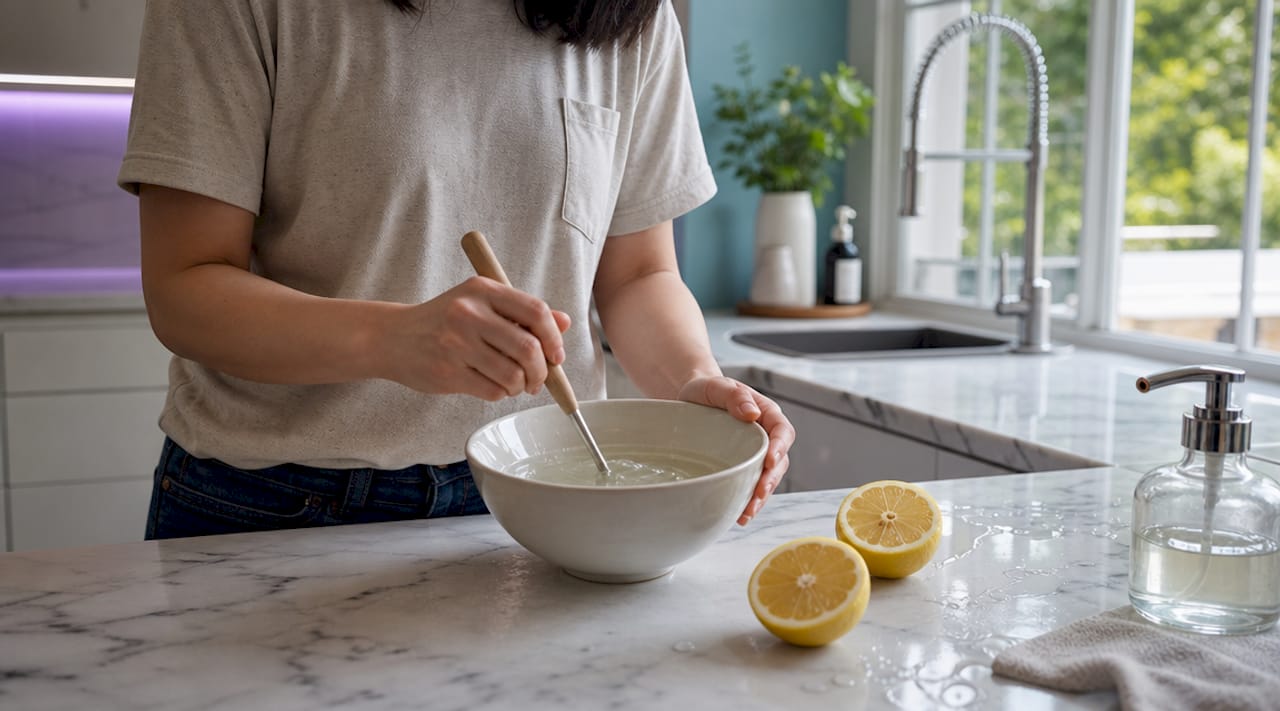
Diluted white vinegar at a 1:1 ratio with water is effective on hard floors, tiles, and glass. The key word is diluted. Undiluted vinegar can irritate paws and mucous membranes, and surfaces must dry completely before pets re-enter the area. Vinegar should not be used on natural stone surfaces like marble or granite because the acidity causes etching. It is also not appropriate for grout or unsealed timber floors. Within those restrictions, it is one of the safest floor cleaners available.
Castile soap, made from plant oils without synthetic additives, works well for general surface cleaning and mopping. Dr. Bronner’s is the most widely available castile soap in Australia and carries no phenols, synthetic fragrances, or benzalkonium chloride. A few drops in a bucket of warm water is sufficient for most floor cleaning tasks.
For disinfection, enzymatic and hydrogen peroxide-based cleaners are the most effective pet-safe alternatives to bleach-based products. Enzymatic cleaners break down organic matter at a molecular level, making them particularly effective on pet urine, faeces, and vomit stains. Hydrogen peroxide variants, when used as directed, are stable and non-irritating after drying. Brands like Biokleen and Puracy produce enzymatic formulations that carry EWG A or B ratings.
One caution that applies across all natural options: essential oils are not inherently safe simply because they are natural. Tea tree, eucalyptus, pennyroyal, and clove oils are toxic to cats and dogs at concentrations commonly found in DIY cleaning recipes. If you are making your own cleaners, leave essential oils out entirely or confirm with your vet before use.
Pro Tip: Safer pet cleaning products rinse easily and do not leave persistent residues, which directly reduces paw and face exposure after cleaning. Choose formulations that specify “rinse-free” or “residue-free” on the label when cleaning floors and surfaces pets contact regularly.
How to safely clean your home when you have pets
The right products only protect your animals if you also follow safe application practices. A two-step exposure control method covers the most critical risks.
- Remove pets from the area before you start cleaning. Place dogs in another room or outside. Secure cats away from the area being cleaned. This eliminates inhalation exposure during application, which is the highest-risk moment for respiratory irritants.
- Keep pets out until all surfaces are completely dry. Residue contact through paws is the second most common exposure route. Keeping pets out of cleaned areas until surfaces dry minimises this risk significantly.
- Ventilate the space during and after cleaning. Opening windows and using fans during cleaning disperses VOCs and fumes before pets re-enter. This is particularly important in bathrooms and laundries where ventilation is often poor.
- Store all cleaning products in locked or child-proof cupboards. Pets, especially dogs, will investigate bottles left on floors or low shelves. Ingestion of even small amounts of concentrated cleaner can cause serious harm.
- Follow manufacturer dilution instructions precisely. A product that is safe at the recommended dilution may cause irritation at higher concentrations. This applies to castile soap, hydrogen peroxide cleaners, and enzymatic products as much as it does to conventional cleaners.
For pet bedding, wash covers in hot water with a fragrance-free, dye-free laundry detergent. Brands like Ecostore and Earth Choice offer fragrance-free options widely available in Australian supermarkets. For pet toys, hand-wash with diluted castile soap and rinse thoroughly. Avoid dishwasher tablets on rubber or fabric toys as many contain enzymes and fragrances at concentrations that leave residue.
Pro Tip: Cover fish tanks and remove birds from rooms before using any spray cleaner, even certified pet-safe products. Aquatic animals and birds have respiratory systems far more sensitive than dogs or cats, and airborne particles from any spray can cause harm.
Key takeaways
Choosing non-toxic cleaners for pets requires ingredient-class screening, verified certifications, and correct application practices rather than relying on marketing claims alone.
| Point | Details |
|---|---|
| Avoid key harmful ingredients | Screen for ammonia, bleach, phenols, benzalkonium chloride, and synthetic fragrances before buying any cleaner. |
| Use verified certifications | EPA Safer Choice and Green Seal labels confirm ingredient safety far more reliably than “natural” or “eco” marketing terms. |
| DIY options work with care | Diluted vinegar and baking soda are safe and effective, but surfaces must dry fully before pets re-enter the area. |
| Two-step exposure control | Remove pets during cleaning and keep them away until surfaces are completely dry to minimise residue contact. |
| Essential oils are not safe | Tea tree, pennyroyal, and eucalyptus oils are toxic to cats and dogs regardless of how natural the source is. |
What I’ve learnt from years of cleaning around animals
The most common mistake I see pet owners make is trusting the front of the label. “Plant-based,” “eco-friendly,” and “gentle formula” are phrases that cost nothing to print and mean nothing without a verified certification behind them. I have seen products carrying all three of those claims that still contained benzalkonium chloride and synthetic fragrances. The ingredient list on the back is the only part of the packaging that matters.
Cats and dogs respond differently to cleaning products, and that difference is worth understanding. Dogs tend to be more resilient to surface residues because their livers process a wider range of compounds. Cats are genuinely fragile when it comes to phenols and essential oils, and the grooming habit that makes them such clean animals is exactly what makes them vulnerable. If you have cats, the ingredient screening process is non-negotiable.
I have also found that the DIY route works well for about 80 per cent of household cleaning tasks. Baking soda and diluted vinegar handle most surfaces, and a good enzymatic cleaner covers pet-specific messes. Where people go wrong with DIY is adding essential oils to make the cleaner smell better. I understand the impulse, but it introduces the exact toxicity risk you are trying to avoid. Leave the oils out and let the vinegar smell dissipate on its own. It does, quickly.
One thing worth discussing with your vet is whether your specific pet has sensitivities beyond the standard risk categories. Some dogs with skin conditions react to even low-residue castile soap on floors. Some cats with respiratory conditions are sensitive to vinegar fumes during application. Your vet knows your animal’s history and can flag risks that a general guide cannot anticipate.
— Isaac’s
Keep your pet’s car space as clean as their home
Your pet travels in your car, and car interiors collect the same dander, odours, and bacteria as your home. The difference is that most car cleaning products are not formulated with pet safety in mind. At Isaac’s Pro Detailing on the Sunshine Coast, we use non-toxic, eco-conscious products on every interior clean, covering seat extraction, carpet treatment, and odour elimination without harsh chemical residues. If your dog or cat rides with you regularly, a professional interior detail using pet-safe interior cleaning products is the logical extension of the safe home cleaning routine you have already built. View our full service menu and book a mobile detail at a time and location that suits you.
FAQ
What makes a cleaning product safe for pets?
A pet-safe cleaning product contains no ammonia, bleach, phenols, benzalkonium chloride, or synthetic fragrances, and carries a verified certification such as EPA Safer Choice or Green Seal. The product must also leave no persistent residue on surfaces after drying.
Are essential oils safe to use in DIY pet cleaning solutions?
No. Essential oils including tea tree, pennyroyal, and eucalyptus are toxic to cats and dogs and should not be added to any DIY cleaner used in a pet household, regardless of how diluted they are.
How long should I keep pets off a cleaned floor?
Keep pets off cleaned surfaces until they are completely dry. Drying time varies by product and ventilation, but as a general rule, removing pets during cleaning and waiting at least 15 to 30 minutes after the surface appears dry is the safest approach.
Is diluted vinegar safe to use around cats and dogs?
Diluted white vinegar at a 1:1 ratio with water is safe for most hard surfaces when allowed to dry fully before pet contact. Undiluted vinegar irritates paws and should never be applied directly to surfaces pets walk on without dilution and a full drying period.
Can I trust “non-toxic” or “natural” labels on cleaning products?
No. These terms have no regulatory definition in Australia and do not guarantee a product is free from harmful ingredients. Always check the full ingredient list and look for EPA Safer Choice or Green Seal certification before using any cleaner around pets.