
TL;DR:
- Car odour removal involves pinpointing and eliminating the source rather than masking smells with artificial fragrances. Effective methods include enzyme cleaners, baking soda treatments, and professional steam or ozone cleaning, with proper inspection and maintenance to prevent recurrence. Patience and systematic identification are essential, and professional help is necessary for persistent odours.
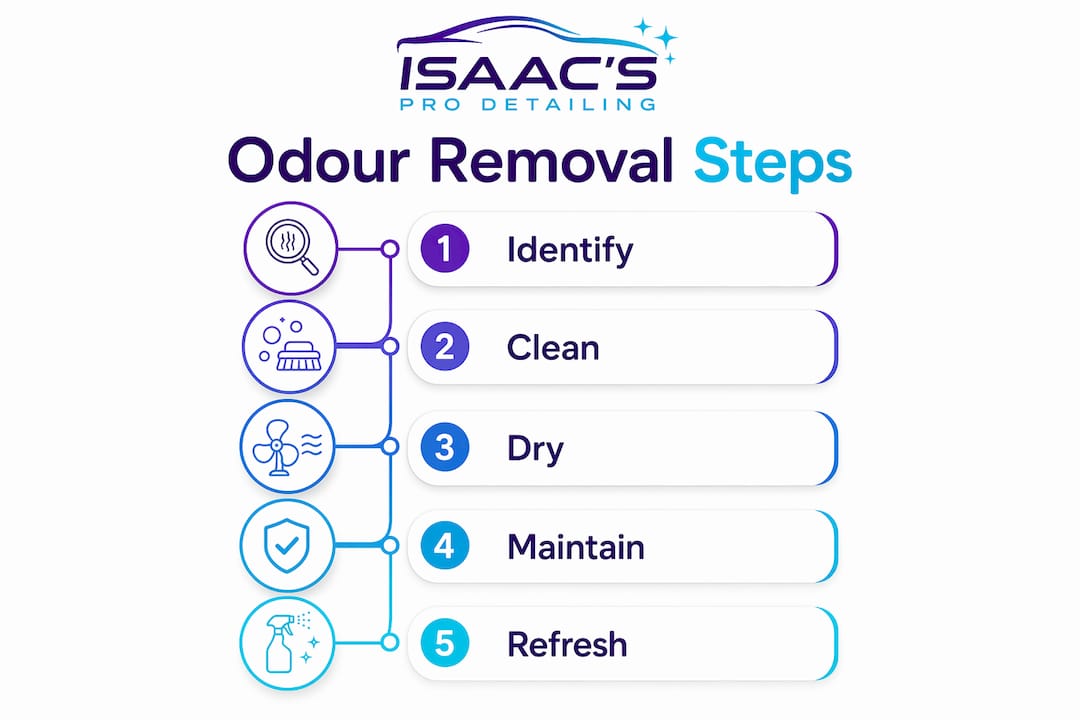
Car odour removal is the process of locating and eliminating the source of unpleasant smells inside a vehicle, rather than masking them with sprays or air fresheners. The most effective methods include enzyme cleaners, baking soda treatments, cabin air filter replacement, and professional services like steam cleaning and ozone deodorisation. Masking odours with synthetic fragrances not only fails to solve the problem but often makes it worse, as artificial scents mix with decaying organic matter. Whether you are dealing with a musty smell from mould, stale food, or pet odours, the approach is the same: find the source, remove the contaminant, then neutralise what remains.
How to remove odours from cars: finding the source first
Effective odour elimination starts with locating exactly where the smell originates. Jumping straight to cleaning products without identifying the source is the single most common mistake car owners make, and it leads to repeated treatments that never fully work.
The most reliable method is a sensory inspection carried out in stages. Start with the air conditioning off, then run it on recirculate mode and note whether the smell intensifies. A musty odour that worsens when the AC runs almost always points to microbial growth on the evaporator coil. Musty AC smells originate from evaporator contamination, and surface cleaning alone will not fix this. You need cabin filter replacement and a specialised evaporator cleaning spray applied through the intake vent.
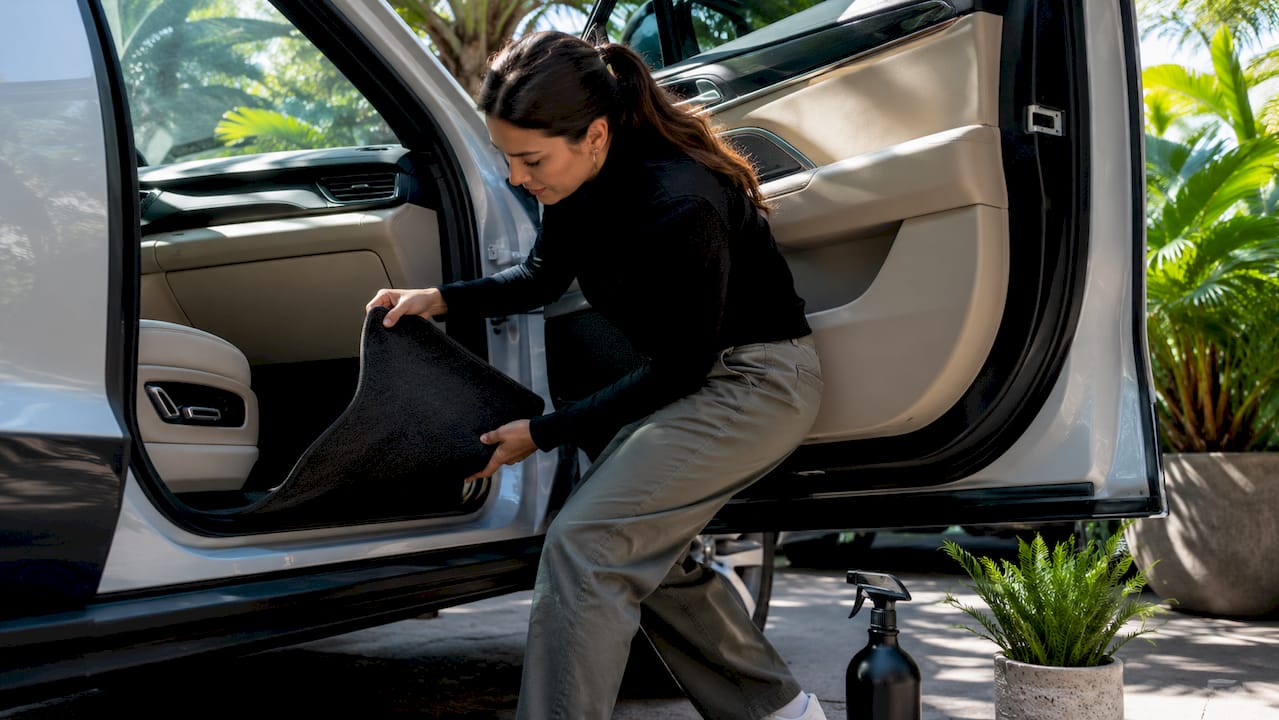
For non-HVAC smells, work through the interior systematically. Lift floor mats, check under seats, inspect cup holders, and look in the boot. Hidden areas under seats accumulate decaying organic material that continues producing odour long after the original spill or mess is gone. A sloshing sound when you turn corners can indicate a blocked sunroof or AC drain, which causes pooled water and mould growth.
Use the table below to match common symptoms to their likely sources:
| Symptom | Likely source | Location to check |
|---|---|---|
| Musty smell with AC on | Evaporator mould, dirty cabin filter | HVAC intake, cabin filter housing |
| Sour or rotten smell | Food spills, decaying organic matter | Under seats, boot, cup holders |
| Wet dog or mildew smell | Damp carpet or upholstery | Floor mats, seat bases, boot lining |
| Chemical or burning smell | Fluid leak or electrical fault | Engine bay, under dashboard |
| Persistent stale smell | Saturated carpet padding | Floor carpet, under mats |
What DIY methods actually work for removing car odours naturally?
Once you have identified the source, you can address most odours with products you either already own or can buy for under $50. The key is patience. Rushing the process or using the wrong product on the wrong surface causes damage and leaves the smell behind.
Follow these steps in order for the best results:
-
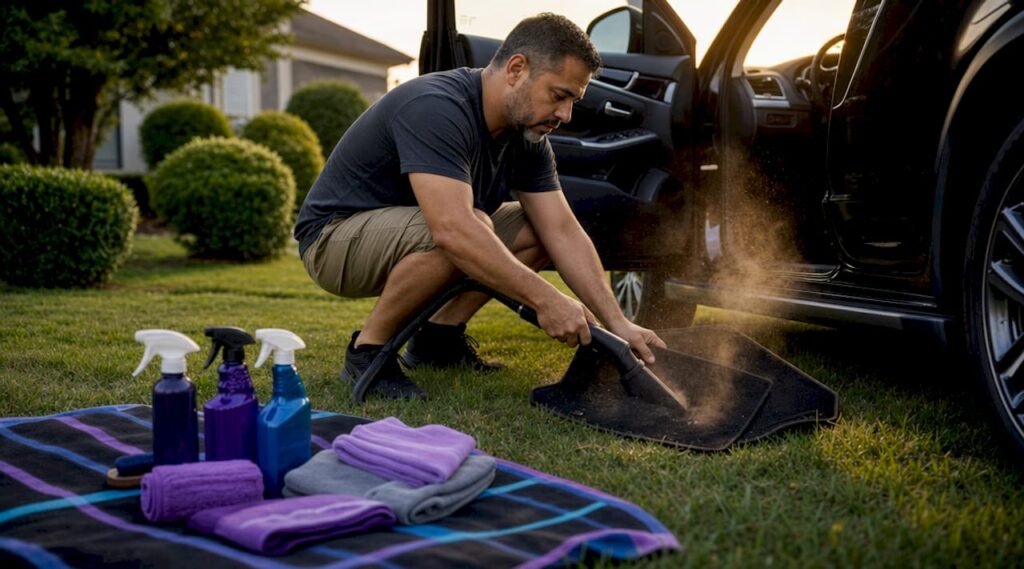
Vacuum thoroughly. Remove all floor mats and vacuum every surface, including under seats, in seat crevices, and along the edges of the carpet. Use a crevice tool to reach between seat rails. Skipping this step means you are applying cleaning products on top of loose debris, which reduces their effectiveness.
-
Apply baking soda to fabric surfaces. Sprinkle approximately one cup of baking soda across carpets and upholstered seats. Optimal baking soda dwell time is 24 to 48 hours for stubborn odours, though 30 minutes works for mild smells. Vacuum all residue thoroughly afterwards, as clumping occurs if moisture contacts leftover powder.
-
Spray a white vinegar solution on hard surfaces and fabric. Mix equal parts white vinegar and water in a spray bottle. Mist lightly over seats, door cards, and carpet. Do not saturate. Vinegar neutralises alkaline odour compounds and evaporates without leaving a residue. The vinegar smell dissipates within a few hours.
-
Use enzyme cleaners for organic odours. Pet urine, vomit, and food spills require enzyme cleaners rather than general-purpose sprays. Enzyme cleaners biologically digest odour molecules in fabric and carpet padding rather than masking them. Apply generously, cover with a damp cloth to slow evaporation, and allow several hours of dwell time. Wiping the product away too soon stops the biological process before it completes.
-
Place activated charcoal bags in the cabin. Products like Moso Natural or similar activated charcoal bags absorb residual odours passively over days and weeks. They work well as a follow-up treatment after cleaning, not as a standalone fix.
Pro Tip: Always test any cleaning product on a hidden section of upholstery first. Fabric-safe, pH-balanced cleaners are the standard for odour removal without risking discolouration or fabric damage. Check the best interior cleaning solutions before committing to a product.
After cleaning, leave all doors open for at least two hours to allow the interior to dry completely. Damp upholstery that is sealed back up will develop mould within days, creating a worse problem than the original smell.
When should you use professional car odour removal solutions?
Some odours cannot be resolved with household products, no matter how diligently you apply them. Knowing when to escalate to professional treatment saves you time, money, and frustration.
The clearest signs that you need professional help include:
- Odour returns within days of cleaning
- Smell is strongest near the dashboard or vents and does not respond to filter replacement
- Visible mould on carpet, seat foam, or boot lining
- A sloshing sound when cornering, indicating blocked drainage
- The vehicle has been flooded or had a major liquid spill soaked into the subfloor
Professional detailers use three main methods for severe odour cases. Steam cleaning uses high-temperature vapour to kill bacteria and lift contaminants from deep within fabric fibres. Hot water extraction, often called carpet shampooing, flushes the carpet backing and padding where most odour-causing residue hides. Both methods typically take one to three hours depending on vehicle size.
Ozone generator treatment is the most powerful option for killing bacteria and mould causing persistent odours. An ozone machine is placed inside the sealed vehicle and runs for one to two hours. The ozone gas penetrates every surface, including the HVAC system, and oxidises odour compounds at the molecular level.
Safety warning: Ozone gas is hazardous to human health and can damage rubber seals and certain plastics if misused. The vehicle must be completely unoccupied during treatment, and the interior must be ventilated thoroughly for at least 30 minutes before anyone re-enters. Never operate an ozone generator yourself without professional guidance.
Cabin air filter replacement is a straightforward task that many car owners overlook. Replacing the cabin filter takes 15 to 30 minutes and directly addresses musty smells circulated through the ventilation system. Most manufacturers recommend replacement every 15,000 to 25,000 kilometres, but Queensland’s humid climate means Sunshine Coast drivers often need to replace theirs more frequently. A permanent odour removal protocol always includes filter inspection as a baseline step.
For HVAC-related odours that persist after filter replacement, a mechanic should inspect the evaporator coil and drainage lines. Blocked AC drains are a mechanical issue, not a detailing issue, and no amount of cleaning spray will resolve pooled water inside the door sills or firewall.
What maintenance routines prevent odours from returning?
Removing an odour is only half the job. Without a consistent maintenance routine, the same conditions that created the smell will recreate it within weeks.
The following habits make the biggest difference:
- Vacuum weekly or fortnightly. Regular vacuuming of carpets, seat crevices, and boot space prevents organic debris from accumulating and decomposing. This is the single highest-return maintenance habit for odour prevention.
- Treat spills immediately. Blot liquid spills with a clean cloth within minutes of occurrence. The longer a liquid sits, the deeper it penetrates into carpet padding where standard cleaning cannot reach. Apply an enzyme cleaner to any food or drink spill the same day.
- Replace the cabin air filter on schedule. Check your vehicle’s service manual for the recommended interval and stick to it. In humid coastal environments, err on the shorter end of the replacement range.
- Inspect sunroof and AC drains annually. Pour a small amount of water into the sunroof channel and watch for it to drain outside the vehicle. If water pools or drains slowly, the channel needs clearing before mould takes hold.
- Use charcoal absorber bags between cleans. Activated charcoal bags placed under seats or in the boot continuously absorb airborne odour compounds. Replace or recharge them in direct sunlight every 30 days.
- Never leave damp items in the car. Wet towels, gym gear, and damp umbrellas left in a sealed vehicle create the exact humidity conditions that mould needs to establish itself.
Pro Tip: After any interior clean involving water or steam, park the car in direct sunlight with windows slightly open for two to three hours. Heat accelerates drying and prevents the residual moisture that causes mould. For more detail on keeping your interior in top condition, the vehicle interior maintenance guide from Isaac’s Pro Detailing covers the full routine.
Key takeaways
Effective car odour removal requires identifying the source, removing the contaminant with the right product, and maintaining the interior to prevent recurrence.
| Point | Details |
|---|---|
| Source identification is non-negotiable | Locate the odour origin before applying any product, including HVAC and hidden areas. |
| Enzyme cleaners outperform general sprays | They digest organic odour molecules rather than masking them; allow full dwell time. |
| Baking soda needs time to work | Apply one cup and leave for 24 to 48 hours for stubborn odours before vacuuming. |
| Ozone treatment requires strict safety precautions | Vehicle must be unoccupied during treatment and ventilated thoroughly afterwards. |
| Routine maintenance prevents recurrence | Weekly vacuuming, immediate spill treatment, and scheduled filter replacement keep odours away. |
What I have learned from treating hundreds of smelly cars
The most persistent mistake I see is car owners reaching for an air freshener the moment they notice a smell. It is understandable. Air fresheners are cheap, fast, and give the impression of a clean car. But masking odours with fragrances consistently makes the underlying problem worse. The synthetic scent mixes with the decaying organic source, and within a week the car smells worse than before.
The second mistake is impatience with enzyme cleaners. I have seen people apply a quality enzyme product, wait ten minutes, wipe it off, and conclude it does not work. Enzyme cleaners need multi-hour dwell time to biologically break down odour molecules. Rushing the process is the same as not using the product at all.
The third, and most costly, mistake is ignoring the HVAC system. I have detailed cars where the owner had cleaned the interior three times without touching the cabin filter or the evaporator. The smell always came back because the source was circulating through the vents on every drive. If your car smells musty the moment you turn on the air conditioning, the filter and evaporator are your starting point, not the seats.
My honest advice: be methodical, be patient, and do not skip the inspection step. If the smell returns after two thorough DIY treatments, stop spending money on products and book a professional. Ozone treatment and hot water extraction resolve cases that no amount of baking soda will fix, and the cost is far less than replacing saturated carpet or mould-damaged upholstery.
— Isaac’s Pro Detailing
Get your car smelling fresh with Isaac’s Pro Detailing
If DIY methods have not resolved the smell, or you simply want the job done properly the first time, Isaac’s Pro Detailing on the Sunshine Coast offers a full range of professional odour removal services. The team uses ozone deodorisation, steam cleaning, hot water extraction, and cabin air filter replacement to address odours at every level of the interior.
All services are fully mobile, meaning the team comes to your home, workplace, or wherever suits you across the Sunshine Coast region. Products used are pH-balanced and safe for all upholstery types. To see exactly how a professional interior detail is carried out from start to finish, visit the mobile detailing workflow page, or explore the full interior cleaning guide to understand what a thorough treatment involves.
FAQ
What is the fastest way to remove bad odours from a vehicle?
Vacuuming thoroughly and applying baking soda with a minimum 30-minute dwell time addresses mild odours quickly. For organic smells from food or pets, an enzyme cleaner applied with adequate dwell time is the fastest effective solution.
How do I get rid of musty smells when the AC runs?
A musty smell from the air conditioning almost always indicates microbial growth on the evaporator coil or a clogged cabin air filter. Replace the cabin filter first, then use an evaporator cleaning spray applied through the intake vent with the system on recirculate.
Are ozone generators safe to use in cars?
Ozone generators are effective but must be used with strict precautions. The vehicle must be completely unoccupied during treatment, and the interior requires thorough ventilation for at least 30 minutes afterwards, as ozone gas is harmful to lungs and can degrade rubber components.
How often should I replace my cabin air filter?
Most manufacturers recommend cabin filter replacement every 15,000 to 25,000 kilometres. In humid coastal areas like the Sunshine Coast, replacing it at the shorter end of that range reduces the risk of mould-related odours circulating through the ventilation system.
Why does my car still smell after cleaning?
If odour persists after cleaning, the source is likely in a hidden area such as carpet padding, seat foam, blocked drains, or the HVAC evaporator. Thorough cleaning of hidden areas and a mechanical inspection of drainage lines are the next steps before considering professional ozone or steam treatment.