
TL;DR:
- Regular professional detailing extends vehicle lifespan by protecting against salt, UV, and internal damage.
- Coastal conditions require frequent rinses, decontamination, and protective coatings to prevent rust and wear.
- Investing in professional detailing is cost-effective, saving money on repairs and maintaining resale value.
Most Sunshine Coast vehicle owners think detailing is purely cosmetic. A bit of shine before a road trip, or a spruce-up before selling. But that belief is costing drivers real money. Weekly washing reduces rust by 40%, and that’s just the beginning of what a consistent detailing routine does for your vehicle. Living near the coast means your car faces salt air, humidity, and UV intensity that inland drivers simply don’t deal with. This article breaks down exactly how professional detailing protects your car from the inside out, what steps matter most, and how to build a routine that actually works for Sunshine Coast conditions.
Table of Contents
- Why detailing matters for your vehicle’s lifespan
- Exterior and interior detailing: Essential steps to slow ageing
- Professional vs at-home detailing: What delivers maximum value?
- Building your ideal detailing routine for Sunshine Coast conditions
- Our take: What most vehicle owners overlook about car detailing
- Bring professional detailing to your doorstep
- Frequently asked questions
Key Takeaways
| Point | Details |
|---|---|
| Detailing prevents early rust | Regular detailing can reduce rust risk by up to 40% and preserves the vehicle’s structure. |
| Interior care extends value | Cleaning and protecting your car’s interior maintain comfort, safety and resale price. |
| Professional services add lasting protection | Skilled detailers use advanced techniques like coatings to provide durable defence against Sunshine Coast conditions. |
| Routine is key | A consistent cleaning and detailing schedule saves on repairs and keeps your vehicle looking new for years. |
Why detailing matters for your vehicle’s lifespan
Your car is under constant attack. On the Sunshine Coast, that attack is more aggressive than most places in Australia. Salt particles from sea spray settle into panel gaps and undercarriage crevices. Humidity accelerates oxidation. UV radiation bakes paint and fades interior plastics faster than you’d expect. And if you park near the beach, fine sand acts like sandpaper on your clear coat every time the wind picks up.
Here’s what most owners don’t realise: the damage isn’t visible until it’s already expensive. Rust doesn’t appear overnight. Paint degradation starts at the microscopic level. By the time you see bubbling paint or a dull finish, the underlying damage has been building for months or even years.
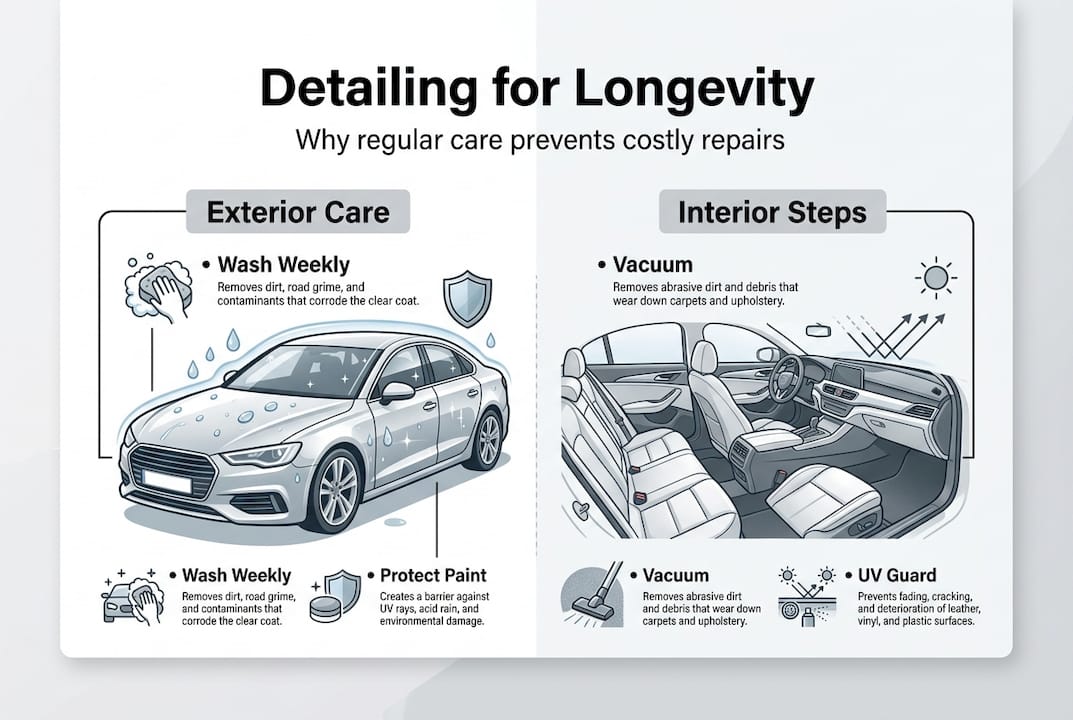
Consistent cleaning regimens cut parts wear by 35%, which means regular detailing isn’t just about how your car looks. It’s about how long your car lasts. That’s a significant mechanical benefit that most people associate with servicing, not detailing.
The misconception runs deep. People assume detailing is what you do when you want your car to look nice for a special occasion. In reality, car longevity detailing is preventative maintenance. It removes the contaminants that cause corrosion, protects surfaces from UV and chemical damage, and keeps seals and trim from cracking.
Here’s what professional detailing addresses that a standard home wash typically misses:
- Brake dust and iron particles embedded in wheel surfaces that corrode alloys over time
- Tree sap, bird droppings and industrial fallout that etch into clear coat within days
- Salt residue in door sills, boot seals and underbody panels
- Mould and bacteria in air conditioning vents and carpet fibres
- UV damage to dashboard plastics and leather that causes cracking and brittleness
Pro Tip: Don’t wait until your car looks dirty to wash it. In coastal areas, salt deposits are invisible but active. A rinse after beach trips and a proper wash every two weeks makes a measurable difference to long-term condition.
“Detailing is the difference between a car that lasts 10 years and one that lasts 15. The maintenance cost is a fraction of the repair cost.”
Understanding how detailing extends car lifespan changes the way you think about every wash. It’s not a chore. It’s an investment in the vehicle you’ve already paid for.
Exterior and interior detailing: Essential steps to slow ageing
Knowing why detailing matters, zooming in on specific techniques shows exactly how the process extends vehicle lifespan. A proper detail follows a logical sequence, and skipping steps undermines the whole result.
Exterior detailing sequence:
- Pre-rinse and foam wash to loosen surface contaminants without scratching
- Clay bar decontamination to pull embedded particles from the paint surface
- Iron remover treatment to dissolve brake dust and metallic fallout
- Machine polish or cut and polish to remove light scratches and oxidation
- Wax or sealant application to create a protective barrier against UV and moisture
- Ceramic coating for long-term paint protection with hydrophobic properties
Each step builds on the last. Skipping decontamination before polishing, for example, means you’re grinding contaminants into the paint rather than removing them. This is why professional detailers produce results that home washing simply can’t replicate.
For Sunshine Coast drivers, the exterior detailing benefits go beyond aesthetics. Salt air attacks bare metal and unprotected paint constantly. A quality wax or ceramic coating creates a sacrificial layer that takes the damage instead of your car’s panels.
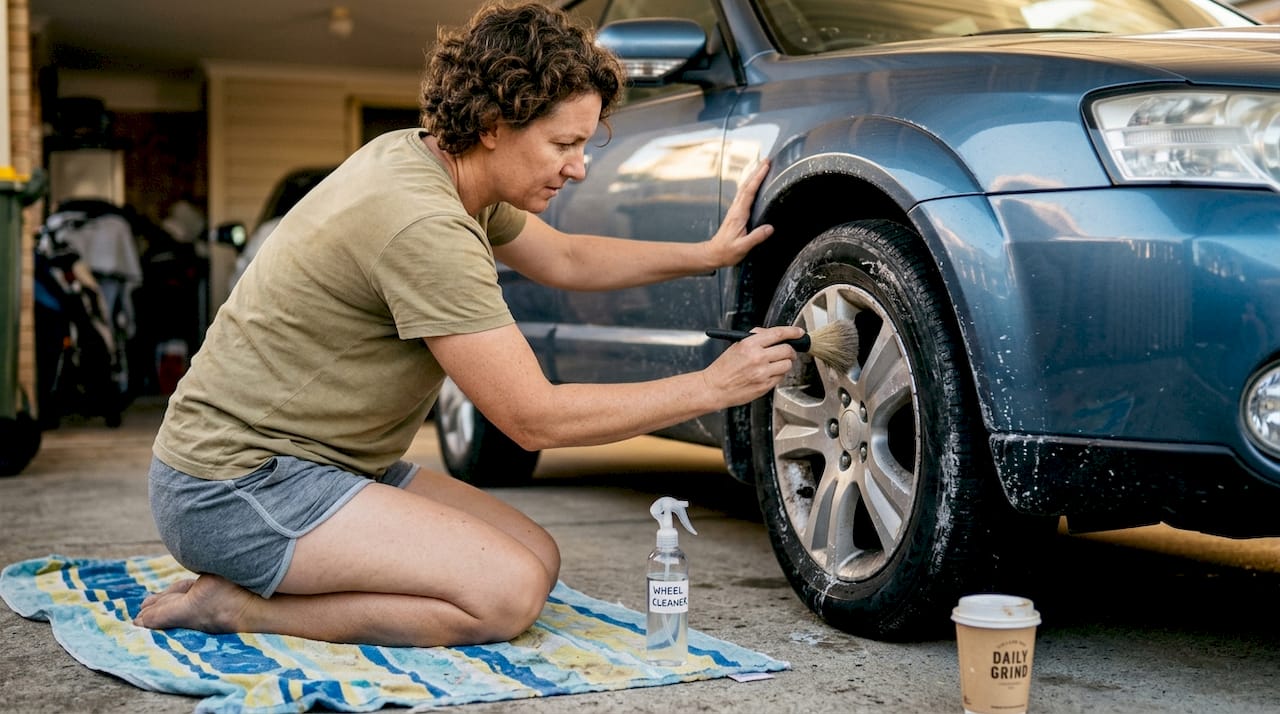
Ceramic coatings last 2 to 5 years on daily drivers, preserving paint and preventing degradation. That’s years of protection from a single application, making it one of the most cost-effective long-term investments for any vehicle in a coastal climate.
Interior detailing is equally critical:
- Thorough vacuuming of carpets, seats and boot to remove abrasive sand and grit
- Seat and carpet extraction to remove moisture, bacteria and odour-causing compounds
- Leather conditioning to prevent cracking from UV exposure and low humidity
- UV protectant application to dashboard and trim to stop fading and brittleness
- Ozone treatment for persistent odours that standard cleaning can’t reach
The interior cleaning guide for Sunshine Coast conditions emphasises moisture control. High humidity means wet sand and damp beach gear create ideal conditions for mould growth inside your vehicle. Extraction cleaning removes moisture at the source rather than just masking it.
“The interior of your car ages faster than the exterior in Queensland conditions. UV through the windscreen and humidity through the doors is a relentless combination.”
Never skip UV protection on interior plastics. Cracked dashboards and brittle trim are not just ugly. They reduce the structural integrity of panels and cost significantly more to replace than to protect.
Professional vs at-home detailing: What delivers maximum value?
As detailing routines vary, let’s weigh professional results against the realities of at-home care. Both have a place, but the outcomes are meaningfully different.
| Factor | Professional detailing | At-home detailing |
|---|---|---|
| Equipment | Industrial polishers, extractors, steam cleaners | Household tools and garden hose |
| Products | Professional-grade coatings and compounds | Consumer-grade products |
| Time required | 2 to 6 hours (you do nothing) | 3 to 8 hours of your own time |
| Protection duration | 6 to 24 months depending on coating | 4 to 8 weeks with quality wax |
| Rust prevention | Comprehensive underbody and panel treatment | Limited without proper access |
| Resale impact | Significant improvement in value | Moderate improvement |
| Cost | Higher upfront, lower long-term repair costs | Lower upfront, higher risk of missed damage |
Weekly washing reduces rust by 40%, and professional detailing amplifies that benefit by reaching areas and applying products that home washing cannot match.
Pro Tip: Think of professional detailing like a dental check-up. You can brush your teeth at home every day, but a professional clean catches what you miss and prevents the expensive problems.
What professionals bring that’s genuinely hard to replicate at home:
- Paint thickness gauges to detect previous repairs or thin spots before polishing
- Dual-action polishers that remove scratches without burning through clear coat
- Hot water extraction machines that pull contaminants from deep in carpet fibres
- Ceramic coating application that requires controlled conditions and trained technique
Exploring detailing package options helps you understand exactly what’s included at each service level. For most Sunshine Coast owners, a combination works best: regular home rinses between professional details every three to six months.
The long-term maths strongly favours professional investment. Rust repair on a single panel can cost $500 to $1,500. A full respray runs $3,000 to $8,000. Understanding why professional detailing protects resale value makes the cost comparison straightforward.
Building your ideal detailing routine for Sunshine Coast conditions
To get the most from detailing, adapting your care routine to local conditions is essential. A generic schedule built for inland or cooler climates simply won’t cut it here.
| Frequency | Task | Purpose |
|---|---|---|
| Weekly | Rinse exterior, wipe salt deposits from door sills | Remove active corrosive agents |
| Fortnightly | Full exterior wash with quality car shampoo | Prevent contaminant build-up |
| Monthly | Interior vacuum and wipe-down, tyre dressing | Maintain interior condition and tyre life |
| Every 3 months | Professional detail with decontamination | Deep clean and protection refresh |
| Annually | Ceramic coating inspection or reapplication | Long-term paint and surface protection |
Consistent cleaning regimens cut parts wear by 35%, and the frequency table above is designed to deliver that outcome without overwhelming your schedule.
Sunshine Coast specific hazards to keep front of mind:
- Sea spray deposits invisible salt that starts corroding within 24 hours of contact
- Intense UV degrades paint, rubber seals and interior plastics faster than most Australian regions
- High humidity promotes mould growth inside vehicles, especially after wet beach trips
- Sand abrasion from coastal winds scratches clear coat and embeds in door seals
- Insect residue from warm-weather driving etches into paint if left more than a few days
Pro Tip: After any beach trip, rinse your car’s undercarriage with fresh water before the salt dries. This single habit prevents more corrosion than most other steps combined.
The regular detailing value becomes obvious when you compare the cost of routine care against the cost of neglect. A car that’s consistently detailed retains more resale value, requires fewer panel repairs, and simply lasts longer. Understanding how regular detailing saves money over the vehicle’s lifetime reframes the entire conversation from expense to strategy.
Our take: What most vehicle owners overlook about car detailing
After working with Sunshine Coast clients across all vehicle types and budgets, one pattern stands out. Most people wait until their car looks bad before they do anything about it. By then, the damage is already done.
The owners who get the best long-term outcomes treat detailing the way they treat servicing. It’s scheduled. It’s non-negotiable. They don’t wait for visible rust or faded paint to act.
What surprises many clients is how much money they save over three to five years by staying on top of their vehicle’s condition. One full detail every quarter costs far less than a single rust repair or paint correction job. The maths aren’t complicated, but the mindset shift is.
We’ve seen vehicles from coastal suburbs that are five years old looking worse than 15-year-old cars that have been properly maintained. Salt air is genuinely brutal, and it doesn’t give you a warning. Learning to protect and enhance your car before problems arise is the single biggest shift in thinking we recommend to every new client.
Treat detailing as an investment, not an afterthought.
Bring professional detailing to your doorstep
If you’re ready to protect and extend the life of your car, professional mobile detailing makes it easier than ever to stay on top of your routine.

Isaac’s Pro Detailing Sunshine Coast brings everything to you. Whether you’re at home, at work, or anywhere across the region, our fully equipped mobile service delivers professional results without disrupting your day. Understanding the mobile detailing workflow shows exactly how seamless the process is. From ceramic coatings to full interior extractions, every service is designed to support vehicle longevity in our specific coastal climate. Book your next detail with the Sunshine Coast’s trusted mobile detailing service and start treating your car the way it deserves.
Frequently asked questions
How often should I detail my car for longevity?
Detail your car every three to six months for optimal protection and value, with more frequent washes in coastal environments. Weekly washing reduces rust by 40%, so regular rinses between professional details make a real difference.
Does detailing help prevent rust and mechanical wear?
Yes. Consistent cleaning regimens cut parts wear by 35% by removing the salt, grime and contaminants that cause corrosion and accelerate component deterioration.
Is professional detailing worth it compared to doing it myself?
For most car owners, professional detailing delivers deeper cleaning, longer-lasting protection and genuine convenience. Ceramic coatings last 2 to 5 years on daily drivers, which is a level of protection no consumer-grade product can match.
How does the Sunshine Coast climate affect my car’s detailing needs?
Salt air, humidity and sand accelerate paint and metal damage significantly in this region, making regular detailing more critical here than in most other parts of Australia.