
TL;DR:
- Car leather protection involves regular cleaning, conditioning, and UV shielding to maintain flexibility and color. Proper tools and frequent care, especially under Australian conditions, prevent premature cracking and fading. Professional treatments optimize leather longevity and appearance.
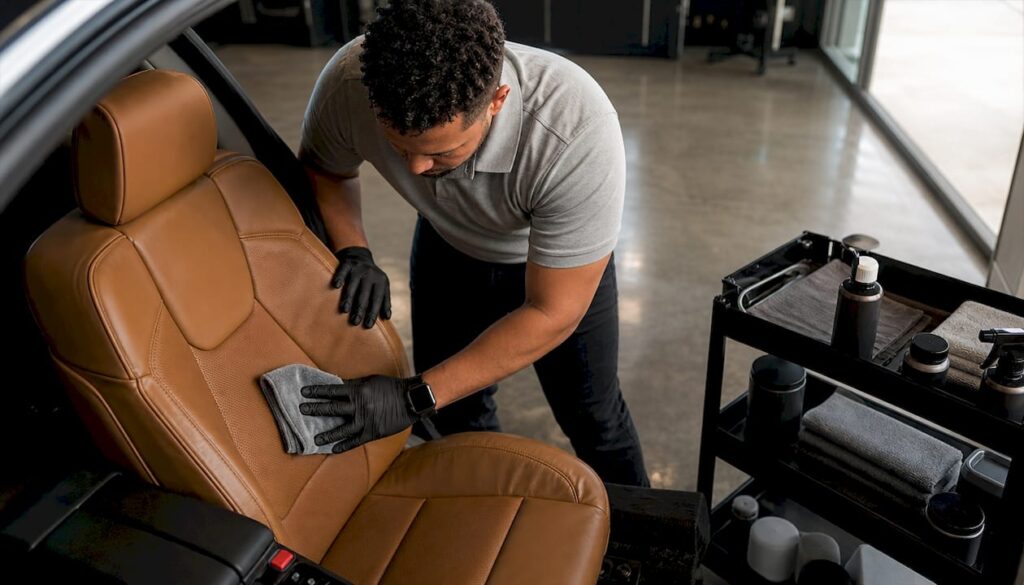
Car leather protection is defined as the routine process of cleaning, conditioning, and shielding automotive leather to preserve its flexibility, colour, and structural integrity. Without consistent care, leather dries out, stiffens, and cracks, often irreversibly. The Sunshine Coast’s intense UV exposure, high heat, and coastal salt air accelerate this damage faster than most vehicle owners expect. Knowing how to protect car leather means understanding three non-negotiable steps: clean regularly, condition correctly, and guard against sun and wear. Get these right, and your leather interior will stay supple and attractive for years.
What products and tools do you need for car leather care?
The right tools make the difference between leather that lasts and leather that deteriorates despite your best efforts. Start with a quality automotive leather cleaner that is pH-balanced. Household cleaners, including dish soap and multipurpose sprays, strip the leather’s protective top-coat, causing it to dry and crack prematurely. Always choose products labelled specifically for automotive leather.
Your toolkit should include:
- pH-balanced leather cleaner formulated for automotive use
- Leather conditioner with UV-blocking properties
- Microfibre cloths (at least two: one for cleaning, one for buffing)
- Soft-bristle detailing brush for stitching and crevices
- Handheld vacuum or detailing vacuum with a soft brush attachment
- UV protectant spray suitable for leather surfaces
When choosing a leather protectant, look for these qualities:
| Quality | Why it matters |
|---|---|
| UV blocking | Prevents pigment breakdown and fading from sun exposure |
| Non-greasy formula | Avoids sticky residue that attracts dirt and accelerates wear |
| Conditioning agents | Replenishes natural oils to keep leather supple |
| Water resistance | Helps repel spills before they soak into the hide |
| Compatibility with automotive leather | Prevents damage to factory-applied protective coatings |
For vehicle owners who want to go further, luxury car interior accessories such as seat covers and sunshades complement a solid leather care routine by reducing daily wear and UV exposure.
Pro Tip:Always test any new cleaner or conditioner on a hidden section of the seat first. Apply a small amount, wait five minutes, and check for discolouration or texture change before treating the full surface.
How often should you clean and condition car leather?
Frequency is the most overlooked factor in leather maintenance. Most vehicle owners clean their leather far too rarely, then wonder why it cracks within a few years.
Industry guidance recommends cleaning every 2–4 weeks and conditioning every 3–6 months under standard conditions. That schedule shifts significantly for Australian conditions. High UV intensity, temperatures that regularly exceed 40°C inside a parked car, and coastal humidity mean conditioning every 1–3 months is the more appropriate target here on the Sunshine Coast.
Follow this schedule as a baseline:
- Weekly: Vacuum seats to remove grit, crumbs, and debris before they grind into the leather surface.
- Every 2–4 weeks: Wipe down with a pH-balanced leather cleaner using a damp microfibre cloth.
- Every 1–3 months (Australian conditions): Apply a quality leather conditioner to replenish moisture and oils.
- Every 6 months: Assess the leather’s overall condition and apply a UV protectant or dedicated leather sealant.
Over-conditioning is a real problem. Excessive conditioner leaves sticky residue that attracts dirt, which then acts like sandpaper against the leather surface every time someone sits down. Thin, even layers buffed off thoroughly are always better than heavy applications.
Pro Tip:Rather than following a rigid calendar, professional detailers recommend monitoring leather by touch and sight. If the surface looks dull, feels slightly stiff, or shows faint surface lines, it needs attention now, regardless of when you last treated it.
Step-by-step guide to cleaning and conditioning leather seats safely
Correct technique matters as much as product choice. Skipping steps or rushing the process causes more harm than good.
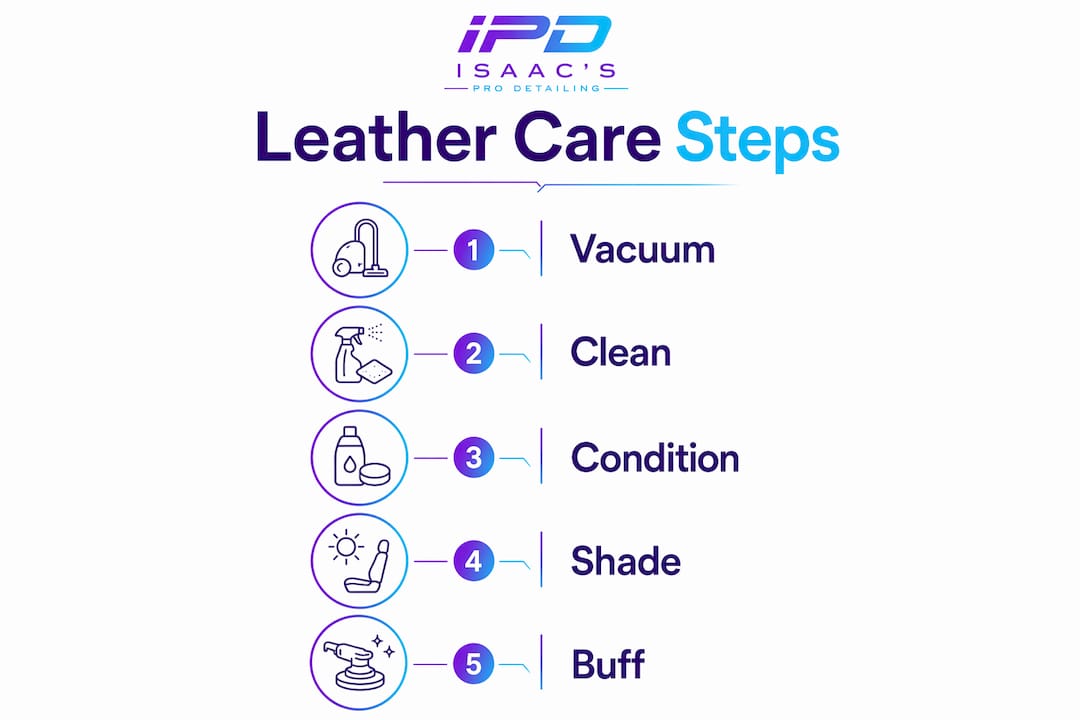
Step 1: Vacuum first, always
Vacuum the entire seat surface before applying any liquid. Grit and debris trapped under a wet cloth will scratch the leather. Use a soft brush attachment and pay attention to the seam lines and bolster edges where particles collect.
Step 2: Apply leather cleaner with a microfibre cloth
Spray the cleaner onto the cloth, not directly onto the seat. Work in small sections using gentle circular motions. Cleaning before conditioning prepares the surface properly, allowing the conditioner to absorb evenly and preventing dirt from being locked into the hide. Wipe away residue with a clean, dry cloth.
Step 3: Apply conditioner sparingly
Use a fresh microfibre cloth and apply a small amount of conditioner. Work it in using light, overlapping strokes. Less is more. Buff off any excess immediately to avoid the sticky residue that attracts dirt and accelerates wear.
Step 4: Condition in the shade, never in direct sun
Applying conditioner on hot seats or in direct sunlight causes uneven absorption and can damage the leather’s finish. Always work in a cool, shaded environment, such as a garage or carport.
Step 5: Allow to dry and buff
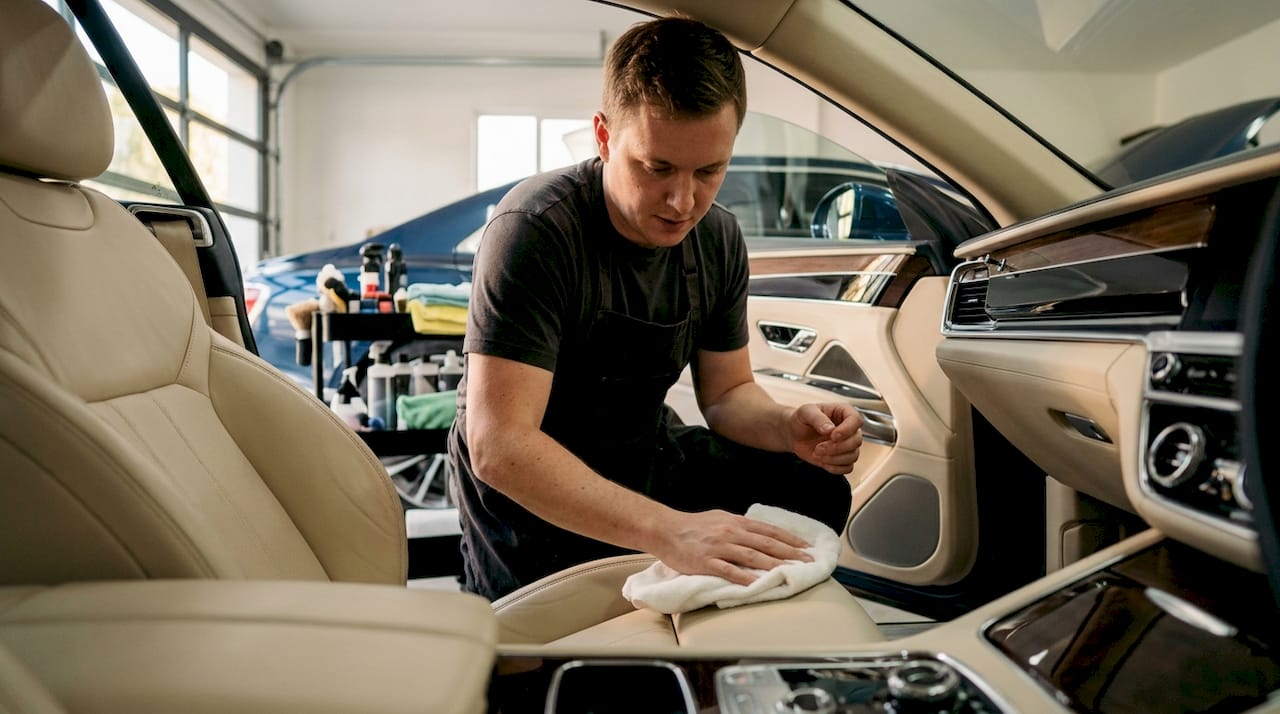
Let the conditioner absorb for five to ten minutes, then buff the surface lightly with a dry microfibre cloth. The leather should feel soft and smooth, not tacky.
Avoid these common mistakes:
- Using alcohol-based sprays or baby wipes, which strip protective coatings
- Applying water directly from a spray bottle, which can over-wet the leather
- Scrubbing with abrasive cloths or sponges
- Skipping the vacuum step and dragging grit across the surface
Pro Tip:For a thorough interior clean that covers leather and all other surfaces correctly, the car interior cleaning guide from Isaac’s Pro Detailing walks through every step in detail.
How do you protect leather from sun damage, stains, and wear?
Daily use is where leather takes its hardest hits. UV rays, accidental spills, and friction from clothing all degrade the surface over time. A proactive approach to these threats extends leather life considerably.
Sunlight accelerates leather pigment breakdown and drying, which leads directly to cracking and fading. On the Sunshine Coast, this is not a seasonal concern. It is a year-round reality. Parking in shade whenever possible and using a quality windscreen sunshade reduces the interior temperature significantly. Window tinting is a worthwhile investment for vehicles that sit in the sun regularly, as it blocks a substantial portion of UV radiation before it reaches the seats.
For stain prevention and wear management, apply these habits:
- Wipe spills immediately using a clean, dry microfibre cloth. Blot, do not rub. Rubbing spreads the liquid and pushes it deeper into the leather.
- Focus extra protection on the driver’s seat bolsters.High-wear bolster areas suffer the most friction and dye transfer. Apply a dedicated leather protectant to these zones at every maintenance cycle.
- Avoid sharp objects on seats. Keys, belt buckles, and bags with metal hardware scratch and cut leather surfaces.
- Minimise abrasive contact. Rough denim and textured clothing cause surface wear over time, particularly on the driver’s seat.
- Consider a professional protective coating. Specialist leather coatings, available through professional detailers, create a durable barrier against UV, spills, and friction that outperforms standard consumer products.
Pro Tip:For a broader look at why leather interiors need protection and the most common mistakes vehicle owners make, Isaac’s Pro Detailing covers the topic in depth.
Key takeaways
Consistent cleaning, conditioning, and UV protection are the three non-negotiable pillars of protecting car leather, and in the Australian climate, each step needs to happen more frequently than standard global advice suggests.
| Point | Details |
|---|---|
| Clean every 2–4 weeks | Remove grit and debris before they grind into the leather surface. |
| Condition every 1–3 months | Australian heat and UV demand more frequent conditioning than standard schedules suggest. |
| Always clean before conditioning | Cleaning first allows conditioner to absorb properly and prevents dirt lock-in. |
| Protect high-wear areas | Apply dedicated protectant to driver’s seat bolsters at every maintenance cycle. |
| Avoid harsh products | pH-balanced, automotive-specific cleaners and conditioners protect the leather’s factory coating. |
What I’ve learned from years of treating leather in the Australian heat
Most vehicle owners come to me after the damage is already done. The leather is stiff, the bolsters are cracked, and the colour has faded to a patchy grey. The honest truth is that leather failure is almost always a maintenance failure, not a product failure.
The mistake I see most often is over-conditioning. Vehicle owners read that leather needs moisture, so they apply conditioner heavily and frequently, thinking more is better. What actually happens is that the excess conditioner attracts fine dirt particles, which then act as an abrasive every time someone sits down. The leather wears faster, not slower.
The other thing I’ve noticed is that most people treat leather like a set-and-forget task. They condition it once, feel satisfied, and ignore it for a year. Leather is a natural material. It breathes, it reacts to temperature and humidity, and it tells you when it needs attention. A quick visual check and a touch test every few weeks takes thirty seconds and saves you from expensive repairs.
For older or heavily worn leather, DIY care has real limits. Professional treatments, including specialist leather coatings and deep conditioning services, can restore suppleness and colour in ways that consumer products simply cannot match. If your leather is already showing cracks or significant fading, that is the point to call in a professional rather than continue applying conditioner over damaged hide.
— Isaac’s
Professional leather care on the Sunshine Coast
Keeping up with leather maintenance takes time and the right products. For vehicle owners who want expert results without the effort, Isaac’s Pro Detailing brings professional-grade leather cleaning, conditioning, and UV protection directly to your location across the Sunshine Coast.
The mobile detailing workflow at Isaac’s Pro Detailing covers every stage of leather care, from safe extraction cleaning through to specialist protective coatings that outperform anything available in a consumer spray bottle. Services come to your home, workplace, or wherever suits you best. For vehicle owners who want their leather looking its best and lasting as long as possible, professional care is the most reliable path forward.
FAQ
How often should I condition leather car seats?
Condition leather seats every 3–6 months under standard conditions. In harsh Australian climates with high UV and heat, increase this to every 1–3 months.
Can I use household cleaners on car leather?
No. Harsh chemicals and household cleaners strip the leather’s protective top-coat, causing it to dry, stiffen, and crack. Always use pH-balanced products formulated for automotive leather.
What causes leather car seats to crack?
Cracking results from moisture loss, UV exposure, and neglect. Neglecting leather’s moisture balance causes it to stiffen and crack, even under minor pressure or flexing.
Should I clean leather before conditioning?
Yes, always. Cleaning before conditioning prepares the surface for proper absorption and prevents dirt from being trapped beneath the conditioner layer.
How do I protect leather seats from sun damage?
Use a windscreen sunshade, park in shade where possible, and apply a UV-blocking leather protectant regularly. UV rays accelerate fading and drying, making sun protection a year-round priority in Queensland.