
TL;DR:
- Paint protection film (PPF) is a durable, self-healing, transparent polyurethane layer that shields vehicle paint from chips, scratches, and UV damage by acting as a sacrificial barrier.
- Applying PPF to high-impact areas like the bumper, bonnet, and guards provides effective protection, especially when paired with ceramic coating for chemical resistance and easier cleaning.
- For optimal results, ensure the vehicle’s paint is in good condition and installed by experienced professionals, as proper preparation and application are crucial for longevity.
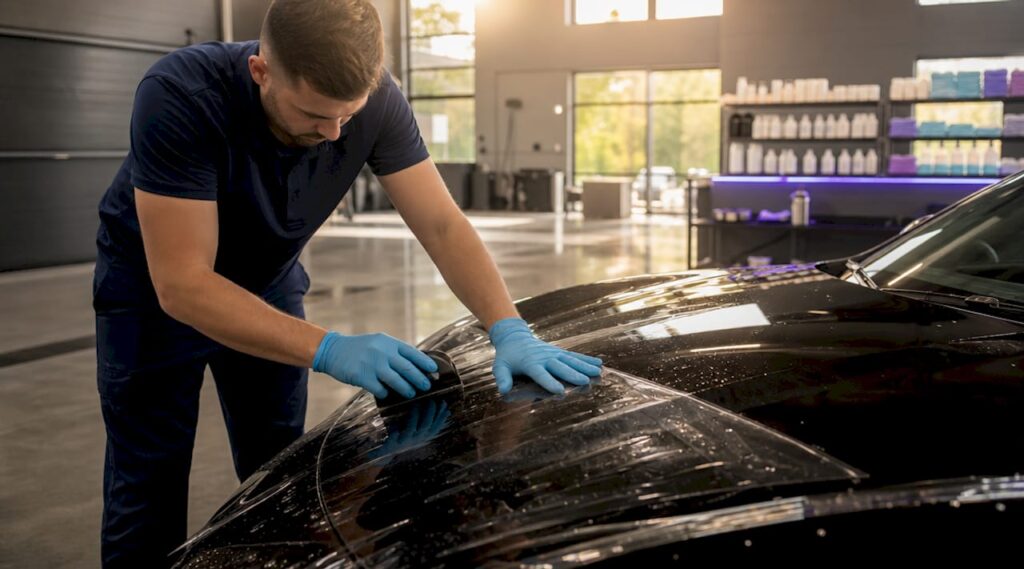
Paint protection film (PPF) is a thin, transparent thermoplastic polyurethane (TPU) sheet bonded to a vehicle’s painted surfaces to shield them from stone chips, scratches, and UV fading. Originally developed for helicopter rotor blades before the automotive industry adopted it, PPF now sits at the top of the car paint protection options available to vehicle owners. Brands like 3M helped bring the technology to consumer vehicles, and modern films from manufacturers such as XPEL and SunTek have added self-healing properties that make today’s PPF far more capable than its military origins suggest. If you care about preserving your vehicle’s appearance and resale value, understanding what PPF does and how it works is the first step.
How does paint protection film work to protect your vehicle’s paint?
PPF works by acting as a sacrificial protective barrier between road debris and your vehicle’s clear coat. The film absorbs the energy from stone chips, gravel strikes, and light abrasions before that damage reaches the paint below. Think of it as a screen protector for your phone, except it covers the most vulnerable panels of a car worth tens of thousands of dollars.
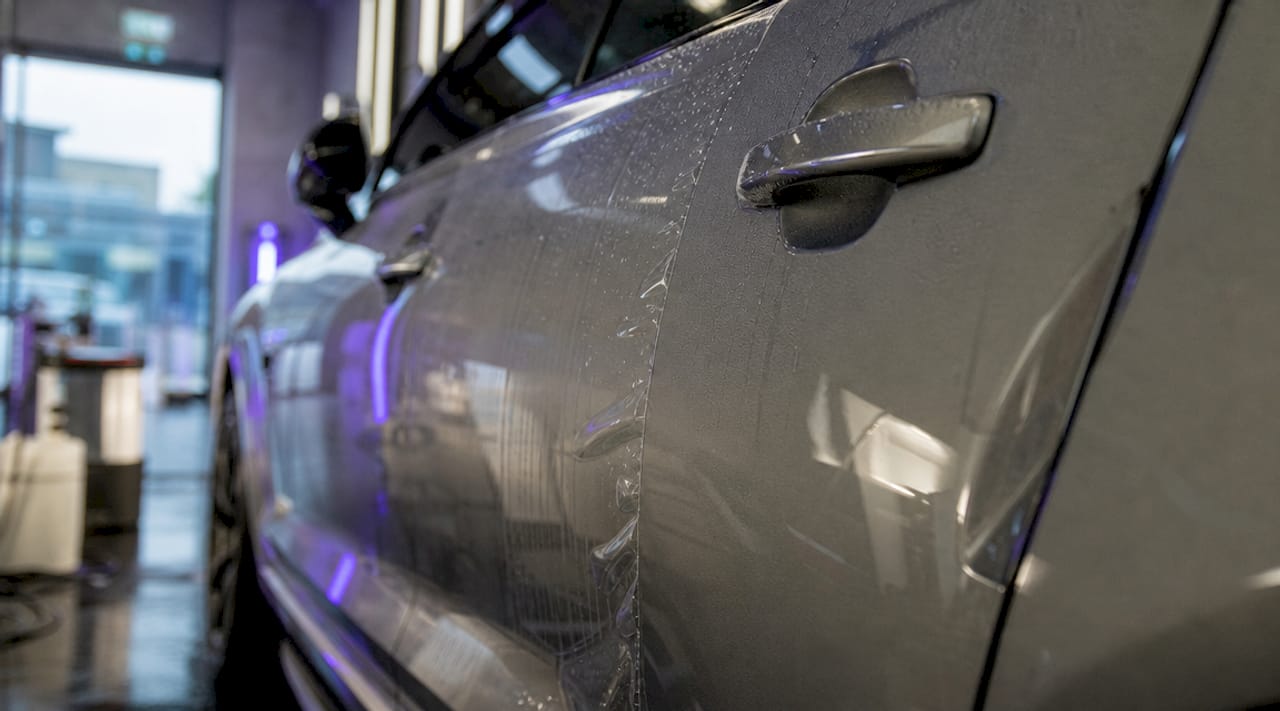
The material itself is a multi-layer construction. The outer surface is a clear coat layer that resists staining and minor abrasion. Beneath that sits the TPU core, which provides flexibility and impact absorption. An adhesive layer bonds the film to the paint without damaging it during removal, provided the underlying paint is in sound condition.
The feature that separates premium PPF from basic protective films is self-healing technology. Modern PPF films are self-healing, meaning minor scratches and swirl marks disappear when the film is exposed to heat from sunlight or warm water. The TPU polymer has elastic memory, so it returns to its original shape once heat activates the outer layer. This means a car parked in the Sunshine Coast sun for an afternoon can literally repair its own surface marks.
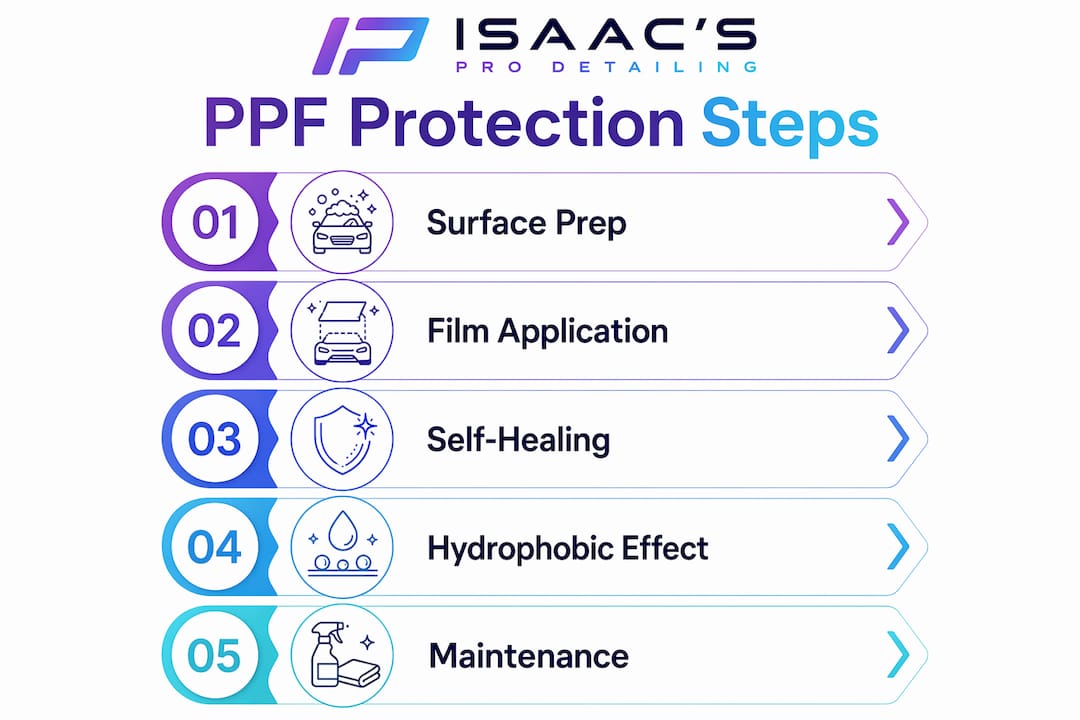
Higher-grade films also carry hydrophobic and self-healing layers that repel water, dirt, and insect residue. This makes the surface easier to clean and reduces the chance of contaminants bonding to the film over time. UV inhibitors built into the film also prevent the yellowing and oxidation that unprotected paint suffers after years of sun exposure, which is particularly relevant for vehicles in Queensland’s high-UV environment.
Pro Tip:Run warm water over a freshly scratched PPF panel before assuming the film is permanently damaged. In most cases, the self-healing layer will restore the surface within minutes.
Which areas of a vehicle are typically covered?
Not every panel on a car receives PPF, and that is a deliberate choice rather than a cost-cutting measure. Installer-recommended coverage focuses on the zones that take the most punishment from road use. The most common areas covered are:
- Front bumper — the single highest-impact zone on any vehicle, collecting the majority of stone chips and insect strikes at highway speed.
- Bonnet — the large flat surface directly behind the bumper that catches debris thrown up by the front tyres.
- Front guards (fenders) — particularly the leading edges, which face direct tyre spray and road grit.
- Mirror caps — small but highly exposed panels that catch wind-driven debris from multiple angles.
- Rocker panels (door sills) — low-mounted panels that collect gravel and kerb rash from daily parking.
Full-car PPF coverage is available but less common. Full-car wrapping can introduce visible seams because the film cannot conform perfectly to every complex body contour without sectioning. Those seam lines, while minimal with a skilled installer, are noticeable on some vehicles. For most owners, protecting the high-impact front end delivers 80% of the protective benefit at a fraction of the full-car cost.
The practical approach is to discuss your driving habits with your installer. If you regularly travel on unsealed roads or do long highway runs, extending coverage to the full bonnet and A-pillars makes sense. If your car is primarily a city commuter, a front-end package covering the bumper, guards, and partial bonnet is usually sufficient.
Paint protection film vs ceramic coating: which is right for you?
This is the comparison most vehicle owners ask about, and the honest answer is that PPF and ceramic coating solve different problems. Understanding both helps you choose the right protection or decide whether combining them makes sense.
PPF is made from TPU for durability and impact resistance, while ceramic coating is a liquid polymer that bonds chemically to the paint surface and cures into a hard, glass-like layer. Ceramic coating excels at chemical resistance, repelling bird droppings, tree sap, and industrial fallout. PPF excels at physical impact protection, stopping chips and scratches that ceramic coating cannot prevent.
Vinyl wraps occupy a third category entirely. They use PVC rather than TPU and are designed primarily for colour changes and aesthetic customisation, not protection. A vinyl wrap will not absorb a stone chip the way PPF does.
The combined approach of PPF and ceramic coating is what serious enthusiasts and detailers recommend for ultimate protection. PPF handles the physical impacts on high-risk panels, while ceramic coating applied over the top adds chemical resistance and makes the entire surface easier to maintain. You can read more about ceramic coating application to understand how the two products work together.
| Feature | PPF | Ceramic coating | Vinyl wrap |
|---|---|---|---|
| Impact protection | Excellent | None | Minimal |
| Self-healing | Yes (heat-activated) | No | No |
| Chemical resistance | Moderate | Excellent | Low |
| UV protection | Yes | Yes | Partial |
| Aesthetic change | None (clear) | None (clear) | Full colour change |
| Typical lifespan | 5 to 10 years | 2 to 5 years | 3 to 7 years |
| Relative cost | High | Moderate | Moderate to high |
The table makes the decision clearer. If physical damage is your primary concern, PPF is the right product. If you want easier maintenance and chemical protection on a budget, ceramic coating delivers strong value. If you want both, layer them.
What to consider before getting PPF applied to your car
The single most important factor in a successful PPF installation is the condition of the paint underneath. PPF works best on new or fresh paint, and installers may refuse to apply film to compromised surfaces because the adhesive can lift flaking or poorly bonded paint during removal. Getting PPF applied over damaged paint does not fix the damage. It seals it in.
Before booking an installation, consider the following:
- Paint inspection first. Have the paint assessed for chips, oxidation, or previous repairs. Any defects visible before application will remain visible under the film.
- Correct paint defects beforehand. A cut and polish or paint correction service should precede PPF installation on any vehicle that is not brand new.
- Allow new paint to cure fully. Freshly sprayed panels need at least 30 days to cure before PPF is applied. Applying film too early traps solvents and causes adhesion problems.
- Choose an experienced installer. Film edges and seams are the primary failure points in any PPF job. An inexperienced installer leaves lifting edges, visible seam lines, and air pockets that collect dirt.
- Understand the maintenance requirements. PPF is low maintenance but not zero maintenance. Wash the vehicle regularly, avoid harsh chemical cleaners on the film, and address any lifting edges promptly before water ingress causes further problems.
Pro Tip:Ask your installer to show you examples of their edge work on previous jobs, particularly around door handles and bonnet corners. Clean, tight edges are the mark of a skilled technician and will determine how the film looks after two years, not just two weeks.
For Sunshine Coast drivers, the local UV intensity and coastal salt air make paint protection particularly worthwhile. You can find practical car paint protection steps tailored to this environment if you want a broader maintenance framework.
Key takeaways
Paint protection film delivers its best results when applied to sound paint by a skilled installer, covering high-impact zones rather than the entire vehicle.
| Point | Details |
|---|---|
| PPF composition | A multi-layer TPU film that absorbs impacts and resists UV, chips, and abrasion. |
| Self-healing technology | Heat from sunlight activates the film’s elastic memory to repair minor surface scratches. |
| Optimal coverage zones | Front bumper, bonnet, guards, mirror caps, and rocker panels deliver the highest protective return. |
| PPF vs ceramic coating | PPF stops physical damage; ceramic coating resists chemicals. Combining both gives the strongest protection. |
| Paint condition matters | Apply PPF only to sound, corrected paint. Compromised paint risks lifting during film removal. |
My take on PPF after years of working with vehicle paint
I have seen PPF save paint jobs that would have cost thousands to repair, and I have also seen poorly installed film cause the very damage it was meant to prevent. The technology is genuinely impressive, but it is only as good as the preparation and the person applying it.
The mistake I see most often is owners rushing to get PPF applied to a car that needs paint correction first. They want to protect the car immediately, which is understandable, but sealing in swirl marks and minor chips under a film that will last a decade is not protecting the car. It is preserving its flaws permanently.
My honest recommendation for most vehicle owners is a partial front-end package rather than full-car coverage. Full coverage sounds appealing, but the seam lines on complex body shapes can be more visually distracting than the stone chips you were trying to avoid. Focus the film where the damage actually happens, and use a quality ceramic coating over the rest of the vehicle for chemical and UV protection.
The combined PPF and ceramic approach is what I recommend to anyone who wants their vehicle to look as good in five years as it does today. Neither product alone does everything. Together, they cover every realistic threat your paint faces on Australian roads.
— Isaac’s
Protect your vehicle with professional detailing on the Sunshine Coast
Isaac’s Pro Detailing brings professional paint protection services directly to your location across the Sunshine Coast, whether that is your home, workplace, or anywhere in between.

Before any PPF or ceramic coating goes on, the paint needs to be in the best possible condition. Isaac’s offers paint correction, cut and polish, and full exterior preparation services to get your vehicle ready. The team also applies ceramic coatings as a standalone service or as a complement to existing PPF. If you want expert advice on the right paint protection solution for your specific vehicle and driving habits, get in touch for a tailored recommendation.
FAQ
What is paint protection film made from?
Paint protection film is made from thermoplastic polyurethane (TPU), a flexible, impact-resistant polymer. The film includes an adhesive layer for bonding to paint and an outer clear coat that resists staining and minor abrasion.
How long does paint protection film last?
Quality PPF from brands like XPEL or SunTek typically lasts between five and ten years with proper maintenance. Lifespan depends on film quality, installation standard, and how well the vehicle is maintained after application.
Is paint protection film worth it for everyday cars?
PPF is worth considering for any vehicle where paint condition affects resale value or owner satisfaction. Even partial front-end coverage on an everyday car prevents the stone chip damage that accumulates quickly on Australian highways.
Can paint protection film be applied over existing damage?
PPF cannot fix or protect badly bonded or flaking paint. Installers recommend correcting all paint defects before application, as the film will seal in any existing damage and may lift compromised paint during removal.
What is the difference between PPF and a vinyl wrap?
PPF uses TPU for impact resistance while vinyl wraps use PVC primarily for colour changes and aesthetics. PPF is a protective product; vinyl wrap is a styling product. They serve different purposes and should not be treated as interchangeable.