
TL;DR:
- Regular cleaning routines improve family health, comfort, and vehicle resale value.
- Key tasks include decluttering, vacuuming, wiping surfaces, and timely stain removal.
- Using automotive-specific tools and professional services ensures effective, safe cleaning.
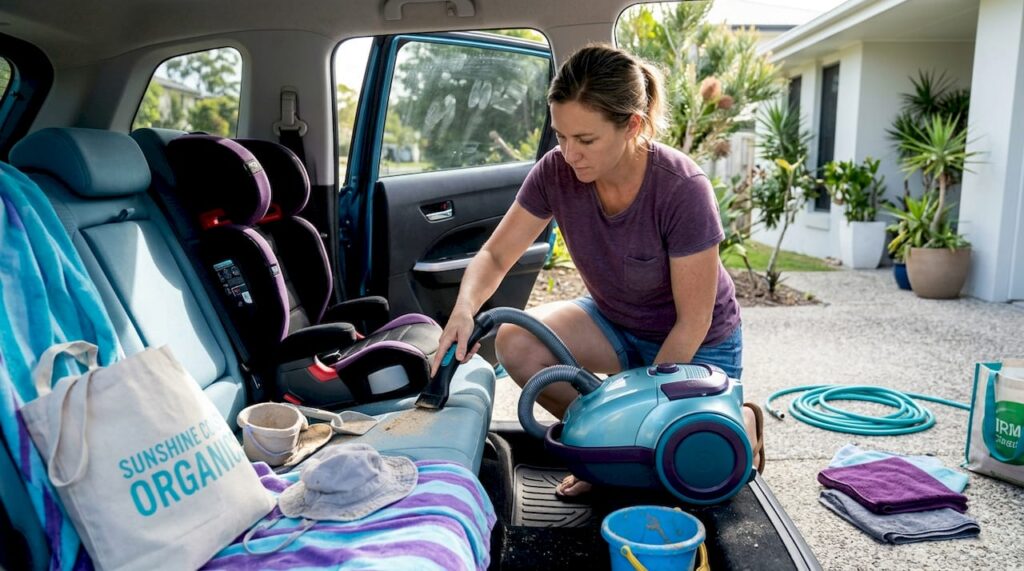
If you’ve ever found a chip wedged under the seat three weeks after it went missing, or arrived at school pickup with a car that smells suspiciously like wet dog and last Tuesday’s banana, you already know the struggle. Keeping a family car clean on the Sunshine Coast is its own particular challenge. Beyond the usual crumbs and sticky handprints, you’re dealing with beach sand that finds its way into every crevice, salt air that accelerates grime build-up, and pets who treat your back seat like their personal lounge. This guide gives you practical, no-fuss strategies to stay on top of it all.
Table of Contents
- The essential family car cleaning checklist
- How often should you clean your family car?
- Pro tips: Tools and products for fast and effective cleaning
- Dealing with messes: Sand, pet hair and sticky spills
- Our perspective: Why a clean car matters more than you think
- Get expert help for a spotless car interior
- Frequently asked questions
Key Takeaways
| Point | Details |
|---|---|
| Family-centric checklist | Follow a systematic cleaning routine tailored to tackle kid and pet messes for a consistently fresh car. |
| Set cleaning routines | Schedule light cleans every two weeks and deep cleans every 2-3 months to keep mess under control. |
| Smart tool choices | Invest in microfibre products and HEPA vacuums for faster and damage-free cleaning results. |
| Spot-treat trouble areas | Use enzyme-based cleaners and quick action for pet and food stains to prevent lingering smells and stains. |
| Consider professional help | Professional detailers offer convenience and expertise when family life gets too busy for a deep clean. |
The essential family car cleaning checklist
Having set the stage for the typical messes families face, let’s break down the actionable checklist for a truly clean and fresh car. Whether you’re tackling things yourself on a Saturday morning or setting up a routine to maintain between professional visits, this order of operations makes a real difference.
The core car cleaning checklist for families covers seven key steps, starting with decluttering all the way through to deodorising. Follow this sequence every time and you’ll avoid the common mistake of cleaning in the wrong order.
Declutter and remove all rubbish. Pull out everything that doesn’t belong. Kids’ bags, sports gear, water bottles, wrappers, and forgotten jackets. You can’t properly clean around clutter, and half the mess that accumulates is simply stuff that never got taken inside.
Vacuum thoroughly, focusing on crevices. Use a crevice attachment to get into seat gaps, under seats, and between the console and seat. This is where crumbs and pet hair hide most stubbornly. Don’t rush this step. Vacuuming for an extra five minutes here saves a lot of scrubbing later.
Wipe all hard surfaces. Dashboard, console, door panels, and steering wheel all collect oils, dust, and sticky residue. Use an all-purpose cleaner on a microfibre cloth. A microfibre cloth (a tightly woven fabric that traps particles rather than pushing them around) gives you far better results than a cotton rag or paper towel.
Clean seats according to material. Fabric seats need an upholstery cleaner or shampoo worked in with a soft brush. Leather seats need a dedicated leather cleaner followed by a conditioner. Never use the same product on both. Applying the wrong cleaner to leather can cause it to crack or fade over time.
Spot clean stains promptly. Pet accidents and food spills need enzyme-based cleaners. These cleaners contain biological agents that actually break down the organic matter causing the stain and the smell, rather than masking it. This is especially important for interior detailing steps that involve children or pets regularly using the back seat.
Clean all glass streak-free. Use an automotive glass cleaner and a clean microfibre cloth, working in small circular sections. Streaky windows are a safety issue, not just an aesthetic one, especially on sunny Sunshine Coast days when glare is intense.
Deodorise. Enzyme sprays neutralise odours at the source. For persistent smells, activated charcoal sachets placed under seats absorb odours between cleans. You can also explore the full step-by-step interior cleaning process for deeper guidance.
“A clean car isn’t just about appearances. For families, it’s about health, comfort, and making the daily run feel a little less chaotic.”
Pro Tip: Do the vacuuming before any wet cleaning. If you wipe surfaces first and then vacuum, the suction can disturb the moisture and spread grime back across surfaces you’ve already cleaned.
How often should you clean your family car?
With a clear checklist in hand, families next need to understand how often to take each step for maximum efficiency. The answer depends on how many kids and pets you’re ferrying around, and how often you’re hitting the beach.
Practical frequency benchmarks point to a light clean every two weeks and a deep clean every two to three months for families with kids or pets. That might sound like a lot, but a consistent routine actually reduces the total effort over time. Letting messes sit leads to staining, odour absorption into fabric, and grime that bonds to surfaces.
Here’s a practical breakdown of cleaning frequency for Sunshine Coast families:
| Cleaning task | Recommended frequency | Why it matters for families |
|---|---|---|
| Remove rubbish and loose items | Every few days | Prevents build-up and stops smells developing |
| Quick vacuum of seats and floor | Weekly | Stops crumbs attracting pests and embedding in fabric |
| Wipe hard surfaces | Every 1 to 2 weeks | Removes sticky residue before it hardens |
| Spot treat stains | Immediately when spills occur | Enzyme cleaners work best on fresh stains |
| Full interior deep clean | Every 2 to 3 months | Maintains hygiene, removes embedded odours |
| Professional extraction clean | Once or twice a year | Restores carpet and seat fibres; preserves resale value |
A few factors specific to the Sunshine Coast push frequency higher than average:
- Beach visits. Sand gets into floor mats, seat creases, and air vents. Even a quick shake-out of mats after each beach trip makes a measurable difference.
- Humid weather. Moisture trapped in seats and carpets accelerates mould growth, particularly in summer. Regular vacuuming keeps this in check.
- Active pets. Dogs who come along for weekend adventures bring mud, damp fur, and dander. Vacuuming at least weekly is essential.
- Kids in sports. Wet swimwear, muddy boots, and footy gear contribute rapidly to odour build-up.
Families who stick to consistent top interior cleaning methods report that maintaining a routine actually takes less time than deep cleaning after a long neglect. You can also pair your routine with pet-friendly cleaning options to keep things safe for your animals as well as your family.
It’s also worth noting that professional detailing, when done periodically, can restore vehicle value by hundreds to thousands of dollars. That’s not just cleaning. That’s a financial decision.
Pro tips: Tools and products for fast and effective cleaning
Knowing when and how to clean is just as crucial as having the right gear. The difference between a quick wipe-down that looks clean and a genuinely hygienic interior often comes down to the tools and products you’re using.
Using automotive-specific products instead of household cleaners is one of the most impactful changes families can make. Household sprays, even popular all-purpose ones, can degrade plastic coatings, strip leather conditioners, and leave behind residues that attract more dirt. Car-specific cleaners are formulated for the materials and temperatures inside a vehicle.
Here’s a comparison of the most common cleaning tool approaches:
| Tool or product | Best for | Avoid using on |
|---|---|---|
| Microfibre cloth | Dashboard, console, glass, leather | Abrasive stains requiring scrubbing |
| HEPA vacuum with brush head | Pet hair, crumbs in fabric, crevices | Delicate leather surfaces without attachment |
| Silicone pet hair brush | Quick removal of pet hair from seats | Glass or hard surfaces |
| Enzyme cleaner | Pet accidents, food stains, odour | Leather (check label carefully first) |
| Leather conditioner | Leather seats, steering wheel | Fabric upholstery |
| Foam upholstery cleaner | Fabric seats and carpets | Leather or vinyl surfaces |
The best tools every Sunshine Coast family should keep in their cleaning kit:
- A HEPA vacuum (High-Efficiency Particulate Air filter), which captures 99.97% of fine particles including pet dander and pollen, rather than recirculating them into the cabin air
- A set of microfibre cloths in at least two colours, one for glass and one for surfaces
- A detailing brush set for vents, crevices, and seat stitching
- A pet hair removal glove or rubber brush for seats
- An enzyme-based stain and odour spray
- A dedicated glass cleaner formulated for automotive use
You can get detailed advice on choosing the right best interior cleaning tools for your vehicle type and family situation. There are also pro tips for maintaining interiors that cover more advanced techniques if you want to go further.
Pro Tip: Keep a small cleaning kit in the boot. A microfibre cloth, a small spray bottle of all-purpose automotive cleaner, and a roll of paper towels means you can deal with spills immediately, before they set into the fabric.
Dealing with messes: Sand, pet hair and sticky spills
After equipping your cleaning kit, it’s time to tackle the unique Sunshine Coast car messes that challenge every family. These three culprits account for the majority of interior complaints from local families.
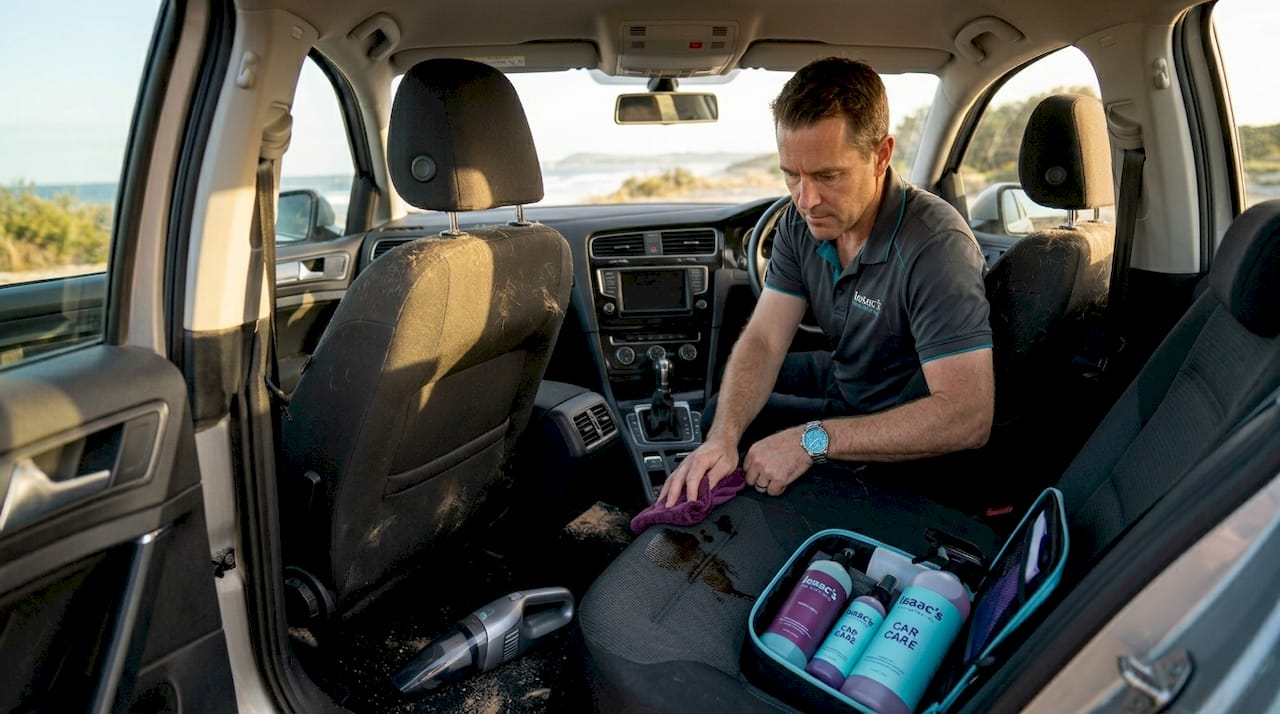
Sand is the Sunshine Coast’s signature stowaway. It works its way under floor mats, into seat stitching, and along the base of door seals. The most effective defence is a combination of high-quality rubber floor mats with raised edges (which contain spills and sand), shaking mats out before re-entering the car, and focused vacuuming along seat tracks and door wells. Spot cleaning and vacuuming crevices after beach trips prevents sand from grinding into carpet fibres over time, which causes accelerated wear.
Practical tips for managing sand:
- Keep a small brush or broom near the car for a quick boot scrub before entry
- Choose all-weather rubber mats over carpet mats if you’re at the beach weekly
- Vacuum the seat tracks and under-seat runners every fortnight
Pet hair is persistent because it becomes electrostatically attached to fabric fibres. A standard vacuum often moves it around rather than removing it effectively. A rubber silicone glove or brush, used with short strokes in one direction, clumps the hair for easier vacuum removal. Regular grooming between car trips also reduces the volume of loose hair your dog brings along. Families who use dedicated detailing for pet owners services often find that a professional extraction clean removes embedded dander that home tools simply can’t reach.
Tips for managing pet hair:
- Use a fitted pet seat cover on your dog’s favourite spot
- Keep a silicone brush in the car for a quick tidy before passengers join you
- Wash any seat covers fortnightly to prevent dander from transferring back to the seat
Sticky spills from juice, ice cream, and soft drinks are every parent’s nemesis. The key is speed. The longer a sugary spill sits, the more it bonds to fabric. Blot immediately with a clean cloth, never scrub, which pushes the liquid deeper into the fibres. Then apply an enzyme cleaner, allow it to work for five minutes, and blot again. For older stains, you may need two treatments.
For tougher stains and odours, the range of top interior cleaning solutions available for Sunshine Coast conditions covers even the most stubborn family messes.
Pro Tip: Never apply cleaner and immediately rub. Always blot first to absorb excess liquid, apply the cleaner, let it dwell for a few minutes, then blot again. Rubbing spreads the stain and damages fabric.
Our perspective: Why a clean car matters more than you think
Most people think of car cleaning as a cosmetic exercise. Something you do before a road trip or when the smell gets bad enough to warrant action. But after working with hundreds of Sunshine Coast families, we see it very differently.
A consistently clean car interior directly supports your family’s health. Allergens from pet dander, mould spores from damp beach gear, and bacteria from food residue all accumulate in a neglected interior. For children with asthma or allergies, the car cabin is one of the most concentrated exposure environments they encounter daily. Addressing the impacts of interior cleaning on health outcomes is something most families underestimate significantly.
Beyond health, there’s a real psychological dimension. A messy car is a low-level stressor that most people habituate to without realising. When you spend 45 minutes a day in a clean, fresh-smelling vehicle rather than a chaotic one, that adds up to meaningful quality of life improvement over a year. Parents who offer lifts to other families’ kids often describe the relief of a presentable interior as a quiet pride they hadn’t expected to care about.
Then there’s the financial argument, which is surprisingly strong. Cars that are regularly maintained inside and out retain significantly more resale value than equivalent models that have been neglected. Fabric staining and embedded odours are among the most common reasons buyers negotiate a vehicle price down. Regular cleaning is genuinely a financial investment.
Our honest take is this: treating car cleaning as an occasional chore leads to bigger, more expensive problems. Treating it as a small, regular habit protects your family’s health, wellbeing, and the money tied up in your vehicle.
Get expert help for a spotless car interior
For truly stubborn odours or time-strapped weeks, sometimes professional help is worth every cent. Sunshine Coast families have access to a mobile detailing service that comes to you at home, at work, or even at the beach carpark.
Isaac’s Pro Detailing Sunshine Coast offers interior detailing that goes well beyond a home vacuum. From full seat and carpet extraction to ozone deodorisation for pet and food smells that enzyme sprays won’t fully shift, the service is built for real family vehicles. Our mobile car detailing workflow is designed to fit around your schedule, with eco-friendly products safe for kids and pets. If you’d like to understand more about what a professional service covers, the full in-depth interior cleaning guide walks through every step. Ready to book or simply explore your options? Visit the Sunshine Coast car cleaning pros to get started.
Frequently asked questions
What are the most important car cleaning tasks for families with kids or pets?
Decluttering, vacuuming, wiping hard surfaces, cleaning seats according to material, spot-treating stains, and deodorising are the essential steps for family vehicles, as outlined in the full cleaning checklist.
How often should a family car be deep cleaned?
A deep clean is recommended every two to three months, with a light clean every two weeks for families with kids or pets, based on established frequency guidance for family vehicles.
What’s the best vacuum for pet hair in family cars?
A HEPA vacuum with strong suction and brush attachments is the most effective option, as HEPA-equipped kits deliver near-professional results for removing pet hair and allergens at home.
Why use microfibre and automotive-specific products instead of household cleaners?
Microfibre cloths and car-specific cleaners prevent surface damage and deliver lasting results because, as automotive detailing research confirms, household products can degrade car materials and leave residues that attract more grime.