
TL;DR:
- Traditional car washes waste over 200 liters of contaminated water polluting waterways.
- Eco-friendly methods use less water, biodegradable products, and safer tools like microfibre cloths.
- Washing on grassed areas and proper disposal ensures minimal impact on Sunshine Coast waterways.
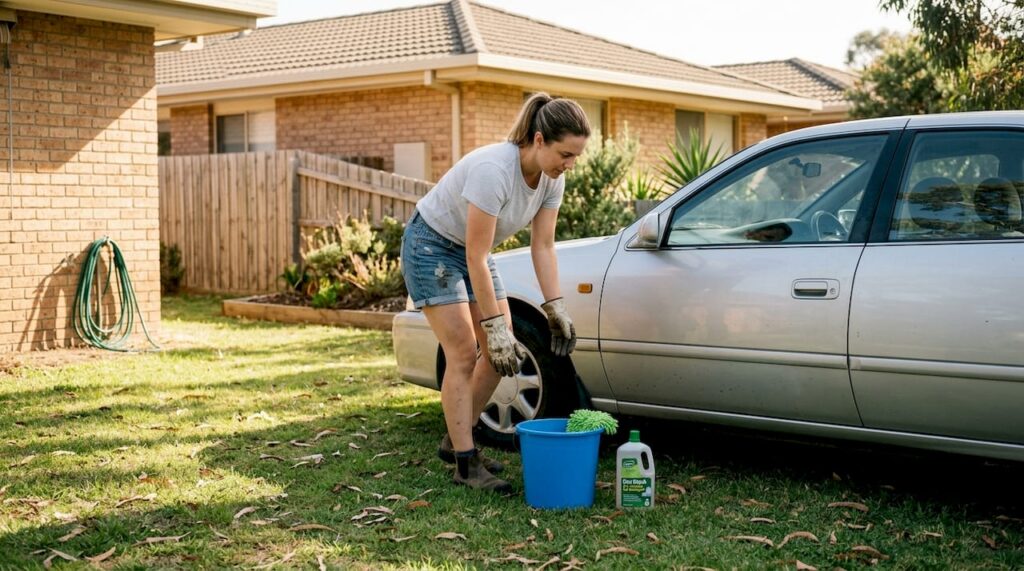
Traditional driveway car washes send over 200 litres of contaminated water straight into Sunshine Coast stormwater drains every single wash. That runoff carries detergent, oil, heavy metals, and grime directly into the waterways and coastal ecosystems that make this region so special. The good news is that switching to genuinely eco-friendly car cleaning doesn’t mean settling for a dull, half-clean vehicle. This guide walks you through the right tools, the correct workspace setup, a practical step-by-step process, and how to verify you’re actually making a difference rather than falling for greenwashed marketing.
Table of Contents
- Essential tools and products for eco-friendly car cleaning
- Preparing your vehicle and workspace for safe, eco-friendly cleaning
- Step-by-step process for eco-friendly car cleaning
- Verifying results and maintaining eco-friendly habits
- The uncomfortable truth about eco car cleaning on the Sunshine Coast
- Take eco car cleaning further with local detailing experts
- Frequently asked questions
Key Takeaways
| Point | Details |
|---|---|
| Reduce water waste | Switching to bucket washes and eco-friendly detergents can cut your water use by over half each wash. |
| Choose true green products | Look for concentrated, plant-based, biodegradable products to avoid greenwashing and achieve a real eco clean. |
| Protect local waterways | Preparing your workspace and avoiding hard surface washing keeps pollutants out of Sunshine Coast stormwater. |
| Hand washing prevents car sensor damage | Manual wash methods are safer for modern vehicles, helping you avoid costly repairs from pressure washers. |
Essential tools and products for eco-friendly car cleaning
Now that you know why traditional methods fall short, let’s examine the tools and products you’ll need for a greener approach. Getting the right gear before you start is the single biggest factor in whether your clean is genuinely eco-friendly or just feels that way.
When it comes to carbon footprint, the method matters enormously. Hand washing produces just 0.88 kg of CO2 per vehicle, the lowest of any cleaning method. That’s a compelling reason to skip the automated drive-through and pick up a quality microfibre cloth instead.
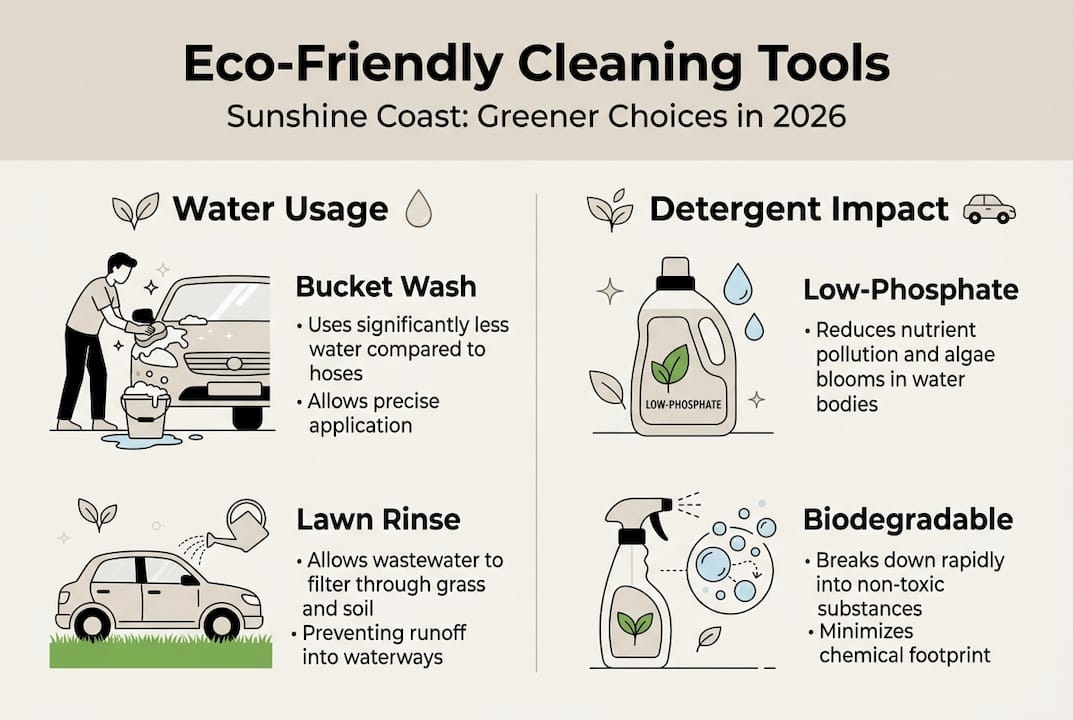
Here’s a quick comparison of eco-friendly versus traditional tools:
| Feature | Eco-friendly option | Traditional option |
|---|---|---|
| Water usage | 15 to 30 litres (bucket method) | 150 to 300 litres (hose) |
| Carbon output | 0.88 kg CO2 (hand wash) | Up to 4.5 kg CO2 (automated) |
| Product type | Plant-based, biodegradable | Petroleum-based detergents |
| Cloth/sponge | Microfibre, natural sea sponge | Synthetic foam, abrasive pads |
| Cost over time | Lower (concentrated formulas) | Higher (single-use products) |
When choosing products, look for these qualities:
- True biodegradability: The product must break down fully in soil and water, not just partially. Check for third-party certification rather than vague label claims.
- Low or zero phosphate: Phosphates feed algae blooms in waterways, which devastate marine life.
- Plant-based surfactants: These lift grime effectively without stripping protective coatings like ceramic or wax layers.
- Concentrated formulas: Less packaging, less waste, and often a lower cost per wash.
For a detailed breakdown of how leading biodegradable products compare in real-world performance, it’s worth reviewing independent testing before you buy. Our eco-friendly detailing guide also covers specific product recommendations suited to Sunshine Coast conditions, and families can find tailored advice in our eco cleaning for families resource.
Pro Tip: Avoid pressure washers on modern vehicles. High-pressure water can force moisture into proximity sensors, parking cameras, and door seals, causing electrical faults that are expensive to repair. A two-bucket hand wash method is both safer for your car and kinder to the environment.
Preparing your vehicle and workspace for safe, eco-friendly cleaning
With your eco-friendly products in hand, it’s just as important to prepare your workspace and vehicle thoughtfully before the first wash. Where you wash your car matters just as much as what you wash it with.
The Sunshine Coast Council advises against washing on hard surfaces like driveways or roads, because runoff flows directly into stormwater drains with no filtration. Even small amounts of detergent can harm aquatic life downstream.
Here’s a comparison of cleaning locations and their environmental impact:
| Location | Runoff risk | Water absorption | Recommended? |
|---|---|---|---|
| Concrete driveway | Very high | None | No |
| Lawn or grass area | Low | High (soil filters water) | Yes |
| Commercial car wash | Managed (recycled water) | Controlled | Yes |
| Gravel area | Medium | Partial | Use with caution |
Before you start, run through this preparation checklist:
- Choose a grassed area where soil can absorb and filter wash water naturally.
- Pre-remove loose debris by hand or with a dry microfibre cloth to reduce the volume of dirty water produced.
- Set up two buckets: one for your wash solution and one for rinsing your cloth, which keeps contamination low.
- Check product labels for phosphate and nitrogen content. Low-P/N (low phosphate and nitrogen) formulas are safest for soil and waterways.
- Plan your water disposal: never tip dirty wash water down a stormwater drain. Dispose of it in a garden bed or toilet.
Important: Stormwater drains on the Sunshine Coast flow directly to local creeks, rivers, and the ocean without treatment. Even a single wash on a hard surface can introduce harmful chemicals and heavy metals into protected waterways.
For a full workflow with less runoff and a breakdown of the mobile detailing steps professionals use to minimise environmental impact, these resources offer practical, location-specific guidance.
Pro Tip: Parking on a lawn and using low-phosphate detergents is one of the most effective things you can do. The grass and soil act as a natural filter, absorbing nutrients and breaking down mild detergents before they reach any waterway.
Step-by-step process for eco-friendly car cleaning
Once your workspace is ready, follow these steps for the best eco-friendly clean on the Sunshine Coast.
- Pre-rinse with minimal water. Use a single bucket of clean water and a soft cloth to loosen surface dust and bird droppings. Avoid hosing down the entire vehicle at this stage. For heavily soiled or muddy vehicles, apply a small amount of targeted, plant-based detergent directly to problem areas and let it dwell for two minutes before wiping.
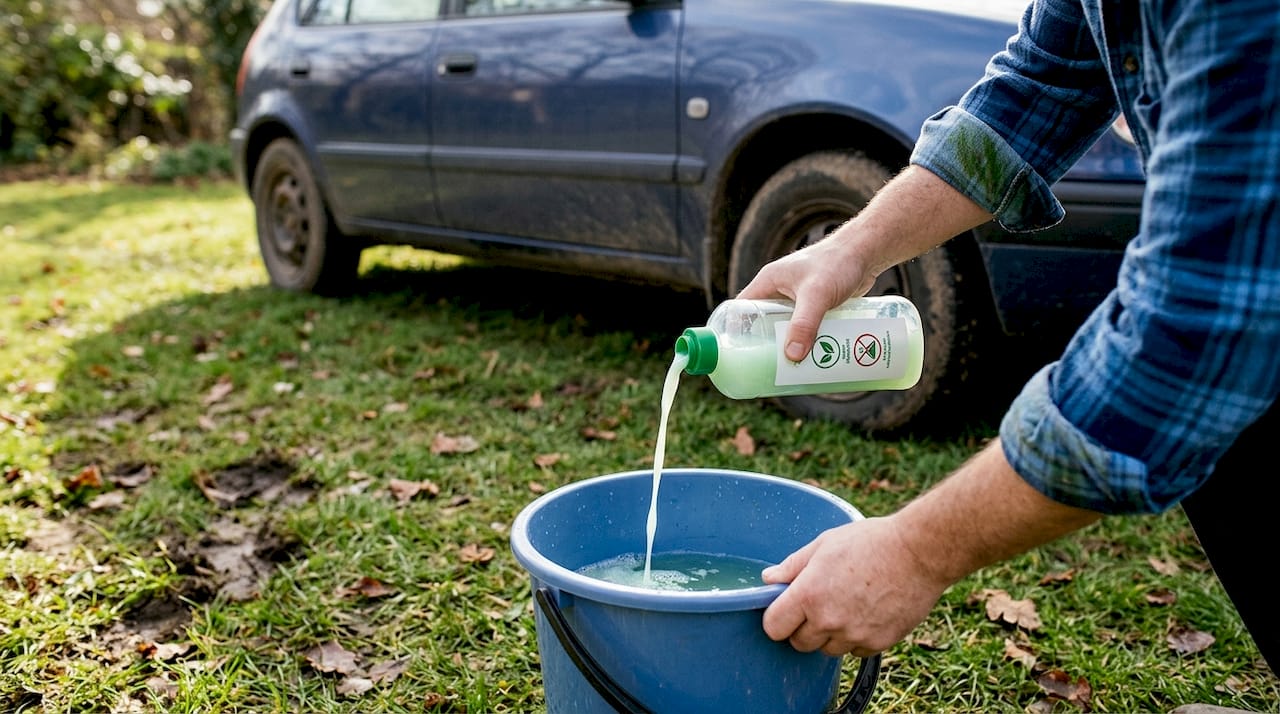
- Two-bucket wash. Fill one bucket with your diluted eco-friendly shampoo and one with clean rinse water. Work from the roof down, rinsing your cloth in the clean bucket after each panel. This method typically uses just 15 to 20 litres total.
- Targeted drying. Use a high-quality microfibre drying towel rather than letting the vehicle air-dry, which leaves water spots and mineral deposits, particularly in Sunshine Coast’s warm climate.
- Interior care. Vacuum first, then use a plant-based interior cleaner on surfaces. For seat and carpet stains, a small amount of concentrated eco-friendly solution applied with a damp cloth avoids the need for excessive water. Our interior cleaning steps guide goes into more detail on fabric and leather care.
- Safe product disposal. Pour residual wash water onto a garden bed, never down a drain. Rinse and store your buckets and cloths ready for next time.
For stubborn residue or vehicles with heavy contamination, eco-friendly pre-rinse techniques using targeted dwell time and minimal water are far more effective than blasting with a pressure washer.
Research into nature-based wastewater solutions such as Vertical Flow Treatment Wetlands shows that up to 60% of car wash water can be safely recycled and reused when processed correctly, reducing turbidity and harmful bacteria to safe levels. This is exactly the kind of thinking that separates genuinely sustainable detailing from the standard approach.
Pro Tip: For muddy vehicles, resist the urge to hose everything off at once. A targeted pre-treatment with a small amount of plant-based detergent on the worst areas, left to dwell briefly, loosens grime far more efficiently and uses a fraction of the water.
Verifying results and maintaining eco-friendly habits
After cleaning, it’s important to check your results and form habits that keep your vehicle and the environment in great shape.
One of the biggest traps in eco car cleaning is greenwashing. Many products use terms like “natural,” “green,” or “biodegradable” without meeting any meaningful standard. Plant-based, concentrated formulas that carry genuine third-party biodegradability certification consistently outperform traditional options without stripping protective coatings.
Here’s how to tell if your clean was genuinely eco-friendly:
| Sign | What it means |
|---|---|
| No soapy residue on paintwork | Correct dilution and thorough rinse technique |
| Wash water disposed on garden, not drain | Proper waste management followed |
| Paint feels smooth, not stripped | Product didn’t damage existing wax or ceramic coating |
| No chemical smell lingering on surfaces | Plant-based formula used correctly |
| Less than 25 litres of water used | Efficient two-bucket method applied |
For ongoing maintenance, build these habits into your routine:
- Wash every two to three weeks rather than waiting for heavy soiling, which requires more product and water to shift.
- Use a waterless detailer between full washes for light dust. These spray-and-wipe products use no water at all and are ideal for Sunshine Coast’s dusty, sunny conditions.
- Check product labels every purchase. Formulas change, and a product that was genuinely eco-friendly last year may have been reformulated.
- Store products correctly to extend their lifespan and avoid waste from degraded formulas.
Our car care checklist is a practical tool for keeping these habits consistent across every season.
The uncomfortable truth about eco car cleaning on the Sunshine Coast
While practical steps are helpful, there’s a deeper truth about eco car cleaning every Sunshine Coast owner should consider. Most people who think they’re washing their car sustainably aren’t. They’ve bought a product with a green label, maybe switched to a microfibre cloth, and called it done. But the real environmental risk isn’t the product alone; it’s the runoff.
The Sunshine Coast’s waterways are genuinely sensitive. Creeks, wetlands, and coastal zones here are not just scenic backdrops; they’re ecosystems that can’t absorb repeated chemical contamination. Washing on hard surfaces sends every trace of detergent, oil, and metal particles straight into those systems without a single filter.
Greenwashing in the car care industry is rampant. We’ve seen products labelled “eco” that contain synthetic fragrances, non-biodegradable thickeners, and phosphate levels that would concern any environmental scientist. The label is not the product.
Pressure washers deserve a special mention. Many owners assume high pressure equals a thorough clean. In reality, pressure washers can damage modern proximity sensors, force water into door seals, and strip ceramic coatings, all while using far more water than a bucket method. Hand washing with quality eco tools is safer for your vehicle and the local environment. Our local eco detailing page explains how professional techniques address these risks directly.
Take eco car cleaning further with local detailing experts
Sometimes, the best way to guarantee a spotless, truly eco car clean is to partner with professionals who know the local environment inside out.

At Isaac’s Pro Detailing Sunshine Coast, we use vetted, plant-based products and proven techniques that protect both your vehicle and the region’s waterways. Our fully mobile service comes to your home, workplace, or wherever suits you, so there’s no need to drive to a facility that may not meet the same environmental standards. From our structured mobile detailing workflow to our complete car care checklist, every step is designed to minimise water waste and deliver a lasting, professional result.
Frequently asked questions
What is the most eco-friendly location to wash my car on the Sunshine Coast?
Washing on the lawn with buckets and low-phosphate products is best, as the soil absorbs and filters the water naturally, preventing stormwater contamination.
Are biodegradable cleaning products always eco-friendly?
Not always. Some products labelled “biodegradable” don’t fully break down or are simply greenwashed marketing; look for concentrated, plant-based formulas with verified third-party biodegradability standards.
How much water can I save using eco-friendly cleaning methods?
Hand washing with buckets uses dramatically less water than a hose, and nature-based recycling methods can enable up to 60% water reuse compared to conventional washing.
Is professional eco car detailing worth it for Sunshine Coast owners?
Yes. Professionals use advanced green products and techniques tailored to the local environment, ensuring a thorough clean with minimal water waste and no risk of stormwater contamination.
Recommended
- Eco-friendly Car Detailing: Cleaner Cars, Greener Sunshine Coast
- Eco-friendly Car Cleaning: Simple Steps For A Greener Shine
- 6 Essential Car Detailing Tips For Sunshine Coast Drivers
- Car Detailing Workflow At Home: 70% Less Harmful Runoff
- Step by Step Golf Cart Maintenance: Extend Life 25% in 2026 — GOLFCARTSTUFF.COM™