
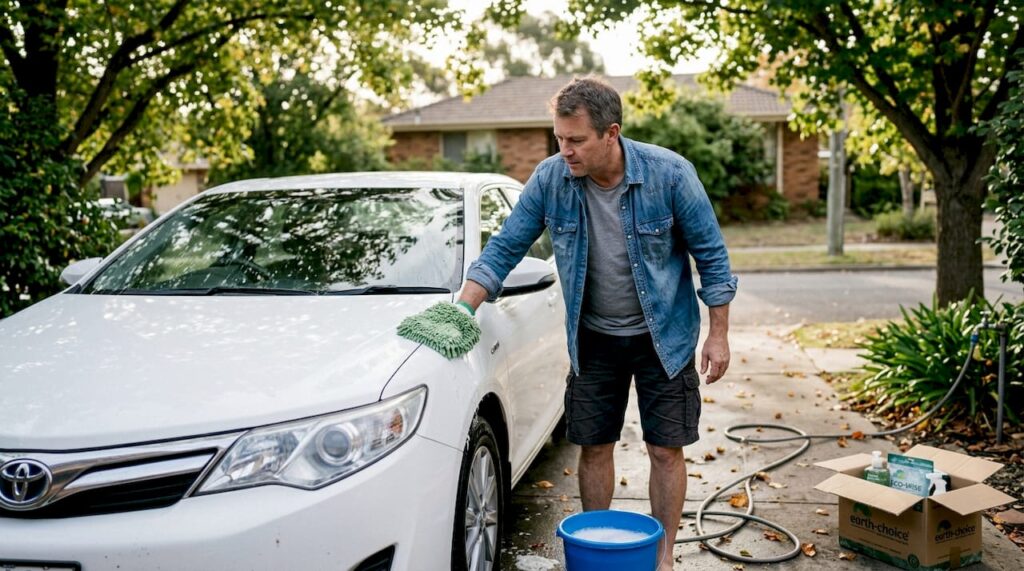
Traditional car cleaning is quietly hard on the environment. A standard hose-down can waste up to 300 litres of water, and most commercial car wash chemicals contain surfactants that flow straight into stormwater drains. On the Sunshine Coast, where waterways and beaches are part of daily life, that matters. The good news is that eco-friendly car cleaning has come a long way. Modern methods deliver genuinely professional results using a fraction of the water and without harsh chemicals. This guide walks you through exactly what you need, how to do it properly, and how to avoid the greenwashing traps that catch even well-meaning car owners off guard.
Table of Contents
- What you need for an eco-friendly car clean
- Step-by-step: The eco-friendly car cleaning process
- Interior cleaning the eco-friendly way
- Common mistakes and how to stay truly green
- Why most eco car cleaning guides miss the mark
- Take your eco-friendly car care to the next level
- Frequently asked questions
Key Takeaways
| Point | Details |
|---|---|
| Minimise water use | Rinseless and waterless washes dramatically reduce water and runoff compared to traditional methods. |
| Choose certified products | Always verify biodegradable claims and plant-based ingredients for genuine eco-friendly cleaning. |
| Section-by-section care | Work on one panel at a time and use fresh mitts to avoid spreading dirt and damaging paint. |
| Avoid common eco traps | Watch out for misleading green branding and overuse of chemicals, even in natural products. |
What you need for an eco-friendly car clean
Now that you’re ready to ditch harsh chemicals, let’s break down exactly what you need for a safe, sustainable car cleaning routine.
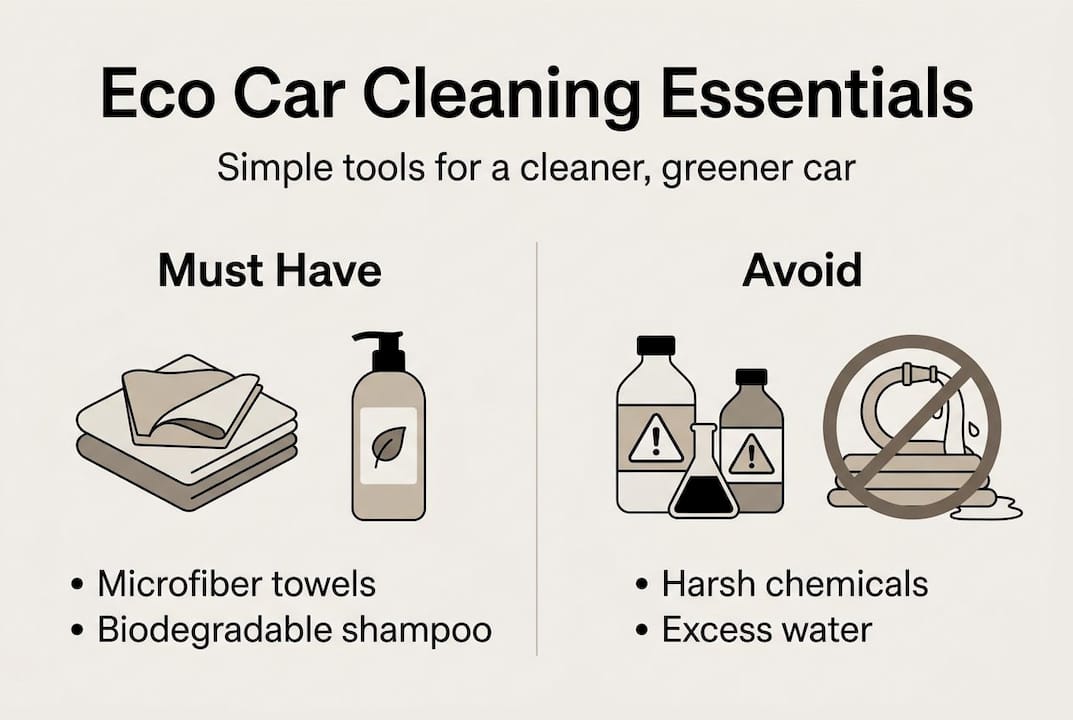
The foundation of any green clean is choosing the right products. Not all products labelled “natural” or “eco” are created equal. Genuine eco-friendly car shampoos are 98% biodegradable and derived from plant-based ingredients rather than petroleum. When shopping, look for certifications rather than marketing language. A product that says “green formula” without any third-party verification is a red flag. Genuine eco-friendly product certifications include specific biodegradability standards and ingredient transparency.
Here’s what to have ready before you start:
- Plant-based car shampoo (look for certified biodegradable on the label)
- Two clean wash buckets (one for soapy water, one for rinsing your mitt)
- Microfibre wash mitts (at least two, ideally one per panel section)
- Microfibre drying towels (three or more for a full exterior)
- Waterless or rinseless wash spray (for light dust or water-restricted days)
- Spray bottle filled with diluted plant-based cleaner for spot work
- Soft-bristle detailing brush for wheels and vents
For a comprehensive car detailing result, you’ll also want a dedicated wheel cleaner rated safe for alloy surfaces and a paint-safe drying aid or quick detailer spray.
| Product type | What to look for | What to avoid |
|---|---|---|
| Car shampoo | Certified biodegradable, pH neutral | Petroleum surfactants, phosphates |
| Wheel cleaner | Non-acid, plant-based formula | Hydrofluoric acid-based products |
| Interior cleaner | Water-based, low VOC | Aerosol sprays, ammonia-based |
| Drying aid | Silicone-free, biodegradable carrier | Petroleum distillates |
Pro Tip: Check the product’s safety data sheet (SDS) online before you buy. If it lists petroleum distillates or synthetic surfactants as primary ingredients, it’s not truly eco-friendly regardless of the label.
Step-by-step: The eco-friendly car cleaning process
With everything ready, the next step is to roll up your sleeves and follow a proven eco-friendly cleaning method suited to your goals and resources.
Choosing between a traditional hand wash, a rinseless wash, or a waterless wash depends on how dirty your car is and whether water restrictions apply in your area. Two-bucket, rinseless, and waterless washes all use dramatically less water and generate less chemical waste than a standard hose wash. Here’s how to approach each method properly.
- Park in the shade. Direct sunlight dries product too fast, leaving water spots and forcing you to use more solution.
- Rinse loose dirt first. Use a low-pressure hose or a pump sprayer to knock off heavy grit before touching the paint.
- Prepare your buckets. Fill one with diluted plant-based shampoo and one with plain water for rinsing your mitt after each panel.
- Wash panel by panel, top to bottom. Start at the roof and work down. Rinse your mitt in the clean bucket after every single panel.
- Address the wheels last. Wheels carry the most brake dust and grime. Keeping them for last prevents contamination spreading to the paint.
- Dry immediately with microfibre. Pat dry rather than dragging the towel to prevent micro-scratches.
- Apply a quick detailer or spray wax. This seals the clean surface and extends the time between washes, reducing your overall water use.
For a rinseless wash, mix your rinseless product per the manufacturer’s ratio, apply to one panel at a time, and wipe off with a clean microfibre towel. For waterless, spray directly onto the surface and buff gently. A well-organised detailing workflow at home makes this process faster and reduces runoff significantly.
| Method | Water use | Effort | Best for |
|---|---|---|---|
| Two-bucket hand wash | Low (15-20 L) | Medium | Moderately dirty cars |
| Rinseless wash | Very low (1-2 L) | Low-medium | Light to moderate dirt |
| Waterless wash | Zero | Low | Light dust, touch-ups |
Pro Tip: Use a fresh, clean microfibre mitt or towel for every two panels. Reusing the same cloth drags contamination across the paint and causes swirl marks that are expensive to correct. Check out greener detailing solutions if you want to go further with your sustainable car care approach.
Interior cleaning the eco-friendly way
Your car’s exterior is sparkling, but real eco-friendly care covers the places you sit, touch, and breathe.
Vinegar-based cleaners and steam cleaning are two of the safest and most effective options for car interiors. A diluted white vinegar solution (roughly one part vinegar to three parts water) tackles glass, hard plastics, and door trims without leaving toxic residue. Bicarb soda sprinkled on carpets and fabric seats draws out odours and light stains before vacuuming.
Here’s a practical interior cleaning checklist:
- Vacuum first. Remove all loose debris from seats, carpets, and floor mats before applying any liquid.
- Spot clean fabric seats with a plant-based upholstery spray or diluted vinegar solution, working in small sections.
- Wipe hard surfaces (dash, console, door cards) with a damp microfibre cloth and a low-VOC interior cleaner.
- Clean windows from inside using a vinegar spray and a clean microfibre towel, wiping in overlapping strokes to avoid streaks.
- Deodorise naturally. Place a small open container of bicarb soda under a seat overnight to absorb lingering smells. Avoid aerosol fresheners, which release volatile organic compounds into the cabin air.
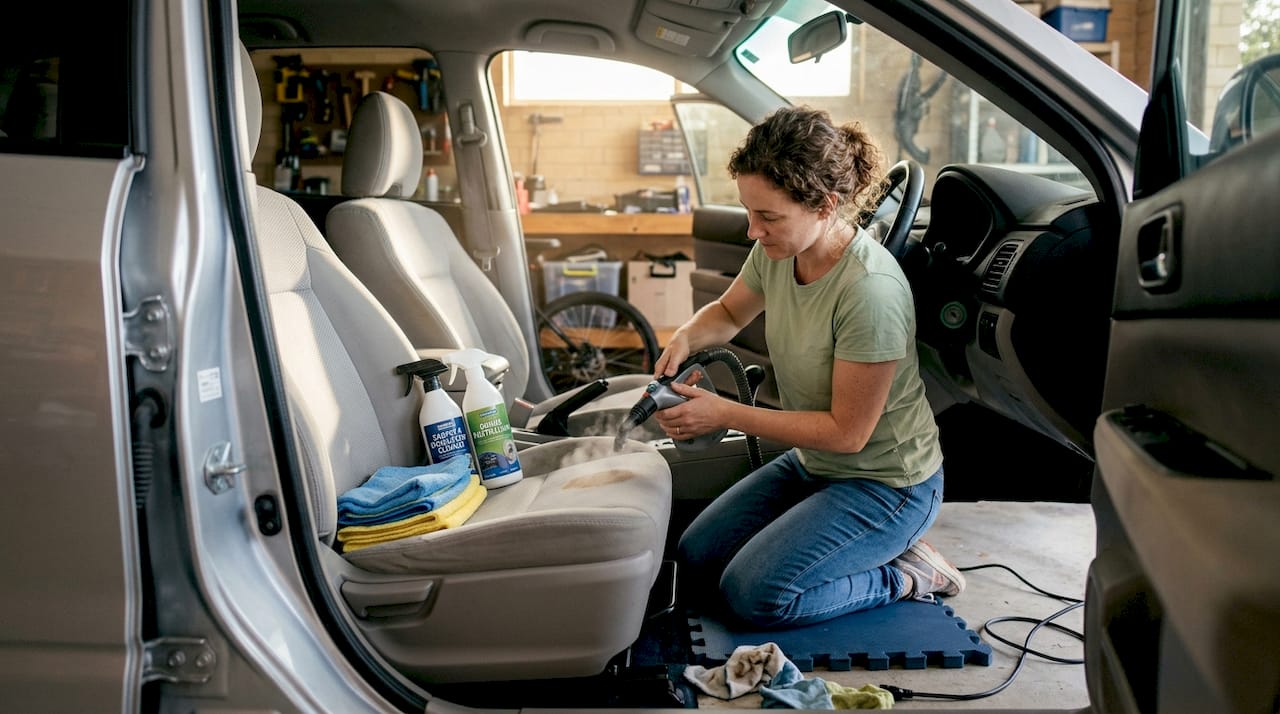
For tougher stains on fabric or carpet, a portable steam cleaner is one of the best tools you can invest in. Steam lifts grime using heat and moisture alone, with no chemicals required. It also sanitises surfaces, which is a genuine bonus for families. For a deeper look at interior care, the car interior cleaning guide covers seat extraction and carpet care in detail.
Pro Tip: Always test any DIY solution on a hidden spot first. Vinegar is safe on most surfaces but can dull certain matte or satin interior trims if used undiluted.
Common mistakes and how to stay truly green
Even with the best intentions, there are pitfalls. Let’s break down what to avoid and how to make your cleaning routine genuinely sustainable.
Greenwashing is everywhere in the car care industry. A product with a leaf logo and the word “natural” on the bottle may still contain synthetic surfactants, artificial fragrances, and preservatives that are harmful to aquatic life. Some products mislead with unverified eco claims, and without checking certifications or the SDS, it’s easy to be fooled. Learning to read eco label standards helps you cut through the noise.
Here are the most common mistakes eco-conscious car owners make:
- Washing on a hard driveway without a drain mat. Runoff carries soap, grime, and tyre residue directly into stormwater. Use a wash mat that collects water, or wash on grass.
- Using too much product. More shampoo doesn’t mean cleaner. Overdosing creates excess foam that requires more water to rinse and increases chemical load.
- Ignoring water restrictions. The Sunshine Coast has seasonal water restrictions. Rinseless and waterless methods are your best friends during those periods.
- Reusing dirty towels. A contaminated microfibre cloth does more harm than good, grinding fine particles into the clear coat.
Waterless cleaning often costs more upfront but saves significant time and water over the long run, making it a smart investment for regular car owners.
For households with multiple vehicles or heavy use, a professional reclaim system is worth considering. These systems capture and filter wash water for reuse, cutting total water consumption dramatically. If you’re managing eco-friendly detailing for families with several cars, the maths on a professional service often stacks up better than doing it yourself.
Why most eco car cleaning guides miss the mark
Most eco-friendly car cleaning articles hand you a product list and call it done. What they skip is the real-world complexity that makes or breaks a sustainable routine on the Sunshine Coast.
The biggest oversight is product greenwashing. Guides recommend “biodegradable” products without telling you how to verify that claim. The second oversight is ignoring local conditions. Water restrictions, coastal salt air, and the intense Queensland sun all affect which methods work best here. A rinseless wash that performs brilliantly in cooler climates can dry too fast on a 35-degree Sunshine Coast afternoon, leaving residue on the paint.
There’s also the technique gap. Washing section by section with a fresh mitt per panel is one of the most effective ways to prevent micro-scratches and limit contamination spread, yet almost no mainstream guide emphasises it enough. Tool rotation matters just as much as product choice.
Local expertise genuinely changes outcomes. Understanding the role of car detailing in protecting your vehicle’s value over time puts eco-friendly cleaning in a much bigger picture. It’s not just about the environment. It’s about protecting your investment with methods that work in your actual climate and conditions.
Take your eco-friendly car care to the next level
If you want the ultimate eco-friendly result or simply value your time, local pros can help.
![cta_image]
Sometimes the most sustainable choice is also the most convenient one. Isaac’s Pro Detailing brings a fully equipped mobile car detailing workflow directly to your home, workplace, or favourite beach car park. We use plant-based, certified products and water-efficient techniques that go well beyond what most DIY setups can achieve. Whether you need a full interior and exterior detail or a targeted treatment, our car care checklist helps you understand exactly what your vehicle needs. Visit Isaac’s Pro Detailing to explore our eco-conscious service options and book a time that suits you.
Frequently asked questions
Is rinseless or waterless car cleaning really better for the environment?
Waterless methods win across 9 of 12 sustainability categories, though they cost more per wash. Both options dramatically reduce water use and carbon emissions compared to a standard hose wash, with hand washing producing as little as 0.88 kg CO2 per car versus 4.46 kg for automated rollover systems.
How do I know if a cleaning product is truly eco-friendly?
Look for third-party biodegradable certifications on the label and check the product’s safety data sheet for ingredient transparency. Vague terms like “natural” or “green formula” without supporting documentation are not reliable indicators.
Are professional car detailing services on the Sunshine Coast eco-friendly?
Many local professionals now use plant-based products and reclaim water systems, but it’s worth confirming their specific practices before you book to ensure they align with your values.
Can I make my own eco-friendly car cleaners at home?
Vinegar solutions work effectively as natural alternatives for interior surfaces, glass, and light grime. Bicarb soda is a reliable odour absorber for carpets and fabric seats when used correctly.