
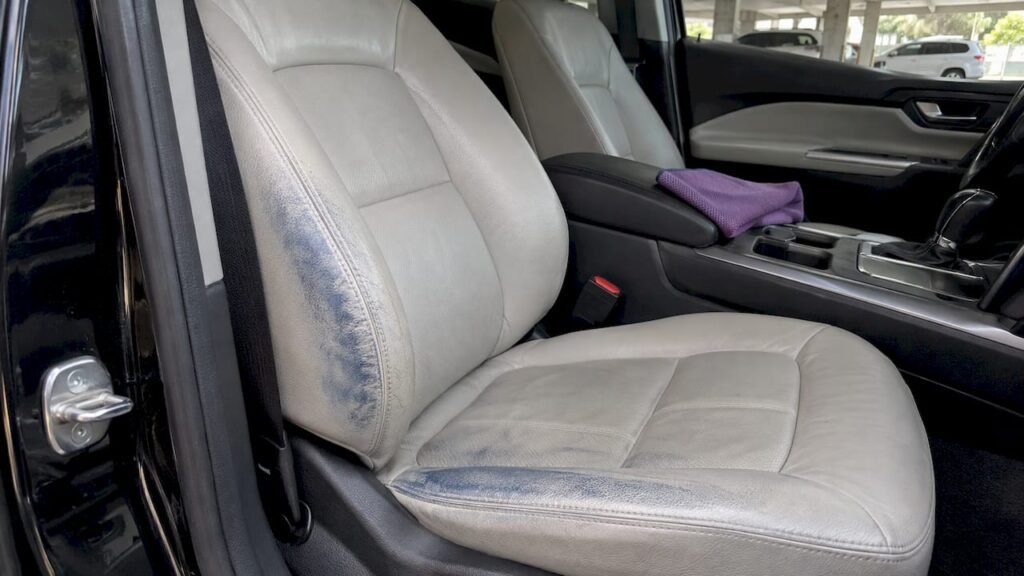
Leather dye transfer is the blue, grey or black haze that new jeans, dark clothing or a fake tan leave on light car seats. Fresh marks often lift with a gentle leather cleaner. Set-in marks usually do not, and every extra round of scrubbing risks the seat’s own colour. The best result comes from three things: acting fast, knowing when to stop, and putting a protective layer on the leather before the next pair of jeans arrives. Here on the Sunshine Coast, we apply leather ceramic coating at your home, workplace or wherever the car is parked.
TL;DR
- Dye transfer is clothing colour sitting in or on the seat’s coating. It is easiest to remove while fresh and hardest once it has soaked in.
- Test any cleaner on a hidden spot, use light pressure, and stop after two careful attempts. More scrubbing strips the colour coat.
- Keep vinegar, alcohol, household sprays and fabric protectors away from leather seats.
- Light, cream and beige leather shows transfer most, and new dark denim is the usual culprit.
- Protection before the stain is the reliable fix. We offer leather ceramic coating at $50 per seat, mobile.
Table of Contents
- What dye transfer actually is
- First, work out what your seats are
- How to treat fresh dye transfer
- What to avoid on leather seats
- When the dye has dried in
- Preventing dye transfer, and why it beats removing it
- Our approach: leather protection done on site
- Booking a clean and a coating together
- Interior cleaning beyond the leather
- FAQ
- Sources
What dye transfer actually is
Most car leather is not raw hide. It is leather finished with a colour coat and a flexible clear topcoat, which is better thought of as paint on the surface than as dyed leather. That coat wears with use, and it is what stands between your seat and your clothes.
Dye transfer happens when colour from a garment moves into that finish. Light-coloured leathers such as white, cream and beige are the most prone, and dark denim, new clothing and items that are not properly colour-set are the main culprits. Heat, sweat and damp clothing make it worse, which is a fair description of a summer drive home from the beach.
Two things decide how bad it gets:
- How long the dye sits. Fresh dye is sitting on the topcoat. Given time, it works into the coating.
- How worn the finish is. A tired bolster, the side of the seat you slide over getting in and out, has a thinner protective layer and takes colour more easily.
Dark leather can pick up transfer too. It is just harder to see, so the seat can look slightly uneven rather than stained.
First, work out what your seats are
The right method depends on the material, and many cars mix leather, vinyl and fabric on the one seat.
The thumb test. Press your thumb into the panel. Tiny wrinkles in the valleys of the grain suggest leather, while vinyl will not wrinkle. If you are unsure, treat it as leather. Leather cleaners are safe on vinyl, but the reverse is not true.
Check the feel. Smooth, coated and slightly sheeny is the typical finish in most cars. A soft, almost bare, absorbent surface suggests aniline or suede-type leather. That is rare in vehicles but does show up in some premium models. Absorbent leathers take dye deep and tolerate few cleaning products, so they are not a job for a home experiment.
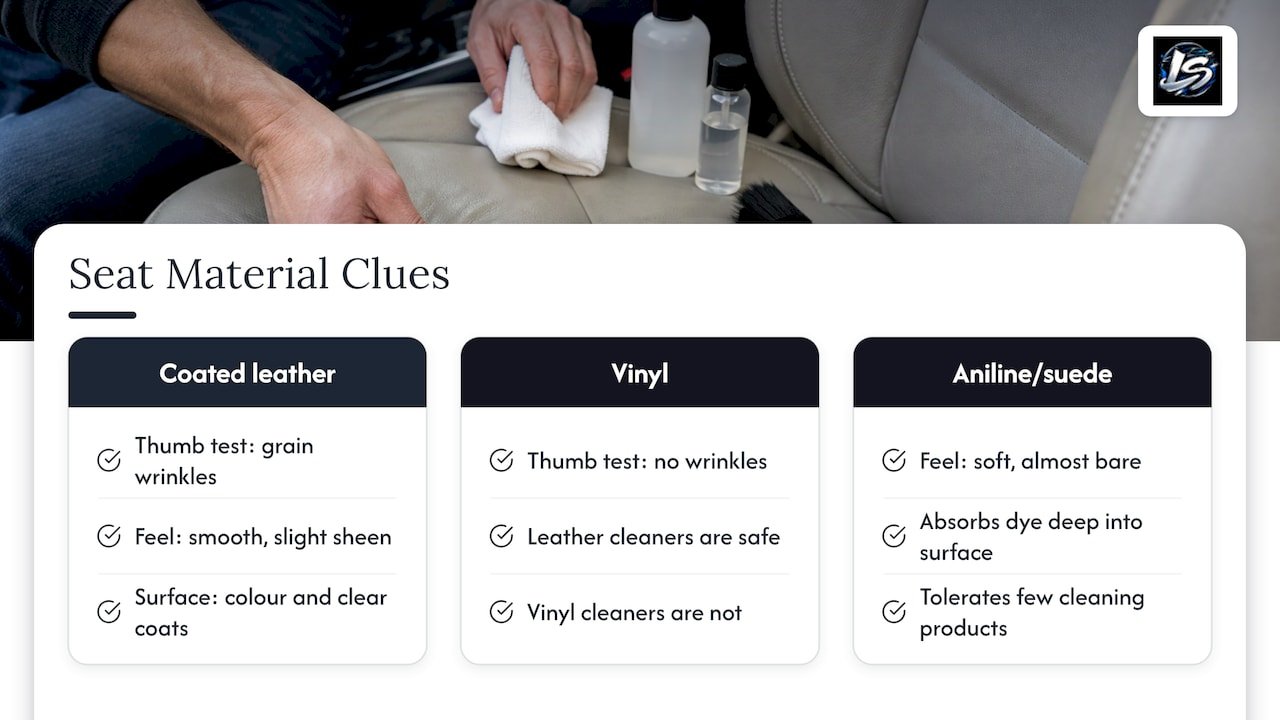
If the seat looks suede-like, or you are not certain what it is, leave it alone and have someone look at it before anything wet goes on.
How to treat fresh dye transfer
This is the routine for a coated (pigmented) leather seat when the mark is hours or a few days old. Ford’s owner guidance for leather seats says to treat stains such as dye transfer as soon as possible with a commercial automotive leather cleaner and to test it on an inconspicuous area first. Build the routine around that.
- Vacuum first. Grit under a cloth acts like sandpaper on the topcoat. Take a few minutes over the seams and folds.
- Test somewhere hidden. Use the side or underside of the seat. Wipe a little cleaner on a white cloth and check for colour on the cloth. If the seat’s own colour comes off, stop there.
- Apply to the cloth, not the seat. Dampen a clean white microfibre cloth. Soaking the leather pushes dye further in and into the stitching.
- Work gently. Dab and wipe with light pressure. On a textured grain, a soft brush moved along the grain can help. Vigorous rubbing strips the coating and leaves a dull patch that looks worse than the original mark.
- Lift, do not spread. Switch to a clean section of cloth as soon as it picks up colour. Otherwise you are moving dye around.
- Wipe dry and let it settle. Let the seat dry at room temperature. Check the result in daylight, not under a garage light.
- Stop after two careful rounds. If a mark does not shift after two sessions, the dye has gone into the colour layer. Water-based cleaners will not reach it, and harsher products start to dissolve the finish.
Once it is clean, a leather conditioner or protectant restores moisture to the area you worked on. Cleaning removes oils the leather needs.
Fresh marks on the seat you cannot see well
Dark leather hides early transfer. Every few weeks, rub a clean white cloth along the bolsters and seat base in good light. If it comes away tinted, the seat is collecting dye, and a gentle clean now is much easier than one in six months. Our guide on how to clean leather seats covers the everyday routine.
What to avoid on leather seats
When a stain is bothering you, the temptation is to reach for whatever is under the sink. Do not.
- Vinegar and other household cleaners. Ford’s guidance is blunt: no household cleaners, alcohol solutions or solvents made for rubber, vinyl and plastics on leather. Vinegar is an acid and sits in that group, so it is not a dye remover for seats.
- Rubbing alcohol, bleach and ammonia. They dull the finish and can lift the seat’s colour along with the stain.
- Oil, petroleum or silicone conditioners. Ford lists these as products to keep off leather too.
- Fabric protectors. 3M’s Australian Scotchgard FAQ states its Fabric & Upholstery Protector must not be used on smooth leather because it could damage the surface. Fabric products belong on cloth seats and carpet only.
- Heat. A hair dryer or sun-baked car speeds drying but can drive the dye in and stress the coating.
- Magic erasers and abrasive pads. They sand the topcoat.
The pattern is the same each time. Harsh products shift the stain by removing part of the finish, and that damage is permanent.
When the dye has dried in
Can you remove dye transfer after it has dried? Sometimes, but the odds fall quickly with time. The dye sinks into the topcoat, and then into the colour layer. At that point a cleaner strong enough to lift it also dissolves the seat’s own colour, which leaves a pale or patchy area that needs recolouring.
A few signs that you should stop and get an assessment:
- The mark has been there for weeks, or through several hot days.
- Two gentle attempts have not changed it.
- Your cleaning cloth is picking up the seat’s colour, not the stain’s.
- The seat is perforated, suede-like, or you cannot identify the leather.
- The stain is on a worn bolster. Here the “stain” may be bare leather showing through the worn colour coat, which no cleaner can fix, and it looks darker when wet.
A technician can judge whether the dye is in the topcoat or the colour layer before anything is applied. That judgement avoids the most common outcome of a DIY rescue: a faded patch bigger than the original mark.
Preventing dye transfer, and why it beats removing it
Prevention is cheaper than any cleanup and works better. The practical habits:
- Wash new jeans before they touch light seats. Aussie Furniture Care’s leather guide suggests washing new jeans three or four times and rubbing a white cloth on new clothing to check for colour before wearing them against light leather.
- Use washable throws on the driver’s seat and any spot that gets constant use.
- Be careful with damp clothes. Wet swimmers, board shorts and sweaty gym gear on light leather is the classic setup for transfer.
- Families with pets: use a washable seat cover or blanket. Pet hair and body oils can wear down protective coatings, and claws scratch the surface, which gives dye an easier way in.
- Wipe down after heavy use with a barely damp microfibre cloth, so sweat, sunscreen and fabric residue do not sit on the surface.
- Keep a protective layer on the leather. A coating that sits on top of the finish gives clothing dye less of a surface to grip. Our guide to protecting car leather walks through the options, and leather coating versus conditioner explains which suits which seat.
For a busy owner, the last one matters most. Covers and washing rules rely on everyone remembering every time. A coating on the seat does not.
Our approach: leather protection done on site
Why we protect first
Most dye transfer jobs we would rather prevent than fix. Car leather wears its colour on the surface, so the cleaner and the coating have to respect that layer. The seats that give owners trouble are usually light, well-loved and unprotected.
We coat leather seats with a ceramic coating, and we do it at your place, so you do not have to give up the car for a day. Our leather ceramic coating is $50 per seat. For owners who want more than the seats looked after, our detail packages bring the interior and exterior together in one visit.
Our packages include no hidden extras, and we use eco-friendly products, which matters in a car where the kids and the dog ride on the same seats.
isaac’s
Booking a clean and a coating together
If your seats are clean, or you have just got a mark off, the best time to protect them is straight away. We come to you across the Sunshine Coast, so it can happen in the driveway or at the office car park while you work.
Our Deluxe Detail and Revival Detail run from $375 to $575 and from $575 to $775 respectively, depending on vehicle size and package. If you want paint, interior and leather all protected at once, the Ultimate Protection Package is $1500 to $2200.
Leather ceramic coating is $50 per seat as an add-on, and the full range of services is on our Isaac’s Pro Detailing site. Tell us which seats are light and which one the jeans usually land on, and we will plan the visit around that.
Interior cleaning beyond the leather
Dye transfer rarely turns up alone. The same denim and sunscreen that mark the seats also reach carpets and fabric trim. Fabric Guard is $25 per seat for cloth upholstery, and fabric protection belongs on cloth only, never on smooth leather. If you have a mix of materials, the sensible plan is to treat each with the product made for it. We have written about how fabric protection works for the cloth side of the cabin, and about ink stains on seats if a pen is the culprit instead of denim.
FAQ
Does vinegar remove dye transfer from leather?
No. Vinegar is a household acid, and vehicle makers advise against household cleaners on leather seats. It can dull the topcoat and lift the seat’s colour without shifting the dye. Use a leather cleaner made for automotive leather and test it on a hidden area first.
How do I stop jeans dye transferring onto light leather seats?
Wash new jeans several times before wearing them on light seats, and avoid sitting in damp clothing. A washable cover on the driver’s seat helps, and so does a protective coating on the leather. Wiping the seats down with a damp microfibre cloth after heavy use stops residue building up.
Can I remove dye transfer after it has dried?
Sometimes, if it is still in the topcoat. After two gentle cleaning attempts without change, the dye has gone into the colour layer and water-based cleaners will not lift it. Stop at that point, because harsher products take the seat’s colour with them.
How can I tell if my car seats are leather or vinyl?
Press your thumb into the seat. Small wrinkles in the grain suggest leather, and vinyl will not wrinkle. If you are unsure, treat the seat as leather, because leather cleaners are safe on vinyl but vinyl products are not safe on leather.
Does leather ceramic coating stop dye transfer?
It adds a protective layer over the leather’s finish, which gives clothing dye less to grip on. We apply it at $50 per seat, and our detail packages cover the rest of the interior in the same visit.
Sources
- Seat Care: Leather, Vinyl, Cloth, Suede and More, Auto Laundry News
- Vehicle Care: Cleaning Leather Seats, Ford owner guidance
- Consumer FAQ, Scotchgard Australia
- Leather Care Guide 2026, Aussie Furniture Care