
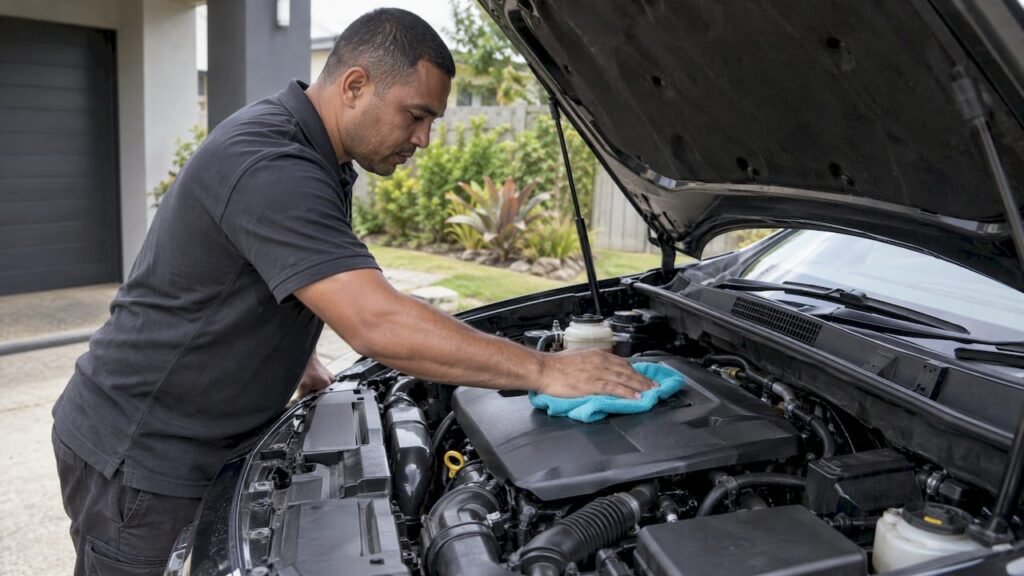
A proper engine bay cleaning service is a low-pressure job done on a cool engine, with the electrics protected, the right degreaser used and the wash water kept out of the stormwater drain. Done at your driveway or workplace, it costs you no travel and no day without the car. On the Sunshine Coast, that is the job our mobile detailing is built around: we come to your home, work or the beach, so the car never has to sit in a workshop queue.
This guide explains what a professional clean covers, where DIY attempts go wrong, what drives the price, how often it makes sense and why the runoff rules matter more than most owners realise.
TL;DR
- A professional engine bay clean removes loose debris, degreases, agitates by brush, rinses gently and dries, always on a cool engine and at low pressure.
- The real risks are water forced into connectors, soaked bonnet insulation and degreaser running into the drain. A trained detailer manages all three.
- A clean bay makes leaks easier to spot and shows a buyer the car has been looked after.
- Price depends on vehicle size, how much oil and grime is built up and whether the clean sits inside a larger detail.
- Mobile service means the wash water is handled on your property, so it is worth choosing someone who plans for runoff.
Table of Contents
- What a professional engine bay clean involves
- Why DIY engine cleaning goes wrong
- Is cleaning an engine bay worth it?
- What affects the price
- How often should you clean it?
- Runoff: the part most people skip
- Choosing a mobile engine bay service
- Our view on engine bays
- Book a mobile detail on the Sunshine Coast
- FAQ
- Sources
What a professional engine bay clean involves
An engine bay is a mix of painted metal, rubber hoses, plastic covers, wiring looms, fuse boxes and an alternator, all in one cramped space. Oil mist, road dust and bitumen settle on everything. The job is not a pressure-washer blast. It is a sequence.
- Cool engine and inspection. A hot engine can flash-dry chemicals and the thermal shock is unkind to components. AutoGuru advises letting the engine cool before you start. A good detailer also notes any active leaks or damaged wiring first.
- Dry removal of loose material. Leaves, twigs and dust come out by hand, brush or air, so they do not turn into sludge once wet. Sunshine Coast bays often collect palm debris and fine beach sand, both of which clog drain channels at the base of the windscreen.
- Protecting sensitive parts. The battery terminals, air intake, alternator and exposed electrical connectors are covered or shielded before any water is used.
- Degreaser and agitation. A degreaser is applied to the soiled areas and left for a short time, then worked with soft brushes. Stubborn baked-on oil needs patience rather than force.
- Gentle rinse. Low pressure only. AutoGuru notes that high pressure can push water into connectors and other components, which is how a tidy-looking bay becomes a misfire or a warning light a week later.
- Drying. Compressed air or microfibre towels remove standing water from crevices, connectors and the top of the engine.
- Dressing. A plastic and rubber dressing restores a deep, even finish to covers and hoses. This is the step that makes a bay look factory fresh rather than just washed.
What gets cleaned
Expect the engine cover, hoses, the underside of the bonnet, the bay’s painted panels, the strut towers, the fluid reservoir caps, and the plastic scuttle area at the base of the windscreen. The bonnet’s sound-absorbing matting is treated carefully: AutoGuru warns that soaking it adds weight and can make it sag and fall apart over time. A detailer wipes it rather than flooding it.
Why DIY engine cleaning goes wrong
Most owners who try it themselves make the same few mistakes.
- Using the pressure washer on its normal setting. It forces water into plugs and sensors.
- Cleaning a warm engine. Degreaser dries on the surface and leaves streaks and spots.
- Spraying everything and walking away. Water pooled around the fuse box or air intake is the usual cause of rough running after a clean.
- Letting runoff go down the driveway. This is the one people overlook, and we cover it below.
A mobile detailer arrives with the brushes, low-pressure equipment, shielding and dressings already matched to the job, so you do not have to learn by trial and error on a car that matters to you.
Is cleaning an engine bay worth it?
Yes, for three practical reasons.
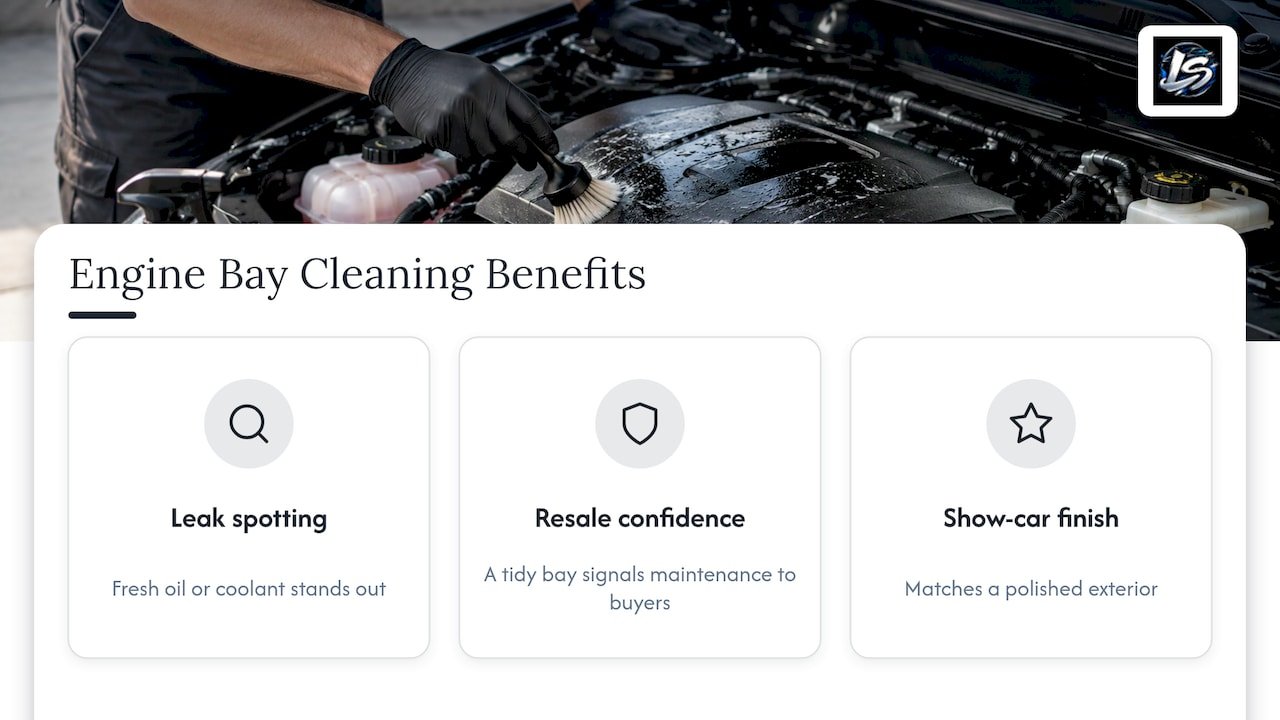
Leaks show up sooner. On a clean bay, fresh oil or coolant is obvious. AutoGuru lists easier leak tracking among the benefits. After a repair, cleaning the old oil residue helps reveal any new leak, removes oil odours and stops grime building up around components.
It helps resale. A tidy bay tells a buyer the car has been maintained. AutoGuru makes the same point about prospective buyers.
It suits enthusiasts and show cars. If you care about the car as a whole, an engine bay that matches a polished exterior finishes the job. Our engine bay detailing guide goes through the finish in more detail, and our piece on the impact of car engine detailing on the Sunshine Coast covers the local angle.
For families with pets, a clean bay also helps in a less obvious way: cats sheltering in warm engine bays and the odour of old oil or rodent mess are easier to deal with when the bay is clean and visible.
What affects the price
There is no single Australian price, because the job varies. The factors that move a quote are:
- Vehicle size. A small hatch has a tight, simple bay. A large SUV or 4WD has more surface, more plastic and more crevices.
- Condition. Light dust is quick. Years of baked-on oil, or a bay recently covered in leak residue, takes much longer.
- Standalone or bundled. An engine clean added to a larger detail is usually more efficient than a separate trip.
- Dressing and protection. A simple wash and dry is not the same as a full degrease, detail and dress.
- Location. Mobile services cover travel in the price, but you save your own time and fuel.
Because quotes depend on the vehicle and its condition, we price by vehicle size and package. Our published detail packages give a sense of the range: the Deluxe Detail is 375 to 575 AUD and the Revival Detail is 575 to 775 AUD, depending on the vehicle. Both are one-off prices. If an engine bay is something you want looked at as part of a booking, mention it when you enquire so it can be quoted with the rest of the work.
How often should you clean it?
There is no fixed interval set by any Australian authority, so it comes down to how the car is used.
- Daily driver on sealed roads: an occasional clean, for example around a major service or once a year, keeps buildup manageable.
- Dusty roads, towing, beach driving or boat-ramp use: salt, sand and mud call for more frequent attention, because salt air and moisture are hard on connectors and metal.
- After a leak repair: clean once the repair is done, so any new leak is visible straight away.
- Before selling or a show: time it just before photos and inspections.
A light wipe-down of covers between professional cleans keeps the bay tidy. Our tips for maintaining your car between details cover the routine for the rest of the vehicle.
Runoff: the part most people skip
Engine degreasing creates dirty wastewater, and Australian regulators treat it seriously.
- The South Australian EPA says engines should be degreased in an approved trade-waste wash bay or with another approved way of storing or treating the wastewater, not where runoff can reach soil or stormwater. It also warns that detergent wash water entering stormwater can contribute to algal blooms and low oxygen for aquatic life.
- SA Water names steam cleaning of engine bays as an example of wastewater that can exceed 100 mg/L of oil and grease, which needs solids settling and oil-water separation before it goes to sewer.
- The NSW EPA states that oil, grease and other pollutants must not enter stormwater drains, and recommends absorbing spills and dry-sweeping where possible.
- Queensland councils apply the same thinking. A Whitsunday Regional Council trade-waste information sheet lists engine degreasing among vehicle-washing activities that need wastewater controls.
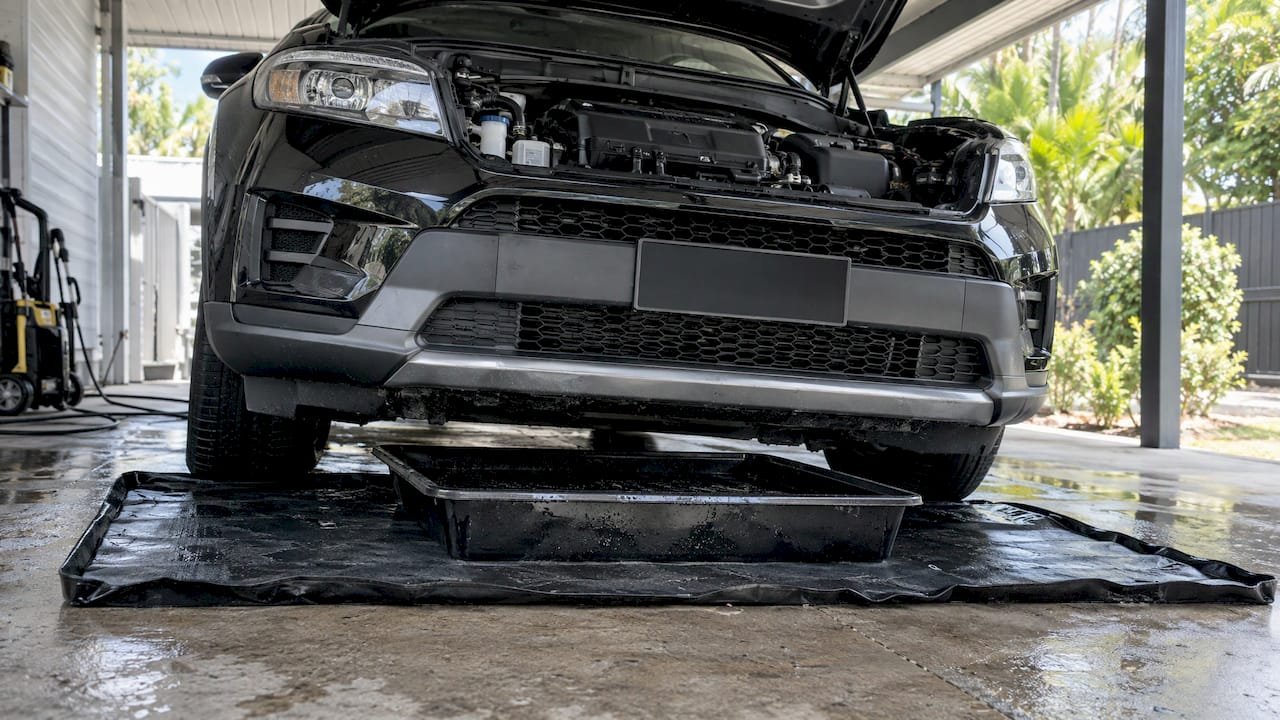
These documents are written for businesses and for other states, so check your own council’s rules for the Sunshine Coast. The practical takeaway for an owner is simple: a driveway engine clean with a hose pointed at the gutter sends degreaser and oil straight to the creek and the beach. For home cleaning, AutoGuru suggests a biodegradable degreaser only when you are not dealing with oil leaks or other fluids, and collecting the runoff in a container for proper disposal.
For environmentally conscious owners, this is the strongest reason to hand the job over. Eco-friendly products are part of how we work, and a professional who plans for the water rather than leaving it to the drain protects the local waterways you probably drive to for the weekend.
Choosing a mobile engine bay service
Whatever provider you pick, ask these questions:
- Is the engine cooled before work starts, and is the clean done at low pressure?
- How are electrical components protected?
- What happens to the wash water and degreaser?
- Is the bonnet insulation wiped rather than soaked?
- Is the finish dressed, or only rinsed?
A service that answers all five clearly has done the job before. Those are also the points we work to when we visit your car.
Our view on engine bays
We treat the engine bay as part of the whole car, not a bolt-on. An owner who has paid for a good exterior finish or a ceramic coating should not lift the bonnet to a bay that looks ten years older than the paint.
The work is slow by design. Cool engine, low pressure, shielded electrics, careful brushing and a proper dry. Speed is where engine cleans go wrong, and an express operator working to a tight schedule is the most likely to rush it.
Being mobile helps. We come to your driveway, workplace or a spot near the beach, so you keep your day and the car is looked after where you are. Eco-friendly products matter to us as much as the finish does, especially around the water we all live next to on the Sunshine Coast.
If you are already planning a detail, a cut and polish or a protection package, the engine bay fits naturally into the same visit.
isaac’s
Book a mobile detail on the Sunshine Coast
If you want the whole car looked after in one visit, start with our Deluxe Detail and Revival Detail packages. For longer-lasting protection, the Ultimate Protection Package is listed at 1500 to 2200 AUD, and our ceramic coating and cut and polish services cover the paint. We come to you, whether that is home, work or the beach, and we back our work with a 100% satisfaction guarantee.
You can also see how a visit runs in our mobile detailing workflow.
FAQ
How much does it cost to clean an engine bay?
It depends on the vehicle size, how much grime has built up and whether the clean is part of a larger detail. Larger vehicles and heavily oiled bays take longer and cost more. Tell your detailer the make, model and condition and ask for a quote based on those.
Is it safe to wash an engine bay with water?
Yes, when it is done on a cool engine at low pressure with electrical parts protected. High pressure can force water into connectors, so a professional avoids it. If your car has a known electrical fault or a damaged wiring loom, see your mechanic before any wet cleaning.
How often should I get my engine bay cleaned?
For most daily drivers, around a major service or once a year is enough to keep buildup in check. Beach, towing, dusty-road and salt-air driving justify more frequent cleans. Cleaning after a leak repair is also sensible, because it shows whether the leak has really stopped.
Does a clean engine bay help when selling a car?
It helps. A clean bay signals good care and makes any leaks easy to see, which is why it is often recommended before a sale. Combine it with an exterior and interior detail for the strongest first impression.
Sources
- How and why you should clean your engine bay, AutoGuru
- How to Clean Car Engine After an Oil Leak, Abbott’s Auto Care
- Stormwater Management for Auto Servicing and Mechanical Repair, South Australia EPA
- Vehicle Washing, SA Water
- Smash repair industry, NSW EPA
- Trade Waste Information Sheet, Whitsunday Regional Council