
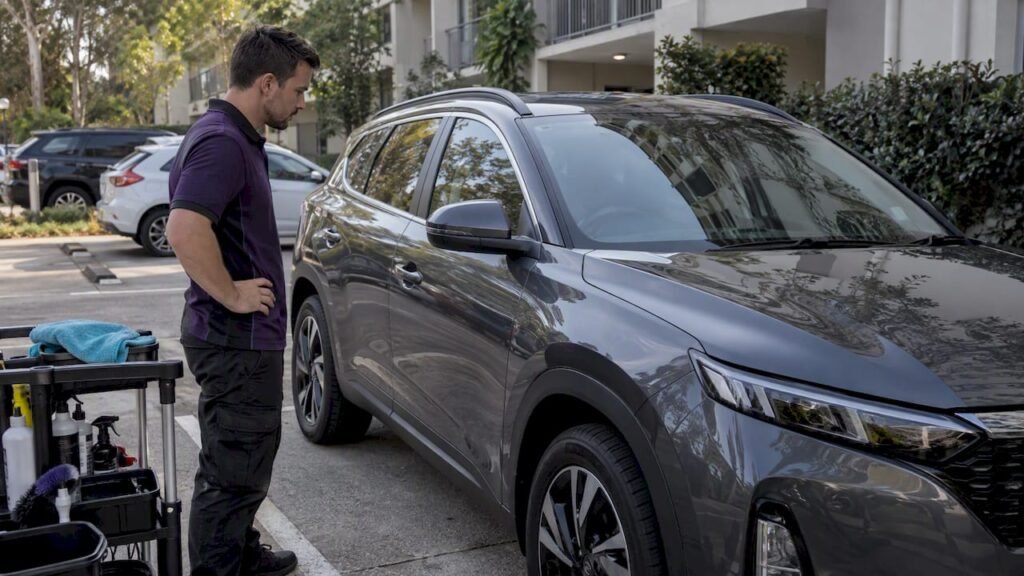
A maintenance detail typically takes a few hours, a full interior and exterior detail takes several hours, and specialist jobs such as paint correction or ceramic coating can take from several hours to multiple days. Vehicle size, condition and the scope of work you choose all shift these windows, and training frameworks like AURVTA001 along with RACQ’s car care guidance help explain why.
TL;DR:
- Full interior and exterior detailing can take from three to six hours, depending on vehicle size, condition, and additional services like odour removal or protection.
- Larger vehicles, heavily soiled cars, or those needing services like paint correction or wheel refurbishment typically require significantly more time.
- Special jobs such as odour removal or pet hair extraction may extend appointments by several hours, especially if multiple stages of cleaning and drying are necessary.
- Proper booking involves honesty about vehicle condition, with preparation and cure times for coatings or protection work often requiring multiple days.
- Regular light cleaning every two weeks helps reduce professional detailing time and costs, keeping maintenance manageable and less time-consuming.
Table of Contents
- Typical time ranges by service scope
- How vehicle size, condition and scope affect duration
- Special-service timing: extraction, odour removal, and protection work
- What a professional quote actually includes
- Maintenance and frequency: what reduces professional time
- Our take on realistic booking windows for mobile detailing
- Matching your timing needs to the right package
- FAQ
- Sources
Typical time ranges by service scope
The length of a detailing appointment comes down almost entirely to what is included, so it helps to think in bands rather than a single number.
- Express or basic detail: usually about an hour to a couple of hours, covering a wash, vacuum, wipe-down of surfaces and quick tyre dressing.
- Standard or full detail: generally several hours, combining interior shampooing, seat and carpet attention, glass cleaning, exterior wash, and a light exterior protectant.
- Paint correction or multi-stage polishing: typically several hours or more, and sometimes booked across multiple sessions because removing swirl marks and oxidation requires multiple passes with different pads and compounds.
- Ceramic coating and protection work: preparation and application might only take a few hours, but cure times mean the vehicle is often booked for at least a full day or returned over several days.
There is no official standard that fixes these durations. Training resources covering vehicle presentation, such as AURVTA001, list the tasks involved in preparing a vehicle (washing, polishing, extraction, stain treatment) without prescribing a set number of hours, because the real driver is the vehicle in front of the detailer, not a fixed formula. A tired hatchback and a mud-caked ute asking for the “same” service can need very different amounts of time.
Coating work in particular tends to surprise owners. The polish and decontamination stage before a coating goes on can take up more of the appointment than the coating itself, and manufacturer-recommended cure windows mean the car may need to sit undisturbed, sometimes overnight, before it is driven in rain or washed again.

How vehicle size, condition and scope affect duration
Two cars booked for the same package rarely take the same time, because size and condition both push the clock in one direction.
- Vehicle size: a mid-size sedan is near average in time, while larger vehicles generally require notably more time due to extra seating rows, cargo space and exterior surface area.
- Condition: a lightly maintained car requires less time, but heavy soiling, dried mud, salt residue or neglect can notably extend the appointment due to extra washing and drying stages.
- Engine bay cleaning: adds a moderate amount of extra time depending on grease and dirt levels.
- Underbody washing: usually adds additional time, especially after beach trips or gravel roads.
- Paint protection film removal or wheel refurbishment: these specialist services commonly require several extra hours because of the careful, patient work involved.
Booking the right package starts with being honest about your vehicle’s condition rather than assuming every detail fits neatly into a brochure time slot.
Special-service timing: extraction, odour removal, and protection work
Some of the longest appointments are not about the car’s size at all. They are about what has happened inside it.
- Carpet and upholstery extraction: hot-water or steam extraction usually needs multiple passes over heavily soiled areas, followed by drying time, which can add 1 to 3 hours depending on humidity and airflow on the day.
- Odour removal and disinfection: RACQ’s hygiene guidance notes that disinfectants do not work properly on dirty surfaces, so cleaning has to happen first. This turns a simple deodorising request into a staged job: clean, extract, dry, then treat, which can stretch a quick smell complaint into most of a day for strong cases like smoke odour.
- Pet hair and embedded debris: rubber squeegees, specialised brushes or vacuum attachments are often needed seat by seat, adding roughly 15 to 30 minutes per heavily affected seat or cargo area.
- Protection workflows: decontamination washes, clay treatment, polishing and coating application each take their own block of time, and the coating itself then needs an uninterrupted cure window, sometimes extending the overall job across multiple days once you count masking and inspection.
Pro Tip: If your car has a persistent odour, mention it when you book rather than on the day. It changes the time and products needed, and surprises rarely work in your favour when a cure window is already locked in.
For UK-based readers dealing with lingering smells, this guide to diagnosing car odour sources walks through why identifying the cause first prevents wasted treatment cycles, a principle that holds regardless of where you are.

What a professional quote actually includes
The visible cleaning is only part of what you are booking in for, and that is by design, not padding.
- Pre-job planning: reviewing safety data sheets (SDS) for each product, selecting the right chemical for the surface, and checking equipment, all steps built into vehicle cleaning training such as AURVTA005.
- Protective equipment and work-area setup: PPE checks and setting up a safe, contained work area take a few minutes but are non-negotiable parts of a compliant job.
- Waste management and environmental controls: runoff and product disposal need to be handled properly, particularly for mobile jobs done on driveways or near stormwater drains.
- Final inspection: a walk-around check before handover, catching anything that needs a second pass.
A detailed mobile detailing workflow shows how these steps fit around the cleaning itself. To get an accurate time estimate when you book, it helps to have on hand: your vehicle’s size and body type, any known stains or odours, whether pets or smokers regularly use the car, and the level of paint protection you are after.
Maintenance and frequency: what reduces professional time
Small habits between professional visits make a real difference to how long the next appointment takes.
- RACQ recommends light cleaning roughly every fortnight, which helps prevent dirt build-up that could increase professional cleaning time.
- A practical schedule includes light upkeep biweekly, a maintenance detail several times a year, and a full detail or protection check about once per year.
- Small tasks like shaking out mats, vacuuming loose debris and rinsing the exterior between professional details help reduce the time needed later, potentially lowering cost and appointment length.
Our take on realistic booking windows for mobile detailing
Booking a Deluxe or Revival Detail with us generally slots into typical time ranges, though mobile work adds its own variables. Weather, access to water or power at your location, and the condition of the vehicle on the day all shift timing, which is why we confirm scope and give a realistic window before we arrive rather than a single fixed number.
— isaac’s
Matching your timing needs to the right package
Once you know roughly how much time your car needs, choosing the right package is mostly about matching scope to condition. For routine upkeep, our Deluxe Detail fits the maintenance band. If your car has not been properly cleaned in a while, the Revival Detail covers the deeper interior and exterior work that neglected vehicles need. For paint protection or coatings, our Ultimate Protection Package is built around the decontamination, polish and cure stages that longer jobs require.
To get an accurate time estimate, let us know your vehicle’s size, any known stains or odours, and whether you want protection added on top of a standard clean.
- Light upkeep or a tired interior: start with the Deluxe or Revival Detail.
- Coatings, wheels or leather protection: check the Ultimate Protection Package.
- Underbody grime or fabric protection on its own: see our mobile underbody wash and fabric guard options.
Reach out with your vehicle details and preferred location, and we will confirm a realistic time window before locking in your booking.
FAQ
How long should it take to fully detail a car?
A full interior and exterior detail typically takes 3 to 6 hours, while paint correction or coating work can extend this to half a day or more. The exact time depends on vehicle size, current condition, and whether extraction, odour treatment or protection products are included.
How long does car detailing last?
The results of a standard detail generally hold up well for 3 to 6 months with regular upkeep, while ceramic coatings are designed to protect paint for longer periods before reapplication. RACQ’s maintenance guidance suggests that regular light cleaning between professional visits extends how long a detail looks fresh.
What is the best time to detail a car?
There is no single best time of day, but working in shade or mild temperatures helps products perform as intended and gives polishes and coatings a more even cure. Avoiding direct sun during application is a common practical step, since heat can cause products to dry too fast before they are properly worked in.
How often do cars need to be detailed?
A reasonable schedule is light owner upkeep every fortnight, a maintenance detail every 3 to 6 months, and a full detail or protection check once a year. RACQ recommends around an hour of light cleaning every two weeks as an effective way to reduce how often heavier professional work is needed.
What does a professional detailing quote typically include?
A quote covers more than visible cleaning: it accounts for planning, product selection, safety checks, and a final inspection, as reflected in vehicle cleaning training standards like AURVTA005. Jobs involving heavy soiling, pet hair or odour treatment typically take longer because cleaning has to happen thoroughly before any disinfecting or deodorising step can work properly.