
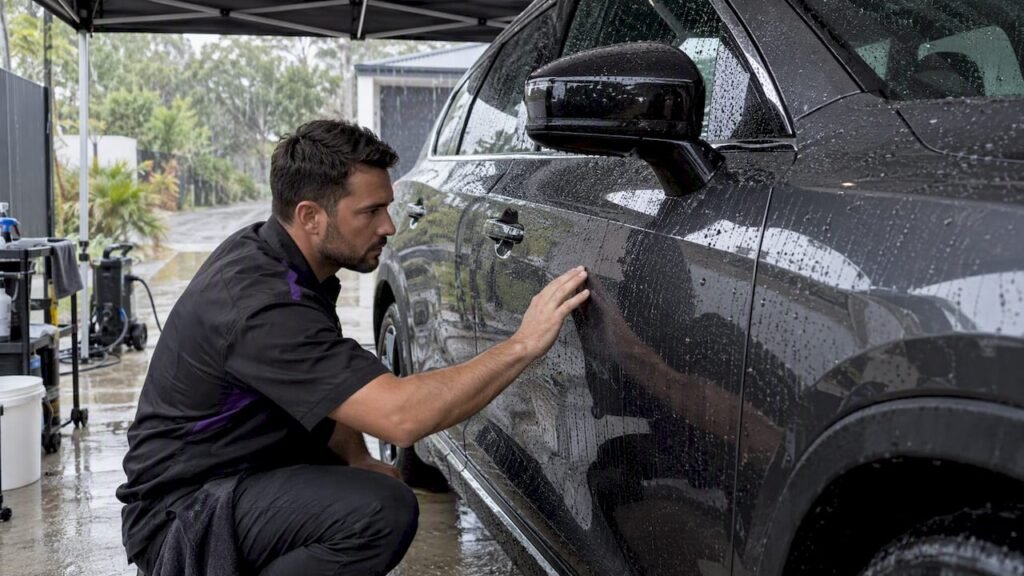
Light rain rarely ruins a fresh ceramic coating, but a coating that hasn’t cured yet is still vulnerable to detergents, acidic residue and rough handling. Your one job in the first 7 to 14 days is simple: skip the car wash, dry the surface gently if you can get to it, and leave harsh chemicals alone. We see this question constantly on mobile jobs across the Sunshine Coast, and the fix is almost always this easy.
TL;DR:
- Rain during the first 48 hours can cause staining or etching if it contains acids or pollutants, especially before the coating is fully cured.
- Full cure, which provides maximum chemical resistance and durability, generally takes between 7 and 14 days, depending on weather conditions.
- Light rain after 3 days typically causes no damage but still requires avoiding harsh chemicals, pressure washing, or polishing until the coating is fully cured.
- Using gentle drying methods like microfibre towels and blowers during cure helps prevent high spots or patchy areas caused by water spots.
- Planning application during stable weather and covering the vehicle during the first two weeks minimizes rain-related risks and ensures proper curing.
Table of Contents
- What rain does to a newly applied ceramic coating
- Cure stages and realistic timing owners can rely on
- What to do if it rains during the cure period
- Aftercare and the first safe wash: what to avoid
- Preventing rain damage during the cure window
- How we handle rain during the cure period on mobile jobs
- When a mark is cosmetic and when it needs a professional
- Getting a post-rain inspection or corrective care
- FAQ
- Sources
What rain does to a newly applied ceramic coating
A ceramic coating cures through a chemical process, not just drying. In the first hours it’s “touch dry”, meaning you can run a finger across it without smearing the product, but the cross-linking that gives it hardness and chemical resistance is still happening underneath. Water beading only becomes reliable once that hydrophobic layer has set enough to repel liquid rather than absorb it.
Plain rain on a coating that’s reached this early beading stage usually causes no harm. The risk comes from what’s in the rain or what you do about it:
- Acidic or heavily polluted rain can leave residues that etch or stain the surface before the coating has hardened enough to resist them.
- Storm runoff carrying sand or grit can abrade the film mechanically while it’s still soft.
- Pressure washing or scrubbing during cure forces water and contaminants into a layer that hasn’t finished sealing.
- Alkaline or phosphoric detergents can partially break down some coatings, cutting their hydrophobic performance well before you’d notice it visually.
Lab and field research on protective particulates links acid deposition and abrasive runoff to accelerated damage specifically when the coating underneath hasn’t fully cured, which is exactly why timing matters more than the rain itself.
Cure stages and realistic timing owners can rely on
Manufacturer guidance gives a reasonably consistent picture, even though exact numbers vary between products. A typical progression looks like this:
- Touch dry: a few hours after application, safe to avoid touching but not yet water-ready.
- Light water tolerance: roughly 12 to 48 hours for many coatings, though a direct downpour is still best avoided.
- Full chemical and mechanical cure: commonly 7 days up to 2 weeks, according to the Artdeshine NGC aftercare guide, which recommends holding off on detergents and heavy pressure for the full window.
Full cure for many professional-grade coatings falls between 7 and 14 days, per the Artdeshine technical guide, though products do vary and some need closer to two weeks in cooler or more humid conditions. Warmer, drier weather speeds up the cross-linking; cold or damp conditions slow it down, which is why the same product can cure faster in one driveway than another. “Full cure” in practice means the coating has reached its intended hardness and resistance to chemicals, not just that it looks glossy.
What to do if it rains during the cure period
How you respond depends entirely on when the rain lands relative to application. Treat these as three separate situations rather than one blanket rule.
- Rain within the first few hours: avoid touching the panel, blot any pooled water with a soft microfibre towel rather than wiping it across the surface, and move the car under cover if that’s an option.
- Rain within 12 to 48 hours: dry the surface gently with a microfibre towel or a blower, skip any wash with detergent, and hold off on polishing or correction work until the coating has had more time.
- Rain after 3 to 7 days: most coatings tolerate water fine by this stage, but still avoid strong chemicals or pressure washing until the full cure window closes. Check for high spots, patchy areas or leftover residue while you’re at it.
- Call a professional if you spot staining, raised or uneven patches, or anything that looks like the coating hasn’t bonded properly. Have the application date, the weather at the time, and photos of the affected area ready when you do.
Pro Tip: A soft microfibre and a cordless blower in the boot cost less than one detailing session and cover almost every rain scenario in the first fortnight.
Aftercare and the first safe wash: what to avoid

Wait until the coating has reached full cure, typically the 7 to 14 day window noted in the Artdeshine aftercare guide, before the first proper wash. Alkaline cleaners and high-phosphate detergents are the main thing to avoid, since they can strip hydrophobic performance from some coatings well before any visible damage shows.
When you do wash:
- Use the two-bucket method to keep grit out of your wash mitt.
- Choose a pH-neutral shampoo rather than an all-purpose or alkaline cleaner.
- Rinse at low pressure instead of blasting the panel from close range.
- Dry with a plush microfibre or a blower rather than letting it air-dry with mineral deposits.
A SiO2 quick-detail spray can top up slickness and beading between washes once the coating has cured, but abrasive polishes have no place on a coating that’s still settling in. Our guide on the first wash after ceramic coating walks through the full process step by step.
Preventing rain damage during the cure window
A bit of planning before application goes a long way. Booking a coating job around a stretch of stable weather is the easiest win, and parking under cover or using a car cover for the first week or two removes most of the risk entirely.
Worth keeping on hand during that window:
- A soft drying towel and a cordless blower for quick, contact-light drying.
- A SiO2 quick-detail spray for light refreshers once the coating has cured enough to handle it.
- Temporary shelter, even a carport or a friend’s garage, if rain is forecast in the first few days.
Pro Tip: Check the forecast before you book your coating appointment; avoiding rain in the first 48 hours removes almost all of the risk. Once the coating is fully cured, a simple routine of gentle washes and a top-up spray every 3 to 6 months keeps beading strong for the long run. Our partner maintenance guide covers drying techniques that suit most coated vehicles.
How we handle rain during the cure period on mobile jobs
Mobile application means we work around real weather, not a climate-controlled bay, so scheduling around forecasts is part of every job. When rain catches a car during cure, we run a straightforward inspection: check for water spotting, high spots, and any patchiness before deciding whether it’s cosmetic or needs attention.

Our service includes guidance on the first wash and what to watch for in the days after application, so customers aren’t left guessing once we’ve driven off. If something looks off, we ask for the same details any technician would want: when the coating went on, what the weather did afterwards, and a few clear photos of the affected panel. That’s usually enough to tell whether it’s a quick fix or worth a closer look in person.
When a mark is cosmetic and when it needs a professional
Light water spotting that wipes away with a damp microfibre is cosmetic and nothing to worry about. High spots, cloudy patches or a surface that won’t bead evenly are signs of a curing problem worth having checked. Run a simple visual and touch check in good light, and if anything seems uneven, it’s worth a professional opinion before it sets further.
— isaac’s
Getting a post-rain inspection or corrective care
If rain has caught your coating mid-cure and something doesn’t look right, a mobile inspection is the fastest way to find out whether it’s cosmetic or needs correction. We can check the affected panels and advise on the first wash, a corrective polish, or a fresh application if the coating hasn’t bonded properly.
Before we arrive, it helps to have:
- Photos of the affected area taken as soon as you noticed it.
- The application date and roughly how long the coating had cured before the rain.
- Any detail on what the weather did (light drizzle versus a downpour).
Book a visit through our ceramic coating page or check the Ultimate Protection Package if you’d rather start fresh with full follow-up care included.
FAQ
Does rain damage ceramic coating?
Light rain on a coating that has reached its beading stage generally causes no damage. The real risk is acidic or contaminated rain hitting an uncured coating, or detergents and pressure washing used too soon, both of which the Artdeshine aftercare guide advises against during the cure window.
How long does ceramic coating need to cure before rain?
Most coatings are touch dry within hours but need 12 to 48 hours before light water exposure is low risk, with full cure commonly taking 7 days up to 2 weeks according to the Artdeshine technical guide. Cooler or more humid conditions can push that timeline closer to the two-week mark.
What can ruin ceramic coating?
Alkaline or phosphoric detergents, pressure washing during cure, and abrasive polishing before the coating has fully hardened are the main culprits. Acidic rain or sand-laden runoff hitting an uncured surface can also cause staining or etching, as outlined in nanocomposite coating research.
Can ceramic coating get wet after applying it?
Yes, once it has reached the touch-dry and light water tolerance stage, which is typically within the first 12 to 48 hours for many products. Avoid detergents, scrubbing or pressure washing until full cure, generally 7 to 14 days, is complete.
Sources
- Artdeshine NGC technical aftercare and application guide
- Nanoscale composite protective preparation for cars paint and varnish coatings