
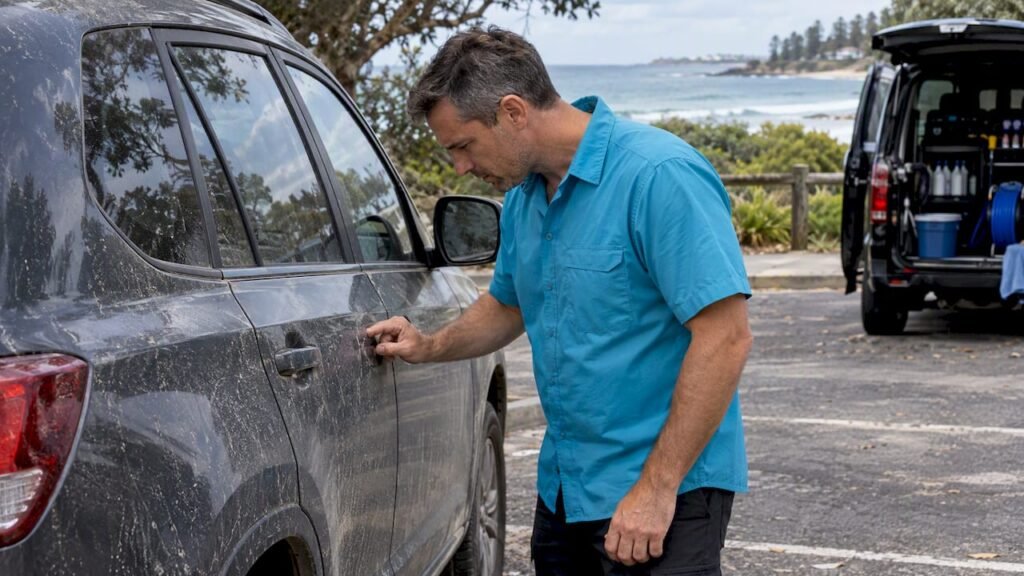
Most cars need a full professional detail every 3 to 6 months, with a fortnightly wash and a monthly mini-detail in between to keep dirt and grime from building up. High-use or coastal vehicles often need a full detail 2 to 3 times a year, while rarely driven garage-kept cars can stretch that interval. Protection like wax, ceramic coating or paint protection film changes this timeline, and anything like bird droppings or tar needs attention straight away, not at the next scheduled wash.
TL;DR:
- Regular washing should be done every two weeks to prevent dirt buildup that can lead to costly paint correction work.
- Full professional details are recommended every 3 to 6 months, with show cars and high-exposure vehicles needing more frequent visits.
- Immediate removal of bird droppings or tar is essential to prevent paint damage, regardless of scheduled cleaning intervals.
- Protective coatings like ceramic or PPF significantly extend the time between full details but still require routine washing and occasional inspections.
- DIY cleaning is suitable for basic maintenance, but paint correction and coating applications should be handled by trained professionals to avoid damage.
Table of Contents
- A practical car cleaning routine you can actually stick to
- What changes how often you should detail your car
- Detailing schedules by vehicle type and use
- How wax, ceramic coatings and PPF change your schedule
- What to do yourself and what to leave to a professional
- When to schedule a detail before selling your car
- How Isaac’s Pro Detailing schedules and prioritises work
- The schedule matters less than the trigger
- Keep your car looking its best between full details
- Sources
- FAQ
A practical car cleaning routine you can actually stick to
A maintenance wash is the quick job: rinse, foam, rinse again, wheels wiped down, interior vacuumed if needed. RACQ recommends washing a normally used car at least once a fortnight to stop dust and road grime from etching into paint over time. A mini-detail includes interior wipe-down, tyre dressing, glass cleaning and a spray sealant top-up, typically done approximately monthly for a regularly used car.
A full professional detail is a different scale of job entirely. It typically includes paint decontamination, cut and polish where needed, full interior extraction, leather conditioning and reapplication of any protective coating. For most daily drivers, that sits at 3 to 6 months. Show cars and classics often follow a shorter interval cycle as their owners seek a higher paint standard and early contamination control. A car prepared for sale should ideally have a full detail scheduled shortly before listing, rather than months in advance.

Reapplication windows vary by product. Isaac’s Pro Detailing notes that wax typically needs topping up every 2 to 3 months, ceramic coatings commonly last 1 to 3 years depending on the product and how well it is maintained, and PPF is usually reassessed on a 5 to 7 year cycle.
Regular washing every few weeks can help prevent costly correction work later, which can be hundreds to a thousand dollars or more. Skipping it lets contaminants sit on paint long enough to bond, which turns a wash into a cut and polish.
- Maintenance wash: fortnightly.
- Mini-detail: every 4 to 6 weeks for daily drivers.
- Full professional detail: every 3 to 6 months, or 2 to 3 times a year for high-exposure vehicles.
- Bird droppings and tar: remove immediately, never wait for the next scheduled clean.
What changes how often you should detail your car
Driving pattern matters more than most owners think. Stop-start city driving, long highway commutes and coastal salt exposure all speed up how fast contaminants build on paint and in the engine bay. Where you park matters too: a car left under trees or exposed to bird activity needs washing more often than one kept in a garage.

Interior wear tells its own story. Kids, pets and smokers all shorten the gap between interior refreshes, since fabric and carpet hold onto odours and stains far longer than exterior paint holds onto dust. Matte finishes and soft-touch interior plastics also need specific, gentler products, which can mean more frequent but lighter attention rather than heavy scrubbing.
Some events cannot wait for a schedule. WorkSafe Queensland’s guidance on bird and bat droppings recommends wetting dried droppings before removal rather than dry-scrubbing, which can disperse contaminated dust and damage clearcoat at the same time.
- City driving and coastal exposure shorten the interval between washes.
- Parking under trees or in direct sun increases contamination and fading.
- Pets, kids and smokers push up interior detailing frequency.
- Bird droppings, tar and tree sap need immediate spot treatment, not a scheduled wait.
Pro Tip: Keep a small detailing spray and microfibre cloth in the boot so contamination gets lifted within minutes, not weeks.
Detailing schedules by vehicle type and use
- Daily driver: fortnightly wash, monthly mini-detail, full detail every 3 to 4 months as a baseline.
- Garage-kept or weekend car: wash and spot clean as needed, with a full detail every 4 to 6 months or before a big event.
- Show or classic car: 1 to 2 month cycles, careful product selection for older paint, and professional handling for any correction work.
- Commercial or high-kilometre vehicle: more frequent exterior washing to manage grime build-up, with interior refreshes timed to passenger turnover.
The common thread is condition, not the calendar. A daily driver parked under a bird-heavy tree needs more attention than one garaged every night, even if both cover similar kilometres.
How wax, ceramic coatings and PPF change your schedule
Protection does not remove the need for regular washing, but it does change what each wash and detail involves. Wax is the lightest option and the one that wears fastest: reapplying every 2 to 3 months keeps it working, and harsh brushes or strong detergents strip it sooner than that.
Ceramic coatings sit on top of paint and resist contamination better than wax, but they still need periodic maintenance washes and visual inspection; you can find effective ways to stop wiper chatter after windshield ceramic coating in Australian fixes. Ceramic coatings commonly last 1 to 3 years depending on the product used and how consistently the car is maintained, which is a wide range that comes down almost entirely to care in between professional visits.
PPF offers the longest protection window and is commonly evaluated on a 5 to 7 year basis, but film still needs regular washing and periodic inspection for lifting edges or embedded grit.
- Wax: reapply every 2 to 3 months.
- Ceramic coating: inspect regularly, expect a 1 to 3 year working life.
- PPF: wash routinely, review condition every 5 to 7 years.
- Any coating showing water sitting flat instead of beading is a sign it is due for inspection.
What to do yourself and what to leave to a professional
Regular washing, vacuuming, spot-cleaning spills and applying tyre dressing correctly are all fine to handle yourself between professional visits. Aggressive polishing with the wrong pad or compound is where DIY effort turns into a problem: it is a common way to introduce swirl marks or damage clearcoat on a car that did not need correction in the first place.
Paint correction, ceramic coating application, PPF work, severe odour removal and iron fallout treatment are professional-only jobs. AURVTN008 sets out the performance criteria technicians follow for cleaning vehicle bodies, including selecting compatible products and managing chemical waste correctly, which is a different standard to a driveway wash with dish soap.
- Wash, vacuum and spot-clean yourself between details.
- Leave polishing, coatings and PPF to trained technicians.
- Check where your wash water runs. Council guidance in some regions restricts runoff into stormwater drains.
Pro Tip: If you are washing at home, direct runoff onto grass or gravel rather than a gutter that drains straight to stormwater.
When to schedule a detail before selling your car
Book a full interior and exterior detail within a few days to a week of listing, not months in advance. RACQ’s pre-sale guidance points to carpets, seats, mats, glass and odour removal as the areas buyers notice first, alongside visible paint correction where needed.
- Prioritise odour elimination and deep carpet cleaning.
- Polish glass and clean wheels and tyres last, so they are spotless at inspection.
- A clean, well-presented car tends to draw stronger offers and fewer price objections during negotiation.
How Isaac’s Pro Detailing schedules and prioritises work
On the Sunshine Coast, scheduling comes down to reading the car rather than following a fixed calendar. A daily driver parked near the beach gets a shorter interval than a garaged weekend car, and a ceramic-coated vehicle gets a different maintenance wash than a bare-paint one. Between full details, the most requested add-ons are iron removal for brake dust, ozone deodorisation for lingering odours, and fabric or leather protection after a fresh interior clean.
Mobile work means managing wash water responsibly at every job site and choosing eco-friendly products suited to the vehicle’s finish, consistent with the environmental and product-compatibility requirements set out in AURVTP2008. That standard is also the reason major paint correction gets scheduled as its own job rather than rushed into a routine visit.
The schedule matters less than the trigger
The biggest mistake owners make with detailing is treating it like a service reminder sticker: a fixed number of months, regardless of what the car has actually been through. A calendar interval is a reasonable default, but it is a poor substitute for looking at your paint and interior and asking whether they need attention now.
Conventional advice tends to oversell ceramic coatings as a way to detail less often. In practice, a coated car still needs the same fortnightly wash as an uncoated one. What changes is how that wash behaves and how long the paint stays looking sharp underneath it, not whether washing is optional.
If you take one thing from all this, let it be the fortnightly wash. It is the cheapest, simplest habit that prevents almost every expensive correction job down the line, and it is the one step owners skip most often when life gets busy.
— isaac’s
Keep your car looking its best between full details
A fortnightly wash and a monthly mini-detail go a long way, but they cannot replace the depth of a full professional job, and that is where a mobile service earns its place. Mobile detailing services come to your home, workplace or other preferred locations, reducing the time between “due for a detail” and “actually booked in”.
The Deluxe Detail and Revival Detail packages cover the full 3 to 6 month interval most daily drivers need, while the Ultimate Protection Package is built for owners who want to stretch that interval with proper ceramic protection on paint, wheels and leather. If contamination has already taken hold, a cut and polish brings paint back before coating goes on.
Book a service at a time and place that suits you, and let the schedule adjust to your car’s condition rather than the other way round.
Sources
FAQ
How frequently should I detail my car?
Most daily drivers need a full professional detail every 3 to 6 months, with a fortnightly maintenance wash in between. High-use, coastal or heavily exposed vehicles often need a full detail 2 to 3 times a year, while garage-kept cars can stretch further between visits.
How long should a detail last?
A full detail’s results typically hold for 3 to 6 months if you keep up fortnightly washing and deal with contamination like bird droppings and tar straight away. Wax-based protection fades fastest, needing reapplication every 2 to 3 months, while ceramic coatings extend that window closer to 1 to 3 years depending on the product and maintenance.
How often do people get their car detailed?
There is no single fixed rate, since frequency depends on how the car is used, parked and protected rather than a set number of visits per year. As a rule of thumb, daily drivers tend to book a full detail every 3 to 6 months, with show cars and pre-sale vehicles on shorter cycles.
How long should it take to fully detail a car?
A full detail covering interior extraction, exterior decontamination, cut and polish where needed, and protection reapplication is a multi-hour job rather than a quick wash. The exact time depends on the vehicle’s size, condition and which services are included, such as ceramic coating or leather treatment.