
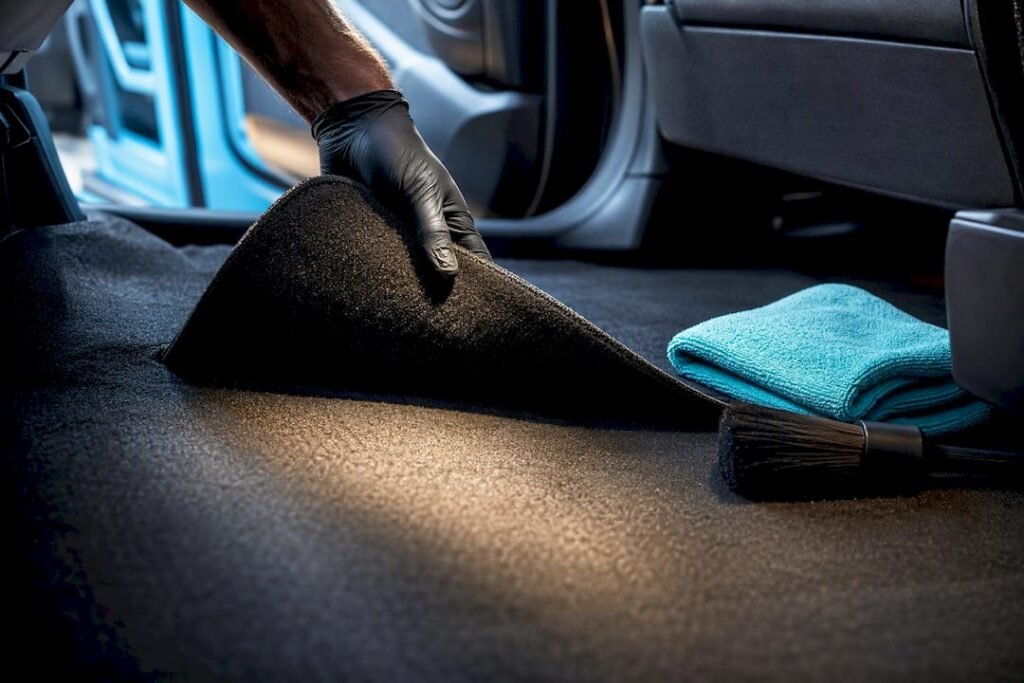
Yes, most fishy smells can be removed if you locate the source and follow a targeted cleaning sequence. The odour usually comes from spilled food, a leak, pest activity or a blocked cabin filter, and each cause has a different fix. Start by ventilating the cabin, removing anything obviously contaminated, and setting out an absorber such as activated charcoal or baking soda while you plan the deeper clean.
TL;DR:
- Detecting the source of the smell is crucial, with leftover food, pests, or a contaminated cabin filter being the most common causes.
- Ventilating the cabin and removing visible contamination should be done immediately, using activated charcoal or baking soda as odour absorbers.
- If the smell persists after cleaning, contamination may be inside panels or foam, requiring professional extraction or ozone treatment.
- Strong acid, burning, or electrical smells indicate urgent mechanical issues that must be checked immediately, not just cleaned.
- Mobile professional odour removal services can provide deep cleaning packages for persistent smells, starting from $375 up to $2,200.
Table of Contents
- The 30 to 60 minute triage to reduce odour now
- What’s causing the fishy smell: working out the source
- Cleaning carpets, upholstery, vents and hard surfaces step by step
- When the smell points to a safety or mechanical issue
- How a pro detailer approaches persistent fish odours
- Getting a mobile odour removal booked
- Where to check if the smell might be something else
- Sources
- FAQ
The 30 to 60 minute triage to reduce odour now
Before you touch a bottle of cleaner, do the basics. This buys time and stops the smell soaking further into fabric.
- Open every door and window and let the cabin air out for 15 to 30 minutes.
- Remove anything visible: leftover fish, wrappers, soggy bags or containers, and bag it outside the car.
- Check under the seats, in the boot, along seat creases and around the centre console, then lift the mats to look underneath.
- Place activated charcoal or baking soda in breathable containers in the cabin and boot.
Skip the air freshener for now. Masking sprays cover the smell temporarily but do nothing to remove whatever is causing it, and they can make it harder to tell later if the treatment has actually worked.
What’s causing the fishy smell: working out the source
Different causes leave different clues, and picking the right one saves you cleaning the wrong part of the car.
- Leftover fish or food: usually a localised, acidic or organic smell concentrated near the mats or a section of seat upholstery.
- A dead animal: an intense, concentrated smell that’s often strongest around vents, under seats or behind trim panels; check for droppings or nesting material nearby.
- Pests and nesting: a musky odour, sometimes with visible droppings. RACV guidance on pests notes that rodents can leave strong odours, droppings and nesting material, and can also chew wiring if left unchecked.
- HVAC or cabin filter growth: a musty, damp smell that gets stronger when the fan runs. RACV notes that a dirty cabin filter reduces airflow and causes unpleasant odours, and replacing it often solves the problem outright.
- Fluid, battery or electrical faults: a rotten-egg, acidic or chemical smell that isn’t fishy at all but gets mistaken for it. This category is the one to treat as urgent.
A fishy or rotten-egg smell isn’t always food related. Some vehicle recalls list cabin odour as a symptom of battery or air-conditioning component defects, where damaged wiring or a vent fault lets gas or fumes into the cabin. If the smell is unusual and paired with warning lights, hissing or heat near the dash, treat it as a mechanical issue first.
Cleaning carpets, upholstery, vents and hard surfaces step by step
Once you’ve worked out roughly where the smell is coming from, this sequence handles the majority of cases.
- Clear the source. Remove all rubbish and contaminated packaging, and set aside or discard anything that’s been soaked through, since saturated foam or padding rarely comes fully clean.
- Vacuum thoroughly. Get into crevices, under the seats and into the boot, then pull the mats out and vacuum them separately on both sides.
- Treat stains and spills. Use a pH-safe enzyme cleaner on affected upholstery or carpet and extract with hot water where you have access to a machine. Repeat on stubborn patches rather than soaking the area once and hoping.
- Clean hard surfaces. Wipe non-porous trims and plastics with diluted white vinegar or a purpose-made interior cleaner. Never mix cleaning chemicals together, particularly anything containing bleach with anything containing ammonia.
- Flush and sanitise the ventilation system. Replace the cabin filter, run the fan on fresh-air intake rather than recirculate, and use an A/C-safe antibacterial spray if the musty smell is coming from the vents specifically.
- Set out odour absorbers. Activated charcoal or baking soda left in the cabin for 24 to 72 hours will pull out lingering odour from a surface-level spill; commercial absorbers are worth trying if the smell is more stubborn.
- Escalate if it persists. If the smell is still there after a full clean, the contamination has probably reached the foam or panel cavities, and that needs professional extraction, ozone treatment or a panel inspection.
Pro Tip: Do the vent sanitising step even if the smell seems to be coming from the carpet. Odour molecules recirculate through the HVAC system, so skipping the vents often means the smell returns within a day.
For a longer walkthrough of extraction and stain-specific treatment, our practical odour-removal guide and step-by-step interior cleaning guide cover the extraction process in more detail, and a UK detailing resource on diagnosing car odour at the source runs through a similar diagnostic order if you want a second checklist to work from.

When the smell points to a safety or mechanical issue
Not every fishy or rotten-egg smell is a cleaning problem. Some are a warning.
- Stop driving and get it checked immediately if you notice a strong acid or burning smell, hissing sounds, or heat near the seats or dashboard.
- Check for a recall. Some manufacturer notices list cabin odour or gas ingress as a symptom of a battery or A/C fault, so it’s worth searching the vehicle recalls database if the smell is unusual or shows up alongside electrical faults.
- If the smell survives a full clean, contamination may be sitting inside foam or behind panels, which usually means a professional inspection rather than another round of vacuuming.
How a pro detailer approaches persistent fish odours
A professional starts with a methodical inspection rather than guessing, working out exactly where the contamination sits before opening any bottle. From there, the job usually follows four stages: locate the source, extract the affected fabric, sanitise the vents, then monitor over the following days to confirm the smell hasn’t crept back. Some jobs need ozone or thermal sanitisation to finish the job properly. Surface spills tend to respond quickly to this process, but embedded contamination or a dead animal usually takes longer and the right tools to fully clear.
— isaac’s
Getting a mobile odour removal booked
If the smell has soaked past what a vacuum and a can of baking soda can fix, a mobile detail solves it without you having to drop the car anywhere.
A professional mobile detailer comes to your home, workplace or wherever the car is parked and works through the same extraction and vent-sanitising process covered above, but with commercial-grade gear.
- Interior extraction and deep-clean packages through the Deluxe Detail and Revival Detail range, priced from $375 to $775 depending on scope.
- Fabric protection and cabin refresh add-ons via the specialised services page, including Fabric Guard at $25 per seat.
- Full protection and odour-elimination coverage under the Ultimate Protection Package, from $1,500 to $2,200.
Because the service is fully mobile, there’s no drop-off and no waiting around a workshop. Get a quote for your vehicle through the booking page and we’ll work out which package matches how deep the smell has gone.
Where to check if the smell might be something else
- RACV’s pest guidance for droppings, nesting material and cabin air quality.
- The vehicle recalls database if the smell matches a battery or A/C safety symptom.
- Isaac’s odour-removal techniques list for further extraction and professional options.
Sources
- Guide to pest control for your car | RACV
- How to keep your car cool in summer and stay safe | RACV
- REC-006466 – FORD E-TRANSIT 2021 – 2025 | Vehicle Recalls
FAQ
Why does my car randomly smell like fish?
A sudden fishy smell is usually a spilled or forgotten food item, but it can also be a dead animal, pest nesting, or a dirty cabin filter growing bacteria. In rarer cases it’s a chemical smell from a battery or air-conditioning fault that’s being mistaken for a fishy odour, which is worth ruling out if the smell is unusual or paired with warning lights.
How do I get fish smell out of my car?
Remove the source, vacuum thoroughly, then treat affected fabric with a pH-safe enzyme cleaner and hot water extraction. Follow up with vent sanitising and a cabin filter change, then leave activated charcoal or baking soda in the cabin for 24 to 72 hours to pull out anything left over.
What neutralises fishy smell?
Activated charcoal and baking soda are the most commonly used absorbers, drawing odour out of the air and fabric over a day or two. For odour trapped in the ventilation system, an A/C-safe antibacterial spray combined with a cabin filter replacement, as RACV recommends, usually clears the musty side of the smell.
What vehicle fluid smells like fish?
No common automotive fluid smells distinctly fishy, so a fishy odour is more likely food, pests or a filter issue than a fluid leak. A rotten-egg or acidic smell is different again and can point to a battery or electrical fault, which is worth checking against the vehicle recalls database rather than treating as a cleaning job.