
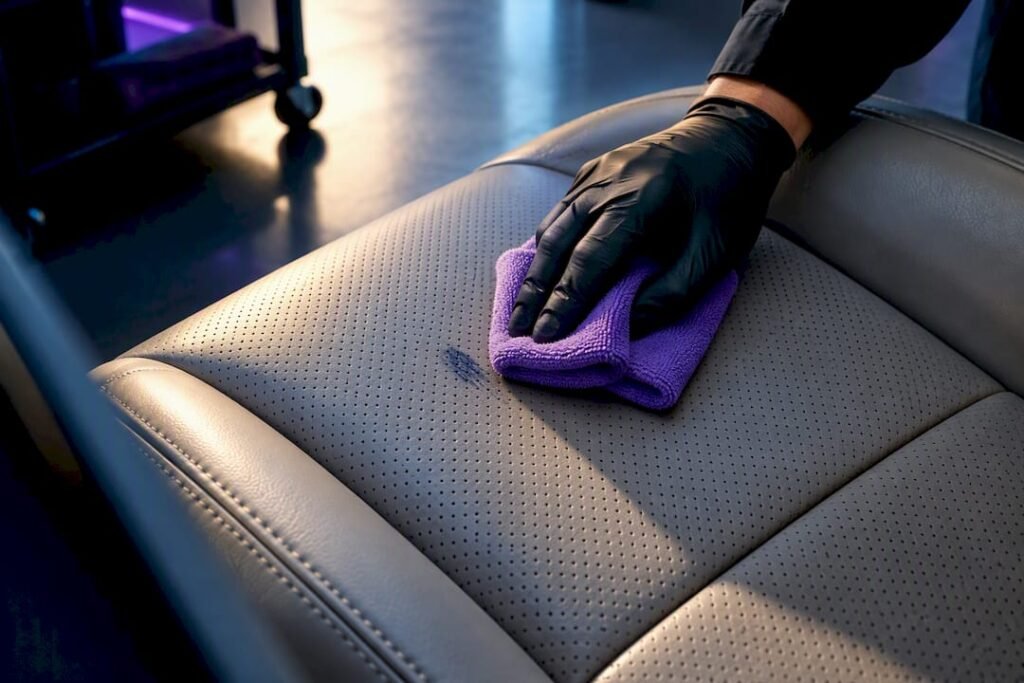
Blot the ink immediately with a paper towel, never rub it. On leather, follow up with a pH-balanced leather cleaner and a microfibre cloth. On fabric, blot then work in a mild detergent solution or an upholstery spot cleaner. Fresh stains respond well to this. Older, soaked-in ink usually needs professional extraction to fully disappear.
TL;DR:
- Acting within the first 60 seconds and blotting without rubbing is essential for preventing ink from setting deeply into fabric or leather.
- For leather seats, testing products on hidden areas and using pH-balanced cleaners with microfiber cloths minimize the risk of permanent damage or discoloration.
- For fabric upholstery, handheld extraction tools outperform hand blotting on ingrained or soaked-in stains, but over-wetting can cause long drying times and odors.
- Household products like acetone, bleach, or WD-40 are unsafe for upholstery and can cause permanent damage or discoloration, making professional help the better choice for stubborn stains.
- Older ink stains over a week old or those deeply bonded require professional extraction, as DIY methods rarely achieve full removal and may risk worsening the damage.
Table of Contents
- What to do in the first 60 seconds after an ink spill
- How do you get ink out of a leather car seat?
- How do you remove ink from fabric car seats?
- What household products should you never use on ink stains?
- When is an ink stain too old to fix yourself?
- Drying, conditioning, and stopping the next stain before it happens
- When does a mobile professional detail make more sense?
- Final perspective: a quick decision guide
- Book a professional extraction if the DIY route doesn’t finish the job
- Sources
- FAQ
What to do in the first 60 seconds after an ink spill
The stain sets fast, so acting quickly matters more than the specific product you use.
- Grab paper towel or a clean microfibre cloth and blot straight down, working from the outer edge of the mark toward the centre.
- Stop as soon as the towel stops picking up colour. Do not rub or scrub. Rubbing drives ink fibres deeper into fabric weave or forces pigment into leather pores.
- If blotting alone hasn’t lifted a fresh mark, mix a few drops of mild dish detergent into a cup of water and dampen (don’t soak) a fresh cloth.
- Blot again, then dry the area with a towel before doing anything else.
Over-wetting is the mistake most people make here. A car seat holds moisture in the foam underneath, and a soaked seat takes days to dry properly and can start smelling musty.
Pro Tip: Keep a small kit in the glovebox: a pack of microfibre cloths, a travel-size pH-balanced leather cleaner, and a mini spray bottle of diluted detergent. Most fresh ink stains never become a weekend project when you catch them in the first few minutes.
How do you get ink out of a leather car seat?
Leather isn’t one material. Coated (pigmented) leather has a protective top layer that resists staining reasonably well. Aniline and semi-aniline leathers, along with perforated seats, have no protective coating or have gaps that let liquid and pigment sink straight into the hide. This difference decides which products are safe to use and how fast you need to move.
Check your vehicle’s care documentation or ask a detailer to identify the finish before doing anything beyond blotting, because a treatment that works fine on coated leather can permanently darken or stain an aniline surface.
Before you touch cleaner to the seat, spot-test it. Pick a hidden spot, such as the underside of the headrest or the seat’s rear panel, apply a small amount, and wait 10 to 15 minutes. Check for discolouration, gloss change, or texture change before treating the visible stain. Leather-care guidance consistently points back to this step, along with checking the manufacturer’s own instructions first, because leather types react so differently to the same product.
Materials and technique that work:
- A pH-balanced leather cleaner made for automotive interiors, never a generic household cleaner.
- Microfibre cloths, several of them, so you’re never wiping ink back onto a clean surface.
- A soft-bristled detailing brush for stitching and grain texture, used lightly.
- Never spray cleaner directly onto the seat. Spray it onto the cloth first, then apply.
Work the cleaner into the stain with short, light passes rather than heavy scrubbing, and wipe off immediately rather than letting it sit. That short-pass, immediate-wipe approach is what separates a clean result from a smeared one, and it’s the same method Chemical Guys recommends for pen and ink marks on leather.
For stubborn ink that a standard leather cleaner won’t shift, isopropyl alcohol can help, but treat it as a last resort rather than a first move. Dilute it (roughly one part alcohol to one part water), apply it to a cloth rather than the seat, and wipe with immediate, controlled passes. Never let it pool or sit. Alcohol strips oils from leather quickly, and repeated or heavy use will dry out the hide and crack the finish over months, even if it lifts the ink today.
Once the stain is gone, let the seat air dry completely before applying anything else. Conditioning damp leather traps moisture underneath the product and can encourage mould in the foam below. A compatible conditioner or protectant only goes on once the leather is bone dry, and only if it matches what the manufacturer’s leather-care guidance recommends for your specific finish. Cleaning removes contamination; conditioning is a separate step that comes after, never combined into one pass.
How do you remove ink from fabric car seats?
Start exactly the same way as leather: blot, don’t rub, working from the stain’s edge inward. Fabric holds onto ink more stubbornly than coated leather because the pigment gets between fibres rather than sitting on a sealed surface, so the next steps matter more.
Mix one teaspoon of mild liquid detergent into 250 millilitres of water, or use a dedicated upholstery spot cleaner if you have one. Spray or dab a small amount onto a microfibre cloth rather than directly onto the seat, then work the stain with a blotting motion, never a scrubbing one. Keep a dry towel underneath the fabric where possible (reaching through the gap between seat and backrest) to stop the solution soaking through to the foam and seams. Stay away from stitched seams and anywhere near wiring or electronics, like heated-seat elements, since trapped moisture there causes bigger problems than the original ink stain.
For a stain that’s spread or soaked into the weave, hand-blotting alone often isn’t enough. This is where a portable spot cleaner earns its keep. These handheld extraction units use a hose and nozzle to moisten the fibre and pull the dirty water back out, which is why CHOICE’s buying guide rates them as more practical for upholstery than a full-size carpet shampooer. The combination of controlled moisture and extraction usually outperforms hand blotting alone on set fabric stains.
| Method | Best for | Limitation |
|---|---|---|
| Hand blotting with detergent solution | Fresh, small stains caught within minutes | Limited on stains that have soaked into fibre |
| Portable spot extractor (owned or rented) | Medium stains, broader coverage | Requires equipment and some technique to avoid over-wetting |
| Professional upholstery extraction | Set-in, large, or old stains | Cost and scheduling, but highest success rate |
Renting a spot extractor is cheaper upfront but the learning curve is real. Too much water pressure or a wand held in one spot too long leaves a wet patch that takes a full day to dry and can leave a faint ring where the wet edge dried unevenly. A professional detailer brings equipment calibrated for upholstery specifically and knows how much moisture the foam underneath can handle.
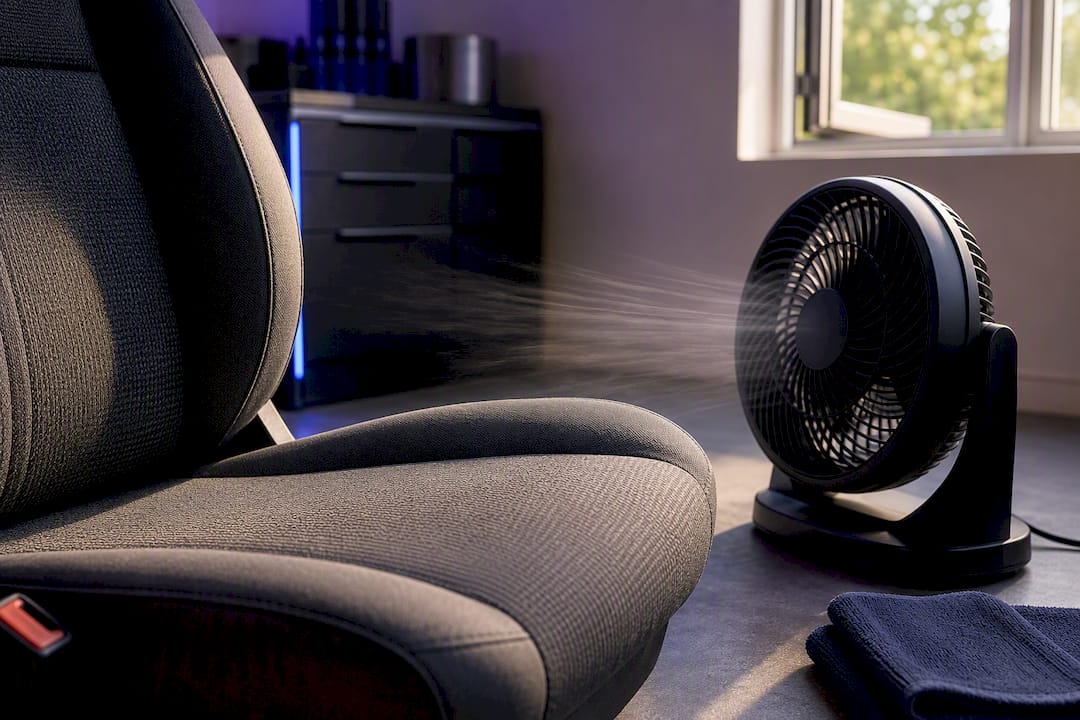
Whichever method you use, dry the seat with airflow rather than heat. Position a fan on the seat with a window cracked, and avoid parking in direct sun to “bake” it dry. Fast, even drying prevents both the ring marks that come from slow evaporation and the mildew smell that turns up two days later when moisture gets trapped against foam.
What household products should you never use on ink stains?
A few products sit in most garages and seem like obvious fixes. They’re the ones most likely to turn a stain into permanent damage.
- Acetone or nail-polish remover strips the finish off coated leather and can dissolve the dye in some vinyl and synthetic trims within seconds.
- Bleach discolours both leather and fabric dye, often unevenly, leaving a patch lighter than the surrounding seat that no cleaner can fix.
- Abrasive melamine sponges (the kind sold as “magic erasers”) work by micro-sanding a surface. On leather, that means sanding away the finish itself.
- WD-40 or similar penetrating oils are untested on upholstery and can darken leather permanently or leave an oily residue that attracts dirt for months afterward.
- Hairspray, an old carpet-cleaning myth, contains alcohol and sugars that can gum up fabric fibres and doesn’t reliably lift ink at all.
The safer starting point is always the same: a pH-balanced cleaner made for the surface, a microfibre cloth, and a mild detergent solution as backup. Excess oils and untested solvents tend to darken leather and change its gloss rather than solve anything, which is exactly why conservative, minimal-intervention cleaning outperforms reaching for whatever’s under the sink.
When is an ink stain too old to fix yourself?
Set-in ink behaves differently to fresh ink, and the older it gets, the lower your odds of full DIY removal. A stain that’s been sitting for a week or more, one that’s soaked through to the foam, or one made with a gel or permanent marker rather than a standard ballpoint, all fall into this harder category.
- Check the age and saturation. If the ink has spread beyond its original outline or the seat feels stiff where it dried, it’s likely bonded to the fibres or leather surface rather than sitting on top.
- Try two controlled attempts at most. A third or fourth round of scrubbing at a stubborn stain does more damage to the surface than the ink itself ever would.
- Book a professional if it doesn’t shift. Professional stain extraction uses upholstery-safe solvents and hot-water extraction equipment that pulls contamination out of fibre and foam layers a spray bottle can’t reach, plus dye correction techniques for leather that’s already discoloured.
- Set realistic expectations. Even professional extraction can’t guarantee full removal on very old or chemically set ink. Significant improvement is the honest outcome to expect, not always a total vanish.
When choosing a detailer for this job, look for someone with specific upholstery extraction experience (not just exterior wash and wax), portable extraction equipment they bring on-site, transparent pricing before they start, and before-and-after photos of similar jobs.
Drying, conditioning, and stopping the next stain before it happens
Once the ink is gone, how you dry the seat determines whether you’re left with a clean result or a new problem. Point a fan at the seat and crack a window for airflow rather than blasting it with a hair dryer or leaving it in full sun. Heat speeds up drying on the surface while trapping moisture underneath, which is exactly what leads to mildew smell days later.
- Blot excess moisture with a dry towel before you start the fan, rather than letting it evaporate on its own.
- Leave leather completely dry, ideally overnight, before applying any conditioner.
- Only use a conditioner that’s compatible with your seat’s specific leather finish, and check the leather protection guide if you’re unsure which type you have.
- Keep pens capped and stored in a door pocket or centre console organiser instead of loose on the seat.
Pro Tip: A $10 seat organiser with pen loops solves more ink stains than any cleaning product ever will. Prevention is the cheapest step in this whole process.
Lingering odours from a damp clean-up are worth addressing early too. If a stain leaves behind a musty smell after drying, treating it before it sets into the foam is far easier than after, a principle covered well in Diamondbrite’s guide to car odour removal.
When does a mobile professional detail make more sense?
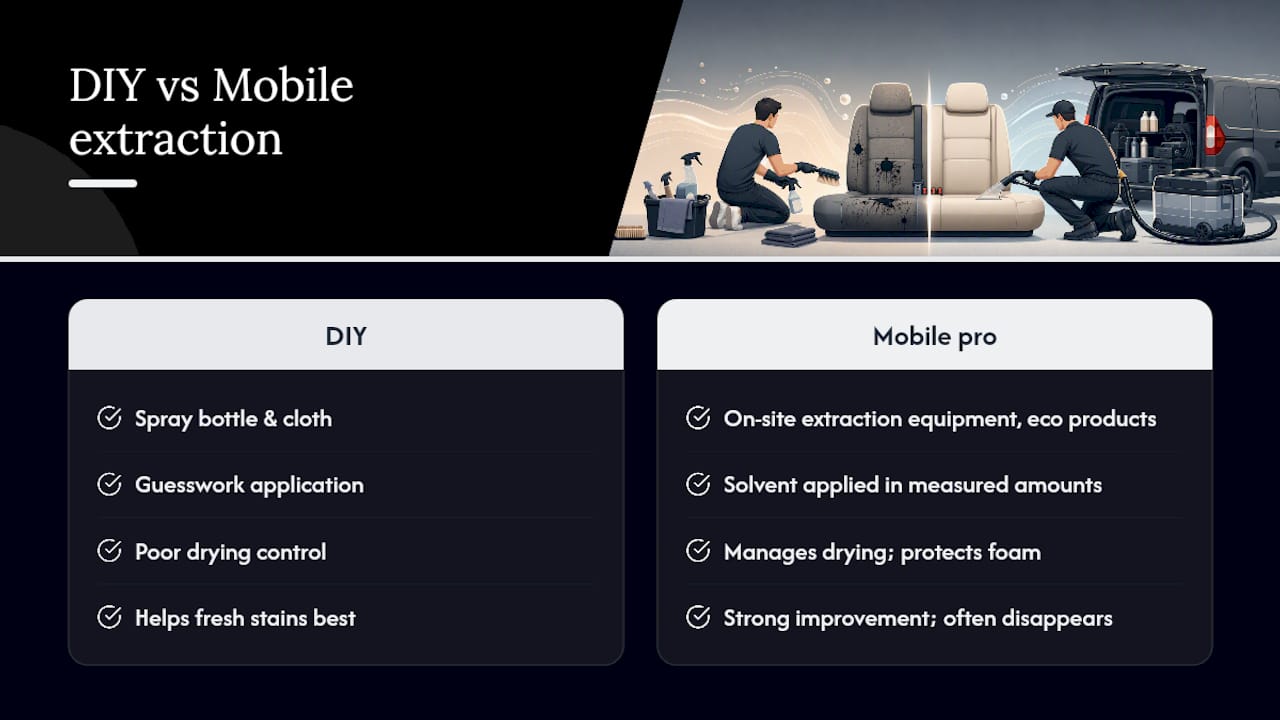
Some ink stains simply outmatch what a spray bottle and a cloth can do, and that’s the point where mobile professional extraction earns its cost. Mobile detailing services often include seat and carpet extraction using stain-extraction workflows and eco-friendly products applied on-site, whether that’s at the customer’s driveway, workplace car park, or another location.
The advantage over DIY isn’t just better products. It’s controlled application and controlled drying, the two places most home attempts go wrong. A mobile detailer brings extraction equipment calibrated for upholstery and leather specifically, applies solvent in measured amounts rather than guesswork, and manages drying time so moisture doesn’t sit in the foam layer underneath.
Realistic expectations still apply here. Fresh to moderately set stains usually see strong improvement, often a full disappearance. Very old ink, or ink that’s chemically bonded into a light-coloured leather dye, may improve significantly without vanishing completely. No professional or product can promise 100% removal on every stain, and any claim that does should raise a flag.
Final perspective: a quick decision guide
Two careful attempts at removing the stain yourself is a reasonable limit. Beyond that, you’re more likely to damage the seat than finish the job. Call a professional the moment a stain is old, fully saturated, or sitting near stitching, electronics, or heated-seat elements, where trapped moisture causes more damage than the ink ever will. A basic cleaning kit at home and a trusted detailer on call covers almost every scenario you’ll actually run into.
— isaac’s
Book a professional extraction if the DIY route doesn’t finish the job
Isaac’s Pro Detailing Sunshine Coast handles the stains that spray bottles and elbow grease can’t shift, at your home, workplace, or wherever the car’s parked, with no drop-off required.
The Deluxe Detail and Revival Detail packages both include full interior cleaning with seat and carpet extraction, using eco-friendly products applied on-site rather than in a workshop queue. If a leather seat has already been treated with the wrong product and needs conditioning or protection, the special services menu also covers leather ceramic coating as a standalone add-on. Pricing may be listed upfront on the site rather than quoted after the fact, and some jobs come with satisfaction guarantees regardless of package size. If a stain has already had two DIY attempts and isn’t budging, an on-site professional assessment can provide realistic expectations on extraction outcomes.
Sources
For more on choosing the right removal product, see CHOICE’s guides on spot stain removers and general stain removers, plus Isaac’s guide to interior cleaning workflow.
FAQ
What will take ink out of upholstery fabric?
A mild detergent solution (a teaspoon of dish detergent in 250 millilitres of water) applied with blotting motions works on fresh stains. For stains that have spread through the fibre, a portable spot extractor combining moisture and suction usually outperforms hand blotting alone.
Can old ink stains be removed?
Improvement is realistic even on older stains, but full removal isn’t guaranteed once ink has soaked into fibre or bonded with leather dye. Professional extraction, using hot-water extraction and upholstery-safe solvents, gives the best odds and can include dye correction for leather.
Will dish detergent remove ink stains?
A few drops of mild dish detergent mixed with water lifts many fresh ink stains from fabric when applied by blotting rather than scrubbing. It’s a reasonable first attempt, but it won’t reliably shift ink that’s already set or spread through the weave.
Will WD-40 remove ink from leather?
WD-40 and similar penetrating oils aren’t designed or tested for automotive leather and often leave the surface darker with an oily residue that attracts dirt. A pH-balanced leather cleaner, applied in short passes and wiped off immediately, is the safer and more effective option.