
TL;DR:
- Maintaining a family vehicle requires consistent routines, including safety checks and interior organization, to ensure safety and cleanliness. Regularly inspecting back seats, changing filters, and using eco-friendly products protect children and reduce environmental impact. Professional mobile detailing offers convenient, thorough cleaning solutions that support busy parents’ schedules.
Family life is hard on cars. Between school runs, sports gear, spilled snacks, and the occasional mystery stain, your family vehicle takes a real beating. Finding time for car care for families feels impossible when the to-do list never ends. But staying on top of your vehicle’s cleanliness and safety doesn’t require a full weekend. It requires the right habits. These family-friendly car care tips are built for parents who want a safe, clean, eco-conscious car without adding extra stress to an already packed day.
Table of Contents
- Key takeaways
- 1. Build a family-friendly car care routine from the start
- 2. Check the back seat every single time you exit
- 3. Keep the cabin air filter clean and fresh
- 4. Choose eco-friendly cleaning products over harsh chemicals
- 5. Pack and maintain a family emergency kit
- 6. Secure car seats and protect your interior
- 7. Follow your owner’s manual for service intervals
- 8. Prepare thoroughly before every road trip
- 9. Know when DIY is enough and when to call a professional
- My honest take on family car care
- Keep your family car in top shape with Isaac’s Pro Detailing
- FAQ
Key takeaways
| Point | Details |
|---|---|
| Safety checks save lives | Back-seat checks every time you exit protect children from heatstroke and accidents. |
| Cabin air quality matters | Replacing the cabin air filter regularly reduces allergens and supports children’s respiratory health. |
| Eco-friendly beats harsh chemicals | Biodegradable cleaning products are safer for kids and the environment without sacrificing results. |
| Owner’s manual is your guide | Sticking to recommended service intervals avoids wasted money and unnecessary environmental waste. |
| Small routines beat big overhauls | Consistent daily and weekly habits keep family vehicles cleaner and safer than occasional deep cleans. |
1. Build a family-friendly car care routine from the start
The biggest mistake busy parents make is treating car care as something to do when things get bad enough. Routine is the whole game. A simple weekly habit, even five minutes, beats a four-hour catch-up session once a month.
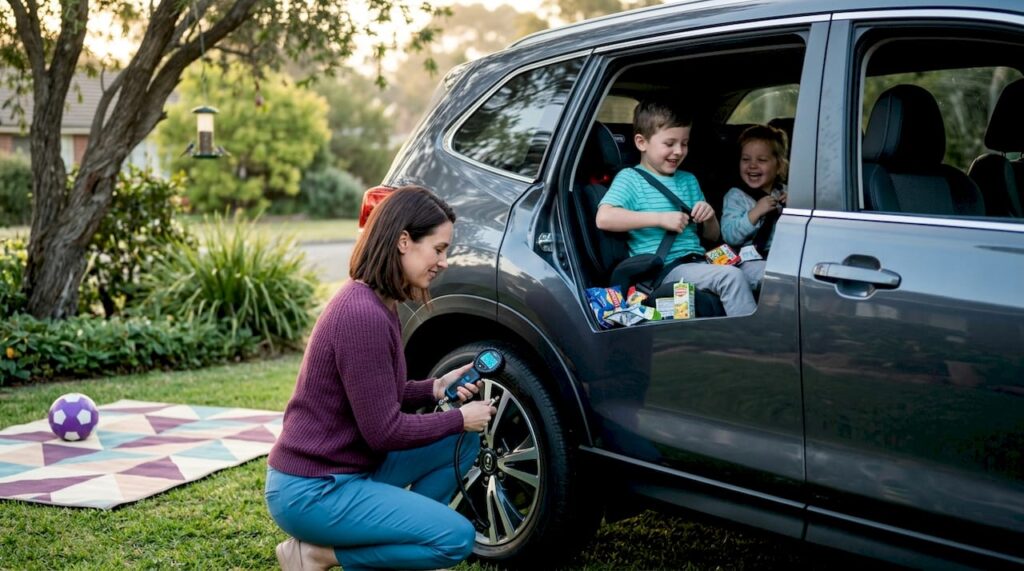
Start with the basics. Tyre pressure, fluid levels, and lights should be on your radar at least fortnightly. These aren’t just tick-the-box checks. Driving with a failing light in Australia can mean demerit points and fines, and low tyre pressure quietly wears out your tyres faster than anything else.
Build a short pre-trip routine for family outings. Before you drive, glance at the back seat and boot. Check the kids are buckled. Confirm your emergency kit is stocked. This habit takes less than sixty seconds and pays off enormously.
Pro Tip: Set a phone reminder every fortnight labelled “car five-minute check” and do it on the driveway while the kids play. Consistency beats perfection every time.
Organising the interior is part of the routine too. A clutter-free car is a safer car. Loose toys or bottles become projectiles in a sudden stop. Use boot organisers, seatback pockets, and cargo nets to keep everything where it belongs.
2. Check the back seat every single time you exit
This is not optional. Internal temperatures can rise 50°F faster than the outside air, putting young children at risk of heatstroke within minutes. The danger is real, and it catches even attentive parents off guard when routines change.
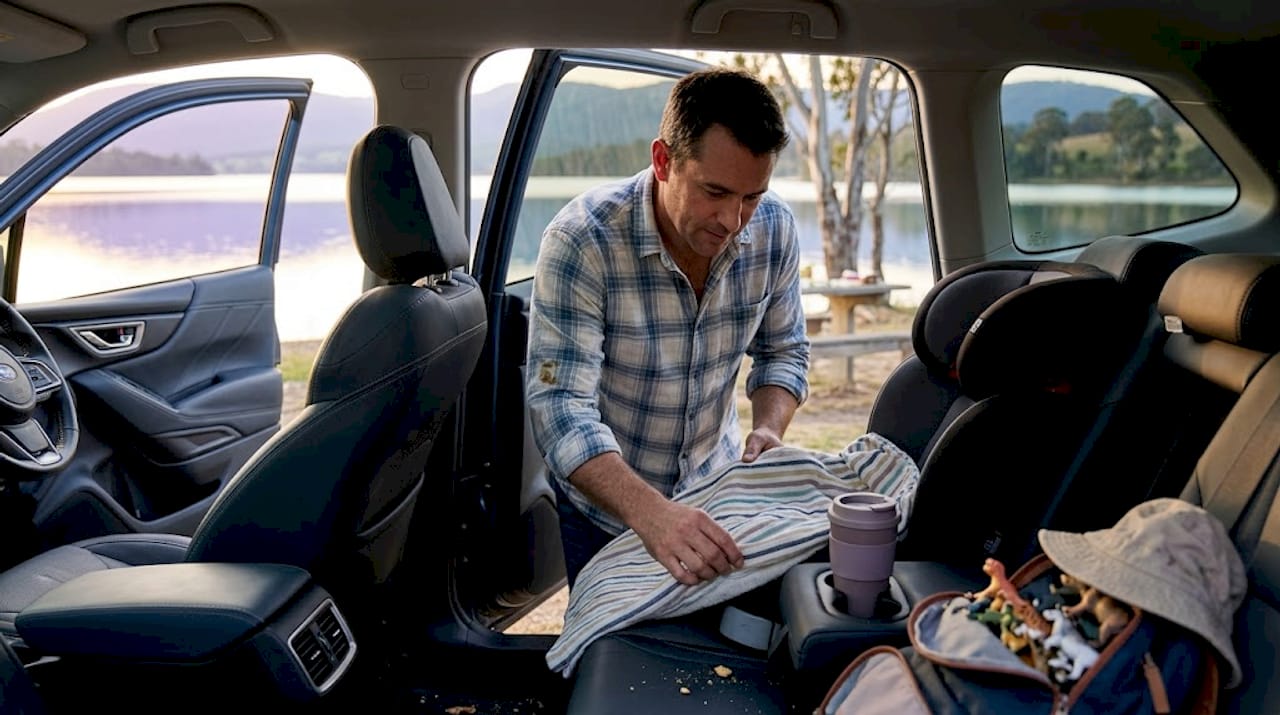
The NHTSA recommends treating back-seat checks as habitual rituals rather than situational judgments. That means every exit, every time, regardless of how short the trip was or how certain you are the car is empty. Distraction is the risk factor here, not carelessness.
A practical trick: place your handbag, phone, or wallet on the back seat before you drive. You physically cannot exit without checking the back seat first.
3. Keep the cabin air filter clean and fresh
Most parents have never thought about the cabin air filter. It sits quietly behind the dashboard, filtering the air your kids breathe every single time you run the air con or heater. When it clogs, allergens, dust, and pollutants circulate straight into the cabin.
Cabin air filters need replacing roughly every 15,000 to 30,000 kilometres, though families who drive frequently with windows up in dusty Queensland conditions may need to go more often. Replacement takes about fifteen minutes and costs very little. For a family with young children or anyone with asthma, it’s one of the highest-value maintenance tasks you can do.
For tips on keeping the interior fresh alongside filter maintenance, the vehicle interior maintenance guide from Isaac’s Pro Detailing is worth bookmarking.
4. Choose eco-friendly cleaning products over harsh chemicals
Harsh chemical cleaners in an enclosed car cabin are a real concern for children, especially toddlers who touch surfaces constantly and then put their hands near their faces. The good news: biodegradable cleaners work just as well for most family car cleaning tasks.
Look for plant-based all-purpose cleaners and enzyme-based sprays for organic stains like food and drink spills. These break down the mess at a molecular level rather than masking it, and they won’t leave residues that irritate skin or airways. Paired with reusable microfibre cloths, they make for a very effective and genuinely eco-friendly cleaning routine.
Here’s a quick comparison to help you decide what to reach for:
| Product type | Child safety | Environmental impact | Cost |
|---|---|---|---|
| Biodegradable all-purpose cleaner | High | Low | Low to medium |
| Enzyme-based odour remover | High | Very low | Medium |
| Conventional chemical cleaner | Low to medium | High | Low |
| Waterless wash spray | High | Very low | Medium |
Pro Tip: Store a small spray bottle of diluted white vinegar in the car boot. It removes most fresh stains, cuts through grease, and is completely safe around children.
5. Pack and maintain a family emergency kit
Think beyond the basic jumper cables. A proper family emergency kit accounts for the reality that you might be stuck roadside with a hungry toddler, a nappy emergency, or a child who needs a change of clothes. Storing a 24-hour supply of essentials including water, snacks, wipes, nappies, and a spare change of clothes is a genuinely practical approach for families with young children.
Organise the kit with function in mind. Quick-access items in the glove box should include a torch, first-aid basics, and a list of emergency contacts. Bulk supplies like water and extra clothing belong in under-floor storage or a boot organiser so they don’t clutter the passenger area.
Review and restock the kit every three months. Snacks expire, wipes dry out, and kids grow out of spare clothes faster than you expect.
6. Secure car seats and protect your interior
A correctly installed car seat is non-negotiable, but the car interior around it deserves attention too. Car seat bases press hard into upholstery and can cause permanent damage over time. A seat protector mat under the base prevents this and is inexpensive. It also catches crumbs and spills that would otherwise work their way into seat seams.
Sunshades on rear windows reduce cabin temperature significantly, which matters enormously in Australian summers. Lower cabin temperatures mean less strain on your air con, better comfort for children, and slower degradation of interior plastics and upholstery.
For longer trips, organise toys and snacks in a small tray or bag attached to the back of the front seat. Loose items rolling around the floor create hazards during braking and keep kids frustrated when they can’t reach what they want.
7. Follow your owner’s manual for service intervals
Mechanics sometimes recommend more frequent or more costly services than your car actually needs. Sticking to your owner’s manual for service intervals protects your wallet and reduces unnecessary waste from parts and fluids replaced before they need to be.
This is a point many parents overlook because the advice sounds counterintuitive. Surely more maintenance is better? Not necessarily. Over-servicing generates excess waste, costs money that could go elsewhere, and can even introduce new problems when components are unnecessarily disturbed. A well-planned maintenance checklist aligned with your manual is all you need.
If a mechanic recommends something early, ask for a clear reason. A good mechanic will explain; a great one will show you the evidence.
8. Prepare thoroughly before every road trip
Pre-trip checks done consistently reduce stress and safety risks on family road trips significantly. The checklist doesn’t need to be elaborate. Tyres including the spare, all fluid levels, lights and wipers, air conditioning, and the emergency kit. Tick those off and you’ve covered the vast majority of roadside breakdown risks.
Plan for the drive itself as well as the destination. Download offline maps. Pack car-friendly activities for kids. Identify rest stop locations in advance so you’re not pulling over on a busy highway trying to sort out a toilet emergency. Small logistical decisions made at home prevent big problems on the road.
The Sunshine Coast car care checklist covers pre-trip checks in practical detail if you want a ready-to-use reference.
9. Know when DIY is enough and when to call a professional
Some tasks belong firmly in the DIY category: wiping down the interior, spot cleaning seats, checking tyre pressure, replacing the cabin air filter, and restocking the emergency kit. These are quick, low-skill, and well within a busy parent’s reach on a Saturday morning.
Other tasks genuinely benefit from professional hands. Deep seat and carpet extraction removes allergens and bacteria that surface cleaning misses entirely. Paint correction and protective coatings extend the life of your exterior in ways a garden hose cannot. Odour elimination for cars that have hosted too many nappy changes or car-sick children requires equipment most households don’t own.
Here’s a useful comparison:
| Task | DIY suitable? | Professional benefit |
|---|---|---|
| Interior wipe-down | Yes | Not needed |
| Cabin air filter replacement | Yes | Not needed |
| Deep seat/carpet extraction | Partial | High. Removes bacteria and allergens. |
| Paint correction and polishing | No | High. Prevents long-term damage. |
| Odour elimination | Partial | High. Ozone treatment is far more effective. |
| Tyre pressure check | Yes | Not needed |
Mobile detailing for families offers a compelling middle ground. A professional comes to you, uses eco-friendly products, and handles the tasks that fall outside a realistic DIY scope without requiring you to find parking and wait at a service centre.
My honest take on family car care
I’ve worked on a lot of family vehicles over the years, and what I’ve noticed is that the families with the cleanest, safest cars aren’t the ones spending the most money or the most time. They’re the ones who’ve built small, consistent habits and know when to ask for help.
What I’ve learned is that perfection is the enemy of progress with car care for families. Parents who wait until they have a full free day to clean the car end up doing it once every few months. The parent who spends five minutes on a Wednesday doing a quick wipe and check ends up with a genuinely well-maintained vehicle year-round.
The eco-friendly choices I advocate for aren’t just good for the environment. They’re better for kids in the car, gentler on interior surfaces, and honestly cheaper over time than harsh products that degrade upholstery and trim. The switch requires nothing more than swapping a few products.
The one area I won’t compromise on is child safety. Back-seat checks, properly installed seats, secure storage of loose items. These are not optional extras. They’re the foundation everything else is built on. Get those right first, then build the rest of your routine around them.
— Isaac’s
Keep your family car in top shape with Isaac’s Pro Detailing
Busy parents shouldn’t have to choose between a safe, clean car and their limited free time. Isaac’s Pro Detailing comes to you across the Sunshine Coast, whether you’re at home, at work, or at the beach, and handles the jobs that go beyond what a Saturday morning can achieve.
Using eco-friendly products safe for children and the environment, the team at Isaac’s offers everything from interior seat and carpet extraction to exterior protection and odour elimination. For families wanting to know what a full professional service looks like, the mobile detailing workflow page covers the full process in detail. You can also browse the full range of options on the wash menu to find the right fit for your family vehicle and budget.
FAQ
How often should I clean my family car’s interior?
A quick wipe-down weekly and a deeper clean monthly works well for most families. Homes with young children or pets may benefit from fortnightly spot cleaning to stay ahead of stains and bacteria.
What’s the safest way to clean a car with kids in mind?
Use biodegradable, plant-based cleaners and enzyme sprays rather than conventional chemical products. These are effective on food and drink stains and leave no harmful residue on surfaces children touch.
When should the cabin air filter be replaced?
Replace your cabin air filter every 15,000 to 30,000 kilometres, or more often in dusty conditions. A clean filter directly improves the air quality your family breathes during every trip.
Is mobile detailing worth it for busy families?
Yes. A mobile detailing service removes the logistics of dropping off and collecting your car, and professional tools achieve results that DIY cleaning simply cannot match for deep cleaning and odour removal.
How do I prevent heatstroke risk for children in the car?
Make a back-seat check part of every exit from the vehicle, without exception. Heatstroke risk builds rapidly because internal temperatures climb far faster than outside conditions, so consistency in checking matters more than confidence that the car is empty.