
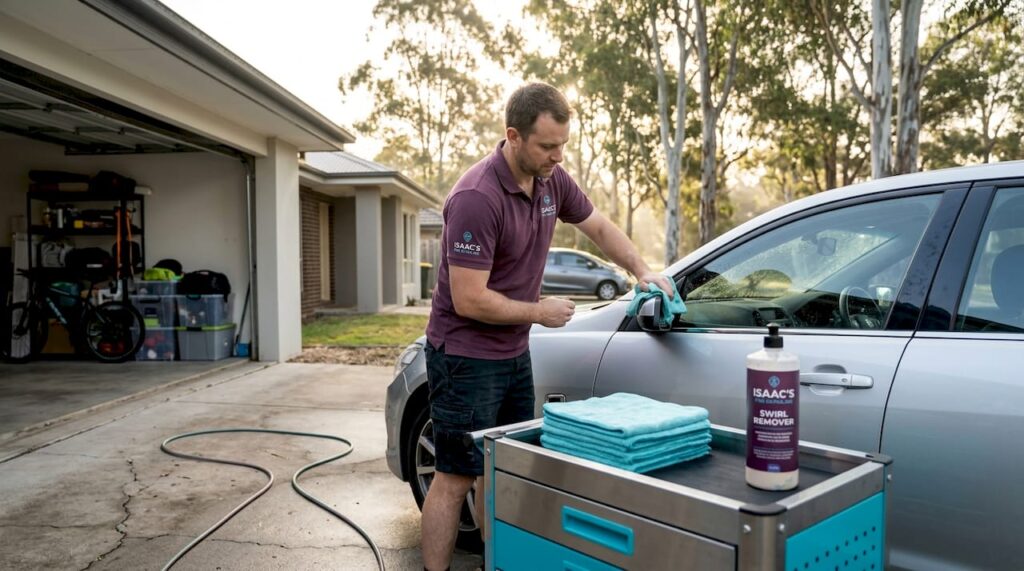
TL;DR:
- Exterior enhancement on the Sunshine Coast involves deep cleaning, paint correction, and long-term protection to combat UV, salt, and humidity damage. It significantly improves vehicle appearance, resale value, and provides durable protection against environmental contaminants. Regular professional treatments, especially ceramic coatings, are essential for maintaining a shiny, well-protected finish suited to coastal conditions.
Your car faces a daily assault on the Sunshine Coast. Salt air drifts in from the ocean, UV radiation beats down for most of the year, and Queensland’s humidity works its way into every surface. Many drivers respond with a quick trip through the car wash, believing that’s enough to keep their vehicle in good shape. It isn’t. Exterior enhancement is an entirely different discipline, one that combines deep cleaning, paint correction, and long-term protective treatments to actively defend your vehicle and restore its best possible appearance.
Table of Contents
- What does exterior enhancement really mean?
- Core steps of exterior enhancement
- Popular exterior enhancement options on the Sunshine Coast
- Why exterior enhancement matters for value and pride
- What most car owners get wrong about exterior enhancement
- Get expert exterior enhancement on the Sunshine Coast
- Frequently asked questions
Key Takeaways
| Point | Details |
|---|---|
| Deep cleaning matters | A proper exterior enhancement is much more than just a standard wash and dramatically improves long-term value. |
| Choose tailored solutions | Select protective options like ceramic coatings to best suit the Sunshine Coast’s unique environment. |
| Routine pays off | Regular, professional enhancement saves money on major repairs and keeps your car looking and performing better for longer. |
| Convenience is possible | Mobile detailing ensures even busy car owners can access top-quality services without disrupting their schedule. |
What does exterior enhancement really mean?
Exterior enhancement is not a single service. It’s a layered approach to car care that goes well beyond removing surface dirt. Think of a standard wash as clearing the table after a meal, while exterior enhancement is a full kitchen deep clean, repair, and reorganisation. The goal isn’t just cleanliness; it’s protection, restoration, and value preservation.
For Sunshine Coast drivers, this distinction matters more than it does almost anywhere else in Australia. The combination of intense UV exposure, coastal salt spray, and high humidity creates an environment that degrades paint, dulls trim, and accelerates oxidisation (the process that causes paint to fade and chalken) faster than in most inland areas. A standard wash removes loose surface grime but leaves behind the contaminants, microscopic scratches, and UV damage that quietly eat away at your vehicle’s finish over time.
Understanding the difference between interior vs exterior detailing helps clarify why exterior work requires its own dedicated focus and process. The exterior is your car’s first line of defence, and treating it accordingly is the foundation of good vehicle ownership.
Standard wash vs. exterior enhancement: a comparison
| Feature | Standard wash | Exterior enhancement |
|---|---|---|
| Surface cleaning | Yes | Yes |
| Paint decontamination | No | Yes |
| Swirl and scratch removal | No | Yes |
| Clay bar treatment | No | Yes |
| Protective coating applied | No | Yes |
| UV protection added | No | Yes |
| Resale value impact | Minimal | Significant |
| Longevity of results | Hours to days | Months to years |
Key benefits at a glance:
- Removes bonded contaminants that washing cannot touch
- Corrects paint defects including swirl marks and light scratches
- Applies lasting protection against UV, salt, and oxidisation
- Restores depth and gloss to faded or dull paintwork
- Protects plastic trim, glass, and rubber seals
Professional exterior detailing boosts vehicle value by 5 to 20 per cent, a significant return for a service that also improves your daily driving experience.
Core steps of exterior enhancement
A well-executed exterior enhancement follows a clear sequence. Skipping steps or rushing the process reduces results and can even introduce new damage. Here’s exactly what a thorough professional service looks like.
A multi-step process delivers long-term benefits that a basic wash simply cannot replicate, and understanding each stage helps you appreciate why the time and investment are worthwhile.
-
Pre-inspection and assessment. The detailer examines every panel under good lighting, checking for paint defects, contamination, rust spots, and areas needing special attention. This step shapes the entire approach.
-
Pre-wash and rinse. A foam pre-wash loosens heavy grime and debris without touching the paint, reducing the risk of scratching during the contact wash phase.
-
Two-bucket contact wash. Using separate buckets for clean soapy water and rinse water, the detailer washes the vehicle panel by panel with a soft wash mitt. This technique prevents dragging dirt particles across the paint.
-
Decontamination. After washing, chemical iron removers dissolve iron particles (brake dust, rail dust) bonded to the paint. These particles are invisible to the naked eye but cause long-term paint degradation if left untreated.
-
Clay bar treatment. A detailing clay bar glides across the wet paint surface, physically pulling out embedded contaminants that chemical treatments miss. The result is a surface that feels as smooth as glass.
-
Paint inspection and correction. Under strong lighting, the detailer identifies swirl marks, buffer trails, and fine scratches. Machine polishing with the appropriate compound corrects these defects, restoring clarity and depth to the paint.
-
Protective coating application. Wax, paint sealant, or ceramic coating is applied to the corrected surface. Each option offers different levels of durability and protection, which we’ll cover in the next section.
-
Trim, glass, and tyre care. Plastic trim is treated to restore colour and prevent cracking. Glass receives a water-repellent treatment. Tyres are dressed to prevent UV cracking and improve appearance.
“The difference in a car’s appearance after a full exterior enhancement isn’t subtle. It’s dramatic, and the protection it adds is measurable.”
Pro Tip: Living near the coast means your vehicle accumulates salt contamination faster than you’d expect. Scheduling a professional decontamination treatment every few months, not just a polish, keeps corrosion from taking hold in hidden areas like door sills and wheel arches.
Understanding the broader role of exterior detailing in vehicle care makes it clear why skipping steps is a false economy.
Popular exterior enhancement options on the Sunshine Coast
Not all enhancement services are created equal, and the right option depends on your budget, how long you plan to keep the vehicle, and the current condition of your paint. Here’s an honest look at what’s available and what each delivers.
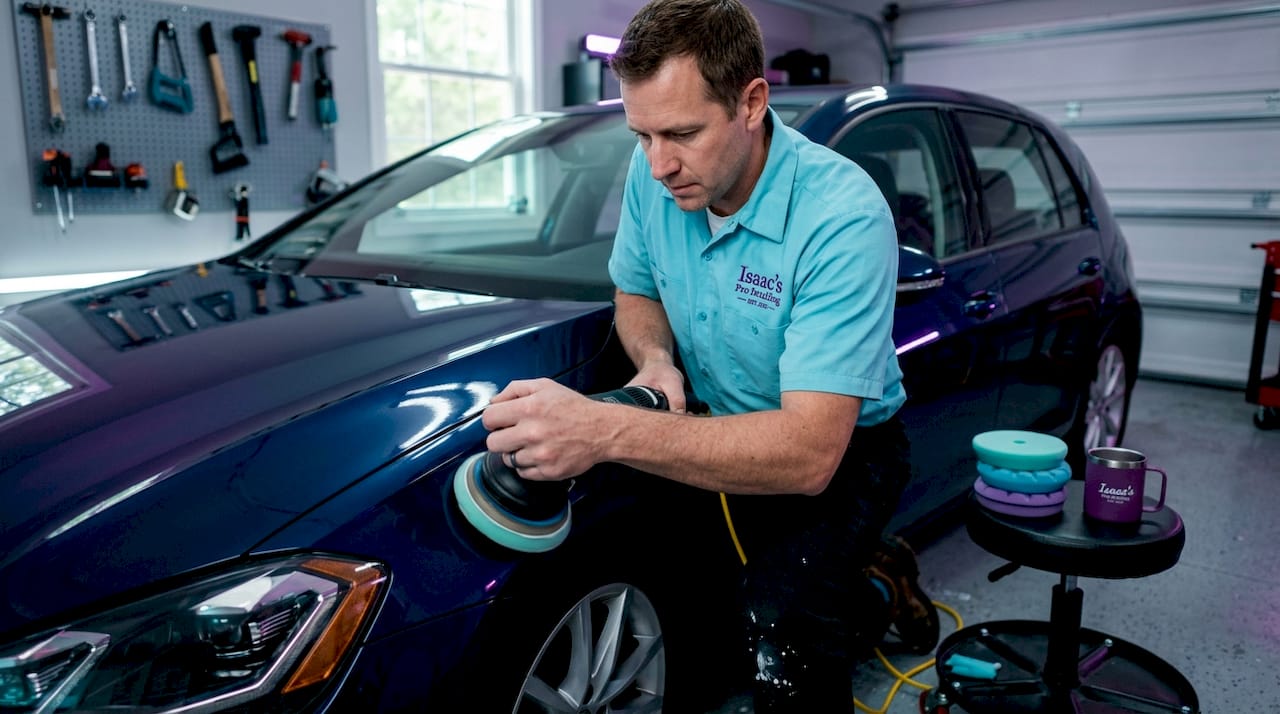
Paint correction and machine polishing. This is the most transformative service for vehicles with visible defects. A rotary or dual-action machine polisher removes a microscopic layer of clear coat (the transparent outer layer of your paint system) to eliminate scratches, swirl marks, and oxidisation. The result is a deep, mirror-like finish that turns heads.
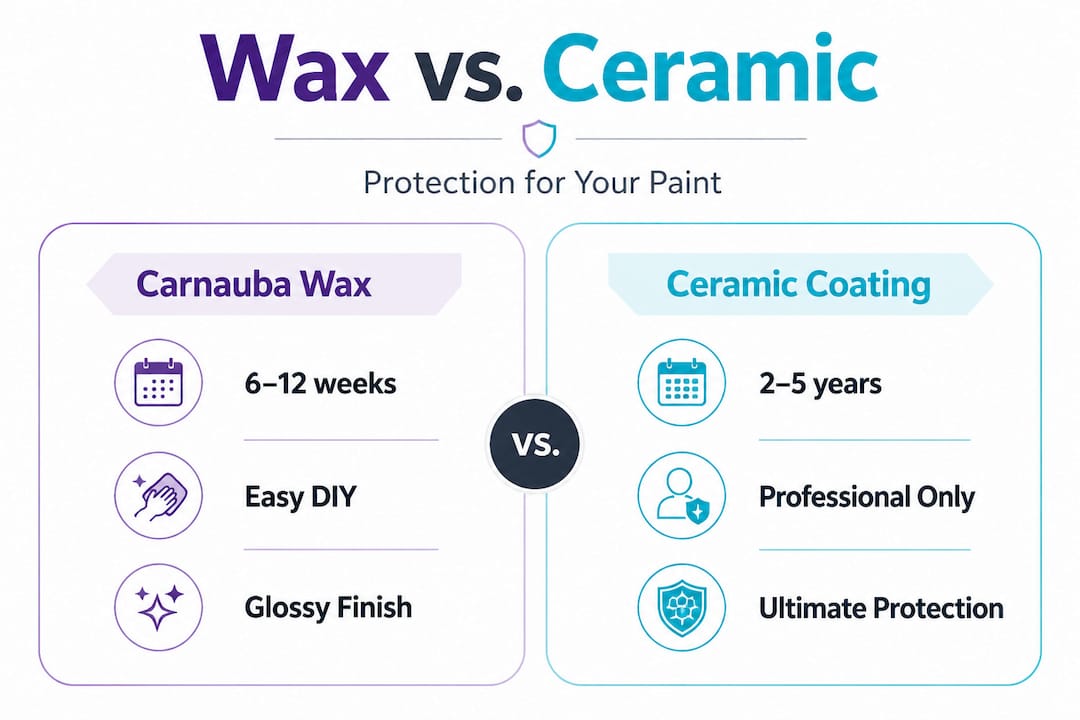
Ceramic coating vs. traditional waxing. Ceramic coating is a liquid polymer that chemically bonds to the paint surface, creating a semi-permanent protective layer. Traditional carnauba wax sits on top of the paint and offers a warm, deep gloss but needs reapplication every 8 to 12 weeks. Ceramic coatings, by contrast, can last 2 to 5 years with proper maintenance. The choice depends on your budget upfront and how much ongoing maintenance effort you want.
Headlight restoration. Queensland’s UV intensity is particularly brutal on headlight lenses, turning them cloudy and yellowed within a few years. Headlight restoration involves wet sanding and polishing the lens back to clarity, improving both appearance and night-time visibility.
Trim rejuvenation. Black plastic trim fades to grey under prolonged UV exposure. Professional trim restoration products penetrate the plastic and restore colour for months, rather than just coating the surface temporarily.
Glass treatment. Hydrophobic (water-repelling) coatings applied to windscreens and windows cause rain to bead and sheet off at speed, significantly improving visibility in wet conditions.
Paint protection solutions provide lasting shine and resilience, especially important when you consider how quickly coastal conditions can undo an unprotected finish.
Comparing your main options
| Treatment | Durability | Relative cost | Maintenance effort |
|---|---|---|---|
| Carnauba wax | 6 to 12 weeks | Low | High (frequent reapplication) |
| Synthetic paint sealant | 4 to 6 months | Moderate | Moderate |
| Ceramic coating | 2 to 5 years | High upfront | Low |
| Paint correction only | Permanent correction | Moderate to high | Low (protection still needed) |
| Headlight restoration | 1 to 2 years | Low to moderate | Low |
For those exploring what a fully rounded service involves, comprehensive car detailing combines many of these treatments into a single visit, making it easier to keep everything in top condition simultaneously.
Why exterior enhancement matters for value and pride
There’s a common attitude among car owners that detailed care is something you do when selling, not as regular practice. This thinking is exactly what causes vehicles to lose thousands of dollars in resale value unnecessarily.
A well-maintained exterior significantly uplifts resale value and can add 15 per cent or more to what a buyer is willing to pay. That figure reflects something buyers feel before they think about it. A car with deep, glossy paint and clean trim signals that the owner cared for it. A faded, scratched exterior suggests neglect, even if the mechanical condition is excellent.
Beyond resale, the practical case for regular enhancement is compelling:
- UV protection. Clear coat degradation from UV exposure is irreversible without machine polishing. Prevention costs far less than correction.
- Salt contamination prevention. Salt deposits attract moisture and accelerate corrosion. Regular decontamination removes them before they cause permanent damage.
- Bird dropping and insect acid protection. Both are chemically acidic and etch into unprotected paint surprisingly quickly in warm temperatures. A protective layer neutralises this risk.
- Reduced cleaning time. A coated surface repels dirt and contamination, meaning your regular washes take less time and effort.
- Daily pride. There’s a genuine satisfaction in driving a vehicle that looks its best. It’s not vanity; it’s the reward for caring about something you use every day.
Pro Tip: Maintaining a consistent enhancement routine, rather than waiting until the paint looks noticeably bad, means each visit takes less time and costs less. You’re maintaining a protected surface rather than restoring a neglected one, which is always the cheaper outcome.
What most car owners get wrong about exterior enhancement
Here’s the honest truth after years of working on vehicles across the Sunshine Coast: most car owners treat exterior enhancement as a luxury they’ll invest in occasionally, usually before selling. This mindset ends up costing them far more in the long run.
Paint correction after serious UV damage or oxidisation is an intensive, time-consuming process. Prevention, by contrast, is straightforward. A ceramic coating applied to a car in good condition takes a few hours. Removing years of oxidisation from neglected paint takes many hours and still may not fully recover the depth of an originally protected finish.
The second major mistake is trusting quick-fix services that cut corners. Automatic car washes with rotating brushes are one of the leading causes of swirl marks in paint. Drive-through foam washes feel satisfying but they don’t decontaminate the surface, and the brushes drag grit across panels. Many car owners believe their paint is scratched from road use, when the damage actually comes from poor washing techniques applied repeatedly.
There’s also a misunderstanding about what protection products actually do. A spray detailer used between services is a maintenance aid, not a substitute for proper protective coating. Many owners use it and assume their paint is genuinely protected. It isn’t, not in any meaningful sense against UV, salt, or chemical contaminants.
The real secret is straightforward: get your vehicle properly enhanced and protected early, maintain it with appropriate products, and schedule regular professional services to top up protection and catch any developing issues. Understanding the importance of comprehensive detailing for Sunshine Coast vehicles makes this approach easy to commit to, because the value is obvious once you see the results and understand the science behind them.
The final piece is this: your car’s paint will degrade. The question is whether it happens at the accelerated pace of an unprotected Sunshine Coast vehicle or the much slower pace of one that’s consistently looked after. The difference, in both appearance and dollars, is substantial.
Get expert exterior enhancement on the Sunshine Coast
You now have a solid understanding of what exterior enhancement involves, why it matters, and what to look for in a quality service. The next step is finding professionals who understand Sunshine Coast conditions specifically and can deliver results that last.
Isaac’s Pro Detailing brings the entire mobile car detailing workflow directly to your home, workplace, or wherever suits you best. No waiting in queues, no dropping your car off and rearranging your day. Every service uses premium products suited to Queensland’s climate, and every enhancement step, from decontamination through to protective coating, is carried out with the attention to detail that your vehicle deserves. Explore Sunshine Coast paint protection options and book a service that genuinely protects your investment.
Frequently asked questions
How is exterior enhancement different from a basic car wash?
Exterior enhancement includes multiple steps such as decontamination, clay bar treatment, paint correction, and protective coating that a basic car wash does not provide. A multi-step process delivers lasting protection and improved appearance that washes simply cannot replicate.
Does regular exterior enhancement boost resale value?
Yes, consistent exterior enhancement keeps your paint in better condition over time and creates a strong first impression for buyers. Exterior detailing boosts vehicle value by 5 to 20 per cent, making it one of the highest-return investments for any vehicle owner.
What is the best exterior enhancement option for Sunshine Coast drivers?
Ceramic coating combined with professional paint correction is the most effective long-term solution for coastal conditions. Paint protection solutions are specifically suited to withstand the UV intensity, salt air, and humidity of the Sunshine Coast environment.
How often should I enhance my car’s exterior?
A full professional enhancement every 4 to 6 months keeps your vehicle properly protected and looking its best year-round, with maintenance washes in between.
Can enhancement services come to my location?
Absolutely. Mobile car detailing teams bring all equipment and products directly to your home or workplace, making the entire process convenient for busy Sunshine Coast locals.