
TL;DR:
- Proper washing order and products prevent paint damage and corrosion.
- Rinseless methods save water and are effective for coastal vehicle maintenance.
- Ceramic coatings provide long-lasting protection against salt, UV, and contaminants.
What’s actually protecting your car’s paint right now? On the Sunshine Coast, between the salt air rolling in off the ocean, intense UV radiation, and the occasional storm dropping tree sap and debris, your vehicle’s exterior takes a serious beating. Most owners know they should wash their car regularly, but far fewer know the right order, the right products, or when to call in a professional. This guide pulls together expert knowledge and research-backed methods to give you a clear, practical system for keeping your car’s exterior clean, protected, and looking its best year-round, without wasting hours or money on the wrong approach.
Table of Contents
- Establishing the right exterior cleaning routine
- Traditional wash, rinseless techniques and water-smart alternatives
- Decontamination: claying, chemical treatment and paint safety
- Protection: ceramic coatings vs. wax for coastal durability
- Maintaining the finish: smart habits for lasting shine
- What most guides miss: balancing professional detail and smart DIY
- Ready for pro-level shine? Expert help on the Sunshine Coast
- Frequently asked questions
Key Takeaways
| Point | Details |
|---|---|
| Follow a smart wash routine | Starting with a pre-rinse and purpose-made soap helps avoid scratches and preserves protection. |
| Choose water-smart methods | Hand or rinseless washes offer professional-level results with less environmental impact. |
| Use lasting protection | Ceramic coatings deliver years of defence against Sunshine Coast salt and UV, far surpassing wax for durability. |
| Maintain regularly for value | Short, routine cleaning sessions keep your car shiny and make deep cleaning easier over time. |
Establishing the right exterior cleaning routine
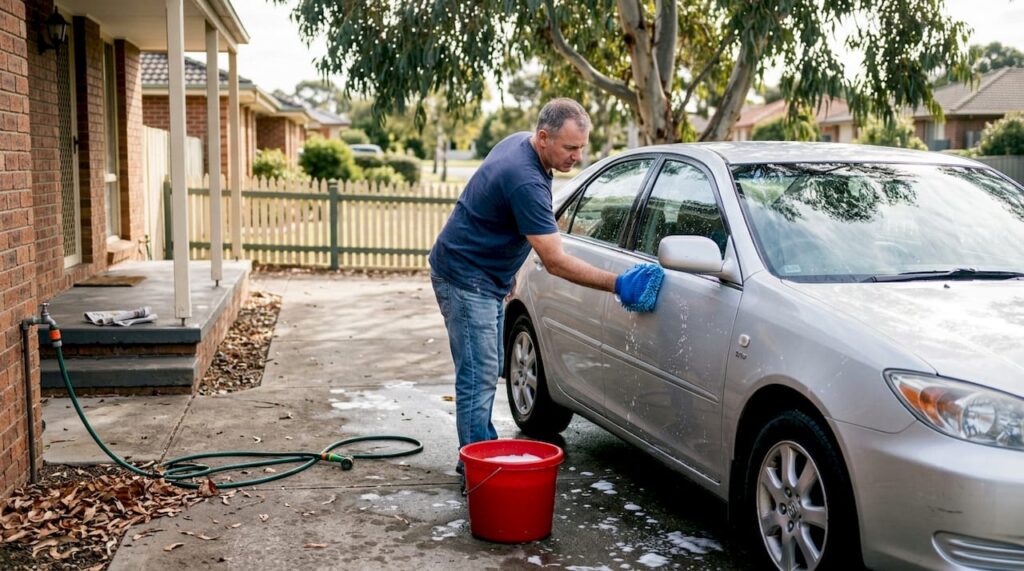
A good exterior clean isn’t just about making your car look presentable. Done correctly, it actively prevents paint damage, rust, and premature ageing. The sequence matters enormously, and skipping steps can cause more harm than good.
Start with a thorough pre-rinse. Use a hose or pressure washer to loosen grit, road film, and salt deposits before you touch the paint with anything. This single step dramatically reduces the risk of scratching. Once rinsed, always use a purpose-made car wash soap, never household detergent or dish liquid. As noted in car paint decontamination research, avoid washing in direct sun and household soaps, as these strip protection instead of cleansing.
From there, follow these foundational steps:
- Rinse the entire vehicle thoroughly before washing
- Work top to bottom, starting at the roof and finishing at the lower panels and wheels
- Use separate wash mitts for the body and the lower sections to avoid cross-contamination
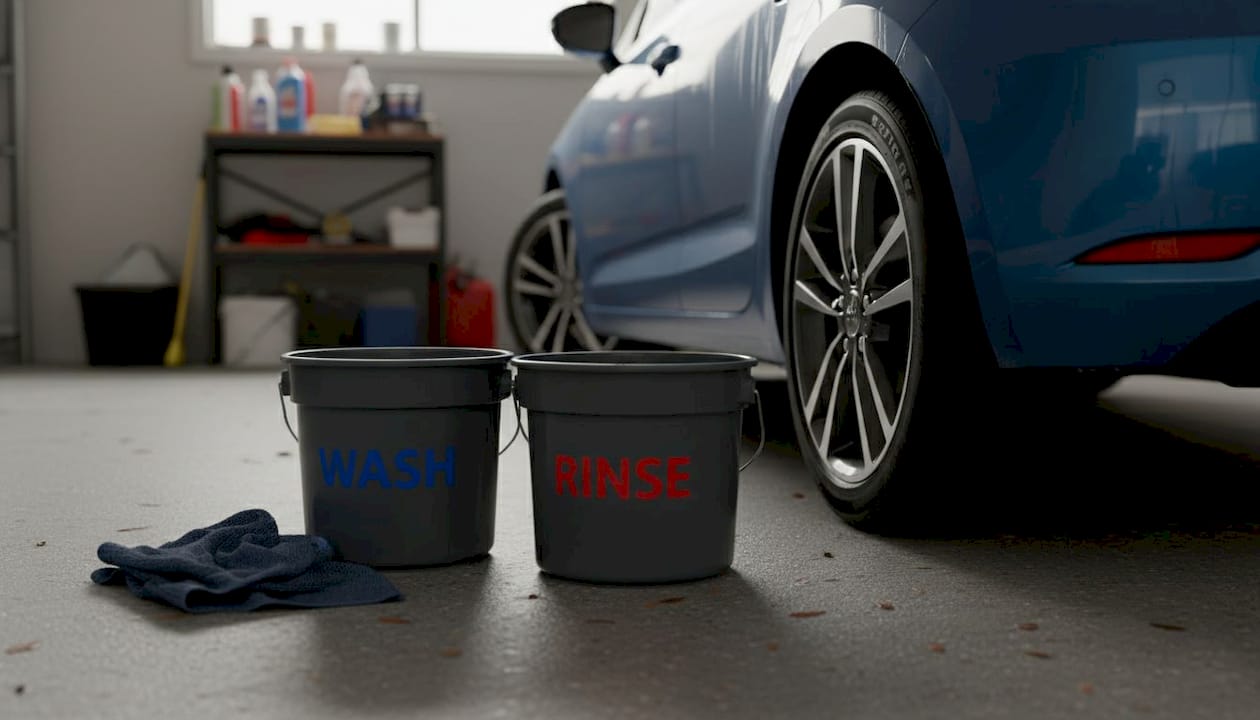
- Rinse your mitt frequently in a dedicated rinse bucket
- Dry with a microfibre towel immediately to prevent water spotting
For a detailed breakdown of the full process, the detailing steps for exteriors guide covers each stage in depth.
Once washed, run the baggie test to check whether your paint needs decontamination. Slide your hand into a clean plastic bag and glide it gently over the paint surface. If it feels rough or gritty rather than smooth, contaminants are embedded in the clear coat. At that point, chemical decontamination is your next step before reaching for a clay bar.
Pro Tip: Chemical decontaminants dissolve iron particles and other bonded contaminants without any physical abrasion. Using them before clay reduces the risk of creating fine scratches, especially on softer paint finishes common on lighter-coloured vehicles.
For more advanced finishing advice, pro detailing tips outlines how professionals approach each stage for a flawless result.
Traditional wash, rinseless techniques and water-smart alternatives
With the right sequence in mind, how you wash matters just as much as when you wash. The method you choose affects water usage, time, paint safety, and environmental impact.
Traditional two-bucket washing remains the gold standard for thoroughness. One bucket holds your soapy wash solution, the other holds clean rinse water. You rinse your mitt in the clean bucket before reloading it with soap, which keeps grit out of your wash water. It uses more water overall, but it’s very effective for heavily soiled vehicles.
Rinseless washing uses a concentrated product diluted in a single bucket. You apply it panel by panel, wipe with a microfibre cloth, and buff dry without rinsing. It uses a fraction of the water and is faster for lightly to moderately dirty vehicles. Multi-mitt methods extend this further by using a fresh, pre-soaked mitt for each panel, reducing the chance of cross-contamination.
Here’s a quick comparison:
| Method | Water usage | Time required | Best for |
|---|---|---|---|
| Two-bucket traditional | High | Moderate | Heavily soiled vehicles |
| Rinseless single bucket | Very low | Fast | Light to moderate dirt |
| Multi-mitt rinseless | Very low | Moderate | Paint-safe panel-by-panel clean |
From an environmental standpoint, the numbers are striking. Hand washing has the lowest carbon footprint at 0.88 kg CO2 per vehicle using gas, compared to automated wash systems that can reach up to 4.46 kg CO2 per wash.
Mobile detailers on the Sunshine Coast routinely use rinseless and waterless techniques because they deliver professional results quickly, with minimal environmental footprint and no need for a fixed water supply.
Key advantages of rinseless methods:
- Significantly less water wasted per wash
- Faster turnaround, ideal for busy schedules
- Equally safe when used correctly with quality microfibre
- Lower risk of water spotting in warm coastal conditions
Pro Tip: In warm Sunshine Coast weather, traditional washing can leave water spots before you finish drying. Rinseless methods let you work one panel at a time, drying as you go, which virtually eliminates this problem.
For a closer look at eco-friendly cleaning steps and how mobile detailing methods apply these techniques on-site, both resources go into practical detail.
Decontamination: claying, chemical treatment and paint safety
Once you’ve washed, deeper contamination needs special attention. A clean-looking surface can still harbour embedded iron particles, industrial fallout, and road tar that a standard wash won’t remove.
Follow this stepwise approach for safe, effective decontamination:
- Complete your standard wash and dry the vehicle fully
- Perform the baggie test to assess contamination levels
- Apply an iron remover or chemical decontaminant spray and allow it to dwell
- Rinse thoroughly once the product has reacted (it will typically turn purple as it dissolves iron)
- Repeat the baggie test. If the surface still feels rough, proceed to clay
- Use a clay bar or clay mitt with lubricant, working in straight lines on one panel at a time
- Wipe the panel clean and inspect before moving on
As car paint decontamination research confirms, you should skip claying if paint feels smooth using the baggie test and use chemical decon first to reduce the risk of marring.
On the Sunshine Coast, salt particles and airborne pollutants from the ocean and surrounding areas embed themselves in clear coat faster than in inland environments. This means decontamination should be part of your routine every three to four months, not just when paint looks dull.
Pro Tip: Never clay a dry panel. Always use a dedicated clay lubricant or a rinseless wash solution as a lubricant. Claying without lubrication can create fine scratches that dull the finish over time.
For more on why this step matters, the exterior detailing benefits resource explains the long-term payoff of proper decontamination before protection.
Protection: ceramic coatings vs. wax for coastal durability
After prepping and decontaminating, selecting your protection is critical. The Sunshine Coast’s combination of salt air and strong UV makes this choice more important than it would be in a milder climate.
Wax is the traditional option. It’s affordable, easy to apply, and gives paint a warm, glossy finish. The catch is durability. In coastal conditions with strong UV, wax typically lasts only one to three months before it degrades and needs reapplying.
Ceramic coatings bond chemically to the clear coat and create a hard, hydrophobic layer that repels water, salt, UV rays, and chemical contaminants. According to ceramic coating research, ceramic coatings provide 2 to 5 or more years of protection, vastly outperforming wax in durability, hydrophobicity, and resistance to salt and UV.
Here’s how they stack up:
| Feature | Wax | Ceramic coating |
|---|---|---|
| Durability | 1 to 3 months | 2 to 5+ years |
| UV resistance | Moderate | Excellent |
| Salt resistance | Low | High |
| Hydrophobic effect | Mild | Strong |
| Application difficulty | Easy | Requires preparation |
| Cost | Low | Higher upfront |
For Sunshine Coast owners, the maths tends to favour ceramic over time. Reapplying wax every two months adds up in both cost and effort. A professional ceramic vs wax protection comparison breaks this down further if you want to weigh the numbers.
Key benefits of ceramic coatings for coastal vehicles:
- Dramatically reduces how often you need to wash
- Prevents salt and mineral deposits from bonding to paint
- Maintains gloss for years without reapplication
- Protects against UV fading and oxidation
Pro Tip: Ceramic coatings require a perfectly clean, decontaminated surface to bond correctly. Any contamination left underneath will be sealed in. This is why professional application typically yields better long-term results than DIY kits.
For a broader look at protection options, the comprehensive detailing guide and the value of regular detailing resource both explain how protection choices affect resale value.
Maintaining the finish: smart habits for lasting shine
Even the best protections need regular care. A ceramic coating won’t save paint that’s been left with bird droppings sitting on it for a week in summer heat.
Here are the habits that make the biggest difference between washes:
- Remove bird droppings, tree sap, and insect splatter as quickly as possible. These are acidic and will etch through clear coat within hours in hot weather
- Keep a spray detailer and a clean microfibre cloth in the car for quick spot cleans
- Rinse the vehicle after beach trips or heavy rain near the coast to remove salt deposits
- Avoid parking under trees where possible, especially during flowering or fruiting seasons
- Stick to a gentle hand wash every one to two weeks rather than letting grime build up
As car paint decontamination guidance confirms, long-term shine is maintained by a regular gentle wash and quick decontamination. Avoid strong household cleaners and harsh sunlight during washing.
Pro Tip: Set a recurring reminder on your phone for your wash schedule. Consistency beats intensity. A quick fortnightly wash does far more for your paint than an occasional deep clean after months of neglect.
For practical scheduling ideas, the mobile detailing workflow and best practices for mobile detailing resources outline how professionals structure ongoing care programmes for local vehicles.
What most guides miss: balancing professional detail and smart DIY
Here’s something most detailing articles won’t tell you: doing everything yourself isn’t always the smartest approach. We see this regularly with customers who’ve spent hours on DIY washes and then applied a ceramic coating over contaminated paint, essentially sealing in the problem.
The most effective approach for busy Sunshine Coast owners is a hybrid model. Handle the routine maintenance yourself, the fortnightly rinse, the quick spot clean, the spray detailer between washes. But leave the protection stages, deep decontamination, and coating applications to a mobile professional.
Why? Because the cost of fixing paint damage from a poorly applied coating or a clay bar used without lubrication often exceeds what a professional service would have cost in the first place. Automating a regular professional detail visit, say every three to four months, is often cheaper long-term than reactive repairs.
DIY isn’t always faster either. Cutting corners on prep work creates problems that take far longer to fix than the time saved. For a realistic look at what professional mobile services actually involve, mobile detailing service examples gives you a clear picture of what’s included and why it matters.
Ready for pro-level shine? Expert help on the Sunshine Coast
If you want these results with zero fuss, Sunshine Coast pros have you covered. At Isaac’s Pro Detailing Sunshine Coast, we come to you, whether you’re at home, at work, or anywhere else on the coast.

Our mobile detailing workflow is built around efficiency and quality. We use professional-grade decontamination products, apply coatings correctly over properly prepared surfaces, and leave your vehicle protected for the long haul. No guesswork, no shortcuts. Our comprehensive car detailing packages are tailored to your vehicle’s needs and your schedule. Ready to book or find out more? Visit Isaac’s Pro Detailing Sunshine Coast and get your vehicle the care it deserves.
Frequently asked questions
How often should I wash my car’s exterior in coastal areas?
Aim for every one to two weeks to combat salt, bird droppings and UV, with more frequent spot cleaning after storms or beach trips.
Is hand washing really better for the environment?
Yes. Hand washing produces only 0.88 kg CO2 per vehicle, compared to up to 4.46 kg for automated systems, making it significantly more eco-friendly.
What’s the best protection for cars exposed to salt air and sun?
Ceramic coatings offer 2 to 5 or more years of protection against salt, UV, and chemicals, far outlasting wax in coastal conditions.
Do I always need to clay my car after washing?
No. Use the baggie test first. If the paint feels smooth, skip the clay and use chemical decontamination instead to reduce the risk of scratching.