
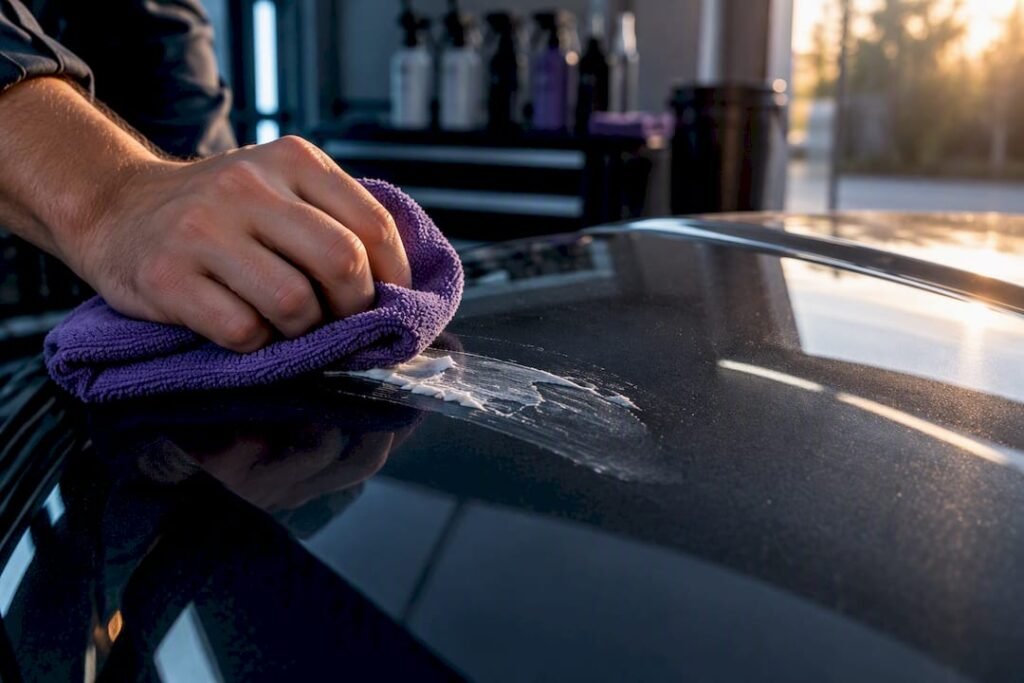
The moment you spot sunscreen stains on car paint, act before it dries any further: wipe the area with a lubricating detail spray or diluted pH-neutral shampoo and a soft microfibre. If the mark doesn’t budge, step up to a paint-safe cleanser or light polish, but leave machine buffing to someone trained. Time is the enemy here. The longer sunscreen sits on your paint, the higher the risk of clearcoat etching that no amount of wiping will fix.
TL;DR:
- Removing fresh sunscreen stains requires gentle wiping with a lubricating spray or mild shampoo followed by blotting; avoid aggressive scrubbing or household solvents.
- Mineral sunscreens with titanium dioxide or zinc oxide can chemically interact with coated surfaces, speeding up gloss loss and surface degradation if left unremoved.
- When stains resist initial cleaning, a dedicated paint cleanser or clay bar can help, but overuse of polishing tools risks clearcoat damage and should be reserved for professional intervention.
- Repeated attempts to remove stubborn stains at home often lead to further damage, making professional correction the safest choice for etched or hazy marks.
- Preemptive measures like protective coatings and habit changes can significantly reduce the risk of sunscreen stains, especially on high-contact panels and during outdoor activities.
Table of Contents
- How do you remove fresh sunscreen marks from car paint?
- What if the sunscreen stain won’t come off?
- Why does sunscreen leave marks on car paint?
- How do you avoid swirl marks and clearcoat damage while cleaning?
- What stops sunscreen stains from happening again?
- What does a professional detailer do differently on sunscreen stains?
- What habits actually stop sunscreen stains for good?
- Book a mobile detail before a small mark becomes a paint correction job
- Sources
- FAQ
How do you remove fresh sunscreen marks from car paint?
Fresh sunscreen residue is the easiest version of this problem you’ll ever face, so don’t let it turn into the hard version. The oils and mineral particles in sunscreen haven’t had time to bond with the clearcoat yet, which means a gentle lift is usually all it takes.
Start with a rinse, not a rag. Grit and dust sitting on top of the sunscreen smear will scratch your paint the second you start rubbing, so hose the panel down first or run a proper two-bucket wash if the car’s due for one anyway. This single step prevents the majority of at-home swirl marks that owners create trying to “just wipe it off” in a hurry.
Once the loose dirt is gone, here’s the sequence that actually works:
- Spray the affected panel generously with a lubricating detail spray, or a well-diluted mild dish soap solution if that’s what you’ve got on hand.
- Let it sit for 20 to 30 seconds. Don’t rub yet. The lubricant needs time to soften the residue.
- Blot gently with a plush microfibre, folding to a clean face as it picks up residue.
- Lift, don’t drag. Move the cloth in straight lines rather than circular scrubbing, and rinse or swap cloths often.
- Rinse the panel and check the result under good light before deciding if you need a second pass.
Removing sunscreen from car paint at this stage rarely takes more than one or two rounds of that routine. A detailing guide from Bowden’s Own backs this up: quick action with a lubricating spray or mild cleanser usually clears fresh marks, while sunscreen left to bake in can force you into machine polishing territory.
You’ll want a short kit for this:
- A plush microfibre towel (at least two, so you’re never using a dirty one)
- A soft detailing sponge for stubborn spots
- A spray bottle with your chosen lubricant or diluted shampoo
- A bucket of clean water for rinsing cloths
Pro Tip:Keep a spare microfibre and a small spray bottle of detail spray in the boot. Beach trips are exactly when this problem happens, and treating a mark within the hour is ten times easier than treating it a week later.
A few mistakes turn a five-minute job into a weekend one. Don’t scrub aggressively straight off the bat, that’s how swirl marks appear on paint that was otherwise fine. Don’t reach for household solvents like methylated spirits or nail polish remover, they can strip wax, sealant, or even attack the clearcoat itself. And don’t work in direct sun on a hot bonnet. The panel surface can sit well above ambient temperature, which flash-dries your product before it’s had a chance to lift anything and makes streaking far more likely.
What if the sunscreen stain won’t come off?
Some marks don’t respond to a spray-and-wipe routine, usually because the sunscreen has had days or weeks to sit and partially bond to the clearcoat. This is where you escalate carefully rather than just scrubbing harder.
The next step up is a dedicated paint cleanser, sometimes sold as a “paint cleanse and restore” product. These are formulated to break down bonded contaminants without the cutting action of a compound. Apply a small amount to an applicator pad, work it into a section no bigger than a car door panel using light, overlapping motions, then buff the residue off with a fresh microfibre before it fully hazes over. Working in small sections matters, if the product dries across a whole panel before you buff it, you’re creating a new problem to fix.
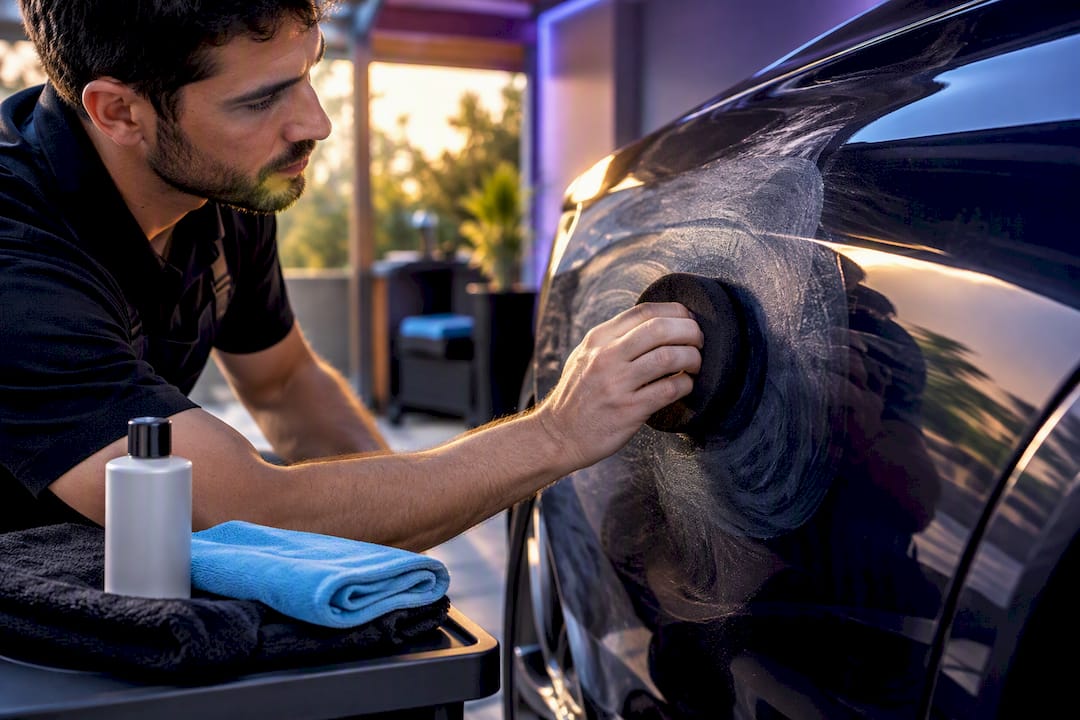
If the surface still feels rough or shows embedded contamination after cleansing, a clay bar or a liquid decontamination product is the next move. Clay lifts bonded particles physically rather than chemically, and it’s worth doing this before any polishing step, polishing over contamination just grinds grit into the paint instead of removing it.
From there, you’re choosing between a light hand polish and machine polishing:
- A hand-applied light polish suits mild haze or the faint edges left after a stain lift.
- Machine polishing, done with a dual-action polisher and the right pad and compound combination, is for marks that have genuinely etched the clearcoat.
- Excessive compounding removes clearcoat thickness permanently. There’s no undo button on that, which is why over-correcting at home is riskier than the stain itself.
Pro Tip:If a paint cleanser or light polish hasn’t shifted the mark after two careful attempts, stop. Repeating the same failed step with more pressure is how a $30 problem turns into a $600 respray.
There are clear signals that tell you it’s time to stop DIY-ing and book a professional. Visible etching, meaning the mark has a texture you can feel with a fingernail or see as a dull outline even after cleaning, is one. A loss of gloss that appears after you’ve used a cleaner, rather than before, is another, that’s a sign the product reacted with something on the surface rather than just lifting residue. And if sunscreen residue is still visible after two properly executed attempts with the right products, further scrubbing won’t help. As carsales notes, sunscreen left to bake in over a season can require full cut-and-polish restoration to bring the finish back.
Why does sunscreen leave marks on car paint?
Sunscreen isn’t designed to sit on painted surfaces, but its ingredients are built to be stubborn on skin, which is exactly why they’re stubborn on your bonnet too. Mineral, or inorganic, sunscreens rely on titanium dioxide and zinc oxide to physically block UV rays. Both are fine white powders suspended in an oily base, and both can leave a chalky residue if the carrier oil evaporates before you wipe it off.
Organic (chemical) sunscreens use different UV-filtering compounds and tend to leave a thinner, oilier film that’s usually easier to shift. That’s the reason two people can have “the same” sunscreen stain problem with very different removal difficulty, the formulation matters as much as the exposure time.
Polyethylene glycol, a common thickening and emulsifying ingredient, adds to the problem by helping the product cling to a surface rather than running off. Under direct sun and heat, this residue doesn’t just sit there passively. Lab testing referenced in a technical bulletin on sunscreen and coated surfaces shows titanium dioxide and zinc oxide can chemically interact with coated finishes, accelerating gloss loss and surface degradation compared with untreated panels exposed to the same sun.
That combination, mineral particles plus heat plus UV, is why a mark that looked minor on Sunday can look etched by the following weekend if you don’t get to it.
How do you avoid swirl marks and clearcoat damage while cleaning?
Before you touch any cleanser or polish stronger than a basic wash, run this checklist. It takes two minutes and it’s the difference between fixing the stain and creating a second one.
- Patch test first. Apply your product to a small, hidden area, like inside the fuel door or a lower rear quarter panel, and check it after 24 hours for discolouration, dulling, or haze before using it on a visible panel.
- Work on a cool panel in the shade. Hot paint dries product too fast and increases the odds of streaking or hazing.
- Use soft microfibres or foam applicator pads only, never a scourer, kitchen sponge, or anything with texture that isn’t designed for paint.
- Apply light pressure. If you’re pressing hard enough to feel resistance, you’re pressing too hard.
- Skip acetone, methylated spirits, and other strong solvents entirely, they can strip protective layers and, in some cases, soften the clearcoat itself.
Over-aggressive cleaning is a genuinely common cause of visible swirl marks, according to detailing guidance on safe wash technique from Diamondbrite, which recommends a proper pre-wash and two-bucket method specifically to reduce the fine scratching that heavy-handed wiping causes.
If you notice dulling or a hazy patch appear partway through cleaning, stop immediately. Rinse the area, let it dry, and inspect under direct light before deciding whether to continue or call in a professional.
What stops sunscreen stains from happening again?
Prevention here is mostly about habits, with protective coatings doing the heavy lifting underneath. Wiping your hands before touching the door handle, giving the car a quick rinse after a beach day, and checking door sills and the boot lip for smears (they’re a magnet for sunscreen-covered hands and towels) will catch most problems before they set.
The bigger lever is what’s on your paint before the sunscreen ever lands on it. Traditional carnauba wax, spray sealants, and ceramic coatings all create a barrier that reduces how strongly contaminants can bond to the clearcoat, which is precisely why a quick wipe works on a protected car and does nothing on bare paint. None of these make paint immune to chemical staining, as the RACV’s guide to paint protection points out, but they buy you time and make the wipe-down far more effective.
- Wax needs reapplication regularly depending on exposure.
- Spray sealants generally last several months and offer stronger chemical resistance than wax.
- Ceramic coatings, professionally applied, can last multiple years and offer strong resistance to staining and etching.
If you’re at the beach every weekend, live near salt air, or your car spends most of its life parked outdoors, a ceramic coating or paint protection film on high-contact panels like the bonnet and roof is worth the outlay. For everyone else, keeping sun protection for your paint topped up and inspecting high-touch panels monthly covers most of the risk.
What does a professional detailer do differently on sunscreen stains?
Professional workflows follow a set order for a reason: inspect, clean, decontaminate, polish, protect. Each step exists to stop you undoing the previous one, and it’s the same approach mobile detailers use on genuinely stubborn contamination.
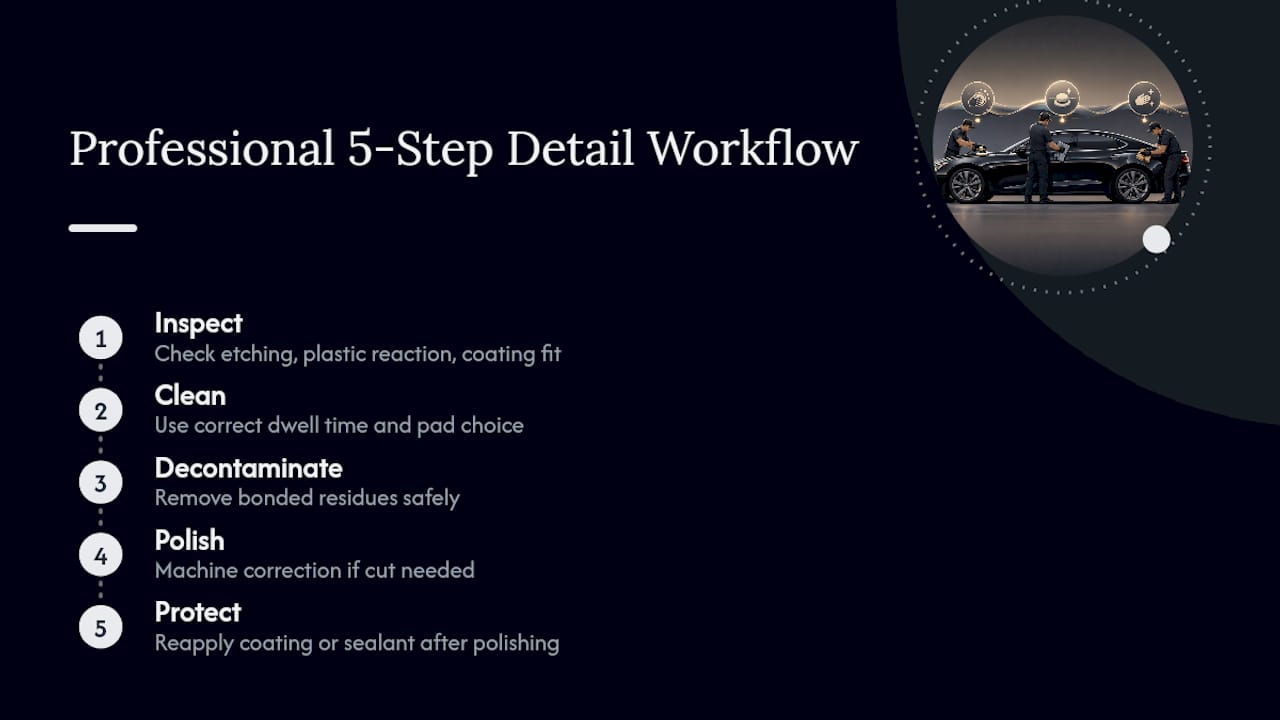
The inspection stage is where DIY attempts often go wrong before they even start. A trained eye checks for edge etching around trim, reaction on plastic mouldings next to the painted panel, and whether an existing coating or sealant is compatible with the cleaning product about to be used, three things most owners never think to check.
Dwell time and pad choice matter more than product strength. A cleanser left too long, or a pad that’s too aggressive for the level of contamination, removes more clearcoat than the stain ever would have. Mobile detailers also tend to schedule this work for early morning or late afternoon specifically to keep panels cool, which controls how the product behaves and reduces streaking, a timing trick most home efforts skip entirely.
If a cut and polish is genuinely required, that’s the stage where machine correction and protection go hand in hand, since polishing without reapplying protection just leaves bare paint exposed to the next sunscreen mark.
What habits actually stop sunscreen stains for good?
Most repeat sunscreen stains trace back to the same three mistakes: reaching for a household solvent because it’s what’s under the sink, working on a hot panel because that’s when you noticed the mark, and skipping the patch test because “it’s just sunscreen.” All three are avoidable.
The fix is boring but effective. Keep a small microfibre kit in the car. Give the bonnet and door sills a quick wipe after applying sunscreen, before you even get in. Top up your sealant or wax on the schedule it needs rather than when you remember.
A five-item checklist covers it: rinse before wiping, lubricate before lifting, patch test before cleansing, work cool and shaded, and reapply protection every few months.
— isaac’s
Book a mobile detail before a small mark becomes a paint correction job
Mobile detailing services offer an alternative to driving to a shop and waiting around by coming to your home, workplace, or wherever the car is parked, and sorting the problem on-site with professional-grade products. If a sunscreen mark has gone past a home wipe-down, our cut and polish service corrects etching and haze without guessing at pad pressure or dwell time. A typical mobile detailing appointment starts with an inspection of the affected panels, followed by a recommended remediation plan based on the findings, and a protective follow-up to help prevent the same spot from staining again.
For cars that see regular sun and sand, the Ultimate Protection Package combines correction with longer-term coverage, while the Graphene spray sealant coating package suits owners who want stronger chemical resistance than wax without committing to a full ceramic coating. Every job is generally quoted before starting, with the expectation of no hidden extras afterward. If you’ve spotted a stubborn mark this week, book an assessment and get a straight answer on what it’ll take to fix it.
Sources
- Removing sunscreen marks from paint
- Tech Bulletin sunscreen
- How to keep your car’s paint pristine this summer
- How to protect car paint: wax & coatings explained | RACV
FAQ
How do you remove sunscreen marks from car paint?
Wipe fresh marks with a lubricating detail spray or diluted mild shampoo and a soft microfibre, using a spray, wait, blot motion rather than scrubbing. For marks that resist this, move up to a paint-safe cleanser and, if needed, a light hand polish, following the step-by-step removal method above.
Will sunscreen damage car paint?
It can, particularly mineral sunscreens containing titanium dioxide and zinc oxide, which are shown to interact with coated surfaces and accelerate gloss loss under sun exposure, according to technical testing on sunscreen and coatings. The damage risk rises the longer the sunscreen sits on the panel in the heat.
How do you get sunscreen stains out of a car?
For exterior paint, work through the graded steps: rinse, lubricate, then wipe, then paint cleanser or light polish if needed, always with a patch test first. For interior plastics and trim, a mild detergent or diluted isopropyl solution often works better than the products used on paint, since plastics react differently to painted panels.
Is a sunscreen stain on car paint permanent?
Not usually, if you act while it’s still fresh. Marks left for months can bond into the clearcoat and require professional cut-and-polish correction to fully remove, but very few sunscreen stains are truly beyond repair with the right escalation steps.
What does Isaac’s Pro Detailing charge for paint correction?
Pricing depends on the vehicle and the extent of correction needed, current packages and pricing are listed on the detailing service page. A mobile inspection will confirm which service, from a light polish to a full cut and polish, actually suits the damage.