
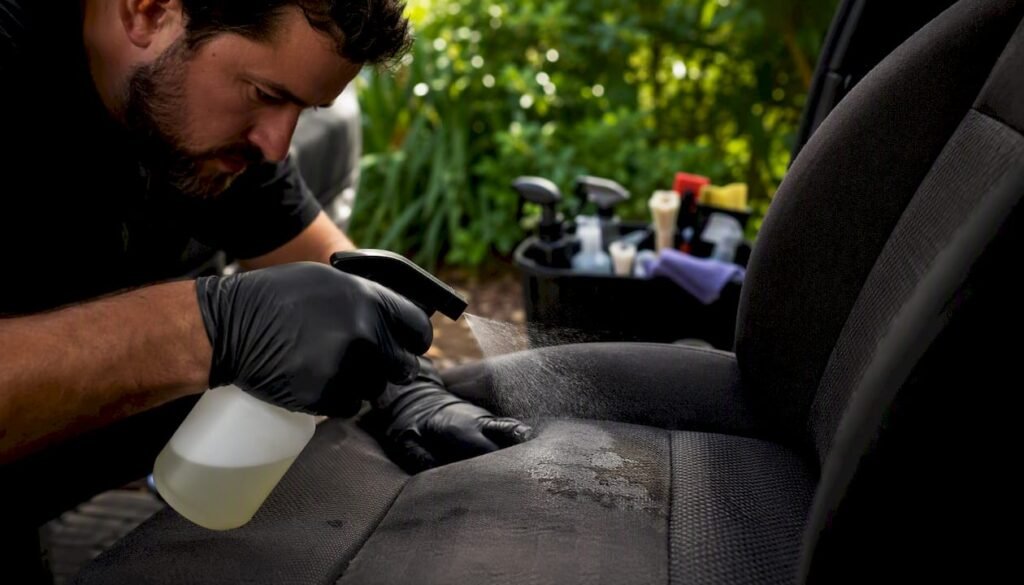
Remove the source first, ventilate immediately, then match your method to the odour type. That three-step sequence is the core of every effective odour removal approach, whether you’re dealing with pet urine in a car, smoke in a rental property, or mould in a commercial kitchen. The full odour removal techniques list below covers everything from activated carbon and enzymatic digesters to ozone treatment and encapsulation sealers, with Australian safety notes throughout.
Priority checklist — do these first:
- Remove the source. No treatment works long-term if the source remains.
- Ventilate. Open windows, run fans, increase air changes before applying anything.
- Clean the affected surface with an appropriate cleaner (enzymatic for organics, solvent for grease).
- Capture residual odour molecules with activated carbon, zeolite, or a HEPA + carbon air cleaner.
- Neutralise with a chemical neutraliser, enzymatic digester, or oxidative treatment matched to the odour type.
- Seal porous surfaces if residue is embedded and cannot be fully removed.
If the odour involves sewage, severe mould, asbestos risk, or persistent VOCs you cannot identify, stop and call a licensed professional before proceeding.
Key takeaways
Matching the removal method to the odour source and substrate is the single most important factor in whether a treatment works the first time or needs repeating.
| Point | Details |
|---|---|
| Remove the source first | No deodorising treatment lasts if the physical source of odour remains in place. |
| Match method to odour type | Enzymatic digesters suit biological sources; ozone and hydroxyl suit smoke and VOCs; encapsulation suits embedded residues. |
| Adsorption needs maintenance | Activated carbon and zeolite capture odour until saturated; pair with a neutraliser to prevent breakthrough. |
| Australian regulatory duty | Businesses must prevent odour impacting neighbours; check EPA Victoria or EPA NSW guidance before large interventions. |
| Isaac’s Pro Detailing | Mobile extraction, enzymatic treatment, and ozone deodorisation delivered to your location across the Sunshine Coast. |
Table of Contents
- Three preparation principles before you start any odour treatment
- 1. Activated carbon, zeolite, and baking soda: adsorption and filtration
- 2. Deep cleaning and source removal: extraction, steam, and enzymatic cleaners
- 3. Ozone, hydroxyl generators, and catalytic oxidation
- 4. Fogging and ULV vapour-phase deodorisers
- 5. Enzymatic and biological digesters for organic odours
- 6. Sealing and encapsulation for persistent residues
- 7. Ventilation, air changes, and HVAC interventions
- 8. When to call a professional and Australian regulatory points to know
- 9. Vehicle interior odour removal: what professional detailers actually do
- A practical note on what actually matters
- Isaac’s Pro Detailing handles the hard odour jobs on the Sunshine Coast
- Sources
Three preparation principles before you start any odour treatment
Getting the diagnosis right saves you from applying the wrong method twice. Before reaching for any product, work through these three steps.
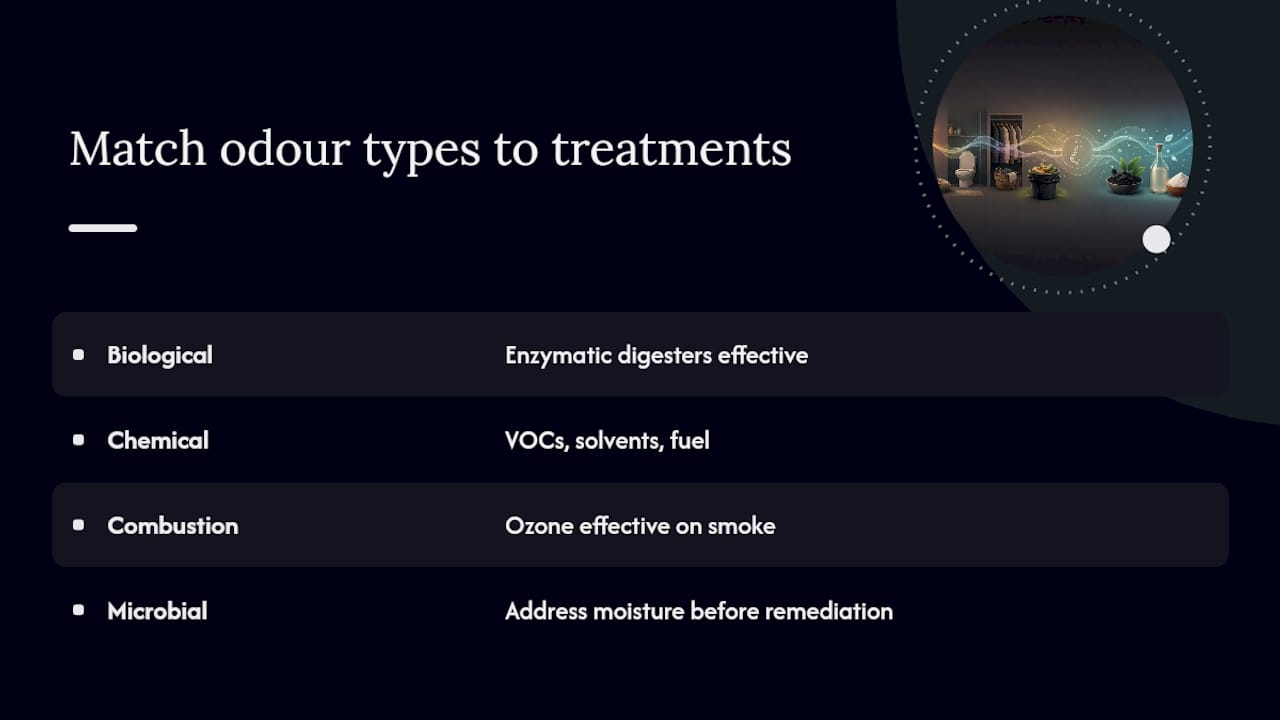
1. Identify the source type. Odours fall into a few broad categories: biological (pet urine, faeces, decomposing food), chemical (VOCs, solvents, fuel), combustion (smoke, fire residue), and microbial (mould, mildew). Each responds to a different treatment. Enzymatic digesters work brilliantly on biological sources but do nothing for smoke. Ozone is effective on smoke but inappropriate for active mould remediation without addressing moisture first.
2. Scale your response to the space and intensity. A single baking soda bowl handles a mild fridge smell. A smoke-damaged room after a fire needs extraction, oxidative treatment, and possibly encapsulation. Applying a whole-room intervention to a spot problem wastes product and time; applying a spot treatment to a whole-room problem guarantees failure.
3. Safety before anything else. Wear nitrile gloves and eye protection as a baseline. For strong chemical odours or suspected mould, add an N95 respirator. Evacuate children, elderly occupants, and pets before using any oxidative treatment. Under EPA Victoria’s general environmental duty, businesses have an obligation to prevent odour impacting community enjoyment — which means commercial operators should check whether their treatment method or the odour itself requires reporting to their local council before starting work.
Pro Tip:Photograph and document the affected area before treatment. If the job needs a second pass or a professional, that record helps them assess the situation accurately and quote correctly.
1. Activated carbon, zeolite, and baking soda: adsorption and filtration
Adsorption and absorption are distinct mechanisms. Adsorption (activated carbon, zeolite) captures odour molecules on the surface of highly porous material. Absorption traps molecules inside a material. Both are effective for VOCs and common odourous compounds, but both require media replacement once saturated.
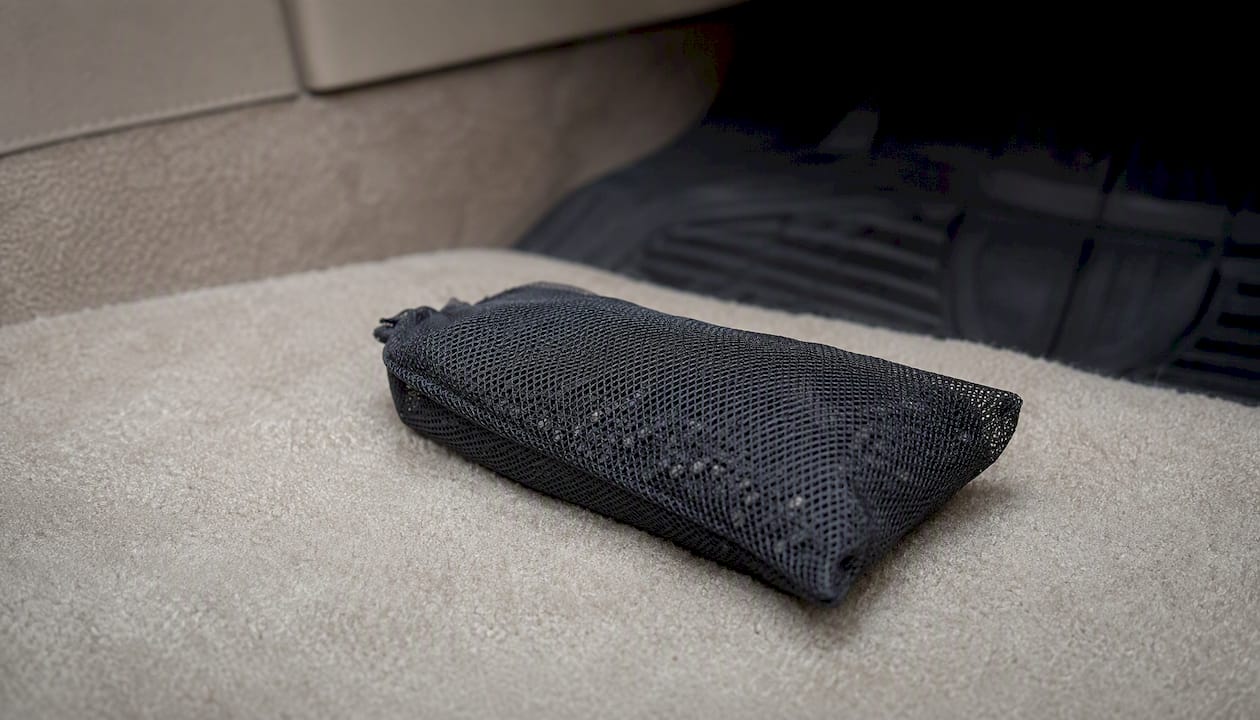
Activated carbon is the workhorse here. A bag of activated charcoal in a mesh pouch placed in a car, wardrobe, or bathroom will capture a wide range of VOCs and musty smells but requires replacement or solar reactivation periodically. Zeolite works similarly and handles ammonia-based odours (pet urine, cigarette smoke) particularly well. Baking soda (sodium bicarbonate) absorbs acidic odour molecules and is best for mild, contained sources like fridges and bins.
For whole-room or vehicle use, a portable air cleaner combining a HEPA filter with an activated carbon layer addresses both particulates and gaseous odours simultaneously — see our guide on clean car glass for practical cleaning methods that improve perceived cleanliness and reduce scent clinging to textiles. HEPA alone does not capture VOCs.
Signs your media is saturated:
- The odour returns within hours of placing fresh media.
- The carbon pouch smells of the absorbed odour itself.
- Air cleaner performance drops noticeably between filter changes.
Pairing capture with a neutraliser that chemically alters odour molecules prevents breakthrough once the media is full — this combination is considered best practice by odour control practitioners.
Pro Tip:Spread baking soda directly onto dry carpet, leave it for 30 minutes, then vacuum thoroughly. It won’t fix a deep urine stain, but it handles surface-level musty smells quickly and cheaply.
2. Deep cleaning and source removal: extraction, steam, and enzymatic cleaners
No odour removal technique on this list works permanently if the physical source remains. This is the step most DIY attempts skip.
Why source removal is mandatory:
- Pet urine soaks through carpet backing into the underlay and subfloor. Treating only the carpet surface leaves the urine crystals below, which re-activate with humidity.
- Cooking grease embedded in rangehood filters and wall tiles off-gasses continuously.
- Mould produces mycotoxins and musty VOCs until the colony is physically removed and the moisture source is fixed.
- Decomposing organic matter (a dead rodent in a wall cavity, for example) must be physically removed before any deodorising treatment has any lasting effect.
Step-by-step for carpets and upholstery:
- Blot or scrape up any solid or liquid residue.
- Apply an enzymatic cleaner generously, covering the full affected area plus a 10cm border.
- Allow the dwell time specified on the product (typically 10–20 minutes for pet urine).
- Extract with a wet/dry vacuum or carpet extractor. Hot water extraction is more effective than cold for grease and protein-based residues.
- Allow to dry fully — typically 4–12 hours depending on humidity and airflow — before assessing residual odour.
- Repeat if the odour persists after drying. One application is often insufficient for heavy contamination.
Enzymatic digesters break organic molecules into odourless, water-soluble byproducts and are the preferred professional choice for biological sources. For pet-friendly vehicles, enzymatic treatment combined with hot water extraction is the standard first step before any oxidative or sealing work.
3. Ozone, hydroxyl generators, and catalytic oxidation
Oxidative methods destroy odour molecules rather than capturing or masking them. They suit smoke, volatile organics, and persistent biological odours that have penetrated porous surfaces.
Ozone (O₃) is generated by UV or corona discharge machines and oxidises odour compounds on contact. It penetrates soft furnishings, carpet fibres, and HVAC ducting effectively. The catch: ozone at treatment concentrations is hazardous to humans, animals, and some materials (rubber seals, certain plastics). The space must be fully evacuated during treatment and ventilated for at least 30–60 minutes afterwards before re-entry.
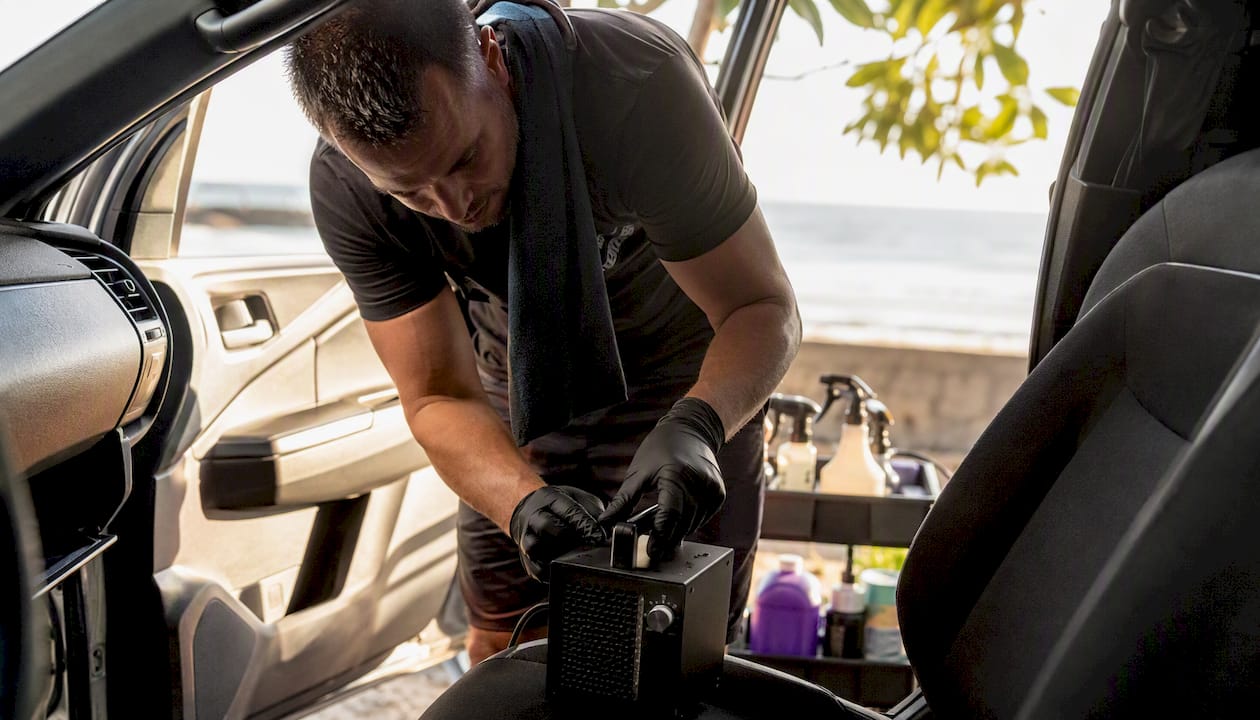
Hydroxyl generators produce hydroxyl radicals (·OH) that react with and break down VOCs. They are generally considered safer for occupied or semi-occupied spaces than ozone, though professional guidance on concentration and dwell time still applies.
Catalytic and thermal oxidation are industrial-scale approaches. For large, low-concentration VOC streams, combining adsorption concentration (zeolite rotor or activated carbon bed) with catalytic oxidation reduces both energy use and equipment size — a practical design pattern for commercial food processing, waste handling, or manufacturing facilities.
Chlorine dioxide kits (available from Australian suppliers such as DeOdor PRO) are a strong chemical oxidiser option for enclosed spaces like vehicles and boats. They require correct sizing for the treated volume and PPE during application.
Safety checklist for oxidative treatments:
- Evacuate all occupants, including pets, before starting.
- Post warning signs on all entry points.
- Wear appropriate PPE (gloves, eye protection, respirator rated for oxidising gases).
- Check material compatibility — ozone degrades natural rubber and some adhesives.
- Ventilate thoroughly before re-entry and test air quality if possible.
Under the NSW EPA’s technical framework for odour management, commercial operators using oxidative treatments at scale may need to document their approach and demonstrate compliance with odour emission standards.
4. Fogging and ULV vapour-phase deodorisers
Fogging machines and ultra-low volume (ULV) applicators atomise a deodorising solution into fine droplets that penetrate concealed spaces, soft furnishings, and air gaps that surface sprays cannot reach. They suit large-area deodorising after fire, flood, or heavy contamination, and are widely used in commercial food facilities, warehouses, and vehicle interiors.
Vapour-phase systems and surface foaming deodorisers can provide rapid relief in receiving bays or processing zones, but long-term control requires source management and filtration alongside them.
Coverage and residue considerations:
- ULV fogging covers large volumes quickly but leaves a fine residue on surfaces. Choose a food-safe or residue-free formulation for kitchens and vehicle interiors.
- Vapour-phase systems (passive or active diffusion of a neutralising agent) work continuously at low concentration and suit enclosed spaces like storage rooms or vehicle cabins.
- Contact deodorisers applied by fogging work on the surfaces the droplets reach. Concealed cavities (wall voids, under-floor spaces) need direct injection or a separate treatment.
Safety checklist for fogging applicators:
- Wear a respirator, eye protection, and chemical-resistant gloves.
- Evacuate the space and seal HVAC intakes to prevent chemical spread.
- Follow the product’s re-entry interval — typically 30–60 minutes after fogging.
- Check the product’s SDS (Safety Data Sheet) for environmental disposal requirements, particularly near stormwater drains.
5. Enzymatic and biological digesters for organic odours
Enzymatic products are the most targeted tool for organic odour sources: pet urine, faeces, vomit, food residues, and drain build-up. They work by introducing specific enzymes (protease, lipase, amylase, urease) that chemically break down the odour-causing organic molecules into simpler, odourless compounds.
How to apply them correctly:
- Remove as much of the physical residue as possible first.
- Saturate the affected area — the enzyme solution needs to reach the same depth as the contamination.
- Keep the area moist during the dwell period (cover with plastic wrap if needed). Enzymes need moisture to work.
- Allow the full dwell time: 15–30 minutes for surface applications, several hours for deep carpet or drain treatment.
- Extract or blot, then allow to dry completely.
- Reassess after drying. Repeat if any odour remains.
When biological options outperform other methods:
- Drain and waste bin odours caused by organic build-up respond better to enzymatic drain cleaners than bleach, which kills surface bacteria but doesn’t break down the underlying organic film.
- Pet urine in carpet underlay requires enzymatic treatment to neutralise uric acid crystals — standard carpet cleaners and steam alone do not break down uric acid.
- Food residues in commercial kitchen grease traps are best managed with bacterial digesters that continuously break down fats, oils, and proteins.
6. Sealing and encapsulation for persistent residues
Some odour sources cannot be fully removed. Smoke residue in plasterboard, urine that has penetrated a concrete subfloor, or fire damage in wall cavities may be physically inaccessible or too extensive to extract. Encapsulation seals the residue in place and prevents further off-gassing.
When to choose encapsulation over removal:
- Porous building materials (plasterboard, timber framing, concrete) that have absorbed smoke or urine and cannot be replaced without major structural work.
- Walls and ceilings with nicotine or smoke staining where the odour persists after cleaning.
- Contaminated carpet underlay where the subfloor beneath has also been affected.
Types of sealers used for odour encapsulation:
- Shellac-based primers (such as Zinsser BIN) are highly effective for smoke and nicotine odours on walls and ceilings. They dry fast and block odour migration through subsequent paint layers.
- Water-based odour-blocking primers suit lower-intensity applications and are easier to clean up.
- Polyurethane sealers are used on concrete subfloors to lock in urine or biological contamination before laying new flooring.
Apply the sealer only after the surface has been cleaned as thoroughly as possible. Sealing over active contamination reduces but does not eliminate odour migration over time.
Pro Tip:Test the sealer on a small, inconspicuous area first. Some shellac-based products react with certain existing paint finishes or adhesives, and checking adhesion before committing to a full wall saves a costly rework.
7. Ventilation, air changes, and HVAC interventions
Ventilation is the first-line response to almost any indoor odour event. It dilutes odour concentration, removes contaminated air, and reduces the load on every other treatment you apply.
Immediate ventilation steps:
- Open windows on opposite sides of the space to create cross-ventilation.
- Position a box fan in one window blowing outward to actively exhaust contaminated air.
- Run bathroom and kitchen exhaust fans continuously during and after cleaning.
- For vehicles, open all doors and windows and run the cabin fan on fresh-air mode (not recirculation).
For persistent or embedded odours, increasing air changes per hour (ACH) matters. Residential spaces typically run at 0.5–1 ACH naturally; during active odour remediation, mechanical ventilation targeting 4–6 ACH significantly accelerates odour dissipation.
HVAC upgrades and interventions:
- Upgrade to a MERV 11–13 filter to capture fine particulates carrying odour compounds.
- Add a dedicated activated carbon canister to the return air duct for continuous VOC capture.
- Have ducts inspected and cleaned if the HVAC system itself is distributing odour (common after smoke events or mould growth in ductwork).
- For commercial spaces, engage a licensed HVAC technician before modifying air change rates or adding carbon canisters — Australian building codes govern minimum ventilation rates and any changes to commercial systems.
Combining adsorption concentration with catalytic oxidation is the industrial equivalent of this principle: concentrate the VOC load first, then destroy it, rather than trying to treat a large dilute airstream directly.
8. When to call a professional and Australian regulatory points to know
Some jobs are beyond DIY scope. Knowing where that line sits prevents health risks and wasted effort.
Call a professional when:
- The odour source is unknown or inaccessible (wall cavities, subfloor, HVAC ducting).
- Smoke, fire, or flood damage affects multiple rooms or structural materials.
- Sewage or black water contamination is involved.
- Mould coverage exceeds roughly 1 square metre or is in the HVAC system.
- Persistent VOCs suggest a chemical spill, fuel leak, or industrial contamination.
- Asbestos-containing materials may be present in the affected area.
- Oxidative treatments (ozone, chlorine dioxide) are needed at a scale beyond a single room or vehicle.
Australian regulatory context: EPA Victoria’s general environmental duty requires businesses to take reasonable steps to prevent odour impacting the community. EPA NSW publishes a technical framework and field odour survey methods to standardise odour assessment and guide regulatory responses. If your odour issue affects neighbouring properties or involves a scheduled activity (waste handling, food processing, manufacturing), contact your local council or state EPA before beginning treatment. Permits or licences may apply. Both the EPA Victoria odour guidance and EPA NSW odour management framework are publicly available starting points.
What to tell a professional: the odour type, when it started, what you’ve already tried, and whether any occupants have experienced health symptoms. That information cuts diagnostic time and helps them quote accurately.
9. Vehicle interior odour removal: what professional detailers actually do
Vehicle interiors concentrate odours in a small, sealed space with multiple porous surfaces: carpet, headliner, seat foam, door trims, and HVAC ducting. A professional approach follows a defined sequence rather than applying a single product and hoping.
The professional workflow:
- Inspection and smell mapping. Identify the primary source (under seats, boot, HVAC vents, carpet backing) before touching anything.
- Physical source removal. Remove floor mats, vacuum thoroughly, extract any solid or liquid contamination.
- Hot water extraction.Carpet and seat extraction with appropriate cleaning solution removes embedded biological residue that vacuuming misses.
- Enzymatic treatment. Apply an enzymatic digester to affected carpet, upholstery, and boot lining. Allow full dwell time before extracting.
- Oxidative treatment (where appropriate). For smoke or persistent VOCs, a hydroxyl generator or ozone machine is run in the sealed vehicle after all occupants and pets are clear. Ozone is particularly effective at penetrating headliner foam and door card cavities.
- Air scrubbing. A HEPA + carbon air scrubber run inside the vehicle post-oxidation captures residual particulates and VOC fragments.
- Encapsulation or fabric protection. Where residue cannot be fully removed, an odour-blocking sealer or fabric protector is applied to lock in remaining compounds and prevent re-emission.
- Final inspection. The vehicle is re-assessed after drying. A second pass is scheduled if any odour remains.
For a typical pet-urine job, turnaround is usually 4–6 hours on-site, with a 12–24 hour drying period before the vehicle is fully assessed. Smoke jobs often need a second ozone cycle 24 hours after the first.
Isaac’s Pro Detailing operates as a fully mobile service across the Sunshine Coast, bringing extraction equipment, enzymatic products, and ozone deodorisation to your location — home, work, or wherever the vehicle is parked.
Pro Tip:Run the vehicle’s HVAC on recirculation with the fan on high during the last 10–15 minutes of an ozone treatment. This draws ozone through the cabin air system and treats the evaporator and ducting, which is where mould and musty smells often originate.
A practical note on what actually matters
The most common mistake in odour removal is skipping source removal because it’s inconvenient. Pulling up carpet, cutting out contaminated underlay, or finding a dead rodent in a wall cavity is unpleasant work. So people spray a deodoriser instead, get two days of relief, and wonder why the smell came back.
Every technique on this list is a tool, not a solution in itself. Ozone is genuinely impressive for smoke odours, but run it in a car that still has urine-soaked carpet and you’ve oxidised the surface while the uric acid crystals underneath remain intact. The smell returns within a week.
Realistic expectations matter too. Heavy smoke damage in a vehicle or property often needs two or three treatment cycles over several days. Pet urine that has been sitting for months may require carpet removal to treat the subfloor. Telling a client the job needs a second pass is better than overpromising on a single treatment.
Isaac’s Pro Detailing handles the hard odour jobs on the Sunshine Coast
Persistent vehicle odours — pet urine, cigarette smoke, mould, food spills — need more than a spray and a vacuum. Isaac’s Pro Detailing brings professional-grade extraction equipment, enzymatic cleaners, and ozone deodorisation directly to your location across the Sunshine Coast. No need to drop the car at a shop and wait.
The service covers the full workflow: inspection, hot water extraction, enzymatic treatment, ozone or hydroxyl deodorisation, and fabric protection to lock in results. Every job is matched to the odour type and substrate — no one-size-fits-all approach. Eco-friendly product options are available for clients who prefer them.
Check the full service menu and pricing or request a quote directly. For a detailed look at what the interior cleaning process covers, the car interior cleaning guide walks through every step.
Sources
- University of Tokyo — focus feature on porous materials and adsorption
- EPA Victoria — odour guidance
- EPA NSW — managing odour from stationary sources
- Aquiptec — catalytic combustion systems and concentration technologies
- Byers Scientific — FAQ on odour neutralisation vs masking
Check your local council and state EPA pages before undertaking large-scale oxidative or chemical treatments, particularly in commercial or multi-tenancy settings.