
TL;DR:
- Deep cleaning a car’s fabric thoroughly before applying protectant is essential to prevent contamination sealing and ensure effectiveness. Reapplying every six to twelve months maintains stain resistance and UV stability, especially in coastal and high-traffic environments. Professional mobile services offer reliable extraction and application, essential for delicate materials like Alcantara or heavily soiled interiors.
The proven car fabric protection workflow involves two steps: deep clean the fabric completely, then apply a fabric protectant once the fibres are fully dry. That order is non-negotiable. Applying protectant over soiled or damp fabric seals contamination into the weave and cuts the product’s effectiveness significantly. Get the sequence right and you’re looking at a 24–48 hour cure time with reapplication every 6 months for high-traffic use and every 12 months for lighter use.
DIY vs hire a pro — quick guide:
- DIY is fine for surface stains, light soiling, and routine recoats on standard polyester or nylon upholstery
- Hire a professional when you’re dealing with heavy staining, persistent odour, embedded coastal sand, fragile materials like Alcantara, or when you simply want a guaranteed commercial-grade result
- Isaac’s Pro Detailing Sunshine Coast is the recommended local option for mobile fabric protection on the Sunshine Coast — they come to you, which matters when cure protocols require a controlled environment
Table of Contents
- What should you check before you clean or coat anything?
- How do you deep clean car fabric safely before applying protectant?
- How do you apply fabric protectant so it actually works?
- What maintenance routine keeps fabric protection working long-term?
- Which fabrics and materials need special treatment?
- When should you hire a professional mobile detailer?
- Key takeaways
- Why this workflow matters more in Australia than most guides admit
- Get your fabric protection done properly, without the effort
- Useful sources
What should you check before you clean or coat anything?
Good preparation stops two common failures: protectant that won’t bond because of hidden grime, and moisture trapped under a cured coating.
Pre-job checklist:
- Remove all items from the cabin, including floor mats, child seats, and boot liners
- Vacuum every seam, crevice, and under-seat pocket with a crevice tool before touching any liquid
- Note visible stains, odour sources, and areas with embedded sand or pet hair
- Check fabric condition: look for worn pile, fraying, or discolouration that signals the fabric may not accept protectant evenly
- Identify any leather, vinyl, or Alcantara trims that need a different product
Decide on extraction depth before you start. If you can see staining, smell anything musty, or the fabric has embedded coastal sand (common on Sunshine Coast vehicles), you need a full wet extraction, not just a surface spray. Surface-only cleaning on heavily soiled seats leaves oils and particulates in the lower fibres, and the protectant bonds to those instead of the fabric itself.
Pro Tip:Pick a small, hidden area — the back of a seat base or under a headrest — and do your colourfastness spot test there first. Wet the fabric lightly, blot with a white cloth, and check for colour transfer. Document which zones get the heaviest traffic (driver’s seat bolsters, rear passenger centre) so you can apply an extra coat there.
How do you deep clean car fabric safely before applying protectant?
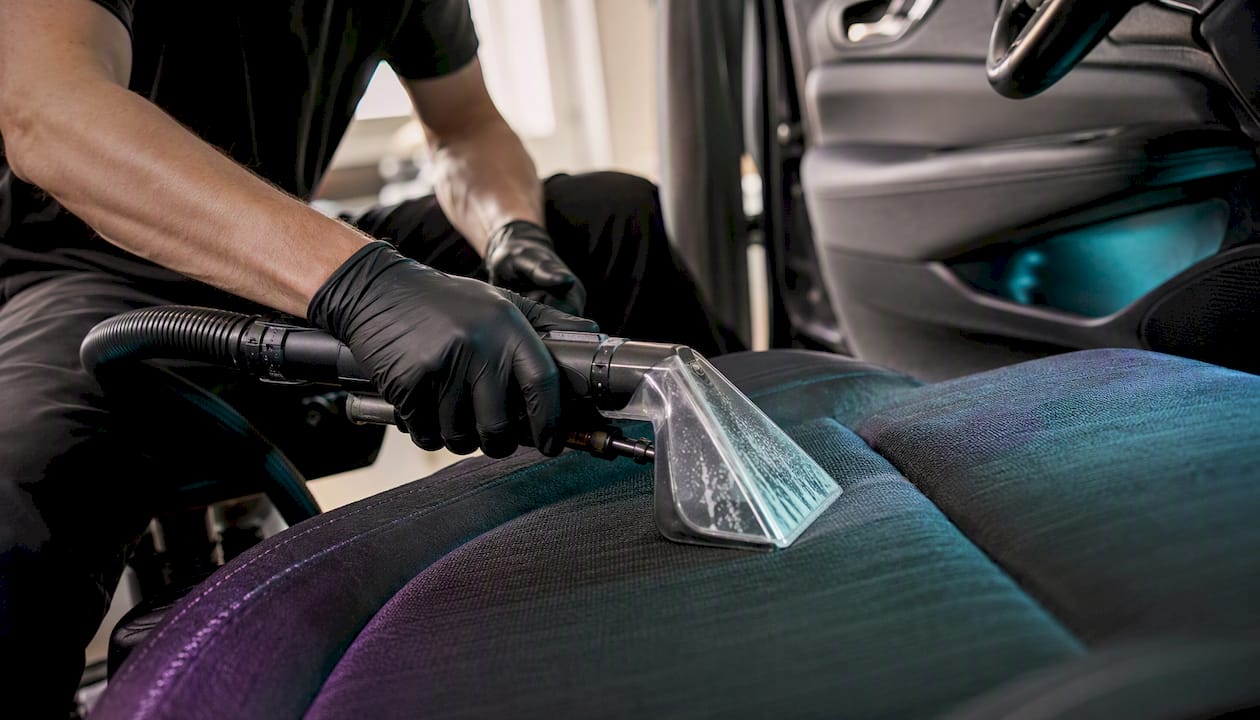
The two-step workflow starts with a thorough clean using an all-purpose cleaner (APC) formulated for automotive textiles. Household cleaners with high solvent content or strong fragrances can strip fabric treatments and leave residues that interfere with bonding.
Cleaning sequence:
- Vacuum thoroughly with a brush-head attachment on flat surfaces and a crevice tool along seams and under headrests
- Dilute your APC to the manufacturer’s recommended ratio for fabric (usually lighter than for hard surfaces)
- Spot-test the diluted cleaner on your identified colourfastness area and wait two minutes
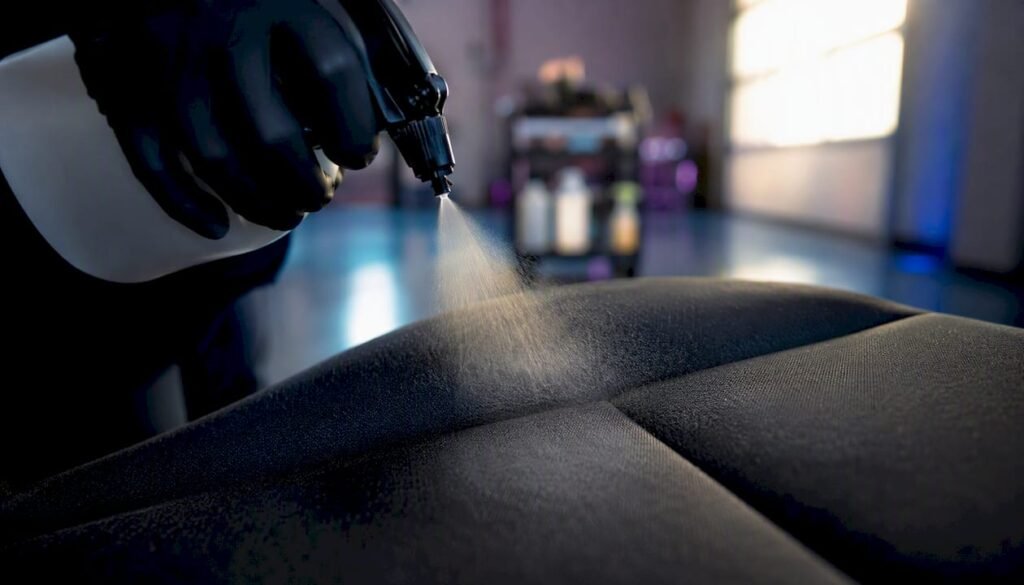
- Spray lightly across a manageable section — one seat at a time — rather than soaking the whole interior
- Agitate gently with a soft-bristle brush using circular strokes; work from the top of the seat down
- Extract moisture with a wet/dry extractor or blot firmly with a clean microfibre cloth — never rub, always blot
- Repeat extraction passes until the cloth comes away clean
- Allow the fabric to air-dry completely before moving to Step 2; in humid Queensland conditions, this can take several hours
Never oversaturate. Excess moisture wicks deep into seat foam and padding, where it can take days to dry fully — and trapped moisture under a cured protectant is a direct path to mould. If you’re working in summer humidity on the Sunshine Coast, run the car’s air conditioning on recirculate for 20–30 minutes after extraction to pull residual moisture out of the foam.
Common mistakes to avoid:
- Using undiluted APC directly on fabric (causes discolouration and fibre damage)
- Rubbing stains instead of blotting (spreads the stain and damages pile)
- Skipping extraction and letting fabric air-dry from a saturated state (traps dirt in lower fibres)
- Applying protectant before the fabric is fully dry to the touch throughout, not just on the surface
For a detailed upholstery cleaning guide for Sunshine Coast conditions, including tool recommendations and extraction tips, Isaac’s Pro Detailing has a dedicated resource worth bookmarking.
How do you apply fabric protectant so it actually works?
Professional guidance consistently recommends a “mist and buff” approach rather than saturating the fabric. The goal is even coverage that penetrates the fibres without pooling, which would stiffen the fabric and block breathability.
Application technique:
- Hold the spray nozzle 15–20 cm from the surface for an even mist pattern
- Apply in overlapping passes across the seat, working section by section
- Use a foam or microfibre applicator to work the product lightly into the fibres immediately after misting
- Apply a second coat to high-wear zones (bolsters, centre rear seat) once the first coat is touch-dry
- Keep windows open and the cabin ventilated throughout; Australian summer heat accelerates off-gassing from spray products
Environmental controls matter here. Applying protectant in direct sunlight or above 35°C causes the product to flash-dry on the surface before it can penetrate the fibres. Aim for a shaded location with airflow. In coastal areas, close windows after application to keep salt air and dust off the wet coating during initial cure.
Curing time reference
| Product type | Surface dry | Deep cure |
|---|---|---|
| Retail water-based protectant | 1–3 hours | 24–48 hours |
| Professional-grade nanoparticle coating | 3 hours surface | 24–48 hours full |
| High-traffic second coat | Add 2–4 hours | Same 24–48 hour window |
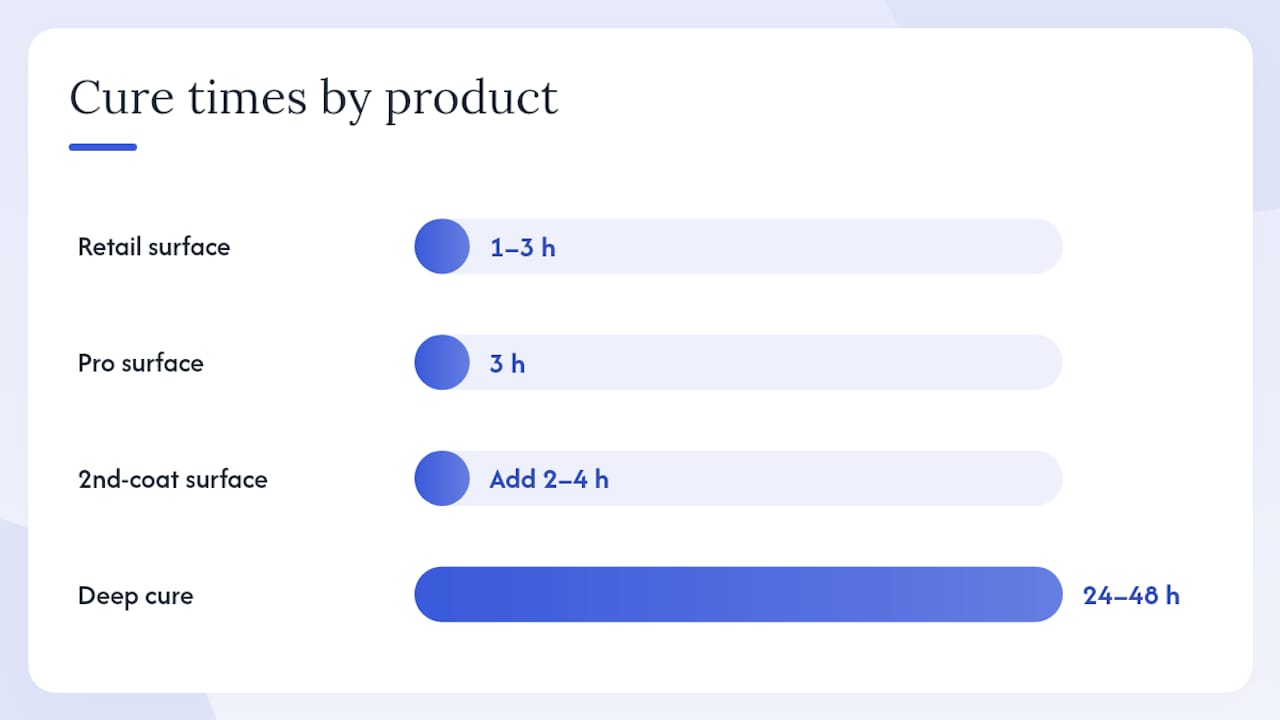
Nanoparticle-based coatings like CARPRO CQUARTZ Fabric 2.0 claim surface cure in around 3 hours, but full fibre-level bonding still requires the full 24–48 hour window. Don’t sit on treated seats or allow contact with liquids during that period.
Pro Tip:Once the surface is dry to the touch (usually 1–2 hours), drop a few beads of water onto a treated area. If they bead and roll off cleanly, the product is working. If they soak in, the coat was too thin or the fabric wasn’t fully dry before application — let it cure further and reassess.
What maintenance routine keeps fabric protection working long-term?
Protection is not permanent. It buys time between spills and the fabric, but it degrades with UV exposure, abrasion, and cleaning frequency.
Routine maintenance checklist:
- Vacuum weekly in high-traffic vehicles; fortnightly for lighter use
- Blot spills immediately rather than wiping; the protectant gives you a window, not immunity
- Use only pH-neutral fabric cleaners for spot-cleaning — harsh solvents strip the coating
- Avoid steam cleaning over protected fabric more than once per reapplication cycle
Reapplication schedule
| Usage level | Reapplication interval |
|---|---|
| High traffic (daily driver, kids, pets, coastal sand) | Every 6 months |
| Standard use | Every 12 months |
Bowden’s Own Fabratection specifies exactly these intervals: 6 months for high-traffic use and 12 months for lighter use. Coastal Sunshine Coast conditions — salt air, sand tracked in from the beach, and intense UV — push most vehicles into the high-traffic category even without kids or pets.
The water bead test is your most reliable reapplication prompt. Run it monthly. When beads start spreading rather than rolling, it’s time to recoat. A DIY recoat using a retail protectant costs roughly $20–$50 in product. A professional recoat from Isaac’s Pro Detailing includes extraction, surface prep, and application with commercial-grade product, which delivers more consistent coverage on complex seat shapes.
For everyday interior maintenance tips that extend the life of your protection between recoats, Isaac’s Pro Detailing has a practical guide covering quick-clean habits and product choices.
Which fabrics and materials need special treatment?
Not all car interiors respond the same way to fabric protectants, and using the wrong product on the wrong material causes permanent damage.
Material compatibility guide:
- Standard polyester/nylon upholstery: Compatible with most water-based fabric protectants; lowest risk of adverse reaction
- Alcantara and microsuede: Require a water-based, biodegradable formulation; products like Bowden’s Own Fabratection are specifically listed as compatible with these materials; always spot-test first
- Suede (genuine): Highly sensitive; use only products explicitly rated for natural suede and apply sparingly
- Leather and vinyl trims: Do not use fabric protectant on these surfaces; they need a dedicated leather protection treatment with different chemistry
- Convertible fabric roofs: Require exterior-rated protectants with UV and water-resistance ratings far above interior products
Safety and ventilation during application:
- Work in a ventilated space or with all doors open; spray products concentrate quickly in a closed cabin
- Wear nitrile gloves and avoid prolonged skin contact with concentrated formulations
- Mask off leather bolsters, plastic trim, and glass before spraying to prevent overspray residue
- Dispose of concentrated product residues according to local council guidelines, not down the drain
Australian UV intensity is not a minor variable. UV inhibitors in coatings engineered for Australian conditions slow fibre degradation and colour fading that would otherwise accelerate in Queensland’s high-UV environment. Antibacterial properties in these formulations also matter in humid coastal conditions, where untreated fabric can develop mould and mildew faster than owners expect.
When should you hire a professional mobile detailer?
Some jobs are genuinely beyond what a DIY kit can fix cleanly. The criteria are straightforward.
Hire a professional when:
- Staining is deep-set or covers large areas of the seat face
- There’s a persistent odour that surface cleaning hasn’t resolved (often requires ozone treatment or full extraction)
- The fabric is Alcantara, genuine suede, or another delicate material where a wrong product choice causes irreversible damage
- You want a guaranteed commercial-grade result with documented cure protocols
- Time is the constraint — a full DIY clean-and-protect cycle on a family SUV takes most of a day
What Isaac’s Pro Detailing Sunshine Coast provides:
- Mobile extraction equipment brought to your home, workplace, or wherever the car is parked
- Professional-grade fabric protectants with verified compatibility for Alcantara, microsuede, and standard upholstery
- Eco-conscious, water-based product choices that are biodegradable and low-VOC
- Guaranteed curing protocols with correct dwell and dry times observed on-site
- Optional follow-up recoat packages so the protection schedule is managed for you
- Full special services including ozone deodorisation and ceramic coatings when the job calls for more than fabric protection alone
The mobile format means no dropping the car off and waiting. Isaac’s comes to you, completes the job in your driveway, and the vehicle is ready to use once the cure window closes.
Key takeaways
A correctly executed car fabric protection workflow — deep clean first, apply protectant second, verify cure, then maintain on a 6–12 month cycle — is the most reliable method to keep fabric interiors stain-resistant and UV-stable in Australian conditions.
| Point | Details |
|---|---|
| Two-step order is fixed | Always deep clean and fully dry fabric before applying any protectant; reversing the order seals in contamination. |
| Cure time: 24–48 hours | Surface dry happens in 1–3 hours, but full fibre bonding takes 24–48 hours; avoid contact with treated seats during this window. |
| Reapplication: 6–12 months | High-traffic or coastal vehicles need a recoat every 6 months; standard use extends to 12 months. |
| Spot-test every material | Alcantara, microsuede, and genuine suede all require a colourfastness test before full application; leather needs a separate product entirely. |
| Isaac’s Pro Detailing Sunshine Coast | Mobile professional service for extraction, fabric protection, and recoat packages across the Sunshine Coast. |
Why this workflow matters more in Australia than most guides admit
The standard fabric protection advice you find online was largely written for temperate Northern Hemisphere climates. It underestimates two things that are genuinely different here: the UV load and the coastal particulate problem.
Queensland UV ratings regularly hit the extreme band, and that affects fabric interiors even through glass. Fibres degrade faster, dyes fade sooner, and untreated fabric becomes brittle at the surface in ways that make staining harder to reverse. A protectant with UV inhibitors isn’t a luxury in this climate; it’s the difference between seats that look good at five years and seats that look tired at two.
The coastal sand issue is subtler. Fine beach sand tracked in from Sunshine Coast beaches is abrasive at a microscopic level. It works into the weave and acts like sandpaper every time someone sits down, gradually breaking down both the fabric and any coating on top of it. That’s why the 6-month reapplication interval for coastal drivers isn’t conservative — it’s accurate.
Prevention genuinely costs less than repair. A full professional extraction and reprotection after heavy staining or mould takes significantly longer and costs more than a routine recoat on a well-maintained interior. The workflow in this guide exists to keep you on the cheaper, easier side of that line.
Get your fabric protection done properly, without the effort
Isaac’s Pro Detailing Sunshine Coast takes the guesswork out of automobile upholstery care by bringing commercial-grade equipment and professional-grade protectants directly to your location. No workshop drop-off, no waiting around.
The service covers full seat and carpet extraction, fabric protection with eco-friendly water-based products, and optional recoat packages so your interior stays protected year-round. For Alcantara, microsuede, or heavily soiled interiors, the professional-grade process delivers results a DIY kit simply can’t match on complex seat shapes and tight seams.
Check the wash menu and service options or review the mobile detailing workflow to see exactly what’s included. Book a session and have it done right the first time.
Useful sources
- Bowden’s Own Fabratection 20L Fabric Protectant
- How to clean and protect car interior fabrics without damaging seats or upholstery
- Interior fabric & leather protection australia | Kovalent Coatings
- How to use HydroThread to protect your car’s interior
- CARPRO CQUARTZ Fabric 2.0
- Car fabric protector — protectME
- Bowden’s Own — how to use interior protection (guidance)
This article provides general information about fabric protection methods and is not a substitute for manufacturer instructions or professional advice. Always follow the specific guidance on your chosen product’s label and confirm suitability for your vehicle’s materials before application.