
TL;DR:
- Seat covers and professional detailing work together to protect vehicle interiors and preserve resale value. Covers block UV rays, abrasion, and spills, while detailing removes deep-seated dirt, bacteria, and stains that covers cannot reach. Combining both approaches ensures long-lasting interior condition, especially under Australian environmental stresses.
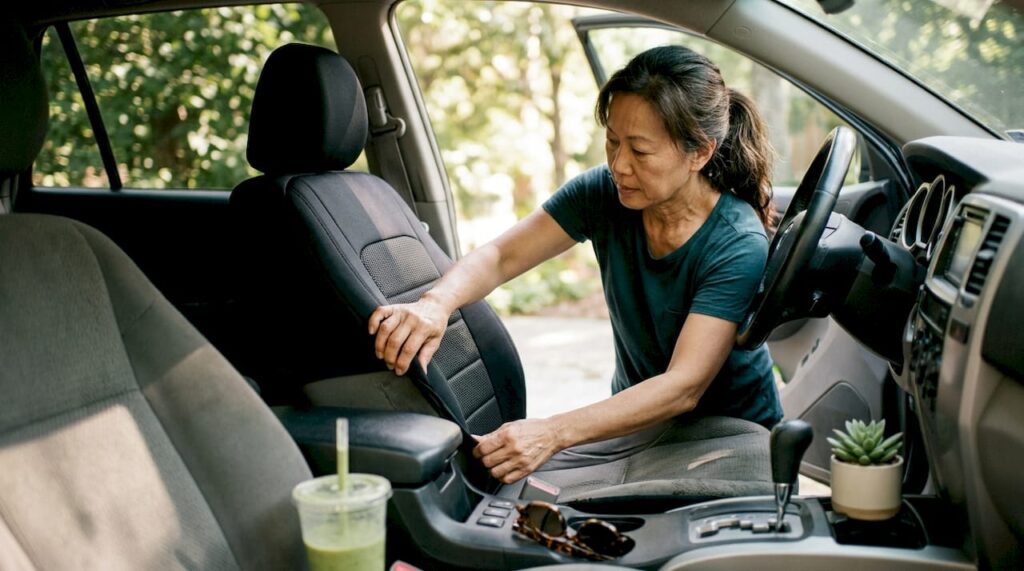
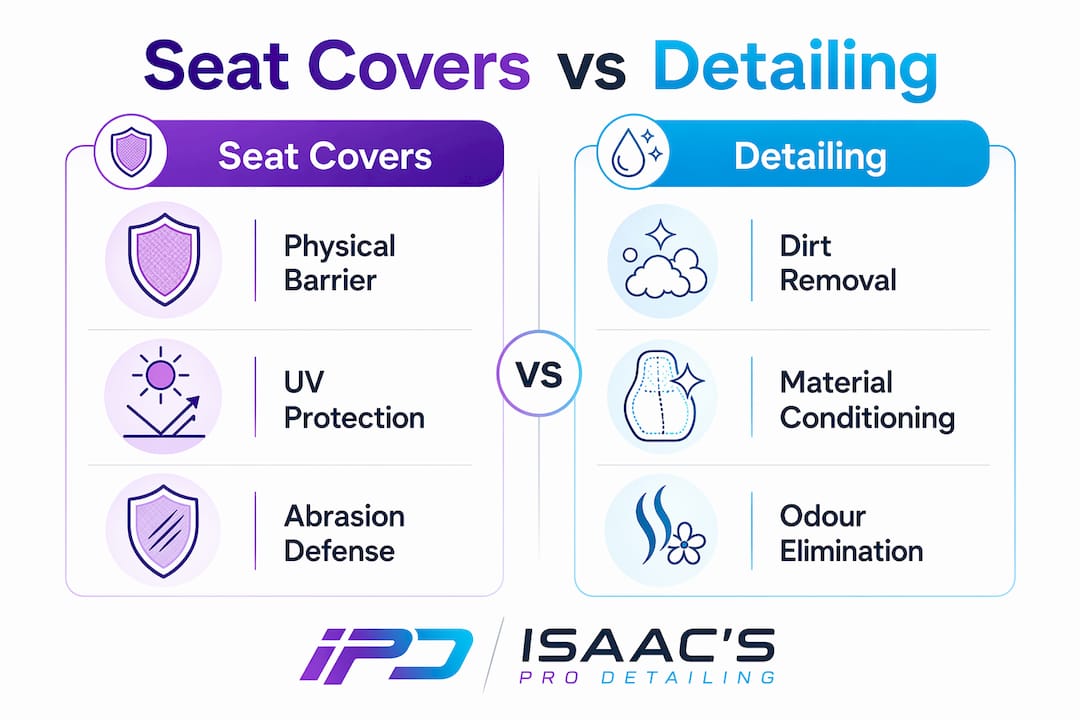
Seat covers and professional detailing are the two primary strategies for protecting a vehicle’s interior, and understanding the role of seat covers vs detailing is what separates owners who preserve resale value from those who face costly repairs. Seat covers act as a physical barrier against abrasion, UV rays, and spills. Professional detailing, the industry term for deep cleaning, restoration, and surface conditioning, addresses contamination that no cover can prevent. Experts confirm that covers and detailing are complementary strategies, not competing ones. Combining both maximises interior longevity, appearance, and resale value for Australian vehicle owners.
How do seat covers protect vehicle interiors?
Seat covers are a physical barrier that blocks the three main causes of seat deterioration: UV radiation, abrasion, and liquid contamination. Australian sun is particularly destructive. UV rays break down foam padding and fabric fibres over time, causing fading, cracking, and structural collapse. A quality seat cover intercepts that radiation before it reaches the original upholstery.
Seat covers preserve resale value on high-investment vehicles by keeping original upholstery in factory condition. For a vehicle priced between $45,000 and $55,000, that protection directly affects what a buyer will pay at trade-in. The cover absorbs the daily punishment so the seat does not have to.
Material choice determines how well a cover performs in specific conditions. Australian drivers typically choose from four main options:
- Neoprene: Water-resistant and durable, suited to trades, surfers, and anyone with wet or muddy gear.
- Canvas: Tough and breathable, the standard choice for farm vehicles and worksites with heavy abrasion risk.
- Sheepskin: Naturally temperature-regulating, popular in Queensland and Western Australia for comfort in extreme heat.
- Leather or leatherette: Stylish and easy to wipe down, but requires conditioning to avoid cracking in coastal climates.
Fit matters as much as material. Ill-fitting generic covers cause friction that damages seats more than no cover at all. Vehicle-specific covers conform to seat profiles and airbag deployment zones, preventing bunching and uneven wear.
Pro Tip:Buy vehicle-specific covers rather than universal-fit options. They cost more upfront but protect airbag compatibility and eliminate the friction that generic covers create.
What does professional detailing involve?
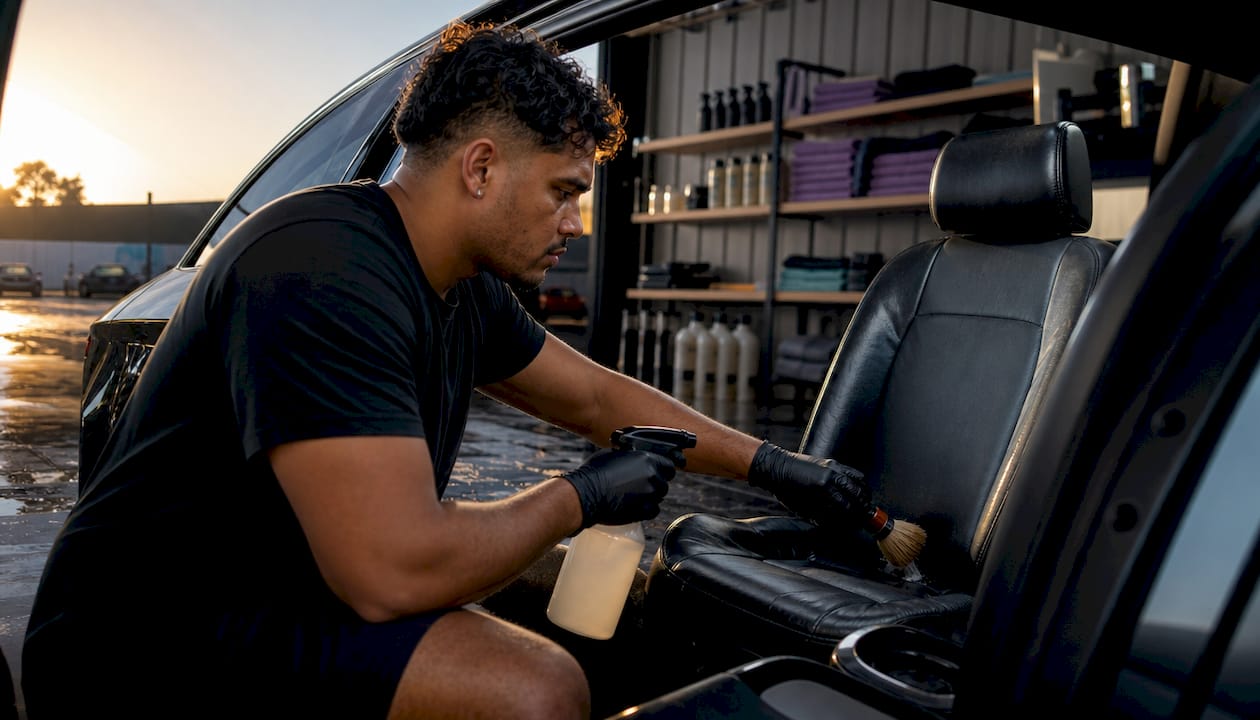
Professional interior detailing is the systematic cleaning, restoration, and conditioning of all interior surfaces using specialised equipment and chemical treatments. It addresses contamination that sits beneath the surface, inside padding, along seat rails, and in crevices that a vacuum and a damp cloth cannot reach.
The core process follows a structured sequence:
- Dry vacuuming and pre-treatment: Loose debris is removed and stains are pre-treated with appropriate chemical agents matched to the surface type.
- Extraction cleaning: Hot water extraction or steam penetrates upholstery padding to lift embedded dirt, salt, bacteria, and odours from deep within the fibres.
- Steam treatment:Professional steam systems are up to 50% more efficient at moisture removal than portable DIY units. That efficiency matters because improper DIY steam cleaning is linked to a significant share of mildew complaints.
- Surface conditioning: Leather receives dedicated conditioner to restore flexibility and resist cracking. Fabric surfaces receive protectant treatments that repel future liquid penetration.
- Final inspection and dressing: Trim, vents, and hard surfaces are cleaned and dressed to complete the interior restoration.
Effective interior detailing requires matching the technique to the material. Leather, alcantara, and woven fabric each respond differently to heat, moisture, and chemical agents. A detailer who applies the wrong method to the wrong surface causes damage rather than preventing it.
Timing is a critical cost factor. Regular maintenance detailing costs significantly less than a full restoration after years of contamination buildup. Waiting until seats are visibly stained or odorous means paying for restorative work that preventive cleaning would have avoided entirely.
Pro Tip:Book an interior detail every three to six months if you use your vehicle daily. That interval keeps contamination from embedding deeply enough to require extraction-level treatment.
When should you choose seat covers, detailing, or both?
The decision depends on your vehicle’s use, its current condition, and the environmental risks it faces. Neither method replaces the other.
| Situation | Best approach | Reason |
|---|---|---|
| New vehicle, daily driver | Seat covers immediately, detail at 6 months | Covers protect factory upholstery from day one; early detailing sets a clean baseline |
| Tradie or worksite vehicle | Heavy-duty canvas or neoprene covers plus quarterly detailing | High abrasion and contamination demand both physical and deep-clean protection |
| Pet owner | Seat covers for hair and scratch protection, detail every 3 months | Pet dander and bacteria embed in fabric; covers reduce volume, detailing removes what remains |
| Coastal vehicle, salt air exposure | Leather conditioning detail every 3 months, covers when parked | Salt accelerates leather cracking; conditioning is non-negotiable, covers add a secondary barrier |
| Visible stains or odours present | Professional detailing first, then covers | Covers over contaminated seats trap moisture and bacteria, worsening the problem |
Applying protectants within the first week of vehicle ownership establishes the strongest long-term foundation for interior maintenance. Early conditioning is far more effective before UV exposure and contamination have begun to degrade the material.
Delaying either method carries real cost. A seat that has absorbed two years of salt, sweat, and UV exposure requires restorative detailing that costs multiples of what a maintenance clean would have. A vehicle without covers that has suffered abrasion from tools or pets may need reupholstery, which no amount of detailing can reverse.
What are the common misconceptions about seat covers and detailing?
Vehicle owners regularly make maintenance decisions based on appearances, and appearances are misleading. The most damaging misconceptions are:
- “My seats look clean, so they are protected.” A spotless interior can still suffer active UV degradation and bacterial growth. Appearance alone does not indicate protection. Professional conditioning is what creates a protective barrier, not cleanliness.
- “I can steam clean my own seats.” DIY steam units lack the extraction power of professional truck-mounted systems. Residual moisture left in padding is the primary cause of mildew growth in vehicle interiors.
- “Any seat cover will do the job.” Generic covers that do not fit the seat profile create friction points. That friction causes more wear than leaving the seat uncovered.
- “Detailing and seat covers do the same thing.” They address entirely different threats. Covers block physical damage. Detailing removes biological and chemical contamination that covers cannot prevent.
- “Leather just needs a wipe down.” Leather requires specialised conditioning cycles to resist UV and salt damage. Standard cleaning products strip natural oils and accelerate cracking rather than preventing it.
“Many owners mistake ‘clean’ seats for ‘protected’ interiors. A spotless interior may still suffer UV or bacterial damage without ongoing professional conditioning. The two are not the same thing, and confusing them is one of the most expensive mistakes a vehicle owner can make.”
The practical fix is straightforward. Use well-fitted covers suited to your vehicle’s specific use, and schedule professional detailing at regular intervals regardless of how clean the interior appears.
How do Australian conditions affect seat covers and detailing?
Australia’s environment creates interior threats that most vehicle care guides written for European or North American climates do not account for. The combination of intense UV, coastal salt air, and worksite dust puts Australian interiors under stress that demands a specific response.
| Environmental factor | Primary damage | Seat cover role | Detailing role |
|---|---|---|---|
| Intense UV radiation | Foam degradation, fabric fading | Blocks UV before it reaches upholstery | Conditions and restores UV-affected surfaces |
| Coastal salt air | Leather cracking, metal corrosion | Reduces direct salt contact on seat surfaces | Removes salt deposits, applies conditioning barrier |
| Worksite dust and grit | Abrasion, embedded particulates | Canvas and neoprene covers absorb abrasion | Extraction removes embedded grit from padding |
| Humidity and moisture | Mildew growth, odour | Water-resistant covers limit moisture ingress | Steam and extraction eliminate existing mildew |
Leather seats in Australia suffer cracking from salt air and UV exposure, and manufacturer warranties often exclude this type of damage. The cracking typically appears first on bolster edges and seat creases, precisely the areas that bear the most contact and flex. Dedicated conditioning applied by a professional detailer delays this process significantly.
Australian drivers select seat cover materials based on their daily use and environment. A Sunshine Coast trade and a Brisbane office worker face different interior threats and need different cover materials. Selecting the wrong material for your conditions reduces protection and increases maintenance frequency. You can also explore common DIY risks when attempting surface restoration without professional guidance, which applies equally to interior care decisions.
Key takeaways
Seat covers and professional detailing work best together: covers block physical and UV damage while detailing removes the biological and chemical contamination that covers cannot prevent.
| Point | Details |
|---|---|
| Covers block physical damage | Well-fitted neoprene or canvas covers prevent abrasion, UV, and liquid damage from reaching original upholstery. |
| Detailing removes what covers cannot | Professional extraction and steam cleaning eliminate embedded dirt, salt, bacteria, and odours from deep within padding. |
| Fit determines cover effectiveness | Vehicle-specific covers outperform generic options by conforming to seat profiles and avoiding friction-related wear. |
| Early care costs less | Starting both covers and detailing on a new vehicle is far cheaper than restorative work after contamination sets in. |
| Australian conditions demand both | Intense UV, salt air, and worksite dust create threats that require physical barriers and professional conditioning simultaneously. |
What I have learned from years of detailing Sunshine Coast vehicles
The most common mistake I see is owners treating seat covers and detailing as an either/or decision. They buy good covers and assume the job is done. Or they book a detail and skip the covers because the seats “look fine now.” Both approaches leave the vehicle exposed.
What I have observed consistently is that vehicles with quality, well-fitted covers and a regular detailing schedule hold their interior condition far longer than those relying on one method alone. The covers reduce the volume of contamination that reaches the seat. The detailing removes what still gets through, conditions the material, and resets the protective baseline. Neither step is optional if you want the interior to last.
The timing question I get most often is: “How often do I really need to detail?” My honest answer is every three to six months for a daily driver in Queensland or coastal New South Wales. The UV load and salt exposure here are not comparable to inland or southern climates. Waiting until you can see or smell the problem means the damage is already done.
One more thing worth saying directly: protecting leather interiors is not optional in coastal Australian conditions. Leather that looks fine in june can be cracking by september without conditioning. The UV and salt combination works faster than most owners expect, and manufacturer warranties do not cover it. Start early, stay consistent, and use both tools.
— Isaac’s
Professional interior care for Sunshine Coast vehicle owners
Isaac’s Pro Detailing brings professional interior detailing directly to your location across the Sunshine Coast, whether that is your home, workplace, or anywhere in between. Every interior service uses extraction equipment, steam cleaning, and surface-specific treatments to address the contamination that seat covers alone cannot prevent.
For vehicle owners who already use quality seat covers, professional detailing completes the protection by conditioning the material beneath and removing what accumulates over time. For those starting fresh, Isaac’s Pro Detailing recommends combining a mobile detailing service with vehicle-specific covers from day one. View the full range of interior detailing services and choose the package that matches your vehicle’s use and condition.
FAQ
What is the main difference between seat covers and detailing?
Seat covers provide a physical barrier against abrasion, UV rays, and spills. Professional detailing removes embedded contamination, conditions materials, and restores surfaces that covers cannot protect on their own.
Should I buy seat covers before or after a professional detail?
If your seats have existing stains or odours, detail first. Placing covers over contaminated seats traps moisture and bacteria. For a clean or new vehicle, fit covers immediately and schedule your first detail within six months.
How often should I get my car interior detailed in Australia?
Every three to six months is the recommended interval for daily drivers in coastal or high-UV regions like the Sunshine Coast. Regular maintenance detailing costs significantly less than restorative work after contamination builds up.
Do seat covers damage original upholstery?
Poorly fitted generic covers can cause friction damage worse than no cover at all. Vehicle-specific seat covers conform to the seat profile and airbag zones, preventing bunching and uneven wear.
Can I steam clean my own car seats safely?
DIY steam units lack the extraction power of professional systems. Professional steam cleaning is up to 50% more efficient at moisture removal, which directly reduces the risk of mildew growth in seat padding.