
TL;DR:
- Maintaining your car regularly prevents costly repairs, safety hazards, and lowers long-term expenses.
- A simple monthly checklist of tyre, oil, coolant, and light checks can be completed in under 15 minutes.
- On the Sunshine Coast, extra attention to salt, humidity, and UV effects ensures your vehicle’s longevity and safety.
Life on the Sunshine Coast is good. But keeping your car in top shape while juggling work, family, and a social calendar? That’s where many owners quietly fall behind. A few skipped checks here, a forgotten fluid top-up there, and suddenly you’re facing a repair bill that could have been avoided entirely. The good news is that a simple, consistent car care routine takes less time than you think, and it pays back every minute you invest. This guide gives you a practical, step-by-step checklist built for real life on the Sunshine Coast.
Table of Contents
- Why regular checks matter for busy owners
- Your essential monthly DIY car checklist
- When to DIY and when to call in the professionals
- How often should you service your car? (And how to avoid over-servicing)
- Sunshine Coast twist: special tips for our region and conditions
- The real-world shortcut: what busy owners actually do (and what really works)
- Take the stress out of car care with professional support
- Frequently asked questions
Key Takeaways
| Point | Details |
|---|---|
| Monthly quick checks | Spending five minutes on tyres, fluids, and lights each month reduces breakdown risk and saves time long-term. |
| Balance DIY with pro help | Home checks keep you safe between logbook services, but always schedule professional maintenance for complex issues. |
| Stick to your logbook | Follow the manufacturer’s service schedule to avoid unnecessary costs and keep your car warranty valid. |
| Adjust for Sunshine Coast | Coastal conditions mean extra attention to rust, paint, and underbody—localised care protects your car’s longevity. |
Why regular checks matter for busy owners
Most car problems don’t appear overnight. They build slowly, quietly, over weeks of missed checks and deferred attention. By the time a warning light flickers on or a tyre goes flat on the Bruce Highway, the underlying issue has usually been brewing for a while. For busy owners, the irony is painful: skipping checks to save time often costs far more time in the long run.
The benefits of a regular routine are hard to argue with:
- Fewer breakdowns because you catch issues before they escalate
- Lower repair costs since small problems are cheaper to fix than large ones
- Better resale value because a well-maintained car holds its price
- Safer driving for you, your passengers, and everyone else on the road
- Less stress knowing your car is not going to let you down
The risks of neglect are equally clear. Worn tyres on wet Sunshine Coast roads in wet season are a serious safety hazard. Low engine oil can cause catastrophic engine damage. A failed wiper blade in a Queensland downpour is both dangerous and illegal.
“The best car care routine is the one you’ll actually stick to. A quick check every few weeks beats a thorough check you never get around to.”
A Sunshine Coast car care checklist that fits your real schedule is worth more than a perfect system you abandon after a month. The RACV’s DIY approach frames a recurring short ‘walkaround’ inspection between logbook services as the most practical option for busy owners, focusing on tyres, lights, wipers, and key fluid levels.
Pro Tip: Set a recurring five-minute walkaround into your weekly calendar. You don’t need to check everything every week, but even a visual scan can catch a flat tyre, a cracked light cover, or a leaking fluid before it becomes a major problem.
Your essential monthly DIY car checklist
A monthly check takes about 10 to 15 minutes if you know what you’re looking for. A busy-owner checklist should cover both monthly items like tyre pressure, lights, wipers, and fluid levels, alongside periodic professional services like oil changes and tyre rotations. Here’s how to work through it efficiently:
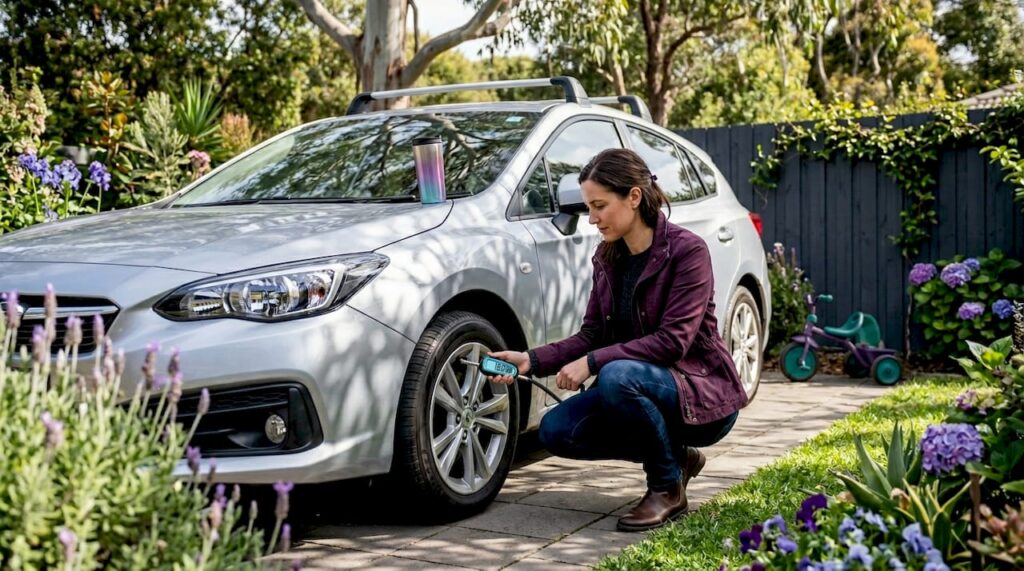
- Tyre pressure: Check all four tyres (and your spare) with a gauge. Correct pressure is on a sticker inside the driver’s door or in your owner’s manual. Under-inflated tyres wear faster, use more fuel, and handle poorly.
- Tyre tread depth: Look for the wear indicators moulded into the tread grooves. If the tread is level with those indicators, it’s time for new tyres. Uneven wear can also signal an alignment issue.
- Engine oil: Pull the dipstick with the engine cold, wipe it, reinsert, and pull again. Oil should sit between the minimum and maximum marks and look amber to light brown. Dark, gritty oil needs changing.
- Coolant level: Check the overflow reservoir (not the radiator cap on a hot engine) and ensure the level sits between the MIN and MAX lines.
- Brake fluid: The reservoir is usually near the firewall. Fluid should be close to the MAX line and look clear to pale yellow. Dark fluid can indicate moisture contamination.
- Lights: Walk around the car and check headlights, tail lights, brake lights, indicators, and reverse lights. A second person or a reflective surface makes this easier.
- Wipers: Run them with washer fluid and check for streaking, skipping, or squealing. Wiper blades on the Sunshine Coast degrade quickly in the UV and heat.
- Air conditioning: Run it briefly and check it’s cooling properly. A system that blows warm air may need a regas.
- Rust and dents:Scan the bodywork for bubbling paint, rust spots, or dents that could trap moisture and accelerate corrosion, particularly along the sills and wheel arches.
- Washer fluid: Top it up with a proper washer solution, not plain water, especially in summer when bugs and grime are relentless.
| Check | DIY friendly? | Signs of a problem |
|---|---|---|
| Tyre pressure and tread | Yes | Low pressure, uneven wear |
| Engine oil | Yes | Low level, dark/gritty colour |
| Coolant | Yes | Below MIN line |
| Brake fluid | Yes (visual) | Dark colour, low level |
| Lights | Yes | Dim, flickering, or blown bulbs |
| Wipers | Yes | Streaking, squeaking |
| A/C function | Yes (basic) | Warm air only |
| Rust and dents | Yes (spotting) | Bubbling paint, surface rust |
| Wheel alignment | No | Needs a workshop |
| Brake pad depth | No (safely) | Squealing, vibration, long stop distances |
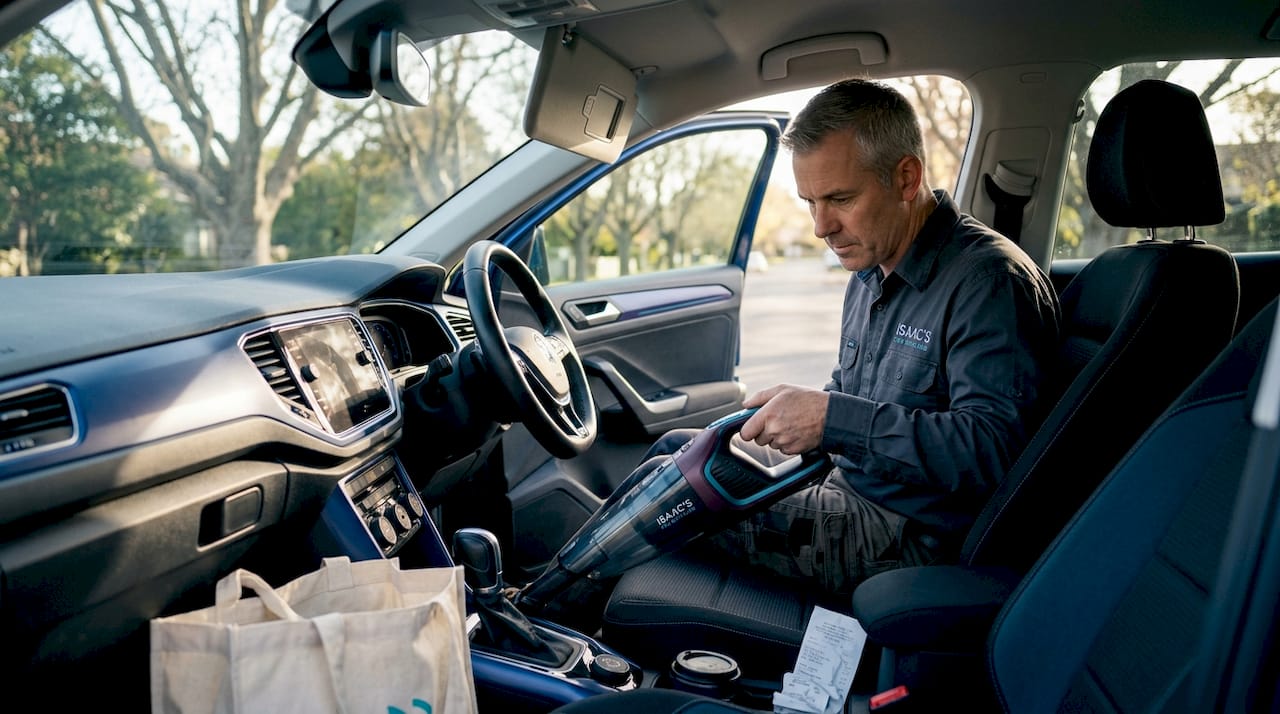
For tips on maintaining vehicle interior alongside your mechanical checks, a regular clean helps you spot issues faster and keeps the cabin pleasant for daily driving.
Pro Tip: Set a monthly calendar reminder on your phone for the first Sunday morning of each month. Do the checks before you wash the car so you can spot any leaks or issues on a clean surface afterward.
When to DIY and when to call in the professionals
Knowing your limits is one of the most valuable skills a car owner can have. Attempting repairs beyond your knowledge can turn a small problem into an expensive one. Here’s a practical breakdown:
Confident DIY tasks:
- Checking and topping up fluid levels
- Replacing wiper blades
- Checking tyre pressure and tread
- Changing a blown globe (in accessible locations)
- Spotting rust, dents, or paint damage early
- Keeping the car clean inside and out
Leave it to a qualified technician:
- Engine warning light diagnosis
- Transmission servicing or repairs
- Brake pad and rotor replacement (unless you’re experienced)
- Electrical fault diagnosis
- Suspension and steering repairs
- Air conditioning regas and leak repair
The RACV explicitly frames DIY checks as complements to scheduled servicing, not substitutes. This is an important distinction. Your walkaround routine catches things between services, but it doesn’t replace the specialised equipment and expertise a technician brings.
A good rule of thumb: if a warning light appears on your dashboard, don’t ignore it and don’t guess. Warning lights are your car’s way of flagging something that needs attention, and modern vehicles have complex enough systems that guessing can cause further damage. Some car safety tips apply to the whole vehicle ecosystem, including your key fob, which can affect whether your car locks and unlocks securely.
For on-site car care that saves you the trip to a workshop, mobile services can handle detailing and cosmetic work at your home or office, complementing the mechanical checks your technician handles.
How often should you service your car? (And how to avoid over-servicing)
Service intervals are one of the most misunderstood areas of car ownership. Maintenance intervals should be driven by your vehicle’s owner’s manual or logbook, not by a mechanic’s preference or a generic “every three months” rule. Over-servicing wastes money, plain and simple.
Here’s a practical reference table:
| Service item | Typical interval | When to check your manual |
|---|---|---|
| Engine oil and filter | 10,000 to 15,000 km or 12 months | Always check: some modern engines go longer |
| Tyre rotation | Every 10,000 km | Depends on drive type (FWD/RWD/AWD) |
| Air filter | Every 15,000 to 30,000 km | More often in dusty conditions |
| Brake fluid | Every 2 years | Check condition at each service |
| Transmission fluid | Every 30,000 to 60,000 km | Varies widely by make and model |
| Spark plugs | Every 30,000 to 100,000 km | Iridium plugs last longer |
| Coolant flush | Every 2 to 5 years | Refer to logbook |
Follow these steps to avoid being over-serviced:
- Read your logbook. It lists every service interval your manufacturer recommends. This is your baseline and your best defence.
- Ask for justification. If a mechanic recommends something not in the schedule, ask them to explain why. A good technician will have a clear answer.
- Track your odometer. Know how many kilometres you drive per year so you can anticipate when services are due rather than relying entirely on a workshop to tell you.
- Keep all receipts. Service records support your warranty and prove to future buyers that the car has been maintained properly.
If you’ve misplaced your logbook, the general default is every six months or 10,000 km, whichever comes first. This applies to most Australian-driven vehicles in average conditions.
Pro Tip: Keep your service book in the glovebox and scan receipts into a folder on your phone. If you ever sell the car, a complete history can add real money to the sale price. Regular detailing saves money in a similar way, protecting your investment and supporting resale value over time.
Sunshine Coast twist: special tips for our region and conditions
The Sunshine Coast is a beautiful place to live, but it’s not kind to cars. Coastal salt air, high humidity, strong UV radiation, and a mix of highway and stop-start suburban driving create a unique set of challenges that standard car care guides from colder climates don’t always account for.
Here’s what to pay extra attention to if you’re a local:
- Salt and rust: Coastal driving exposes your car to salt-laden air, which accelerates corrosion on metal surfaces, brake components, and your undercarriage. A rinse after a beach drive is not just a habit, it’s a smart protective measure.
- UV damage: Queensland sun is brutal on paint, rubber seals, and interior surfaces. Parking in shade, using a quality wax or coating, and conditioning rubber seals regularly can significantly extend their life.
- Air filters: Dusty inland roads combined with coastal humidity can clog air filters faster than in mild climates. Check yours at every service and replace it earlier if driving conditions are particularly harsh.
- Fluid degradation: High temperatures accelerate the breakdown of engine oil, coolant, and brake fluid. In our climate, sticking to the shorter end of recommended intervals is often wise.
- Wipers: The UV here destroys rubber wiper blades quickly. Expect to replace them more often than the generic 12-month recommendation suggests.
Severe driving conditions such as harsh weather, dusty roads, and lots of stop-start traffic may require adjusted service intervals. The owner’s manual remains your baseline, but ask your mechanic to explain clearly if they recommend shorter intervals for your specific conditions.
Understanding why detailing matters for local owners goes well beyond aesthetics. Regular exterior treatments protect paint from salt and UV, while interior cleaning prevents mould and odours that thrive in humid conditions. To maximise vehicle lifespan on the Sunshine Coast, combining mechanical checks with quality detailing is the complete approach.
Pro Tip: After any beach trip or coastal drive, give your car a quick freshwater rinse, paying attention to the undercarriage if possible. It takes two minutes and can meaningfully slow rust formation over the life of the vehicle.
The real-world shortcut: what busy owners actually do (and what really works)
Here’s the honest truth from working with vehicle owners across the Sunshine Coast: perfection is not the goal. The owners who have the best-maintained cars are not the ones who follow every item on an exhaustive list every single week. They’re the ones who do something consistently, month after month, year after year.
Missing a check once is not a disaster. Missing all your checks for twelve months is how you end up stranded on the Nicklin Way with a blown tyre and no idea when you last checked the pressure.
The biggest difference-makers, in order of impact, are tyre pressure, engine oil, and the simple habit of a monthly walkaround. If you only do three things consistently, let them be those. Everything else is a bonus that compounds over time.
The second insight is about outsourcing intelligently. Busy owners often try to do everything themselves until they burn out and do nothing. A smarter approach is to handle the quick five-minute checks yourself and delegate the time-consuming tasks to professionals. Mobile detailing and professional car care saves you hours while ensuring nothing gets missed on the cosmetic and protective side of your vehicle’s care.
The goal is a sustainable rhythm, not a perfect month. Build the habit small, keep it consistent, and your car will reward you with reliability and longevity for years to come.
Take the stress out of car care with professional support
When your schedule is already full, the last thing you need is to spend a Saturday afternoon elbow-deep in your engine bay or driving across town for a detail. That’s where Isaac’s Pro Detailing Sunshine Coast comes in. We come to you, whether you’re at home, at work, or anywhere else that suits your day.

Our mobile detailing workflow is designed specifically for busy Sunshine Coast owners who want professional results without the inconvenience. From interior extraction to ceramic coatings and exterior protection, we handle the time-consuming care so you can focus on everything else in your life. Visit Isaac’s Pro Detailing Sunshine Coast to see our full range of services, transparent pricing, and genuine customer reviews. Booking is straightforward, and we bring everything we need to your door.
Frequently asked questions
What is the minimum I should check monthly if I’m really pressed for time?
Focus on tyre pressure, lights, engine oil, and coolant, because these quick checks take less than five minutes and cover the most common causes of breakdowns. A monthly check of these items is the bare minimum every busy owner should maintain.
How do I know when to trust my mechanic’s service recommendations if they differ from my logbook?
Always refer to your owner’s manual first, and ask for a clear explanation if a different interval is recommended. Maintenance intervals driven by the logbook protect you from unnecessary and costly over-servicing.
Does living on the Sunshine Coast really require extra car care compared to other regions?
Yes, coastal salt and humidity significantly increase rust risk and accelerate wear on rubber seals and paint. Coastal conditions demand regular rinsing, more frequent exterior protection, and closer attention to underbody corrosion than most generic guides suggest.
I don’t have my logbook. How often should I service my car?
A safe default is every six months or every 10,000 km, whichever comes first. The AAMI beginners guide recommends this rule for owners who can’t access their logbook, covering most Australian-driven vehicles under normal conditions.