
TL;DR:
- Ceramic coating is a durable, chemical-bonded liquid polymer that provides water-repellent, UV-resistant, and aesthetic protection for vehicle paint. It lasts several years and simplifies maintenance compared to traditional waxes and sealants, but surface preparation is essential for optimal results. Proper application and ongoing care are vital to maximize its lifespan and performance, especially in challenging environments like the Sunshine Coast.
Ceramic coating gets thrown around a lot in detailing circles, but most vehicle owners have only a vague idea of what it actually is. Some think it’s glorified wax. Others assume it makes a car bulletproof. Neither is right, and that gap in understanding is costing Sunshine Coast drivers real money. This guide cuts through the noise to explain exactly what ceramic coating is, how it works, how it stacks up against other protection options, and what you genuinely need to know before investing in it for your vehicle.
Table of Contents
- What is ceramic coating?
- Ceramic coating versus other paint protection options
- Professional ceramic coating versus DIY kits
- Caring for your ceramic coated vehicle
- Why ceramic coating is misunderstood (and what most car owners miss)
- Get long-lasting protection for your vehicle with expert ceramic coating
- Frequently asked questions
Key Takeaways
| Point | Details |
|---|---|
| Lasting paint protection | Ceramic coating creates a strong, long-lasting barrier against environmental damage. |
| Superior to wax | Unlike wax, ceramic coating offers years of protection with minimal maintenance. |
| Professional vs DIY | Professional ceramic coating delivers better results and warranties than DIY kits. |
| Simple maintenance | Mix regular, gentle washing with proper care to maximise ceramic protection. |
| Knowledge counters myths | Understanding what ceramic coating can and can’t do helps car owners make smarter choices. |
What is ceramic coating?
Ceramic coating is a liquid polymer, typically silica dioxide (SiO2) based, that bonds chemically with your vehicle’s factory paint rather than sitting on top of it like wax does. Once it cures, it forms a hard, transparent layer that becomes part of the surface itself. This is not a product you can simply wash off, and that permanence is exactly the point.
The result of that chemical bond is a surface that repels water, resists UV radiation, deflects minor chemical contaminants, and stays cleaner for longer. As ceramic coating forms a semi-permanent bond with automotive paint, it provides durable, hydrophobic protection that wax simply cannot replicate.
Here is what ceramic coating actually delivers:
- Hydrophobicity: Water beads and rolls off the surface, carrying dirt and grime with it
- UV protection: Shields paint from the harsh Queensland sun that causes oxidation and colour fading
- Chemical resistance: Repels bird droppings, tree sap, road salts, and mild acids
- Enhanced gloss: Adds depth and clarity to the paint that makes your vehicle look freshly polished year-round
- Scratch resistance: Provides a harder outer surface than bare paint, reducing the impact of light swirl marks
“Ceramic coating forms a semi-permanent bond with automotive paint to provide durable, hydrophobic protection.”
One of the most persistent myths is that ceramic coating eliminates all future cleaning needs. It does not. What it does is make cleaning dramatically easier and less frequent. Dirt struggles to bond with the treated surface, so your weekly rinse takes half the effort. But ceramic coating is not a force field, and treating it like one leads to disappointing results.
Pro Tip: Before booking any ceramic coating application, make sure your paint is in good condition first. Ceramic coating locks in whatever the surface looks like at application. Swirl marks, scratches, and oxidation get sealed underneath, not hidden. A quality cut and polish before coating is not optional; it is essential.
The main ingredients in most professional-grade ceramic coatings include SiO2 (silicon dioxide) for hardness and hydrophobicity, TiO2 (titanium dioxide) in some formulas for additional UV resistance, and carrier solvents that help the formula spread evenly before evaporating during the curing process. Consumer-grade products typically contain lower concentrations of these compounds, which directly affects longevity and performance.
Ceramic coating versus other paint protection options
Understanding ceramic coating in isolation only tells part of the story. To make a genuinely informed decision, you need to see how it compares against the protection options most Sunshine Coast car owners have traditionally used: carnauba wax and paint sealants.
Here is how the three main options stack up:
| Protection type | Lifespan | Hydrophobicity | UV resistance | Chemical resistance | Maintenance needed |
|---|---|---|---|---|---|
| Carnauba wax | 4 to 12 weeks | Moderate | Low | Low | High (reapply often) |
| Paint sealant | 3 to 6 months | Good | Moderate | Moderate | Medium |
| Ceramic coating | 2 to 5+ years | Excellent | High | High | Low |
As this table makes clear, ceramic coatings last years compared to months for wax and sealants, which makes a significant difference for Sunshine Coast drivers dealing with intense UV exposure and salt air near the coast.
So which option suits which type of vehicle owner? Here is a practical breakdown:
- Carnauba wax suits owners who enjoy the ritual of hand-waxing their vehicle every few weeks, or those with classic cars where factory-fresh gloss is less critical than a warm, traditional finish
- Paint sealant works well for budget-conscious owners who want better protection than wax without committing to the upfront cost of ceramic
- Ceramic coating is ideal for daily drivers, prestige vehicles, and anyone who wants long-term protection with minimal ongoing maintenance
The cost difference is real, but so is the time saving. When you factor in how often wax needs reapplication versus ceramic coating, and the labour involved each time, the gap narrows considerably. Explore the full range of paint protection options to find what suits your vehicle and lifestyle before making a call.
If you are new to paint care and want to understand the full process before committing, reviewing car paint protection steps for Sunshine Coast drivers gives you a solid foundation. Knowing what goes into protecting your paint helps you appreciate why preparation matters so much before any coating goes on.
Professional ceramic coating versus DIY kits
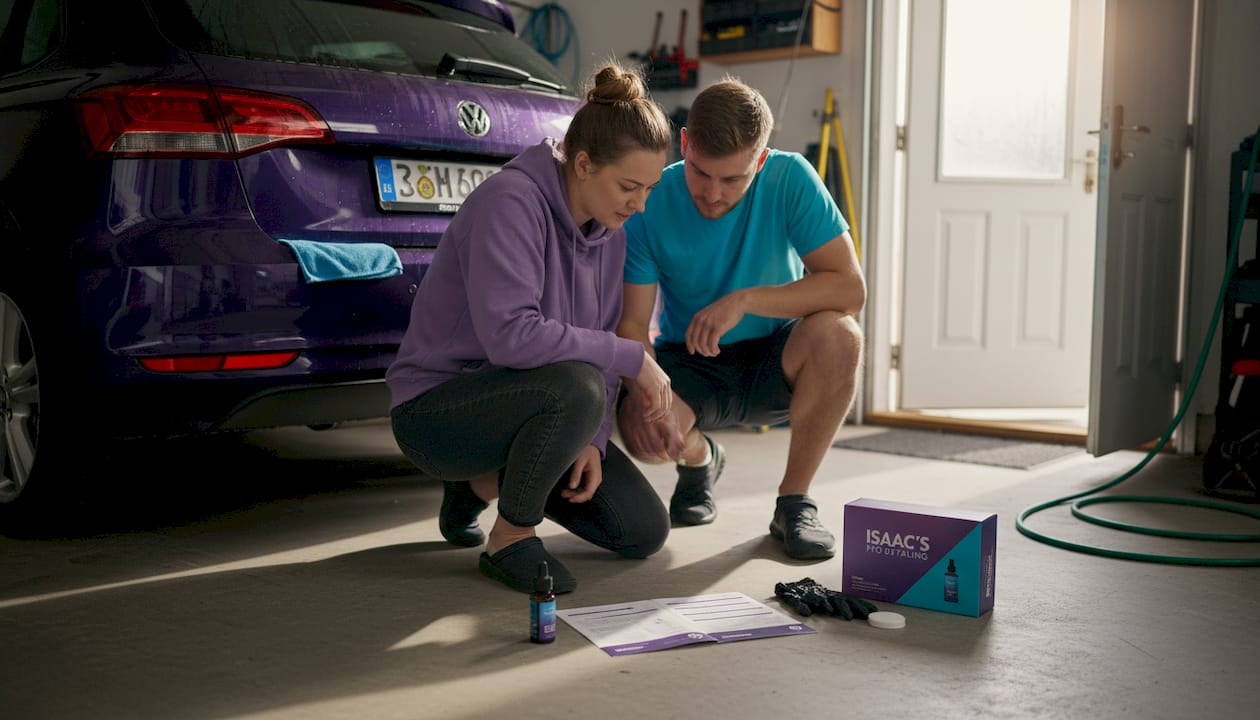
This is where a lot of vehicle owners make their costliest mistake. They see consumer-grade ceramic coating kits at the auto parts shop, compare the price tag to a professional service quote, and assume they are essentially the same product. They are not.
Here is a direct comparison to make the differences clear:
| Factor | Professional application | DIY kit |
|---|---|---|
| Product grade | Commercial-grade, higher SiO2 concentration | Consumer-grade, lower concentration |
| Surface preparation | Full decontamination, clay bar, correction | Typically minimal or none included |
| Application environment | Controlled environment, dust-free | Home garage, variable conditions |
| Warranty | Often included | Rarely offered |
| Longevity | 3 to 5+ years | 6 months to 2 years |
| Risk of high spots or streaking | Very low (trained technician) | Higher risk without experience |
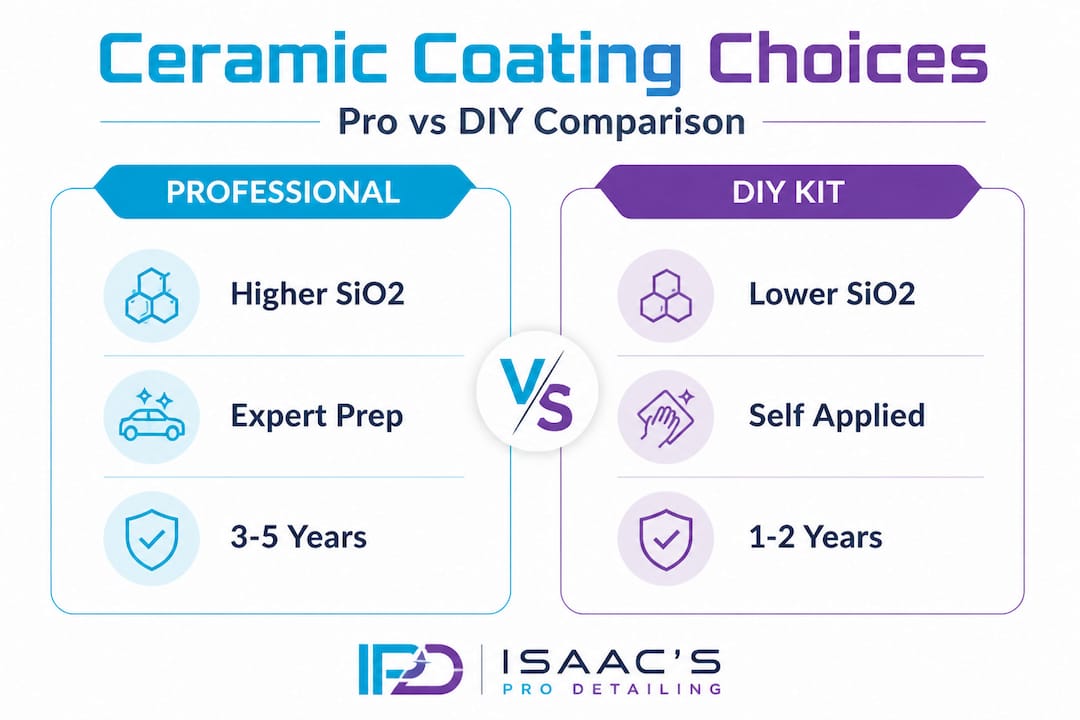
Professional ceramic coating services offer expert preparation, superior product grades, and warranty compared to DIY kits. This is not marketing language. It reflects what actually happens during a proper application.
Here is what a professional ceramic coating process typically involves:
- Wash and decontaminate: The vehicle is thoroughly washed, then treated with an iron remover and clay bar to strip all bonded contaminants from the paint surface
- Paint correction: Any swirl marks, scratches, or oxidation are addressed with a machine polisher before coating goes on
- Panel wipe: The paint is wiped down with an isopropyl alcohol-based solution to remove all polish residue and oils
- Coating application: The ceramic product is applied panel by panel using applicator pads, then levelled and allowed to flash before buffing
- Curing period: The vehicle is kept dry for 24 to 48 hours minimum, with full cure taking several weeks depending on the product
Pro Tip: If you are tempted by a DIY kit, ask yourself honestly whether your garage is dust-free, whether your paint is already corrected, and whether you have experience reading a panel for high spots under proper lighting. One botched application can mean expensive correction work afterward. For most vehicle owners, the professional route through detailing wash packages and full coating services is the smarter investment from the outset.
DIY kits do have a place. If you own an older daily driver that does not justify a full professional treatment, a quality consumer kit applied carefully can still improve your surface protection meaningfully over bare paint or wax. Just go in with accurate expectations about longevity and results.
Caring for your ceramic coated vehicle
Getting a ceramic coating applied is only half the equation. What you do in the months and years after determines whether you get two years out of it or five. The Sunshine Coast environment is genuinely hard on vehicle surfaces. Salt air, intense UV, and summer storms mean your coating is working constantly. Support it with the right maintenance habits.
Common mistakes to avoid:
- Using automatic car washes with abrasive brushes: These strip the coating’s hydrophobic layer and introduce swirl marks into the surface
- Washing in direct sunlight: Products dry too quickly, leaving residue and water spots that become stubborn to remove
- Using dish soap or alkaline cleaners: These strip the coating’s protective chemistry over time
- Leaving bird droppings or tree sap to sit: Acidic contaminants etch through the coating if left too long, especially in Queensland heat
- Skipping regular washes: Ceramic coating reduces how often you need to wash, but it does not eliminate the need entirely
Practical, low-effort cleaning strategies for ceramic-coated vehicles:
- Use a pH-neutral, ceramic-safe car shampoo every two to four weeks
- Rinse the vehicle first to loosen surface debris before contact washing
- Use a quality microfibre wash mitt and separate bucket for rinse water
- Dry with a plush microfibre towel or a leaf blower to avoid water spot formation
Proper washing and regular care significantly extend the lifespan of ceramic coatings, so your routine matters more than most owners realise. A ceramic coating that is well-maintained genuinely outperforms a neglected one by years.
Professional detailing services are also worth scheduling every six to twelve months even on a ceramic-coated vehicle. A detail removes bonded contaminants that regular washing misses, refreshes the surface, and allows the detailer to check whether the coating integrity is holding or if a top-up is warranted.
Pro Tip: For stubborn water spots, try a dedicated water spot remover before reaching for anything abrasive. Hard water is common on the Sunshine Coast and the mineral deposits it leaves behind can etch into your coating over time if you let them build up. Catching them early with the right product saves the coating surface.
Why ceramic coating is misunderstood (and what most car owners miss)
After years of working on vehicles across the Sunshine Coast, the most common issue we see is not poor-quality coatings or bad application. It is misaligned expectations. Car owners arrive having read that ceramic coating is the ultimate protection, and they interpret that to mean their vehicle will require almost no attention afterward. Then when they notice a water spot or a bird dropping leaving a mark, they assume the coating has failed.
It has not. Ceramic coating is exceptional, but it operates within real-world limits. The coating raises your vehicle’s baseline level of protection significantly. It does not make the vehicle immune to the environment. This distinction matters enormously because owners who understand it care for their coatings correctly, and owners who do not end up frustrated and either over-cleaning with the wrong products or ignoring the vehicle entirely.
There is also a widespread underestimation of surface preparation. Most coating failures we have seen come down to application over paint that was not properly corrected or decontaminated. The coating bonds to whatever is underneath it. If that foundation is compromised, the coating performs poorly regardless of the product’s quality or price point.
What seasoned detailers genuinely wish more customers knew is this: invest in the preparation as much as the coating itself. If the budget is tight, a thorough decontamination and light correction before a mid-range coating will outperform a premium coating applied over contaminated paint every single time. The role of car detailing in protecting and enhancing your vehicle is about the full process, not just the final product.
The “never wash again” myth is genuinely damaging to the industry because it sets customers up for disappointment. Ceramic coating should be positioned accurately: as a high-performance, long-term investment that makes vehicle care easier, not unnecessary.
Get long-lasting protection for your vehicle with expert ceramic coating
Everything covered in this guide points to one clear conclusion: ceramic coating done right is one of the best investments you can make for your vehicle on the Sunshine Coast. The key word is done right.
At Isaac’s Pro Detailing Sunshine Coast, we handle every step of the process from preparation to final inspection, and we come to you. Whether you are at home, at work, or anywhere across the Sunshine Coast, our mobile service brings professional-grade ceramic coating Sunshine Coast expertise directly to your vehicle. Before any coating is applied, we ensure your paint is properly prepared so the results actually last. Our ceramic coating guide gives you a full breakdown of what to expect, and our wash menu and packages help you keep your investment protected long after the coating is cured. Get in touch to find out which package suits your vehicle.
Frequently asked questions
How long does ceramic coating really last on a car?
With proper maintenance, a professionally applied ceramic coating typically lasts between 2 and 5 years, and some premium coatings last longer than standard wax or sealant products by a significant margin. Longevity depends heavily on the quality of the product, the preparation of the surface, and how well the owner maintains the vehicle afterward.
Is ceramic coating scratch-proof?
No, and any detailer who tells you otherwise is overselling the product. Ceramic coatings are durable and highly scratch-resistant, offering considerably more protection than bare paint, but they will not prevent deep scratches from keys, car park incidents, or abrasive washing tools.
Can I wash my car normally after ceramic coating?
Yes, but technique matters. Use gentle, pH-neutral shampoos and a proper two-bucket wash method to protect the coating. Automatic brushes, harsh detergents, and washing in full sun are the fastest ways to degrade your coating’s performance.
What is the best way to maintain ceramic coating on the Sunshine Coast?
Regular hand washing every two to four weeks with ceramic-safe products, avoiding abrasive brushes or automatic car washes, and addressing contaminants like bird droppings quickly are the most effective habits. Consistent maintenance is critical to keeping the coating performing at its best in Queensland’s demanding climate.