
TL;DR:
- Professional automotive detailing effectively removes embedded pet hair, dander, and odours beyond regular cleaning.
- A structured process including HEPA vacuuming, enzyme treatments, and ozone therapy ensures a deep clean.
- Regular maintenance like pet covers and grooming prolongs the benefits of professional cleaning and improves air quality.
If you share your car with a dog, cat, or any other furry companion, you already know the struggle. Pet hair weaves itself into seat fibres, dander settles into air vents, and that unmistakable wet-dog smell seems to return no matter how many times you vacuum. For pet owners across the Sunshine Coast, basic cleaning simply does not go deep enough to solve these problems. This guide explains why professional automotive detailing is the real answer to pet-related vehicle mess, what the process involves, and how a few smart habits between appointments can keep your car feeling genuinely fresh.
Table of Contents
- Why pet-friendly vehicles need special attention
- What professional detailing targets in pet-friendly cars
- Prevention and maintenance: Minimising pet mess between details
- Health, value, and experience: The payoff of regular detailing
- The truth most pet owners miss about car cleanliness
- Professional detailing solutions for pet owners on the Sunshine Coast
- Frequently asked questions
Key Takeaways
| Point | Details |
|---|---|
| Pet messes need more than DIY | Only professional detailing fully removes embedded hair, odours, and allergens from your car. |
| Prevention makes a difference | Simple habits like using seat covers and grooming pets help minimise the need for deep cleaning. |
| Detailing protects value | Regular detailing maintains interior health, enhances comfort, and boosts vehicle resale price. |
| Local experts understand pet challenges | Sunshine Coast detailers offer services tailored to pet owners’ unique cleaning needs. |
Why pet-friendly vehicles need special attention
Pets are wonderful passengers, but they are genuinely hard on vehicle interiors. The combination of loose hair, muddy paws, drool, and dander creates a layered problem that builds up faster than most owners realise.
Here is what you are typically dealing with after regular pet transport:
- Pet hair: Embeds deep into seat fabric, carpet loops, and seat-belt webbing, making it resistant to ordinary vacuuming.
- Dander and saliva: Microscopic particles that settle into air vents, floor mats, and upholstery seams, triggering allergies in passengers.
- Mud and outdoor debris: Brought in on paws after beach walks or bush trails, grinding into carpet fibres over time.
- Persistent odours: Caused by bacteria from saliva, urine accidents, and wet fur, which absorb into foam padding beneath fabric.
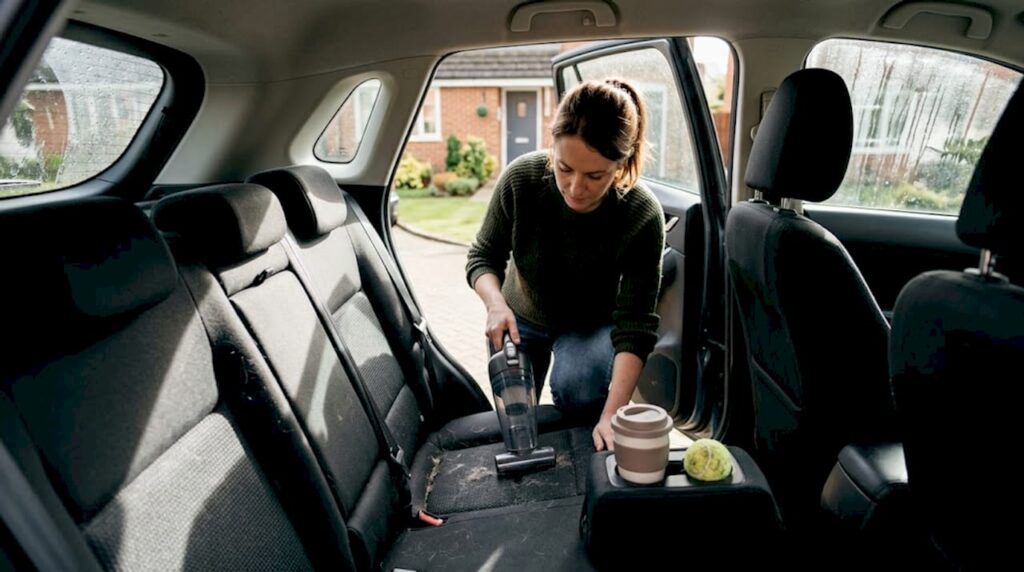
Most consumer vacuum cleaners work well on hard floors but lack the suction power and specialised attachments to pull hair from tightly woven car upholstery. Even a high-powered home vacuum leaves a significant amount of hair behind. Pet hair and odours linger even after regular vacuuming because only professional-grade tools reach the hidden places where residue accumulates.
The real issue is not what you can see on the surface. It is what is sitting inside the foam, lodged in the vent system, and multiplying as bacteria inside the upholstery.
Dander and saliva particles are light enough to become airborne every time you run your climate control system. That means your car’s ventilation can actively circulate allergens throughout the cabin during every drive. Regular wiping and spraying with consumer fresheners masks the smell temporarily but does nothing for the underlying cause.
For a thorough car interior cleaning that actually removes embedded hair, neutralises bacteria, and restores the air quality inside your vehicle, you need equipment and techniques that go well beyond what is available at your local supermarket.
What professional detailing targets in pet-friendly cars
Understanding the problem is one thing; knowing how professionals solve it is another. A trained detailer approaches a pet-friendly vehicle with a structured, multi-stage process designed to remove what home cleaning leaves behind.
Here is a typical professional detailing sequence for a pet-heavy vehicle:
- HEPA vacuum extraction: Commercial-grade HEPA vacuums capture fine particles including dander, pollen, and dust, not just visible hair.
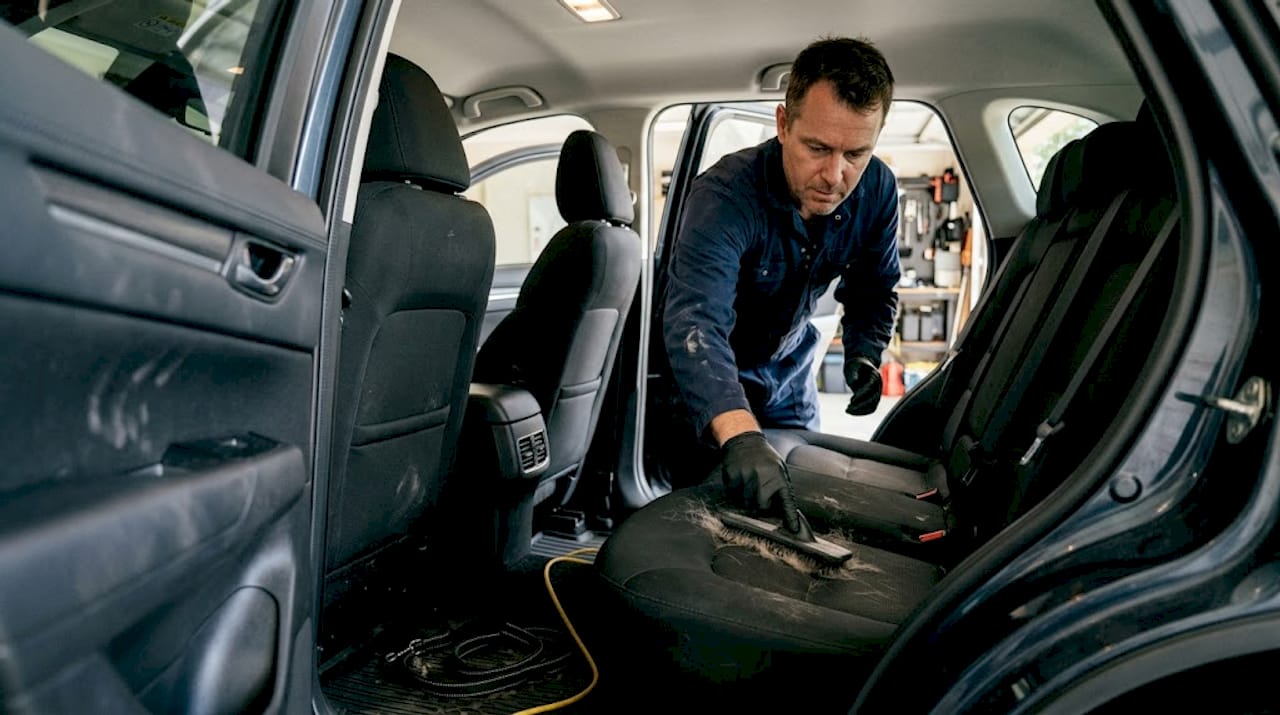
- Rubber pet hair tools and compressed air: Specialised rubber brushes dislodge embedded hair from seat fabric before extraction. Compressed air blasts it from crevices, vents, and under seats.
- Enzyme-based fabric treatment: Enzyme cleaners break down the organic compounds in pet saliva, urine, and dander at a molecular level, eliminating odour rather than covering it.
- Hot water extraction: Steam and pressurised water lifts shampoo and residue from deep within carpet and upholstery fibres, removing what surface-level scrubbing cannot.
- Ozone treatment: An ozone generator floods the cabin with ozone gas, which destroys odour-causing bacteria and neutralises lingering smells in foam and hard-to-reach areas.
| Cleaning approach | Method used | Result |
|---|---|---|
| Home vacuum | Standard suction | Removes surface hair only |
| Consumer fabric spray | Fragrance masking | Temporary odour cover |
| DIY shampooing | Manual scrubbing | Risk of over-wetting and mould |
| Pro HEPA vacuum | Commercial suction + tools | Deep hair and dander removal |
| Pro enzyme treatment | Molecular odour breakdown | Permanent odour elimination |
| Pro ozone treatment | Bacterial destruction | Full cabin sanitisation |
Commercial detailing equipment for thorough hair and odour removal achieves results that DIY simply cannot match, primarily because the machines are purpose-built for automotive interiors at a level of intensity that consumer products never reach.
Pro Tip: Over-wetting fabric during DIY shampooing is one of the most common mistakes. If moisture reaches the foam padding underneath and is not dried properly with industrial air movers, mould can form within 24 to 48 hours. Professional detailers always use controlled extraction and fast-drying techniques to prevent this.
Exploring the best cleaning methods for car interiors will give you a clearer picture of how each stage works and why the sequence matters.
Prevention and maintenance: Minimising pet mess between details
Professional detailing sets your car up for success, but prevention between appointments is just as important. The goal is to slow down the rate of build-up so that each detail session maintains a higher baseline rather than starting from scratch.
These steps make a real difference:
- Use a pet seat cover or hammock: A quality hammock-style cover protects the entire rear seat and prevents hair and mud from contacting upholstery directly.
- Fit a boot liner: If your pet travels in the boot, a fitted rubber liner is far easier to shake out and wipe down than carpet.
- Brush your pet before every ride: Removing loose hair before your dog or cat enters the car is one of the most effective things you can do. Loose hair that never enters the car cannot embed itself in your seats.
- Wipe paws after outdoor adventures: A damp cloth or pet paw wipe at the car door takes ten seconds and prevents muddy prints from grinding into carpet fibres.
- Quick vacuum weekly: A short five-minute vacuum with a pet-hair attachment prevents accumulation from becoming a deep-seated problem.
Prevention strategies like covers and routine grooming make a major difference in how quickly mess accumulates between professional appointments.
Pro Tip: Keeping a small lint roller and a sealed bag of pet wipes in your glove box means you can do a quick tidy-up immediately after a trip, before hair has a chance to work its way deeper into the fabric.
Building simple interior cleaning routines into your weekly schedule does not require much time, but the cumulative effect is significant. Think of it as protecting your investment between professional services.
Health, value, and experience: The payoff of regular detailing
The benefits of keeping a pet-friendly car properly detailed go well beyond aesthetics. There are real health, financial, and lifestyle gains that most people do not consider until they have experienced the difference firsthand.
Health risks from a neglected pet-friendly car include:
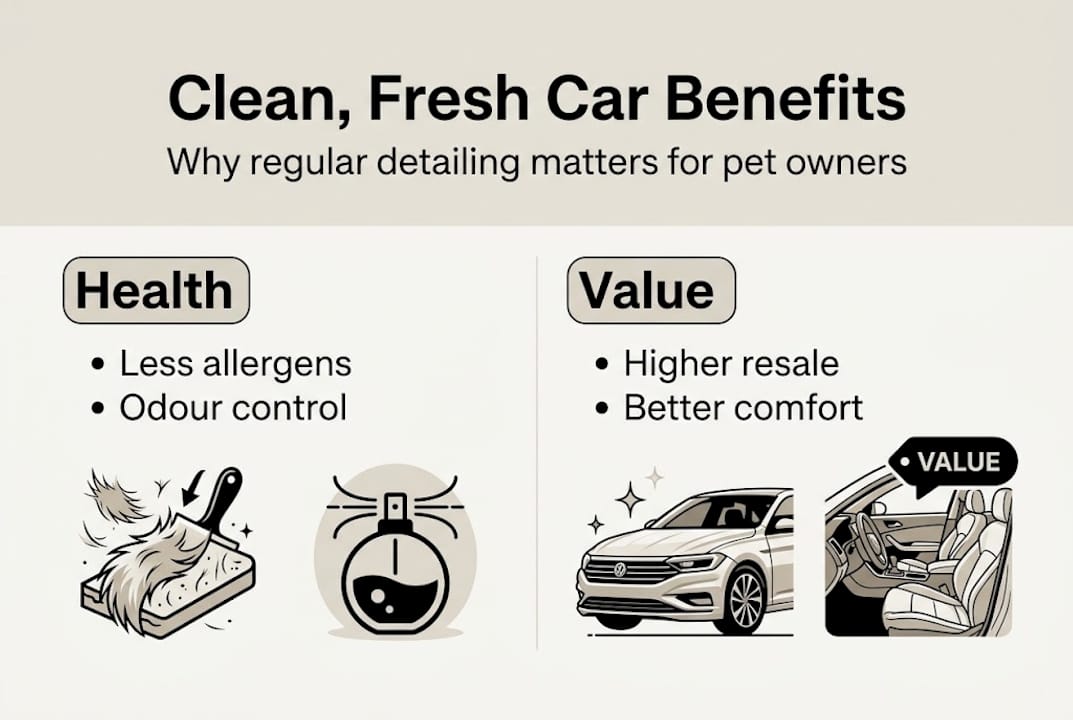
- Airborne allergens from pet dander circulating through the ventilation system
- Bacteria from saliva and urine creating an unhealthy cabin environment
- Mould spores if moisture was ever trapped in fabric or foam padding
- Worsened asthma or hay fever symptoms for sensitive passengers
On the financial side, preventing allergen and odour build-up improves air quality and helps preserve the vehicle’s resale value over time.
| Factor | Regularly detailed car | Neglected car |
|---|---|---|
| Cabin odour | Fresh and neutral | Persistent pet smell |
| Air quality | Clean, low allergen | High dander, bacteria |
| Upholstery condition | Well-maintained | Stained, worn, embedded hair |
| Resale or trade-in value | Higher | Significantly lower |
| Passenger comfort | Comfortable for all | Unpleasant for non-pet owners |
Buyers and trade-in assessors notice pet smell immediately. A car that carries an obvious pet odour can see its resale value reduced considerably compared to a well-maintained equivalent. Understanding car value and savings with detailing shows just how significant this difference can be in dollar terms.
The benefits of regular details also extend to your day-to-day comfort. A clean, fresh-smelling car is simply a more pleasant environment to spend time in, whether you are commuting, running errands, or heading to the beach with your dog in tow.
The truth most pet owners miss about car cleanliness
Here is something worth saying plainly: most dedicated pet owners who clean their cars regularly are doing a great job by any reasonable standard. And they are still missing a significant amount of residue. That is not a criticism; it is simply the reality of what embedded pet hair, dander, and bacteria look like under professional scrutiny.
The conventional wisdom is that diligent home cleaning is enough if you do it often enough. Our experience tells a different story. Even the most thorough DIY routine cannot replicate what commercial-grade HEPA extraction, enzyme treatment, and ozone deodorisation achieve together. The residue that stays behind is not just cosmetic. It affects the air your family breathes on every trip.
What rarely gets discussed is the quality-of-life shift that comes with a properly maintained cabin. Less stress about pet smell before you give someone a lift. Fewer allergy symptoms for kids in the back seat. A more enjoyable ride for your dog, who is not sitting in layers of old dander. Exploring eco-friendly detailing tips shows that professional care does not have to come at an environmental cost either. Professional detailing is not a luxury for pet owners. It is simply the most effective tool available for maintaining a genuinely clean, healthy vehicle.
Professional detailing solutions for pet owners on the Sunshine Coast
If the idea of a genuinely hair-free, odour-free car sounds appealing, Isaac’s Pro Detailing Sunshine Coast is set up to make that happen at your home, workplace, or wherever suits you best.
Our mobile car detailing workflow brings professional equipment directly to you, so there is no need to drive somewhere and wait. Whether you need a focused interior clean or a full detail with odour elimination, the detailed interior cleaning guide on our site outlines exactly what each service covers. Ready to book or want to ask about the right package for your vehicle? Visit Isaac’s Pro Detailing and get in touch with our team today.
Frequently asked questions
How often should I detail my car if I transport pets regularly?
For regular pet transport, detailing every two to three months is ideal, though you may need it more frequently if hair and odours return quickly between appointments.
Can detailing completely remove pet hair and smells?
Yes. Professional tools achieve near-complete removal of pet hair and odours, far surpassing what DIY methods can accomplish with consumer-grade equipment.
What can I do between appointments to keep pet mess to a minimum?
Use seat covers, groom your pet before every trip, and do a quick weekly vacuum to slow the build-up of hair and dander between professional detail sessions.
Are there specific products detailers use to neutralise pet odours?
Detailers rely on enzyme cleaners and ozone generators along with specialised fabric shampoos to attack pet smells at their source rather than masking them.