

TL;DR:
- Maintaining your vehicle’s interior protects resale value, air quality, and material longevity. Regular professional detailing is more cost-effective than reactive repairs and improves safety and comfort. Mobile services offer convenient, high-quality care tailored for busy owners on the Sunshine Coast.
Most vehicle owners spend time and money keeping their cars looking sharp on the outside, yet the interior quietly tells a different story. Dust, allergens, cracked leather, and stained carpets are more than cosmetic problems. They chip away at resale value, air quality, and the simple pleasure of driving. 62% of mid-age vehicle owners refurbish their interiors, showing that savvy owners already understand what’s at stake. This article covers the real benefits of interior maintenance, what professional care actually involves, and how to decide between DIY and calling in the experts, especially when life on the Sunshine Coast keeps you busy.
Table of Contents
- Why maintaining interiors matters: more than meets the eye
- The true cost of ignoring your vehicle’s interior
- What professional interior maintenance really involves
- DIY vs pro care: what busy owners need to know
- Our perspective: the biggest interior mistake most owners make
- How to get spotless interiors on the Sunshine Coast
- Frequently asked questions
Key Takeaways
| Point | Details |
|---|---|
| Prevention saves money | Regular interior maintenance prevents costly repairs and preserves your vehicle’s value. |
| Health and comfort matter | Clean interiors keep your vehicle welcoming and free from allergens and odours. |
| Pro methods make a difference | Professional detailing delivers deeper cleans and longer-lasting protection than DIY alone. |
| Right timing maximises result | Scheduling detailing with lifestyle and season changes ensures continuous protection and appeal. |
Why maintaining interiors matters: more than meets the eye
The interior of your vehicle is where you actually live when you’re behind the wheel. It’s the surface you touch, the air you breathe, and the environment that either energises or drains you on every trip. Yet most owners treat it as an afterthought compared to a fresh wash or a new set of tyres.
The importance of clean interiors goes well beyond appearances. A neglected interior can directly reduce what a buyer is willing to pay when you eventually sell. Stained seats, musty odours, and worn trim all signal poor ownership history, even if the engine runs perfectly. Buyers discount heavily for interiors that look or smell tired.
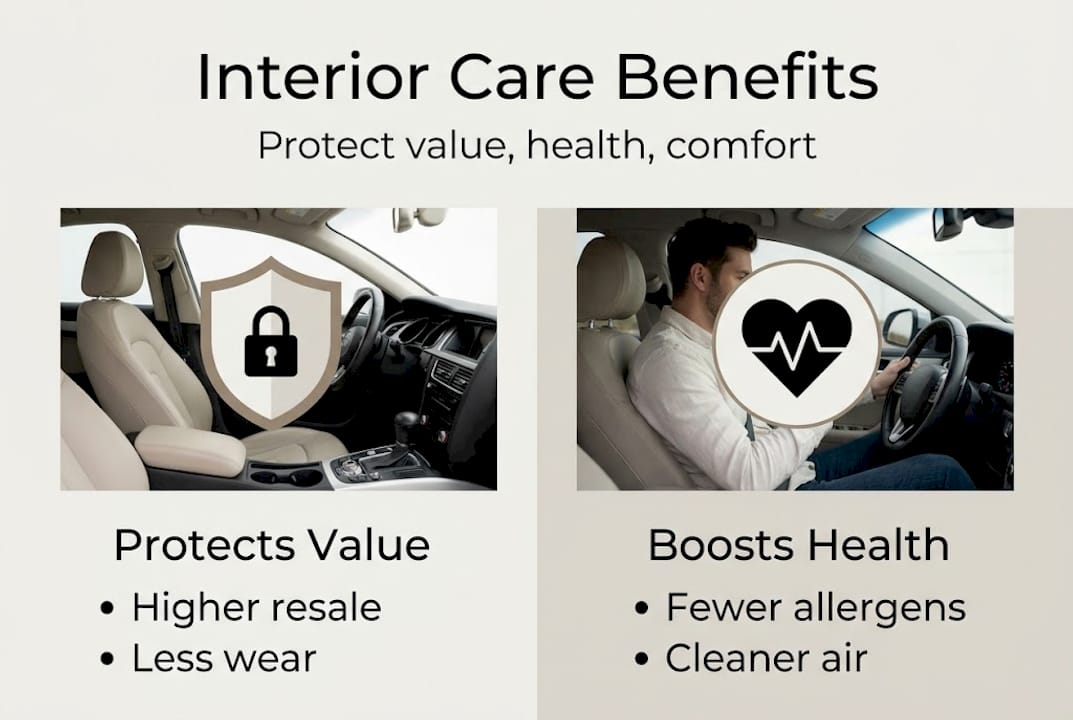
There are also real health stakes. Dust mites, mould spores, and bacteria accumulate in carpets, seat fabric, and air vents faster than most people realise. For families with children, allergy sufferers, or anyone who spends long hours commuting, this is not a trivial concern.
Here’s what consistent interior care actually protects:
- Resale value: A clean, well-maintained interior signals care and commands higher offers
- Air quality: Regular extraction removes allergens, mould, and bacteria from fabrics and vents
- Material longevity: Leather, vinyl, and fabric all degrade faster without conditioning and protection
- Comfort and aesthetics: A fresh interior simply makes driving more enjoyable
- Odour control: Trapped smells from food, pets, and moisture are far easier to prevent than cure
“Preventative interior care is consistently more cost-effective than waiting for damage to accumulate before acting.”
The regular detailing savings become clear when you compare a routine clean against the cost of replacing a mould-damaged headliner or re-dyeing cracked leather seats. Preventative care reduces long-term costs significantly compared to reactive repairs. The maths strongly favours staying ahead of the problem.
The true cost of ignoring your vehicle’s interior
Skipping interior maintenance feels like a saving in the short term. In reality, it’s a slow accumulation of costs that hits hard when you least expect it.
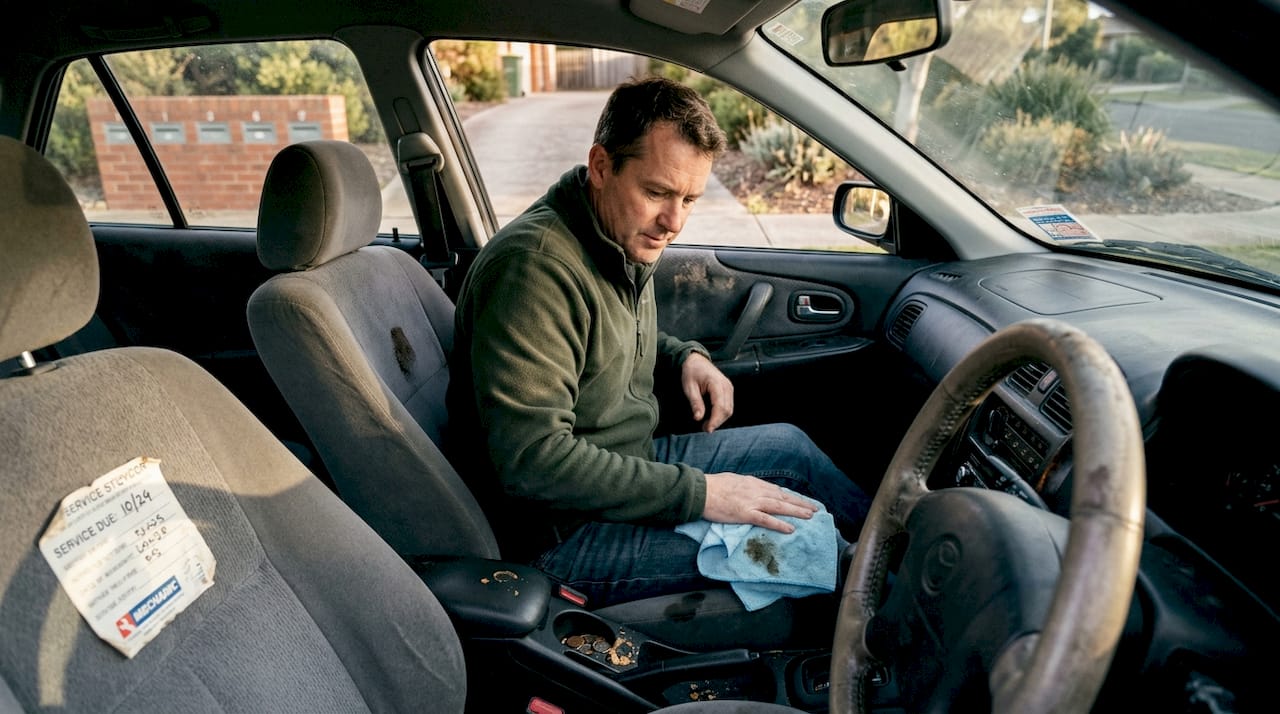
The US auto service market reached $211 billion in 2026, with interior restoration making up a significant and growing segment. That figure reflects just how often owners end up paying for problems that routine care would have prevented.
Consider what common interior repairs actually cost compared to scheduled detailing:
| Issue | Repair or replacement cost | Routine detailing cost |
|---|---|---|
| Leather seat re-dyeing | $300 to $800 per seat | $150 to $300 full interior |
| Carpet mould remediation | $200 to $600 | Included in standard detail |
| Headliner replacement | $400 to $1,000 | Prevented with regular care |
| Air vent deep clean | $100 to $250 | Included in professional detail |
| Odour elimination (ozone) | $100 to $300 | Avoided with routine upkeep |
The pattern is obvious. Routine maintenance saves money by a wide margin compared to any single repair.
Beyond the financial side, the hidden costs of neglect include:
- Cracked leather from UV exposure and lack of conditioning, especially brutal in the Queensland sun
- Stained carpets that trap bacteria and become impossible to clean with household products
- Mould in air conditioning systems that circulates through the cabin every time you turn on the fan
- Faded and brittle plastics on dashboards and door trims that crack and discolour permanently
Pro Tip: Schedule your interior detail to coincide with seasonal changes. In Queensland, the transition between the wet and dry season is the ideal time to address moisture-related issues like mould and musty odours before they take hold.
What professional interior maintenance really involves
There’s a common assumption that professional detailing is just a more thorough version of what you’d do at home with a vacuum and some spray cleaner. The reality is quite different.
Professionals follow a specific methodology that produces results home cleaning simply cannot match. The modern detailing process starts with all dry steps first, then moves to wet procedures, and finishes with conditioning and glass treatment for the best possible outcome.
Here’s how a professional detail actually unfolds:
- Dry extraction first: High-powered vacuuming of all surfaces, including under seats, in crevices, and through vents
- Brush and air work: Dislodging embedded dirt from fabric, trim gaps, and air outlets before any moisture is introduced
- Spot treatment: Targeted pre-treatment of stains on fabric, leather, or carpet using material-specific products
- Wet extraction: Hot water extraction machines deep clean carpets and upholstery far beyond what a home vacuum achieves
- Surface wipe-down: All hard surfaces, plastics, and trim cleaned with appropriate products
- Conditioning: Leather and vinyl treated with conditioners that restore flexibility and prevent cracking
- Glass last: Windows and mirrors cleaned at the end to avoid contamination from earlier steps
The reason glass is always last is practical. Cleaning products and moisture from earlier steps can splash or mist onto glass. Doing it last guarantees a streak-free finish that stays clean.
For the detailed cleaning steps involved in a full professional service, the key difference from DIY is the machinery, the material-specific products, and the trained eye that spots issues before they become expensive problems.
Pro Tip: In the Sunshine Coast climate, UV protectants applied to your dashboard and leather seats are not optional extras. The Queensland sun accelerates fading and cracking dramatically. Ask your detailer about UV-blocking treatments as part of your regular service.
Exploring the range of interior cleaning methods available locally will help you understand which approach suits your vehicle’s specific materials and condition.
DIY vs pro care: what busy owners need to know
Not every situation calls for a professional. But knowing when to handle it yourself and when to call in help is what separates owners who maintain their vehicles well from those who end up with expensive repair bills.
DIY maintenance is genuinely effective for routine touch-ups and light upkeep, but professionals excel when it comes to deep extraction and complex materials. That’s an honest assessment, not a sales pitch.
| Factor | DIY | Professional detailing |
|---|---|---|
| Cost | Low per session | Higher upfront, lower long-term |
| Time | 1 to 3 hours | 2 to 5 hours (you’re free to do other things) |
| Results | Surface level | Deep clean, conditioning, protection |
| Risk | Potential product damage | Material-safe, expert application |
| Equipment | Basic vacuum and spray | Commercial extraction, pro products |
DIY is a smart choice when:
- You’re doing a quick weekly tidy between professional sessions
- Dealing with minor surface dust or small fresh spills
- Maintaining a vehicle that’s already in good condition
Go professional when:
- Stains have set into carpet or fabric
- There’s an odour that doesn’t respond to airing out
- Leather is dry, cracked, or needs conditioning
- You have electronics, suede, or specialty materials that need careful handling
- Allergies or health concerns make deep extraction a priority
With average vehicle age now reaching 12.6 years, more owners are dealing with interiors that have accumulated years of wear. For older vehicles especially, a professional deep clean can make a significant difference to both comfort and value.
For busy Sunshine Coast residents, the mobile detailing approach removes the biggest barrier entirely. There’s no need to drive somewhere, wait around, or reorganise your day. The service comes to your home, workplace, or wherever suits you. The best DIY techniques still have a place in your routine, but they work best as a complement to professional care, not a replacement.
Our perspective: the biggest interior mistake most owners make
After working with vehicle owners across the Sunshine Coast, the pattern we see most often is this: people wait until something is obviously wrong before they act. A stain has to be embarrassing. An odour has to be noticeable to passengers. Leather has to be cracking before anyone thinks to condition it.
This reactive approach always costs more, in money, in time, and in outcomes that could have been avoided. The vehicles we see that hold their value and their appeal are the ones whose owners treat maintenance as a calendar event, not a crisis response.
The uncomfortable truth is that preventative care is boring. It doesn’t feel urgent. But maintenance for value and health is exactly what separates a vehicle that commands a strong resale price from one that gets lowballed at trade-in.
Our practical tip: set a recurring calendar reminder every three months. Pair it with a seasonal change so it’s easy to remember. That single habit, done consistently, will save you far more than any single repair ever could.
How to get spotless interiors on the Sunshine Coast
If you’ve been putting off a proper interior clean, now is the right time to act. The longer you wait, the more work it takes and the more it costs.
At Isaac’s Pro Detailing Sunshine Coast, we bring professional-grade interior care directly to your driveway, workplace, or favourite spot along the coast. No waiting rooms, no wasted time. Our car interior cleaning guide is a great starting point if you want to understand what a full detail covers. For those ready to see the difference a professional service makes, explore how regular detailing protects your investment over time. You can also see exactly how detailing adds visual impact and real dollar value to your vehicle. Get in touch today and let’s keep your interior at its best.
Frequently asked questions
How often should I clean my car’s interior?
Aim for a full interior detail every 3 to 6 months, with quick cleans in between to stay on top of dust and spills. Scheduled maintenance consistently saves money by preventing the need for costly repairs.
Does detailing really add resale value to my car?
Yes, a well-maintained interior signals good ownership and commands stronger offers at sale time. Detailing boosts value and visual appeal by up to 15%, which is significant when you’re negotiating a trade-in or private sale.
What’s the difference between DIY and professional interior cleaning?
DIY is fine for routine surface upkeep, but professionals use specialised extraction equipment and material-specific products to deep clean safely. Professional detailing handles tough stains, odours, and sensitive materials that home methods can’t address without risk.
Can regular interior care protect my health?
Absolutely. Routine detailing removes allergens, mould spores, and bacteria that accumulate in fabrics and air vents. The impact on air quality is particularly important for allergy sufferers and families with young children.
Is mobile detailing as effective as a workshop?
Yes. Modern mobile detailers carry the same professional-grade equipment and products as fixed workshops. Mobile workflows deliver pristine results with the added benefit of coming directly to you, saving time without compromising quality.