
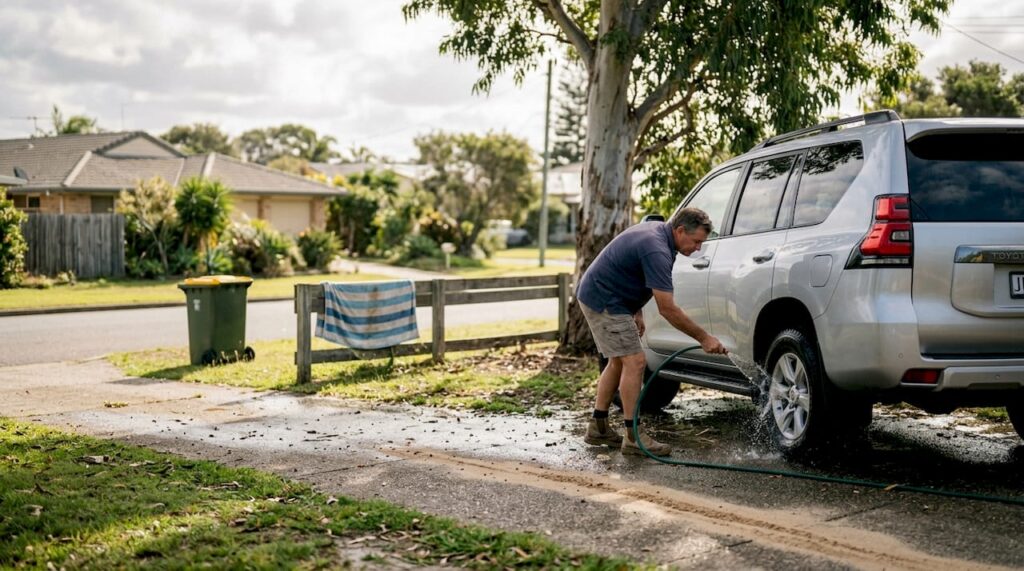
Living on the Sunshine Coast is brilliant, but your car pays a price for it. Between the relentless UV rays, salty sea air, and sudden downpours, your vehicle faces a level of wear that inland drivers simply don’t deal with. Add a packed schedule to the mix and it’s easy to let car care slide until something goes wrong. The good news is that preventive maintenance reduces long-term costs significantly, and a simple, structured checklist is all you need to stay ahead of expensive repairs and keep your car looking its best.
Table of Contents
- Why proactive car care matters on the Sunshine Coast
- What you need: Car care toolkit, products and expert help
- Step-by-step: Detailed car care checklist for Sunshine Coast vehicles
- Common mistakes: What Sunshine Coast owners overlook
- Stay on track: Scheduling and reminders for long-term results
- Take the hassle out of Sunshine Coast car care
- Frequently asked questions
Key Takeaways
| Point | Details |
|---|---|
| Coastal care is critical | Salt, humidity, and UV demand more frequent checks for Sunshine Coast vehicles. |
| Preventive checks save money | Regular maintenance cuts costs by 3-9 times compared to emergency repairs. |
| Professional help pays off | Mobile detailers tackle complex jobs and protect your vehicle’s value effortlessly. |
| Time-based service wins | Even if you drive little, ageing fluids, tyres and rubber parts need regular attention. |
Why proactive car care matters on the Sunshine Coast
The Sunshine Coast is a stunning place to live, but its climate is genuinely tough on vehicles. UV radiation fades paint and cracks rubber seals faster than you’d expect. Salt air, especially if you park near the beach or drive along coastal roads, accelerates rust and paint damage on exposed metal surfaces. Heavy rain then washes that salt and grime into every crevice of your underbody.
A common myth is that low-mileage cars don’t need regular attention. That’s simply not true. Well-maintained high-mileage cars regularly outlast neglected vehicles with far fewer kilometres on the clock. It’s the consistency of care, not the odometer reading, that determines how long your car lasts.
“The history of proactive maintenance tells you far more about a vehicle’s condition than the number on the odometer.”
Proactive care also delivers serious financial returns. Prevention typically saves three to nine times the cost of delayed repairs. Understanding the mobile detailing benefits available locally makes it easier to build professional care into your routine without disrupting your week.
Top three Sunshine Coast hazards to your vehicle:
- UV radiation: Fades paint, cracks dashboards, and degrades rubber seals and tyres
- Salt air and coastal humidity: Speeds up rust on underbody panels, brake components, and exposed metal
- Heavy rain and flooding: Pushes salt and debris into hard-to-reach areas, accelerating corrosion
Pro Tip: If you regularly park near the beach or drive on coastal roads, rinse your underbody with fresh water at least once a fortnight. It takes five minutes and can add years to your car’s life.
Understanding why detailing matters in a coastal environment is the first step. The next is knowing exactly what tools and products you need to get started.
What you need: Car care toolkit, products and expert help
Before you start ticking off checklist items, it pays to have the right gear on hand. A basic DIY toolkit covers the essentials, but knowing when to call in a professional saves you time and protects your car from well-meaning mistakes.
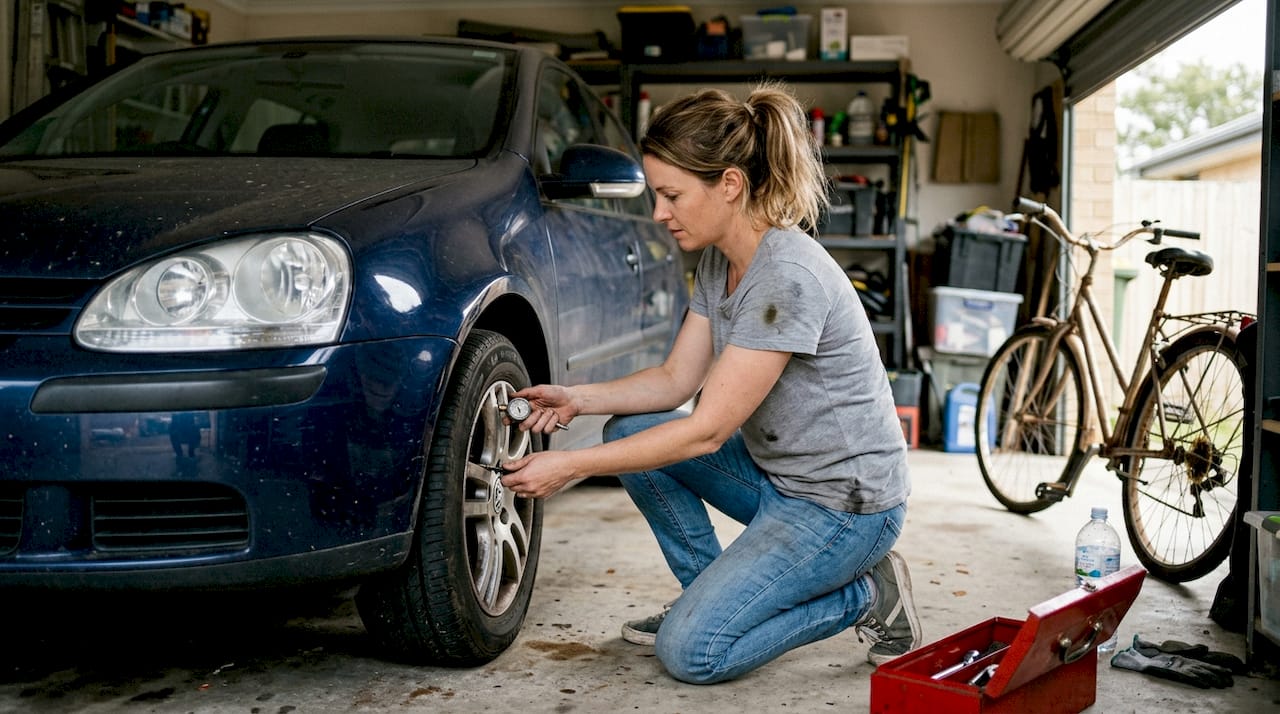
DIY monthly checks save time, but complex tasks like paint correction, ceramic coating, and underbody rust treatment are best left to professionals for lasting results.
| Task | DIY or professional | Frequency |
|---|---|---|
| Tyre pressure check | DIY | Monthly |
| Fluid top-ups | DIY | Monthly |
| Exterior wash and rinse | DIY | Fortnightly |
| Cut and polish | Professional | Every 6-12 months |
| Ceramic coating | Professional | Every 1-3 years |
| Underbody rust treatment | Professional | Annually or after beach season |
| Interior extraction | Professional | Every 6 months |
Your essential DIY toolkit:
- Tyre pressure gauge
- Microfibre cloths (at least six, to avoid cross-contamination)
- pH-neutral car wash shampoo
- Detailing spray for quick exterior touch-ups
- Torch for checking under the bonnet and underbody
- Fluid top-up bottles (coolant, windscreen washer fluid, brake fluid)
Pro Tip: Store your toolkit in the boot so it’s always with you. A quick check in a car park takes less than ten minutes and can catch a slow tyre leak or low coolant before it becomes a roadside emergency.
For anything beyond the basics, save time with mobile detailing by booking a professional who comes to you. No drop-offs, no waiting rooms, no wasted Saturday mornings.
Step-by-step: Detailed car care checklist for Sunshine Coast vehicles
With your toolkit ready, work through this sequenced checklist to keep your vehicle protected year-round. It’s organised by frequency so you always know what’s due.
Monthly essentials
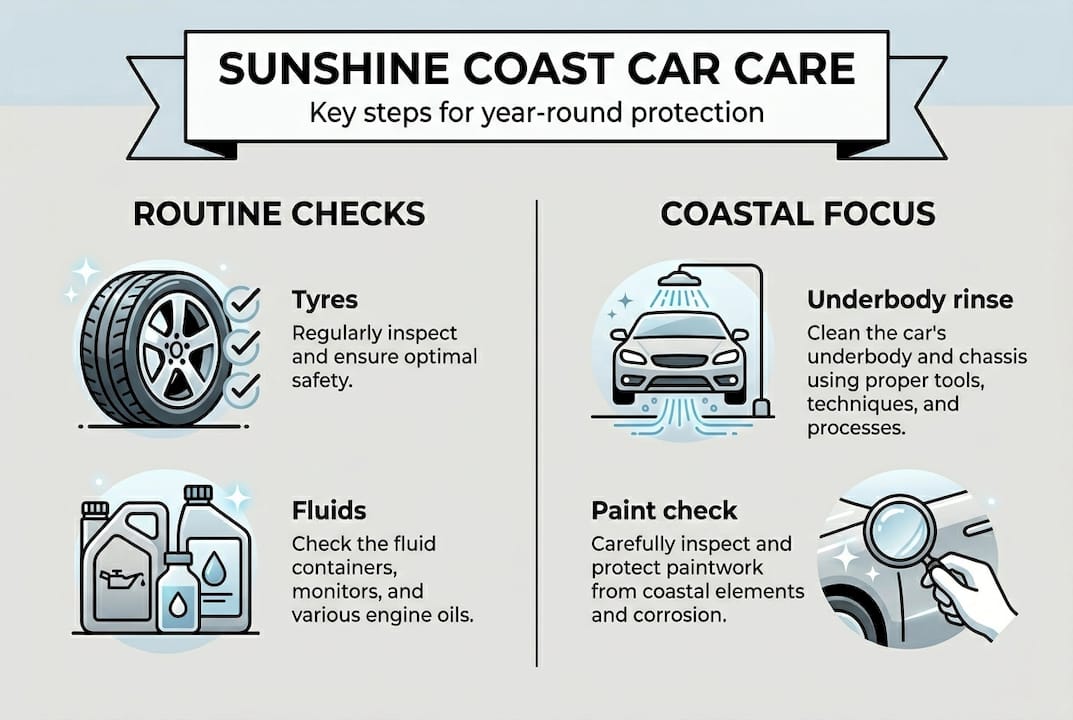
Monthly checks should cover fluids, tyres, brakes, battery, and belts or hoses as a minimum. Here’s how to approach each one:
- Check all fluid levels: Engine oil, coolant, brake fluid, power steering fluid, and windscreen washer fluid. Top up as needed.
- Inspect tyre pressure and condition: Look for uneven wear, cracks in the sidewall, and embedded debris. Inflate to the manufacturer’s specification.
- Test all lights: Headlights, brake lights, indicators, and reversing lights. Replace any blown globes immediately.
- Check wiper blades: Sunshine Coast UV degrades rubber quickly. Streaking or skipping means it’s time for a replacement.
- Inspect the battery terminals: Look for corrosion (white or blue residue). Clean with a damp cloth and baking soda if needed.
Every six months or at service intervals
Follow your car’s logbook for manufacturer-specific intervals, and remember that time-based servicing is critical for low-mileage vehicles in coastal climates.
- Oil and filter change: Even if you haven’t hit the kilometre mark, change oil every six months in coastal conditions.
- Rotate tyres: Promotes even wear and extends tyre life significantly.
- Replace air and cabin filters: Salt air and pollen clog filters faster here than in drier climates.
- Inspect brake pads and rotors: Coastal humidity accelerates brake wear. Don’t leave this until your annual service.
Seasonal checks (after rain or beach drives)
- Rinse the underbody: Use a hose or pressure washer to flush salt and sand from beneath the car.
- Inspect paint and trim: Look for chips, bubbling, or fading. Address paint damage early before rust sets in.
- Check door seals and rubber trim: Cracking seals let moisture in, which leads to interior mould and rust.
Annual or pre-sale roadworthy checks
- Full brake and suspension inspection: Have a mechanic assess wear on all components.
- Exhaust system check: Look for rust, holes, or loose brackets.
- Seatbelt function test: Check all belts retract and lock correctly.
- Professional detail: A full types of detailing services package restores paint, protects surfaces, and dramatically improves resale value.
Pro Tip: Use detailing tips for drivers to learn how to maintain your car between professional visits and get more value from each booking.
“A car that’s regularly detailed and serviced holds its resale value far better than one that’s only cleaned before it goes on the market.”
Common mistakes: What Sunshine Coast owners overlook
Even diligent owners miss things. These are the most common oversights that end up costing real money.
Ignoring the underbody after beach visits. Salt doesn’t just sit on the surface. It works its way into joints, brackets, and panels. A quick rinse after every coastal drive makes a significant difference over time.
Leaving battery and wiper checks for the annual service. Short trips harm batteries and degrade fluids, while UV and age break down rubber regardless of how far you’ve driven. Both need monthly attention, not yearly.
Assuming low mileage means low maintenance. Time is just as damaging as distance in a coastal climate. Rubber seals, brake fluid, and coolant all degrade with age. A car that sits in a driveway near the ocean still needs regular care.
Skipping professional detailing for paint and trim. DIY washing keeps the surface clean, but it doesn’t address paint oxidation, swirl marks, or UV damage. Benefits of comprehensive detailing go well beyond aesthetics, protecting the underlying metal and extending the life of your clear coat.
Overlooking tyre age. Tyres need replacing every five to six years regardless of tread depth, because UV and ozone cause the rubber compound to harden and crack from the inside out.
Pro Tip: Take a photo of your underbody and tyres every six months. Comparing images over time makes it easy to spot rust spots or tyre degradation before they become serious problems.
“The most expensive car repairs are almost always the ones that could have been caught with a five-minute monthly inspection.”
Stay on track: Scheduling and reminders for long-term results
Knowing what to do is only half the battle. The other half is actually doing it consistently. Here’s how to make these checks a habit rather than a chore.
Consistency matters more than frequency when it comes to long-term vehicle health. A simple, repeatable system beats an intensive effort once a year.
- Set monthly calendar reminders: Pick the first Sunday of each month for your DIY checks. Block thirty minutes and treat it like any other appointment.
- Use a logbook or app: Record every service, fluid top-up, and tyre rotation. Apps like AutoCare or MyCarFax make this simple and give you a full service history at your fingertips.
- Book professional detailing in advance: Schedule your six-monthly detail at the same time you book your car service. Pairing them means nothing gets forgotten.
- Set tyre and battery age reminders: Note the manufacture date (found on the tyre sidewall) and set a reminder for the five-year mark.
- Review your steps for exterior detailing after every beach season: Summer is the harshest period for Sunshine Coast vehicles. A post-summer inspection catches damage early.
Pro Tip: Pair your monthly car check with something you already do, like the first grocery run of the month. Habit stacking makes it far easier to stay consistent without relying on willpower.
Take the hassle out of Sunshine Coast car care
If working through this checklist feels like a lot to manage on top of an already busy life, you’re not alone. Most Sunshine Coast car owners want their vehicle to look great and last longer, but they don’t have hours to spare on weekends.

That’s exactly where Isaac’s Pro Detailing Sunshine Coast comes in. Our mobile car detailing workflow means we come to your home, workplace, or wherever suits you best. No drop-offs, no waiting, no disruption to your day. From interior extraction and exterior cut and polish to ceramic coatings and rust protection treatments, our services are tailored specifically to the demands of coastal driving. Explore the comprehensive detailing benefits of a full-service approach, or simply get in touch with the Sunshine Coast detailing experts at Isaac’s Pro Detailing to book your next appointment and take one big item off your to-do list.
Frequently asked questions
How often should I check the tyre pressure in Sunshine Coast conditions?
Monthly tyre checks are essential for Queensland roadworthiness, and you should also check before any long trip. Sunshine Coast heat and UV cause pressure fluctuations that affect handling and tyre wear.
Do I need to detail my car if it’s rarely driven?
Absolutely. Age degrades rubber and fluids regardless of how many kilometres you’ve covered, and UV, moisture, and salt air continue to attack paint and seals whether the car moves or not.
What checklist items help prevent coastal rust the most?
Regular underbody rinses after beach visits, prompt attention to paint chips, and annual rust protection treatments are your best defence. Salt and humidity accelerate underbody rust, so these steps are non-negotiable for coastal drivers.
How do I know if my car needs a professional detail versus DIY?
DIY checks save time for basic maintenance, but paint correction, ceramic coating, and deep interior cleaning require professional equipment and expertise to achieve lasting results.
Recommended
- 6 Essential Car Detailing Tips For Sunshine Coast Drivers
- Vehicle Exterior Detailing Steps For Sunshine Coast Owners
- Comprehensive Detailing: Why It Matters For Sunshine Coast Cars
- Comprehensive Car Detailing: Enhancing Vehicle Longevity
- Why regular wiper blade replacement matters for drivers | GWC Wipers