
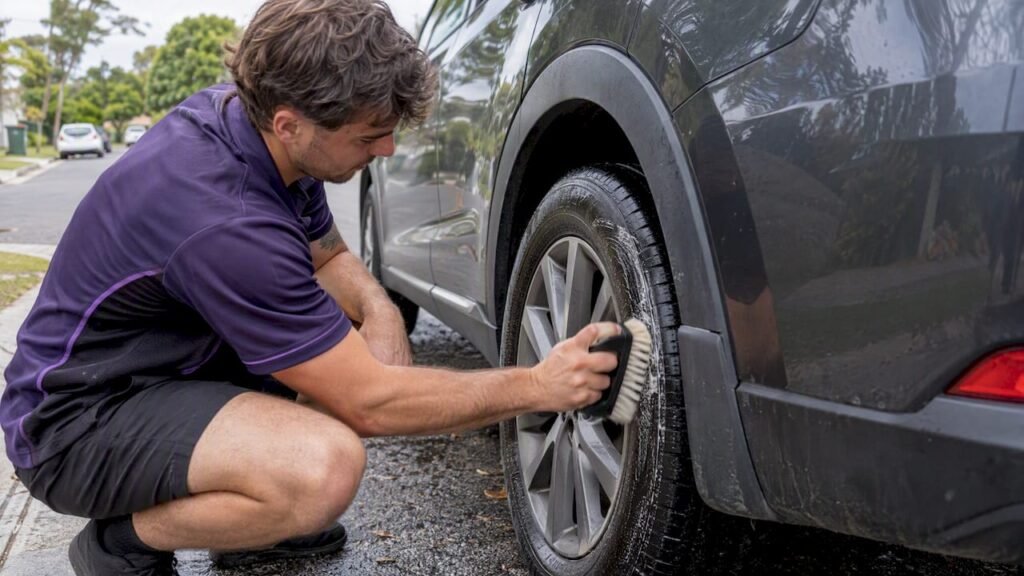
Brown tyre bloom can usually be reduced or removed with a simple mild wash, not harsh chemicals. Start with a pH neutral soap, warm water and a soft nylon brush, working in short strokes before rinsing thoroughly. We recommend this gentle approach over solvents or glossy dressings, a position backed by Michelin’s own guidance on sidewall care.
TL;DR:
- A damp microfiber test separates surface grime, which transfers to the cloth, from antiozonant bloom, which barely shifts because it comes from within the rubber.
- Use pH neutral shampoo and a soft nylon brush in short strokes, then rinse thoroughly and repeat once if bloom remains.
- Avoid petrol, acetone, and silicone tire shine products; solvents can strip protective compounds, while close pressure washing can damage sidewalls.
- Rinse tires weekly with plain water, maintain correct pressure, and rotate them on the vehicle maker’s schedule to limit residue and uneven wear.
Table of Contents
- What causes tyres to turn brown in the first place?
- Step-by-step method to clean brown tyres without adding shine
- Why solvents, petrol and glossy dressings do more harm than good
- Keeping brown bloom from coming back
- A mobile detailer’s take on natural tyre finishes
- Book a mobile detail to restore your tyres properly
- FAQ
- Sources
What causes tyres to turn brown in the first place?
Most brown sidewalls come down to one of two things: a chemical process inside the rubber, or contamination sitting on top of it. Telling the two apart changes how you should clean.
Tyre manufacturers mix antiozonant additives into rubber compounds to help protect the sidewall from ozone-related degradation. Over time these additives migrate to the surface in a process known as blooming, leaving a brownish film that looks like neglect but is actually the rubber protecting itself. Michelin’s FAQ page confirms this discolouration can come from anti-ozone agents reaching the surface, separate from dirt or dust sitting on the tyre.
The second cause is simpler: road grime, brake dust and residual oils settling into the texture of the rubber. This kind of browning sits on the surface rather than coming from within, which means it responds much faster to basic cleaning.
A quick way to tell the two apart:
- Wipe a small section with a damp microfibre cloth. If the brown transfers onto the cloth, you are dealing with surface contamination.
- Think back to recent brake work or heavy driving in dusty conditions, both of which leave deposits that mimic bloom.
- If the colour barely shifts after a wipe, you are most likely looking at antiozonant bloom, which is a normal part of how the tyre ages.
Readers dealing specifically with braking residue rather than bloom may find our guide on removing brake dust from wheels useful, since the techniques overlap closely with sidewall cleaning.
Step-by-step method to clean brown tyres without adding shine
The goal here is a clean, natural black finish, not a glossy coating that hides the problem for a week and then washes off. This method works on both bloom and surface grime, and it is gentle enough to repeat regularly.
What you will need:
- A pH neutral car shampoo or a diluted all-purpose cleaner
- A soft-bristle nylon tyre brush (not a wire brush)
- Two microfibre towels, one for application and one for drying
- A bucket of warm water and a hose or low-pressure rinse attachment
- A mild degreaser, kept as a backup for stubborn patches
The process:
- Pre-rinse the tyre fully with low-pressure water to lift loose dust and grit before any product touches the rubber.
- Mix your pH neutral shampoo at the manufacturer’s recommended dilution and apply it generously to the sidewall with the brush.
- Work the brush in short, overlapping strokes rather than long sweeps, focusing on textured areas where bloom and grime tend to concentrate.
- Rinse thoroughly with clean water, checking the sidewall under natural light to see how much colour has lifted.
- Repeat steps 2 to 4 once if needed. Bloom often needs a second pass, while surface grime usually clears on the first.
- Dry the sidewall with a clean microfibre towel and assess the finish. A faint, even tone is normal and will usually fade further with regular driving and washing.
For patches that do not respond to shampoo alone, a mild degreaser can help, but it should be applied sparingly and left for a short dwell time rather than scrubbed in aggressively. Our partner resource on safe brake dust removal with a short dwell time is a useful reference for handling stubborn contaminants without resorting to harsher chemicals. Always rinse degreaser residue off completely, since any left on the rubber can dry out the surface over time.
Before committing to a full wheel set, test your chosen product on a small, less visible section of sidewall and check how the rubber responds after it dries.
Pro Tip: Avoid using a pressure washer close to the sidewall. The force can damage the rubber and remove protective compounds you want to keep.
Why solvents, petrol and glossy dressings do more harm than good
It is tempting to reach for a strong solvent when a tyre looks stubbornly brown, but that shortcut tends to cost you more in the long run. Michelin warns against harsh chemicals and solvent-based cleaners such as petrol and acetone, noting they can strip the protective layers built into the rubber and speed up degradation.
Many glossy tyre-shine products create the same problem from a different angle. They can coat the surface in a silicone-based film that creates a glossy look, but harsh products may harm the rubber’s protective compounds.
When choosing a product, a few checks help:
- Avoid anything listing petroleum distillates, acetone or high concentrations of silicone near the top of the ingredients.
- Favour products labelled pH neutral or specifically formulated for rubber rather than general-purpose degreasers.
- Treat “long-lasting shine” claims with some caution, since durability in these products often comes from the same solvents that damage rubber over time.
Keeping brown bloom from coming back
Bloom and grime both return eventually, but a simple routine stretches out the time between deep cleans and keeps the rubber in better condition overall.
- Rinse tyres weekly with plain water to stop dust and brake residue from building into a stubborn layer.
- Follow up with a full mild soap clean periodically, or less often if the car spends most of its time on cleaner roads.
- Check tyre pressure regularly, since correct inflation reduces uneven wear that can make discolouration more noticeable in certain patches.
- Rotate tyres on the schedule recommended for your vehicle and inspect them for cuts, bulges or cracking while you are at it.
- Limit prolonged parking in direct sun where practical, since UV exposure is part of what drives antiozonants to the surface in the first place.
Readers who already deal with persistent brake dust on their wheels might find it worth pairing this routine with our brake dust prevention schedule, since the same wash day covers both jobs efficiently.
A mobile detailer’s take on natural tyre finishes
We would rather see a tyre look genuinely clean than artificially glossy. Chasing a showroom shine with silicone dressings trades a few days of good looks for rubber that ages faster and needs more frequent treatment. Our approach on-site favours eco-conscious products and patient brushwork over anything that masks the problem.
Some sidewalls have years of built-up grime or deep-set bloom that a home wash will not fully shift. In those cases, a professional correction gets further with the same gentle principles, just applied more thoroughly and with the right tools for the job.
— isaac’s
Book a mobile detail to restore your tyres properly
A proper sidewall correction often needs more time and the right product sequencing than a weekend wash allows, and that is where a mobile visit earns its keep. We bring an eco-conscious approach straight to your driveway, workplace or favourite beach car park, so there is no drop-off and no waiting around.

Our Deluxe Detail and Revival Detail packages both include thorough exterior attention that covers sidewall cleaning as part of a full reset, while the Ultimate Protection Package adds longer-term protective coatings once the tyres are back to a natural black.
- Deluxe Detail runs from $375 to $575 AUD and suits a full exterior and interior refresh.
- Revival Detail runs from $575 to $775 AUD for vehicles needing a more involved correction.
- The Ultimate Protection Package runs from $1,500 to $2,200 AUD for owners wanting lasting protection across paint, wheels and trim.
Before booking, have your vehicle size and any recent brake or tyre work on hand so we can tailor the visit. Ask us about our services when booking.
Book your mobile detail with Isaac’s Pro Detailing Sunshine Coast for mobile detailing on the Sunshine Coast.

FAQ
What makes tyres turn brown?
Brown sidewalls usually come from antiozonant additives in the rubber migrating to the surface, a normal process manufacturers build in to prevent cracking. Road dust and brake dust can also settle on the surface and look similar, though that type wipes away more easily with mild soap and water.
Do I have to fill my tyres with nitrogen?
No, nitrogen inflation is optional and has no bearing on brown sidewall discolouration, which comes from the rubber compound and surface contaminants rather than the gas inside the tyre. Standard compressed air is fine for most drivers who maintain correct pressure and check it regularly.
How do I get tyre shine off my rims?
Tyre shine that has transferred onto rims usually lifts with a mild soap and water solution applied with a soft brush, followed by a thorough rinse. For stubborn residue, a gentle wheel-specific cleaner works better than a solvent-based product, since it avoids damaging the wheel’s finish.
Can you use a back to black style product on tyres?
Many back to black style dressings rely on silicone to create shine, and that coating can mask bloom rather than remove it while stripping some of the rubber’s own protective compounds over time. A pH neutral soap and brush routine addresses the discolouration itself and leaves a more natural finish.