
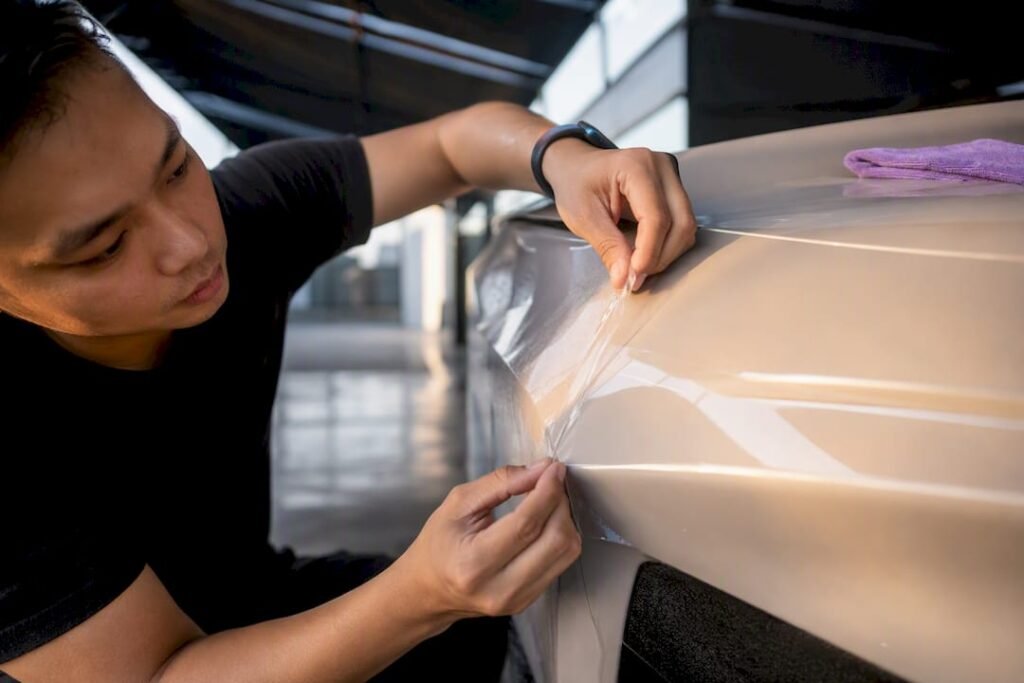
Most new-car owners get the best result from paint protection film on the front-end strike zones and ceramic coating over the whole car. If you drive mostly highway or gravel roads, lean harder on PPF; if the car sits in a garage and you just want gloss and easy washing, ceramic alone often does the job. Book protection soon after delivery.
TL;DR:
- PPF is ideal for heavy highway or gravel driving to prevent stone chips, while ceramic coating enhances gloss and simplifies cleaning for garage-kept cars.
- The typical lifetime of quality ceramic coating is 2 to 5 years, whereas paint protection film can last 7 to 10 years with correct installation.
- Professionals recommend booking protection within six to eight weeks of delivery to prevent environmental damage from etching, which requires prior decontamination and paint correction.
- Applying ceramic coating over PPF extends the film’s lifespan and improves dirt resistance, making the combination suitable for high-value or long-term cars.
- Mobile installers can apply PPF, ceramic coating, and other surface protectants on-site, providing convenience without sacrificing quality.
Table of Contents
- What does ceramic coating actually protect against?
- What does paint protection film cover and why does fitment matter?
- Should you protect the wheels, glass and interior too?
- How do you choose between PPF, ceramic, or both?
- When should you schedule protection on a new car?
- What upkeep keeps the protection working?
- Why mobile professional installation makes sense for new cars
- Get the right protection booked before the paint takes a hit
- Sources
- FAQ
What does ceramic coating actually protect against?
Ceramic coating is a liquid polymer that bonds chemically to the clear coat rather than sitting on top of it like a wax. Once cured, it makes the paint hydrophobic, resists chemical staining from bird droppings and tree sap, and holds a deeper gloss than bare paint ever will.
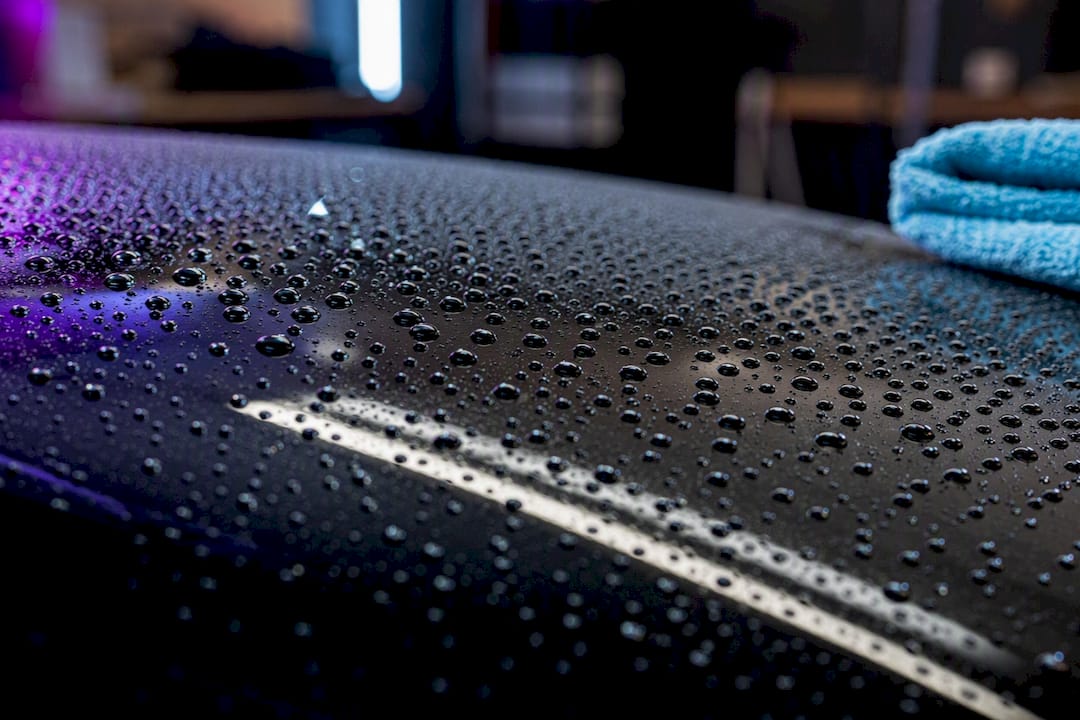
What it will not do is stop a stone chip. A pebble kicked up off the highway punches through ceramic coating exactly as it would through unprotected paint, because coating adds surface resistance, not impact absorption. That distinction trips up a lot of new owners who assume “protected” means “immune.”
Cost and lifespan:
- Professional application typically runs $700 to $2,000, depending on vehicle size and prep work required
- Quality ceramic coatings last roughly 2 to 5 years before reapplication is worth considering
- Maintenance means pH-neutral shampoo and periodic inspection, not “wash and forget”
Pro Tip: Ask your installer how they prep the paint before coating. A coating applied over swirl marks or light oxidation locks those flaws in permanently.
What does paint protection film cover and why does fitment matter?
Paint protection film is a thick, transparent urethane layer designed to take the hit a stone chip would otherwise put in your clear coat. Better films include a self-healing top layer that shrugs off light swirls with a bit of heat, and professional installation is strongly recommended because the film has to be trimmed, stretched and squeegeed without trapping dust or air.
Coverage comes in tiers, and most new-car owners do not need to cover the entire body to get real value:
- Partial front: bonnet leading edge, mirrors, front bumper — the panels that cop the most stone strikes
- Full front: adds the full bonnet, guards and headlights for highway drivers
- Full-vehicle: every painted panel, usually chosen for high-value or long-hold cars
Expect $1,500 to $3,000 for a front-end kit and $5,000 to $8,000 or more for full coverage, with film itself lasting 7 to 10 years when installed well. Poor fitment shows up as edge lift within months, where the film’s border peels and traps dirt. That is almost always a DIY or rushed-installer problem, not a product flaw. Our paint protection film guide covers coverage zones in more detail.
Should you protect the wheels, glass and interior too?
Exterior paint gets the attention, but wheels, glass and interior surfaces take just as much punishment on a new car. Wheel coatings cut down how hard brake dust bakes onto the finish, which turns a scrub-and-swear job into a rinse. Glass coatings improve how water sheets off the windscreen and reduce wiper wear over time. Leather and textile protectants resist UV fading and staining, which matters more than owners expect once a car sits through a few Sunshine Coast summers.
- Wheel coatings need occasional reapplication where brake dust is heaviest
- Glass coatings usually last under a year on the windscreen
- Leather protectants may require renewal every few months with regular use
Bundling these with exterior protection gives you one low-maintenance package instead of three separate problems. Our guide to protective coating types breaks down where each one fits.
How do you choose between PPF, ceramic, or both?
Match the protection to how you actually use the car, not to what sounds most impressive. A few factors decide most of it:
- Annual kilometres and road type — heavy highway or gravel driving pushes you toward PPF on the front end
- Parking situation — garaged cars face less UV and airborne contamination, so ceramic alone often suffices
- Vehicle value and how long you’ll keep it — higher-value cars kept five-plus years justify the combined approach
- Budget — PPF costs more upfront; ceramic is cheaper but needs earlier reapplication
A staged approach works well for most budgets: film the front-end strike zones first, then ceramic coat the whole vehicle. Film absorbs the impacts that matter, and coating over the top adds UV resistance for the film itself while keeping the rest of the car easy to clean. See our broader rundown of vehicle protection methods if you’re still weighing options against your driving pattern.
Pro Tip: If cash flow is tight at delivery, book front-end PPF now and add ceramic coating a few weeks later. The paint stays protected in the meantime, and you’re not stretching one payment across everything at once.
When should you schedule protection on a new car?
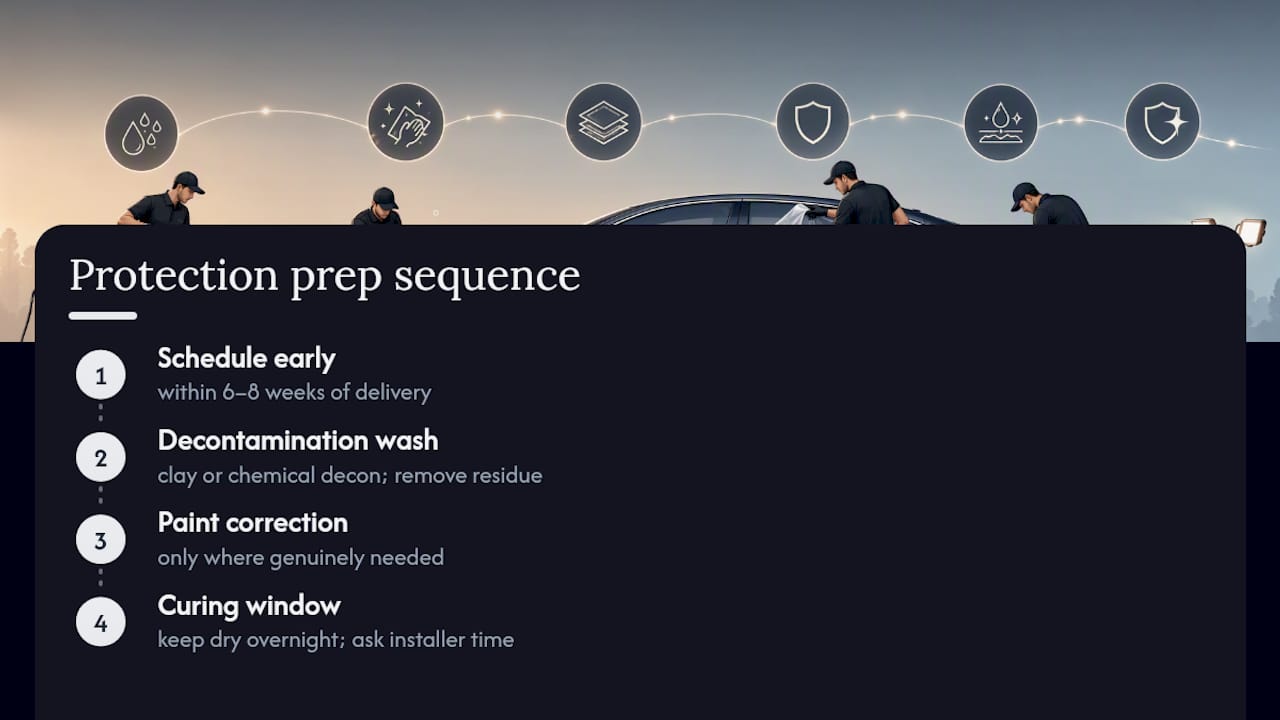
Sooner than most owners think. Environmental hazards can etch into unprotected clear coat within six to eight weeks of delivery, and once that etching sets in, paint correction becomes necessary before any coating or film can go on properly.
A proper job starts with a decontamination wash and clay or chemical decon to strip factory transport residue, followed by paint correction only where genuinely needed on a new car, then a curing window before the vehicle gets driven or washed. Ask your installer what curing time they need and whether the car needs to stay dry overnight. Skipping decon is the most common shortcut that shortens coating life.
What upkeep keeps the protection working?
Wash weekly to fortnightly with a pH-neutral shampoo. Harsh detergents strip the hydrophobic layer on ceramic coating faster than UV exposure ever will, and our first-wash aftercare guide covers the technique in full.
- Check PPF edges every few months for lifting or yellowing
- Watch for water that stops beading, a sign ceramic coating is wearing thin
- Book a professional inspection annually, or every two years for garage-kept cars
- Get onto edge lift or coating breakdown early, since both surfaces still need regular attention rather than treating them as maintenance-free
Diamondbrite’s maintenance guide has useful detail on wash technique if you want to go deeper.
Why mobile professional installation makes sense for new cars
A driveway or workplace car park, done right, beats a workshop queue. Controlled application at your location means the paint is protected without the car leaving your sight, and correct prep, decontamination and curing conditions are what actually determine how long coating or film lasts. DIY kits skip the parts that matter most: proper surface correction and a controlled cure.
Get the right protection booked before the paint takes a hit
There are plenty of ways to protect a new car, but the ones that hold up long term all come down to the same thing: proper prep, quality product, and someone who knows how to install it without leaving edges lifting six months later. Professional detailers can bring ceramic coating, wheel and leather protection, and PPF management straight to your driveway or workplace so the car never has to sit in a workshop queue while stone chips and sap keep landing on unprotected paint.
When you request a quote, have your vehicle model, roughly how many kilometres you drive a year, and your preferred coverage level ready. That’s usually enough for a straight answer on whether front-end PPF, full ceramic, or a combined package suits your car. Check the wash and detailing package menu for current pricing structures, or look through the paint protection guide to see how packages bundle together, then get in touch to lock in a booking before your new car sits through its first heavy pollen season unprotected.
Sources
- Ceramic coating vs paint protection film: Australia
- PPF vs ceramic coating — LLumar
- Clear bra vs ceramic coat: differences & guide (2026)
- PPF vs ceramic coating — Solarblock Tint (blog)
FAQ
Is ceramic coating or PPF better for a new car?
Neither is universally better. PPF suits owners doing heavy highway or gravel driving where stone chips are the main risk, while ceramic coating suits garage-kept cars where gloss and easy cleaning matter most.
Can you put ceramic coating over paint protection film?
Yes. Ceramic coating over PPF extends the film’s usable life and reduces how easily dirt and grime bond to its surface, making it a common pairing on new, high-value cars.
How soon after buying a new car should I get it protected?
Book protection within a few weeks of delivery. Environmental contaminants can etch into bare clear coat within six to eight weeks, which may force a paint correction before coating or film can go on.
How long does professional ceramic coating last compared to PPF?
Professional ceramic coating typically lasts 2 to 5 years, while quality PPF lasts 7 to 10 years when installed correctly.
Can mobile professional detailers apply both PPF and ceramic coating on-site?
Yes, mobile installation can cover ceramic coating, wheel and leather protection, and PPF management at your home or workplace, so both protections can be arranged around one visit.