
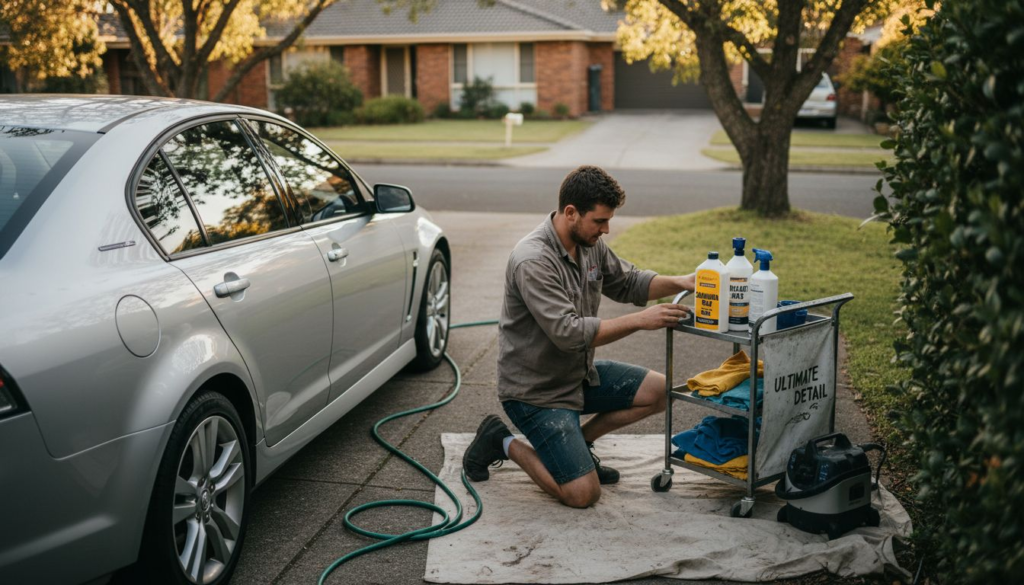
Between school drop-offs in Maroochydore and meetings in Noosa, finding time to properly maintain your car can feel impossible. Vehicle presentation matters, but the last thing you need is wasted time searching for supplies or worrying about streaks and missed spots. With a well-organised mobile detailing kit and proven inspection steps, keeping your car in top shape on the Sunshine Coast becomes effortless, saving you both stress and precious time.
Table of Contents
- Step 1: Prepare and Organise Your Detailing Gear
- Step 2: Assess and Pre-Clean the Vehicle Exterior
- Step 3: Deep Clean and Refresh Interior Surfaces
- Step 4: Enhance and Protect Paintwork and Surfaces
- Step 5: Confirm Quality and Finalise the Service
Quick Summary
| Main Insight | Explanation |
|---|---|
| 1. Organise Your Detailing Gear | Preparation includes creating a mobile detailing kit with essential tools and organising them for easy access. |
| 2. Assess Vehicle Condition Before Cleaning | Conduct a thorough inspection to identify paint imperfections and contaminants before initiating the cleaning process. |
| 3. Use Surface-Specific Cleaning Techniques | Use appropriate cleaners for different materials to effectively remove dirt and restore surfaces in the vehicle’s interior. |
| 4. Apply Protective Coatings Carefully | Use methods like clay bar treatment and ceramic coatings to enhance and protect paintwork while preventing potential damage. |
| 5. Perform Quality Assurance After Detailing | Ensure all work is double-checked using a checklist, documenting the results to confirm complete satisfaction with the service. |
Step 1: Prepare and Organise Your Detailing Gear
Successfully mobile detailing starts with meticulous preparation and organisation of your equipment. Getting your gear ready means having everything strategically packed and easily accessible when you arrive at a client’s location.
To prepare effectively, start by creating a comprehensive mobile detailing kit that includes all essential tools and cleaning supplies. Your kit should feature key items such as:
- Microfibre towels (multiple grades and colours)
- Cleaning solutions for different surfaces
- Polishing pads and compounds
- Protective gloves and safety equipment
- Portable vacuum cleaner
- Water containers and spray bottles
- Detailing brushes of various sizes
Organisation is critical when working in mobile environments. Efficient equipment management requires planning your workflow and allocating resources strategically. Consider investing in a dedicated detailing vehicle or well-organised storage system that allows quick access to your equipment.
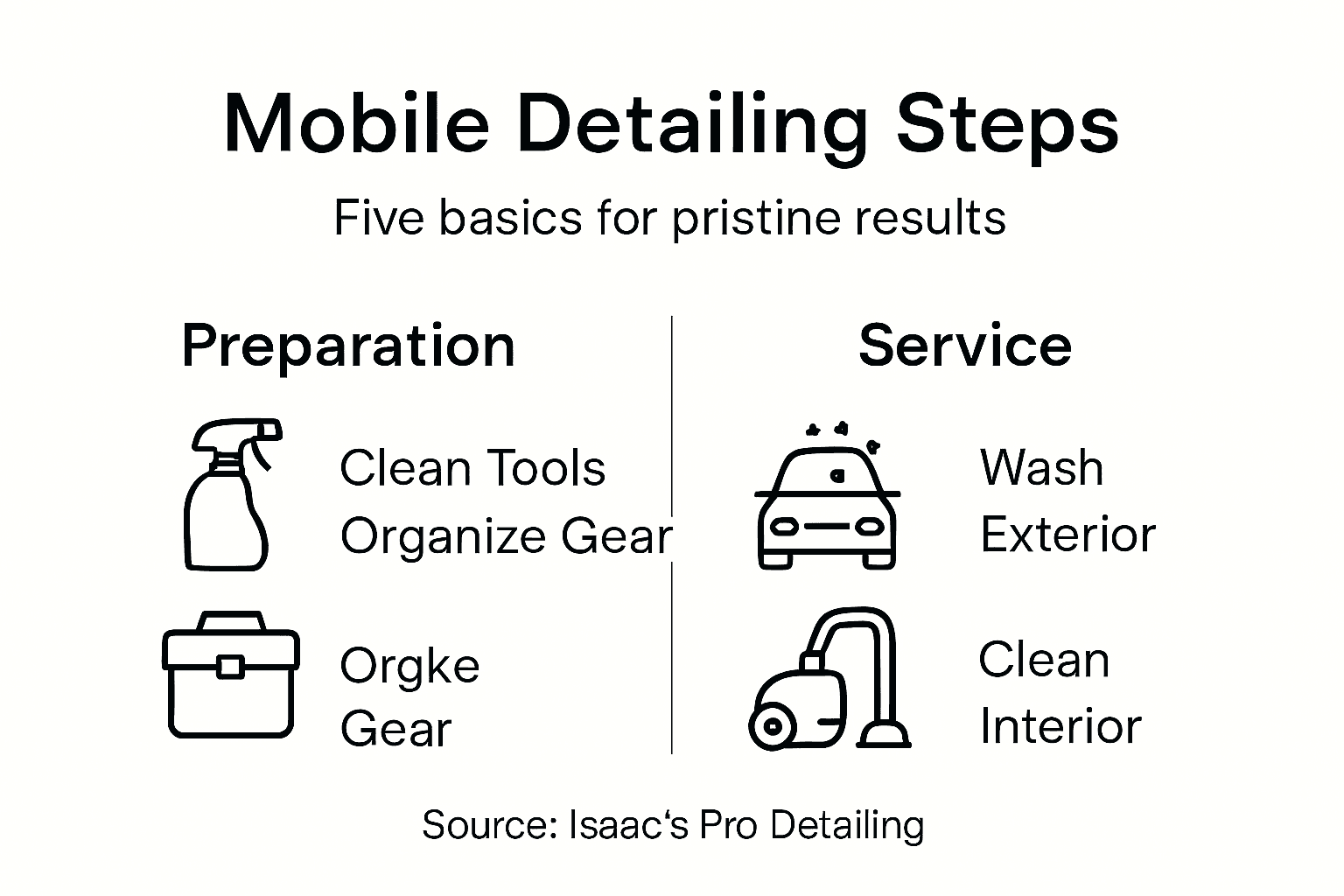
Prioritise keeping your gear clean, maintained, and systematically arranged. This approach not only saves time during jobs but also demonstrates professionalism to your clients.
Pro tip: Invest in a modular storage system with clearly labelled compartments to streamline your workflow and prevent time-consuming equipment searches during detailing jobs.
Step 2: Assess and Pre-Clean the Vehicle Exterior
Preparing to detail your vehicle begins with a thorough exterior assessment and initial cleaning. This critical first step ensures you understand the surface condition and remove preliminary contaminants before diving into detailed restoration.
Start by conducting a comprehensive vehicle exterior inspection that reveals the true state of your car’s paintwork. Walk around the vehicle in good daylight, examining each panel carefully for:
- Paint imperfections like scratches, swirl marks, or oxidation
- Areas of significant dirt or environmental contamination
- Potential rust spots or paint damage
- Uneven surface textures or embedded contaminants
Before applying any cleaning products, perform a visual and tactile examination. Gently run your hand over the surface to detect rough areas or embedded particles that might require special attention. This initial assessment helps you determine the appropriate pre-cleaning techniques and products needed for optimal results.
Begin the pre-cleaning process by rinsing the entire vehicle with water to remove loose dirt and debris. Use a pressure washer or garden hose with a gentle spray nozzle, working from top to bottom to prevent recontamination. Pay extra attention to areas prone to heavy dirt accumulation like wheel arches, lower panels, and around the grille.
A methodical pre-cleaning approach prevents potential paint damage and ensures a more effective final detailing result.
Pro tip: Always use a clean microfibre cloth and dedicated pre-wash solution to remove initial contaminants without risking surface scratches.
Step 3: Deep Clean and Refresh Interior Surfaces
Transforming your vehicle’s interior requires a systematic and thorough approach to cleaning and refreshing every surface. The goal is to eliminate dirt, restore surfaces, and create a pristine environment that looks and feels professionally detailed.
Begin by professional interior cleaning techniques that address different materials and surface types. Start with a comprehensive interior assessment to identify specific cleaning requirements:
- Leather surfaces needing conditioning
- Fabric upholstery with embedded dirt or stains
- Plastic and vinyl dashboard areas
- Carpets and floor mats
- Air vents and hard-to-reach crevices
Remove all loose items from the vehicle and begin with thorough vacuuming. Use attachments to reach tight spaces, paying special attention to seat seams, floor edges, and under seats. For fabric surfaces, use a specialised upholstery attachment that can extract deeply embedded dirt and debris.
Systematic cleaning prevents cross-contamination and ensures a comprehensive interior restoration.
Progress to surface-specific cleaning techniques. Use appropriate cleaners for each material – leather conditioners for leather, all-purpose cleaners for plastics, and fabric-specific solutions for upholstery. Work in small sections, using microfibre cloths to prevent scratching and ensure even application.
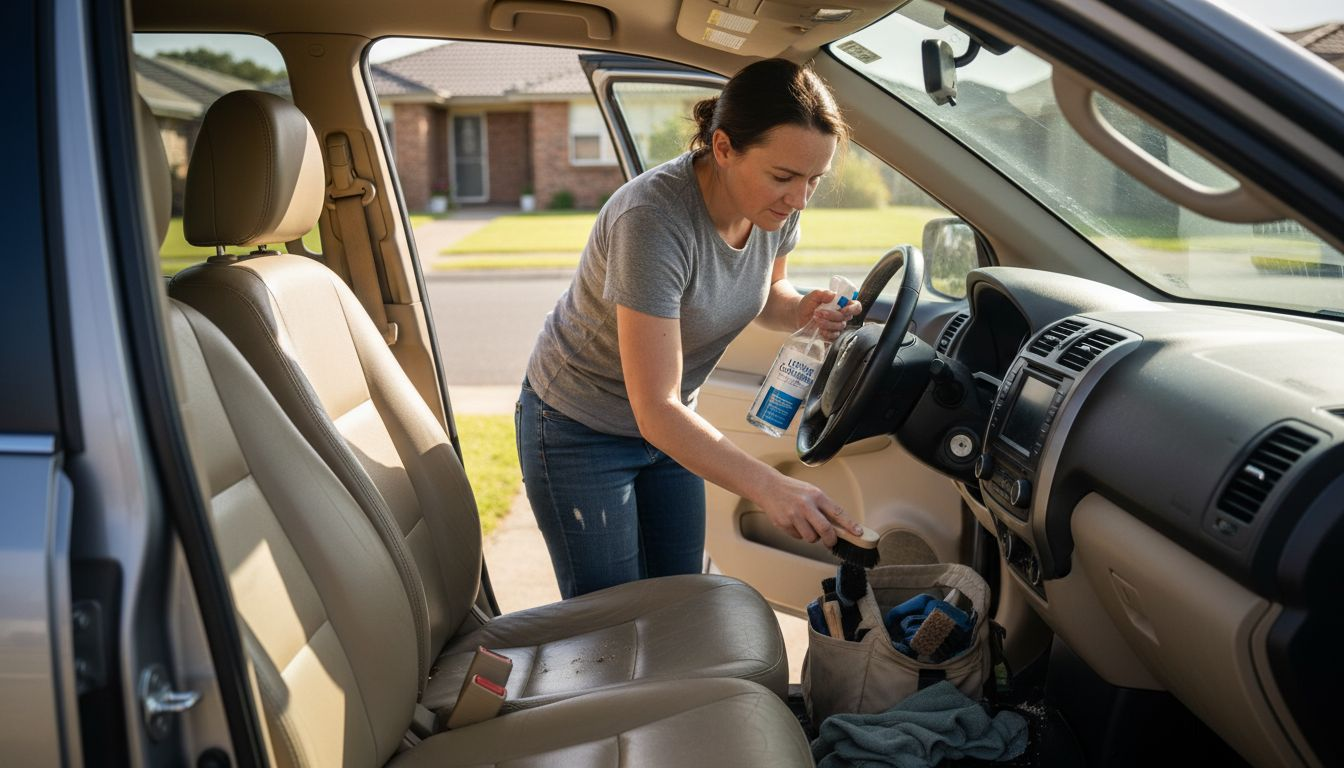
Pro tip: Always test cleaning solutions on a small, inconspicuous area first to ensure compatibility and prevent potential surface damage.
Step 4: Enhance and Protect Paintwork and Surfaces
After cleaning, the ultimate goal is to protect and enhance your vehicle’s paintwork, creating a stunning finish that resists environmental damage and maintains its showroom shine. This critical stage transforms a clean surface into a professionally detailed masterpiece.
Begin by understanding surface coating techniques that will safeguard your vehicle’s exterior. Your protection strategy should include multiple layers of defence:
- Clay bar treatment to remove microscopic contaminants
- Polish to eliminate minor scratches and swirl marks
- Ceramic coating or high-quality wax application
- Paint sealant for long-term protection
- Clear protective film for high-impact areas
Surface preparation is crucial before applying any protective treatments. Ensure the paintwork is completely clean and free from any residual compounds or oils. Use microfibre towels and dedicated cleaning solutions to create an immaculate surface that will bond perfectly with protective coatings.
Proper surface protection not only enhances appearance but significantly extends your vehicle’s exterior lifespan.
Apply protective coatings in a controlled environment, avoiding direct sunlight and extreme temperatures. Work systematically, applying thin, even layers and allowing proper curing time between applications. Pay special attention to areas prone to chips and wear, such as front bumpers, side mirrors, and bonnet leading edges.
Pro tip: Invest in high-quality applicator pads and work in small sections to ensure uniform coverage and prevent potential streaking or uneven protection.
Compare these popular exterior protective finishes:
| Type of Finish | Durability | Shine Level | Maintenance Frequency |
|---|---|---|---|
| Carnauba Wax | Few months | High | Regular (monthly) |
| Synthetic Sealant | Up to 6 months | Medium-High | Moderate |
| Ceramic Coating | 1-3 years | Glossy | Minimal (annual check) |
Step 5: Confirm Quality and Finalise the Service
The final stage of mobile detailing is a critical process of quality assurance that ensures your client receives exceptional results and feels completely satisfied with the service. This comprehensive review transforms a good detailing job into an outstanding customer experience.
Begin by conducting systematic quality checks across every surface of the vehicle. Your quality confirmation should be methodical and comprehensive:
- Inspect exterior paintwork under different lighting conditions
- Check interior surfaces for consistent cleaning and restoration
- Verify no missed spots or unaddressed areas
- Test protective coatings for uniform application
- Confirm all requested services have been completed
Detailed documentation is crucial during this stage. Take high-quality photographs documenting the before and after condition of the vehicle. This visual evidence not only serves as a professional record but also provides transparency and builds trust with your client.
Meticulous quality confirmation demonstrates professionalism and commitment to exceptional service standards.
Ensure you communicate the completed work clearly with the client. Walk them through the services performed, highlighting specific improvements and explaining the protective treatments applied. This personal touch transforms a transaction into a memorable customer interaction.
Pro tip: Create a standardised quality checklist that you complete for every service, ensuring consistent and comprehensive review across all mobile detailing jobs.
Here’s a summary of key focus areas for each mobile detailing stage:
| Step | Main Focus | Typical Challenge | Professional Tip |
|---|---|---|---|
| Prepare Gear | Organisation & readiness | Forgetting equipment | Use labelled storage |
| Pre-Clean Exterior | Paint condition assessment | Hidden contaminants | Inspect in daylight |
| Clean Interior | Surface-specific care | Deep-seated dirt | Test solutions first |
| Paint Protection | Long-term surface care | Streaking or missed spots | Apply in small sections |
| Finalise Service | Quality assurance | Overlooked areas | Use a written checklist |
Elevate Your Mobile Detailing Experience with Isaac’s Pro Detailing Sunshine Coast
Struggling to keep your vehicle spotless and protected on the go can be frustrating especially when balancing a busy lifestyle. The article highlights critical steps like preparing your gear, assessing paint condition, and applying protective coatings that can be time-consuming and challenging without the right tools and expertise. At Isaac’s Pro Detailing Sunshine Coast, we understand these pain points and deliver convenient on-site car care solutions that bring professional quality directly to your doorstep using advanced techniques from deep interior cleaning to ceramic coatings designed to extend your vehicle’s life and shine.
Enhance your car care with our fully mobile service that covers everything from detailed interior extraction to expert paint protection, eliminating the hassle of organising equipment or worrying about streaks and scratches. Don’t settle for less when it comes to your pride and joy — experience trusted craftsmanship and eco-conscious products tailored to your needs by visiting Isaac’s Pro Detailing Sunshine Coast today. Ready to transform your vehicle effortlessly on your terms Explore our comprehensive range and book your service now at Professional Mobile Detailing Solutions. Take the first step towards pristine car care that fits perfectly into your busy Sunshine Coast lifestyle.
Frequently Asked Questions
How do I prepare my mobile detailing kit for optimal results?
To prepare your mobile detailing kit, gather essential tools such as microfibre towels, cleaning solutions, and detailing brushes. Organise them in a modular storage system with labelled compartments, allowing for easy access during your detailing jobs.
What are the key steps to assess a vehicle’s exterior before detailing?
Start by performing a thorough visual inspection in good lighting, checking for paint imperfections and surface contaminants. Follow this with a rinse to remove loose dirt, ensuring a clean starting point for detailed cleaning.
How can I effectively clean and refresh a vehicle’s interior surfaces?
Begin interior cleaning by removing all loose items and thoroughly vacuuming all areas, including tight spaces. Use appropriate cleaners for specific materials, such as leather conditioners for leather and fabric-specific solutions for upholstery, to achieve the best results.
What techniques are essential for protecting a vehicle’s paintwork?
To protect paintwork, apply a clay bar treatment followed by polishing to eliminate scratches. Finish with a protective layer, such as ceramic coating or wax, ensuring that surfaces are clean and dry before application for effective bonding.
How do I confirm the quality of my mobile detailing service before finalising?
Conduct systematic quality checks across all surfaces, inspecting for missed spots and ensuring consistent results. Document your work with before and after photographs, and walk the client through the completed services to enhance their satisfaction.
Recommended
- Why Mobile Car Detailing Matters On The Sunshine Coast
- Mobile Car Detailing Sunshine Coast – Isaac’s Pro Detailing
- Mobile Car Detailing Sunshine Coast – Isaac’s Pro Detailing
- 7 Real-Life Examples Of Mobile Detailing Services Explained
- Injector Cleaning Benefits for Diesel Pros: 2025 Guide – My WordPress
- How to Properly Clean Your Golf Cart Windshield — GOLFCARTSTUFF.COM™